 English
 中文简体
 Español
 عربى


Content
- 1 Introduction
- 2 Product Overview
- 3 Standard Specifications and Dimensions
- 4 Advantages Over Conventional Flexible Connections
- 5 Advanced Manufacturing Capabilities
- 6 Quality Management and Engineering Strength
- 7 Applications
- 8 Selection and Installation Guidance
- 9 Customization Options
- 10 Why Choose an Integrated Manufacturer
- 11 Maintenance and Service Life Considerations
- 12 Environmental and Operational Benefits
- 13 Frequently Asked Questions
- 13.1 What is an ISO flange-type vacuum bellows?
- 13.2 What materials are available?
- 13.3 What is the allowable leak rate?
- 13.4 What pressure range can the product handle?
- 13.5 What standard sizes are available?
- 13.6 Can a non-standard length be ordered?
- 13.7 Can the flange standard be changed?
- 13.8 Are double-headed bolts available?
- 13.9 How should the bellows be installed?
- 13.10 Can the bellows be used as a general flexible hose?
- 13.11 What information should be supplied for a quotation?
- 13.12 What makes this product competitive?
- 14 Conclusion
- 15 References
- 16 Product: ISO FLANGETVPE
Introduction
Vacuum systems depend on piping components that can maintain reliable sealing performance while accommodating movement, vibration, thermal expansion, and installation tolerances. A small weakness in a connection can reduce system efficiency, compromise process control, increase maintenance requirements, or cause the loss of an entire vacuum cycle. For this reason, vacuum bellows are essential components in many industrial installations, including semiconductor equipment, analytical instruments, coating systems, laboratory apparatus, pharmaceutical machinery, chemical processing equipment, and industrial vacuum lines.
The ISO flange-type vacuum bellows presented in this article are designed to provide flexible, leak-resistant connections for vacuum applications. The product combines a stainless steel corrugated pipe with stainless steel flanges and is available in both ISO-K and ISO-F configurations. Its operating range extends from vacuum to atmospheric pressure, while the specified allowable leak rate is 1.33 × 10⁻¹⁰ Pa·m3/sec or below. These characteristics make the bellows suitable for systems where connection integrity, material durability, and dimensional compatibility are critical.
Manufactured by Zhejiang Zhenlong Energy Equipment Technology Co., Ltd., the product reflects the company’s experience in metal hose production, corrugated forming, welding, pipe fitting fabrication, and leak-tightness testing. The company integrates research and development, manufacturing, processing, and trade, enabling it to respond to both standard orders and customized engineering requirements.
Compared with ordinary flexible hoses or lower-grade bellows, the ISO flange-type design offers a more controlled solution for vacuum piping. Its stainless steel construction supports cleanliness and corrosion resistance, its standardized flange dimensions simplify equipment integration, and its corrugated structure provides flexibility without relying on soft polymeric materials that may age, permeate, or deteriorate under demanding conditions.
ISO FLANGETVPE
Product Overview
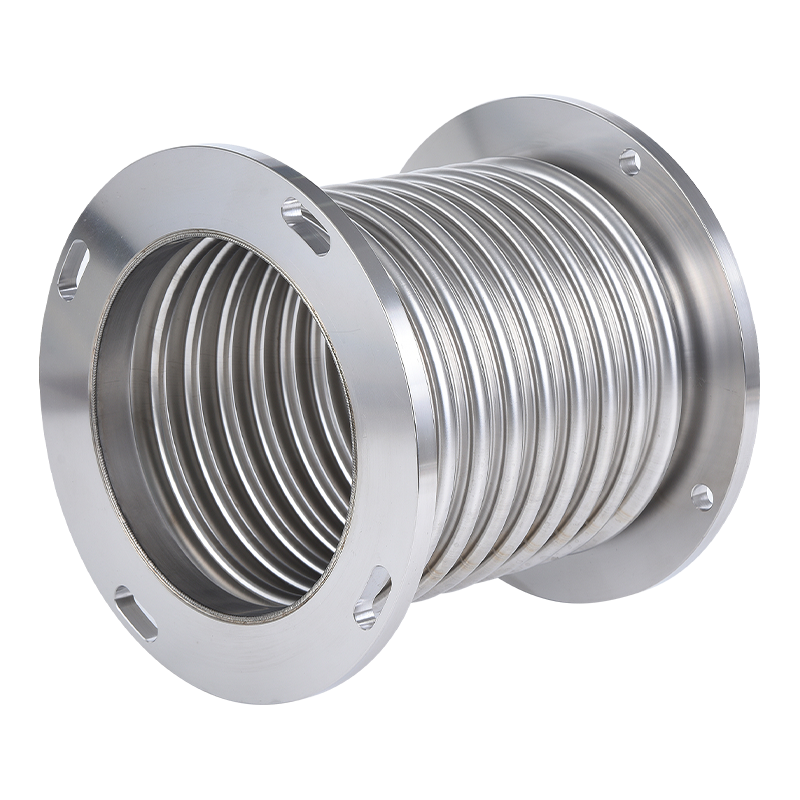
An ISO flange-type vacuum bellows is a flexible vacuum component consisting primarily of a formed metal bellows tube and two end flanges. The bellows section is manufactured from stainless steel, with SUS304 and SUS316L available according to application requirements. The end flanges can also be produced in SUS304 or SUS316L. This material flexibility allows users to select a suitable balance between general corrosion resistance, chemical compatibility, mechanical durability, and project cost.
The corrugated tube is the active flexible element. Its repeated convolutions allow the component to absorb limited axial movement, alignment variation, and mechanical vibration. The corrugated geometry also provides flexibility while preserving the basic pressure boundary of the pipe. In a vacuum system, this flexibility is valuable because rigid pipes can transfer stress directly to pumps, chambers, valves, and other connected equipment.
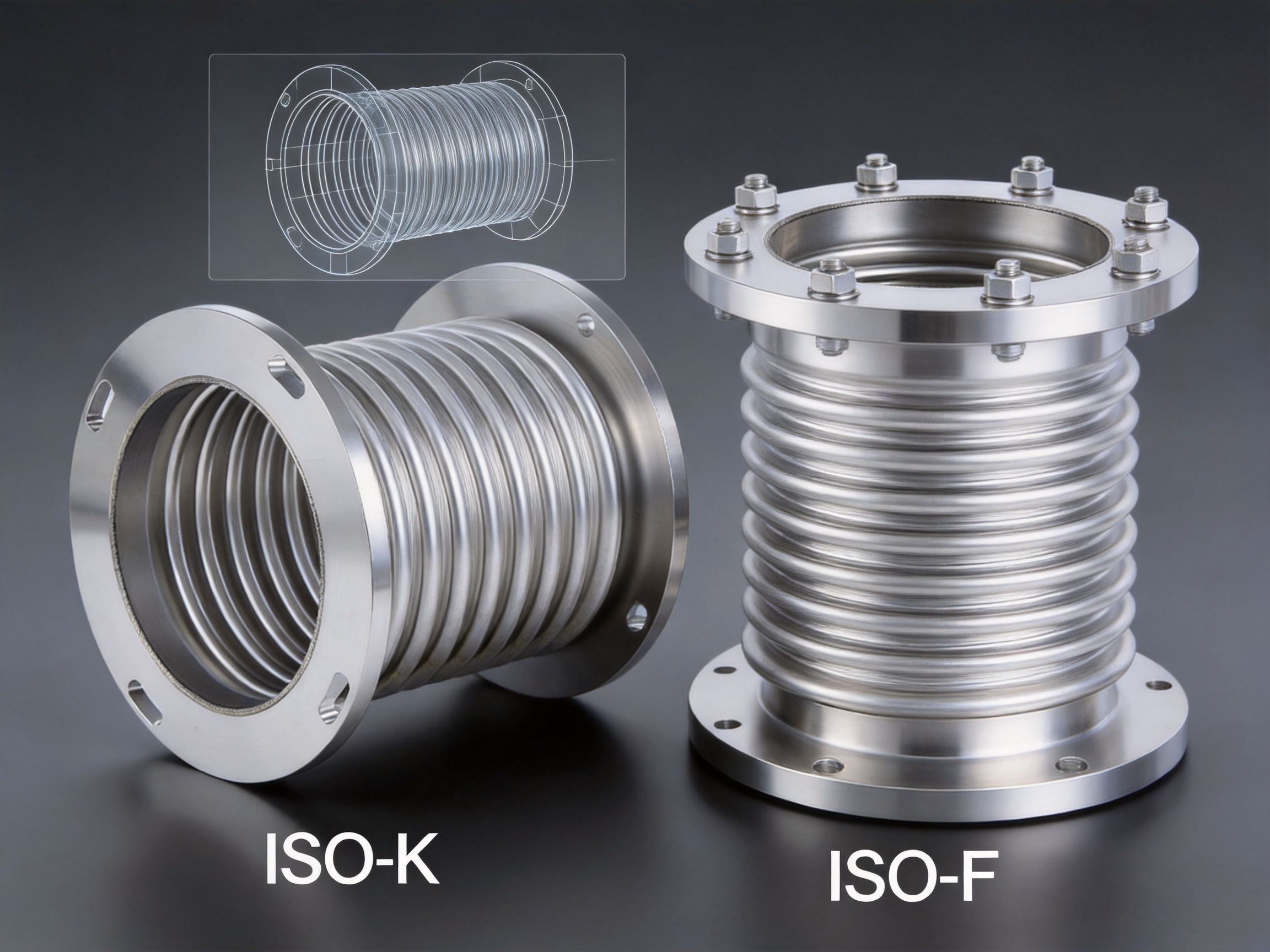
The flanges provide the connection interface. The product is available in ISO-K and ISO-F vacuum bellows configurations. ISO-K connections are commonly used in modular vacuum systems where clamp-style assembly is preferred. ISO-F connections use a flange and bolt pattern that can provide a robust, repeatable connection for equipment and fixed vacuum lines. The available sizes range from DN63 to DN200 as standard products, while larger sizes, including DN250 and above, can be manufactured according to customer requirements.
The standard lengths listed for the product are 150 mm and 200 mm, depending on nominal diameter. However, the manufacturer can produce other bellows lengths when a project requires a different installation distance, movement capacity, or equipment layout. This customization capability is particularly useful for original equipment manufacturers and vacuum system integrators.
Principal Technical Characteristics
The product is designed for vacuum service from vacuum to atmospheric pressure. Its allowable leak rate is specified as 1.33 × 10⁻¹⁰ Pa·m3/sec and below. This specification indicates that the bellows are intended for applications where connection tightness is more demanding than that of conventional utility piping.
The use of SUS304 and SUS316L stainless steel provides a durable metallic pressure boundary. SUS304 is a widely used austenitic stainless steel with good general corrosion resistance and forming performance. SUS316L contains molybdenum and has a low-carbon composition, which can improve resistance to certain corrosive environments and reduce the risk of sensitization in welded areas. The appropriate material should be selected according to the gas composition, cleaning process, temperature, humidity, and expected service life.
The bellows can be manufactured with standard single-headed flange arrangements or with double-headed bolts where additional resistance to loosening is required. This option is useful in installations exposed to vibration, repeated thermal cycling, or mechanical disturbance.
Standard Specifications and Dimensions
The following table summarizes the standard materials and operating characteristics of the ISO flange-type vacuum bellows.
| Item | Specification |
|---|---|
| Corrugated pipe material | SUS304 or SUS316L |
| Flange material | SUS304 or SUS316L |
| Working pressure | Vacuum to atmospheric pressure |
| Allowable leak rate | 1.33 × 10⁻¹⁰ Pa·m3/sec and below |
| Standard connection types | ISO-K and ISO-F |
| Standard nominal sizes | DN63, DN80, DN100, DN125, DN160, and DN200 |
| Optional flange changes | KF or CF according to customer requirements |
| Customization | Non-standard lengths, larger diameters, and double-headed bolts |
ISO-K Dimensions
The ISO-K version is available in nominal diameters from DN63 to DN200. The standard length is 150 mm for DN63, DN80, and DN100, and 200 mm for DN125, DN160, and DN200. The dimensional parameters include the outer flange diameter, inner opening diameter, flange thickness or height, bolt-related dimension, and overall length.
| DN | ∅D1 | ∅D2 | h | C | L |
|---|---|---|---|---|---|
| 63 | 95 | 10 | 4.5 | 12 | 150 |
| 80 | 110 | 83 | 4.5 | 12 | 150 |
| 100 | 130 | 102 | 4.5 | 12 | 150 |
| 125 | 155 | 127 | 4.5 | 12 | 200 |
| 160 | 180 | 153 | 4.5 | 12 | 200 |
| 200 | 240 | 213 | 4.5 | 12 | 200 |
The dimensions should be checked against the mating flange, gasket arrangement, clamp, bolt set, and available installation space before ordering. Although nominal diameter provides a general connection reference, the actual outer diameter, bore, bolt arrangement, and face dimensions determine whether a component can be installed without adapters or modifications.
ISO-F Dimensions
The ISO-F version is offered in the same standard nominal diameter range. Its dimensions include the flange outside diameter, bolt-circle diameter, flange-related dimension, number and diameter of bolt holes, and overall length.
| DN | ∅D1 | ∅K | C | N-∅L | L |
|---|---|---|---|---|---|
| 63 | 130 | 110 | 10 | 4-∅9 | 150 |
| 80 | 145 | 125 | 10 | 8-∅9 | 150 |
| 100 | 165 | 145 | 10 | 8-∅9 | 150 |
| 125 | 200 | 175 | 10 | 8-∅11 | 200 |
| 160 | 225 | 200 | 10 | 8-∅11 | 200 |
| 200 | 285 | 260 | 14 | 12-∅11 | 200 |
ISO-F configurations are often selected when a bolted connection is preferred for equipment access, structural stability, or maintenance planning. The bolt-hole quantity and diameter vary by nominal size, so users should confirm the complete connection drawing during technical review.
Advantages Over Conventional Flexible Connections
Reliable Vacuum Tightness
The most important advantage of a metal vacuum bellows is its ability to maintain a controlled, low-leak connection. Conventional rubber or polymer hoses may be convenient for low-cost applications, but they can release trapped gases, absorb process substances, permeate certain gases, and lose elasticity over time. These effects can make them less suitable for high-quality vacuum service.
The specified allowable leak rate of 1.33 × 10⁻¹⁰ Pa·m3/sec or below demonstrates the product’s focus on leak-tight performance. The final performance of a complete assembly also depends on the gasket, flange face, fastening method, cleaning procedure, and installation quality. Nevertheless, a precisely formed stainless steel bellows provides a strong foundation for maintaining system integrity.
Resistance to Corrosion and Process Contamination
SUS304 and SUS316L are widely recognized for their suitability in industrial piping and vacuum equipment. Unlike many elastomeric hoses, stainless steel does not normally become brittle, swell, or soften when exposed to ordinary industrial conditions. SUS316L is particularly useful when the application includes corrosive gases, moisture, cleaning chemicals, or higher requirements for welded corrosion resistance.
Metal construction can also support cleaner vacuum environments. Stainless steel surfaces can be cleaned, degreased, and prepared for applications where low contamination is important. The proper surface treatment and cleanliness level must be specified for each project, but the material platform is well suited to demanding equipment environments.
Mechanical Flexibility
Rigid pipe sections can transmit vibration and installation stress directly to connected components. A corrugated bellows section can absorb a degree of movement and reduce the mechanical load transferred through the piping system. This helps protect vacuum pumps, chambers, valves, sensors, and other precision equipment.
Flexibility is also helpful when two connection points are not perfectly aligned. Instead of forcing rigid piping into position, the bellows can provide limited compliance during installation. However, the component should never be used as an unrestricted bending hose. Excessive lateral displacement, torsion, compression, extension, or repeated movement beyond the design capability can shorten its service life.
Standardized Equipment Integration
ISO-K and ISO-F interfaces are widely used in vacuum equipment. The availability of standardized flange dimensions simplifies system design and reduces the need for custom transition pieces. It can also improve spare-parts management because a facility can use a consistent family of nominal sizes across multiple machines.
Standardized connection options are especially valuable for original equipment manufacturers. A machine builder can select a known flange configuration, define its installation envelope, and use a repeatable bellows design across multiple product models. This can reduce engineering time and simplify procurement.
Temperature and Aging Benefits
Metal bellows generally provide better long-term stability than flexible polymer connections in environments involving heat, vacuum cycling, or prolonged operation. Stainless steel does not experience the same aging mechanisms as rubber, including plasticizer migration, ozone cracking, and progressive loss of elasticity.
The actual temperature rating must be confirmed for the complete assembly. The bellows material, welds, gasket, flange hardware, cleaning treatment, and surrounding equipment may each have different limits. Even so, the metallic construction provides a strong advantage for applications where organic materials are undesirable.
Configurable Construction
The product is not restricted to a single fixed configuration. Customers can request alternative lengths, larger diameters, different flange standards, and double-headed bolts. ISO flanges can be changed to KF or CF flanges according to project requirements. This flexibility enables the manufacturer to provide a component that is closer to the actual system design rather than forcing the user to redesign the surrounding equipment.
Advanced Manufacturing Capabilities
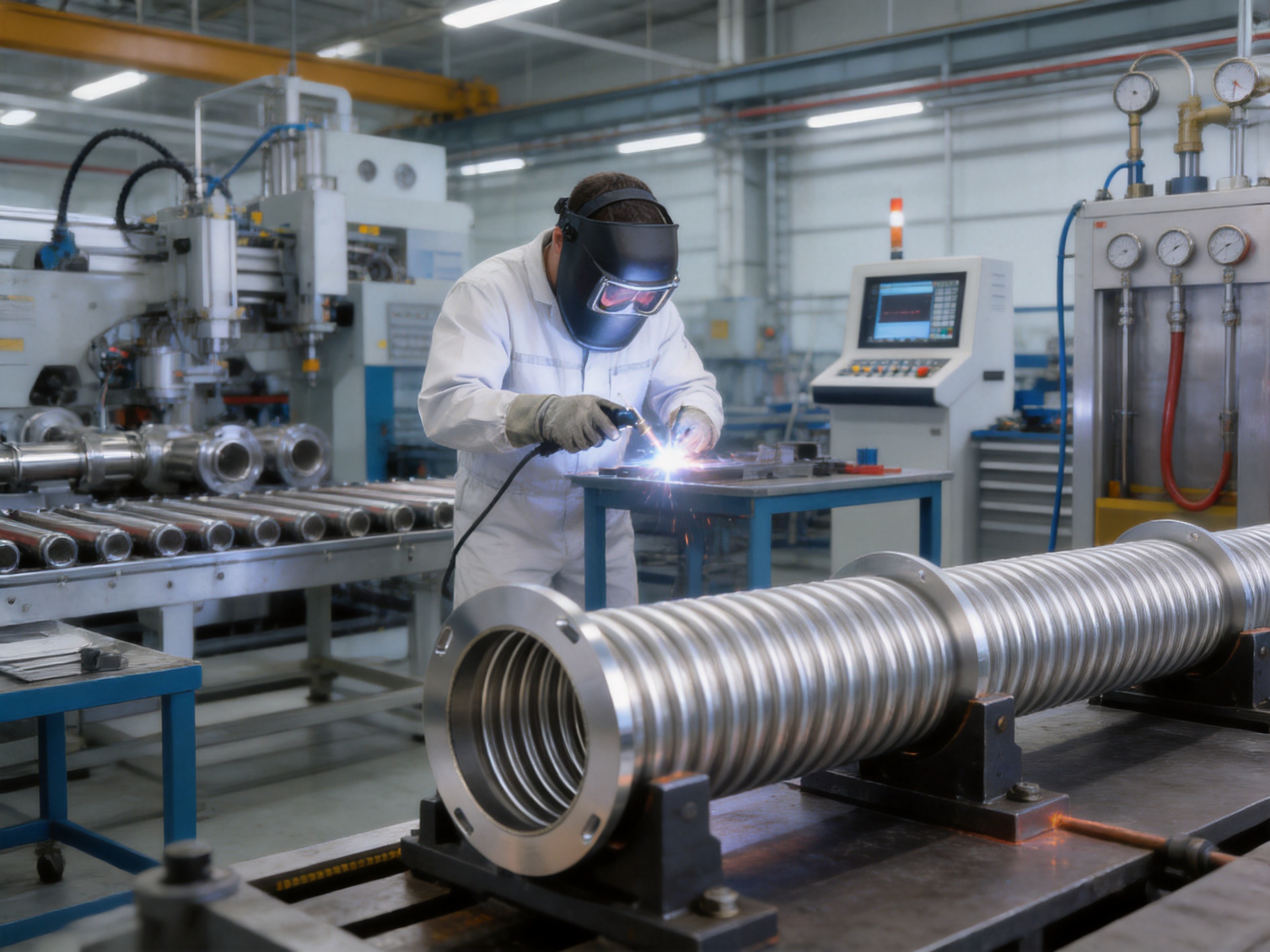
The performance of a vacuum bellows depends heavily on manufacturing consistency. Corrugation geometry, weld quality, flange alignment, surface condition, and final leak testing all influence the finished product. Zhejiang Zhenlong Energy Equipment Technology Co., Ltd. has developed a manufacturing base dedicated to energy equipment and related piping products.
The company operates a factory covering approximately 40 acres, with a factory building of approximately 30,000 square meters. Its production resources include 30 welding and forming production lines. This scale provides the capacity to organize multiple product categories while maintaining specialized processes for metal hoses, corrugated pipes, fittings, and related components.
Material Preparation and Traceability
Manufacturing begins with the correct selection and preparation of stainless steel materials. Sheets, strips, tubes, and flange stock must meet the specified grade and thickness requirements. For vacuum service, material cleanliness is particularly important because oils, particles, oxides, and residues can affect outgassing and leak performance.
A controlled material process helps ensure that SUS304 and SUS316L are not confused during production. Material identification can include documentation review, marking management, dimensional inspection, and chemical verification when required. The company’s equipment includes direct-reading spectrometers for metal material analysis, supporting more accurate identification of alloy composition.
Material analysis is valuable for customized orders and projects with strict documentation requirements. It can help confirm whether a flange or corrugated pipe corresponds to the requested material grade before the component proceeds to forming or welding.
Corrugated Forming
The corrugated pipe must be formed with consistent pitch, depth, diameter, and wall geometry. These parameters affect flexibility, stress distribution, pressure resistance, and fatigue behavior. If the convolutions are uneven, the bellows may experience localized stress concentrations or uneven movement during service.
Dedicated forming production lines help improve repeatability. The forming process must be controlled to avoid excessive thinning, wrinkles outside the intended profile, surface damage, or dimensional variation. After forming, the bellows can be checked for overall length, diameter, convolution profile, and connection geometry.
Consistent forming is also important when different lengths or nominal diameters are produced. A customized length should not simply be treated as a cut-down standard product. The manufacturing team must consider the number of convolutions, end preparation, free length, and expected movement so that the finished assembly remains mechanically suitable.
Precision Welding
Welding is a critical operation because the welded area becomes part of the vacuum boundary. Welds must be continuous, correctly positioned, and free from defects that could create a leak path. They must also avoid excessive heat input that could distort the flange, damage the bellows, or reduce corrosion resistance.
The company’s welding production lines support repeatable fabrication of metal hoses and vacuum bellows. Process control may include fixture positioning, controlled welding parameters, joint preparation, cleaning between operations, and visual inspection. For demanding applications, additional inspection methods can be specified according to the customer’s quality plan.
Flange alignment is equally important. Even a leak-free weld can create installation problems if the two flanges are not properly aligned. Accurate jigs and fixtures help maintain parallelism, concentricity, and the correct overall length during assembly.
Hydrogen Furnace and Thermal Processing Resources
The company operates two uninterrupted solid melting hydrogen furnace production lines. These resources demonstrate its broader capabilities in controlled thermal processing and energy equipment manufacturing. Furnace processes can support the production of components and materials that require controlled heating conditions, uniformity, and stable processing parameters.
For vacuum components, thermal treatment and heat control must be coordinated carefully with the material grade and forming history. The goal is to preserve the desired mechanical characteristics, minimize contamination, and support stable performance during subsequent cleaning and testing.
Leak-Tightness Testing
Leak testing is indispensable for vacuum bellows. Dimensional inspection alone cannot confirm whether a component will maintain vacuum integrity. A leak-tightness tester allows the finished assembly to be evaluated against the specified allowable leak rate.
Testing procedures should be performed using suitable equipment, calibrated instruments, and controlled test conditions. The result may be affected by the cleanliness of the test setup, the quality of temporary seals, the test gas, temperature, and stabilization time. A professional manufacturer understands that a meaningful leak test requires more than simply connecting a gauge to the product.
The stated allowable leak rate of 1.33 × 10⁻¹⁰ Pa·m3/sec and below provides a clear performance target. Customers with special requirements can discuss additional documentation, test records, inspection points, or acceptance criteria during the quotation and engineering review stages.
Quality Management and Engineering Strength
Zhejiang Zhenlong Energy Equipment Technology Co., Ltd. strictly implements the ISO9000:2008 quality management system. A quality management system provides a framework for organizing production procedures, inspection records, corrective actions, process responsibilities, and customer feedback.
For a component such as a vacuum bellows, quality cannot be created by final inspection alone. It must be built into the entire process, beginning with material selection and continuing through forming, welding, assembly, cleaning, inspection, packaging, and shipment. A structured quality system helps identify critical control points and maintain consistency between production batches.
The company also holds the People’s Republic of China Special Equipment Manufacturing License for pressure pipelines and has EU CE certification testing reports. These qualifications support its experience in regulated equipment manufacturing and international market requirements. Customers should confirm the exact certification scope and documentation applicable to a specific order, especially when the bellows will be incorporated into a regulated pressure or vacuum system.
Membership in the China Urban Gas Association further reflects the company’s involvement in gas-related piping and equipment fields. Although the ISO flange-type vacuum bellows are designed for vacuum applications, knowledge gained from gas pipelines, metal hoses, valves, fittings, and pressure-related products contributes to a broader understanding of safe fluid and gas transport.
The company’s research, development, design, and production teams can support customers from early selection through manufacturing and after-sales service. This integrated approach is useful when a project involves unusual dimensions, non-standard flange combinations, special materials, modified bolt arrangements, or specific packaging and inspection requirements.
Applications
Vacuum Equipment
Vacuum chambers, vacuum pumps, valves, gauges, and process modules often require flexible connections. A bellows can isolate vibration from the pump or compensate for small alignment differences between a chamber and its associated piping. ISO-K and ISO-F interfaces make the product suitable for modular vacuum equipment designs.
Semiconductor and Electronics Manufacturing
Electronics manufacturing equipment can require clean, stable, and repeatable vacuum conditions. Stainless steel bellows are suitable for connecting process chambers, load locks, vacuum pumps, and gas handling assemblies, subject to the cleanliness and material requirements of the specific production environment.
Coating and Thin-Film Systems
Physical vapor deposition, vacuum coating, and thin-film equipment use vacuum piping to transport gases and maintain controlled chamber pressure. Flexible bellows can reduce vibration transfer and support easier equipment installation. The stainless steel construction is also compatible with many industrial coating environments.
Research Laboratories
Laboratory vacuum systems frequently require reconfiguration. A standardized bellows can provide a durable connection while allowing equipment modules to be moved or adjusted. The availability of different lengths and flange configurations supports custom experimental arrangements.
Pharmaceutical and Chemical Equipment
Vacuum drying, evaporation, filtration, and process containment systems may benefit from stainless steel flexible connections. SUS316L can be considered where cleaning agents, moisture, or corrosive process conditions create higher material demands. The final selection should be based on chemical compatibility and applicable hygiene requirements.
Industrial Gas and Energy Equipment
Gas handling systems require connection components that can withstand vibration, thermal movement, and installation constraints. The company’s wider experience in metal hoses, natural gas pipelines, valves, plumbing fittings, and energy equipment supports the use of related manufacturing expertise in industrial gas applications.
Selection and Installation Guidance
Correct selection begins with the connection standard. Users should determine whether the equipment requires ISO-K, ISO-F, KF, CF, or another flange type. Mixing connection standards without a suitable adapter can lead to sealing problems, incorrect bolt alignment, or mechanical interference.
The nominal diameter should be selected according to the mating equipment and required flow area. A larger nominal diameter may reduce flow resistance, but it also increases the overall flange envelope and may require more installation space. The available length should be evaluated carefully. A bellows that is too short may be forced into extension or angular misalignment, while an excessively long bellows may lack adequate support.
Users should also evaluate the expected movement. Important factors include axial compression, axial extension, lateral offset, angular displacement, vibration amplitude, movement frequency, and the number of operating cycles. A bellows is a flexible precision component, not a substitute for an unsupported flexible hose. If repeated movement is expected, the manufacturer should receive complete movement data for engineering review.
During installation, flange faces should be clean, dry, and free from scratches or particles. Gaskets should be compatible with the vacuum level, temperature, and process media. Bolts should be tightened in a suitable cross pattern and to the specified torque. Uneven tightening can distort the flange and create a leak path.
The bellows should not be twisted during installation. Torsional stress can be particularly harmful because corrugations are designed primarily for controlled axial and lateral flexibility, not continuous rotational loading. Pipe supports should be arranged so that the bellows is not carrying the weight of a long unsupported pipe section.
After installation, the system should be leak-tested under the intended operating conditions or according to the project’s acceptance procedure. If the system has been opened for maintenance, the sealing surfaces should be inspected again before returning the equipment to service.
Customization Options
One of the product’s main competitive advantages is the ability to accommodate project-specific requirements. Standard products are available in defined sizes and lengths, but many vacuum systems cannot be designed entirely around catalog dimensions. The manufacturer can produce lengths not shown in the standard table, enabling better alignment between equipment interfaces.
DN250 and larger sizes can also be manufactured according to customer requirements. Larger-diameter bellows may be needed for high-throughput vacuum lines, large chambers, industrial coating systems, or specialized process equipment. These products should be reviewed carefully because increased diameter affects forming, stiffness, movement capacity, flange weight, and transportation requirements.
Double-headed bolts can be provided to help prevent loosening. This feature may be beneficial in systems exposed to vibration or repeated temperature changes. The appropriate fastening arrangement depends on the flange design, installation environment, maintenance plan, and applicable engineering standards.
ISO flanges can be changed to KF or CF flanges according to customer requirements. Such changes allow the same general bellows manufacturing platform to support different vacuum equipment architectures. Customers should provide flange drawings or clear dimensional specifications during the technical review to avoid assumptions about bolt circles, sealing faces, clearances, and hardware.
Material selection can also be customized between SUS304 and SUS316L. Where process conditions are uncertain, users should provide information about gases, liquids, cleaning agents, temperature, pressure, vacuum level, expected cycles, and environmental exposure. This information allows the manufacturer to recommend a more appropriate material and construction.
Why Choose an Integrated Manufacturer
Buying a vacuum bellows from an integrated manufacturer offers advantages beyond the product itself. The supplier can coordinate material procurement, forming, welding, flange production, inspection, and packaging under a unified production system. This reduces dependence on multiple subcontractors and can simplify communication when a project includes several related pipe products.
For customers requiring metal hoses, corrugated hoses, gas pipelines, pipe fittings, valves, or plumbing components in addition to vacuum bellows, a broader product portfolio can make procurement more efficient. It may also improve interface consistency when several components are used in the same equipment package.
Engineering communication is another important benefit. Technical discussions can address not only price and delivery but also flange compatibility, movement requirements, leakage limits, material selection, cleaning expectations, and testing documentation. Early communication reduces the risk of selecting a component that appears dimensionally suitable but is mechanically inappropriate for the application.
The company’s 30 welding and forming production lines provide production capacity for both standard and customized orders. Its material analysis and leak-tightness testing equipment support the inspection needs of precision metal products. Its experience across energy equipment and pipe-related products allows it to serve industrial customers that require more than a basic catalog item.
Maintenance and Service Life Considerations
Vacuum bellows should be inspected as part of the wider piping system. Maintenance personnel should look for unusual deformation, visible dents, surface cracking, discoloration, flange damage, loose fasteners, contamination, or evidence of repeated contact with nearby components.
The service life of a bellows depends on operating conditions rather than calendar time alone. Frequent movement, large displacement, corrosive gases, thermal cycling, vibration, incorrect support, and repeated over-compression can reduce fatigue life. A component that remains nearly static in a clean vacuum line may operate for many years, while one subjected to continuous movement may require a defined cycle-life assessment.
If a leak develops, the cause should be investigated rather than assuming that the bellows itself has failed. Possible causes include a damaged gasket, poor flange alignment, under-tightened or over-tightened bolts, contamination on the sealing face, a crack from excessive movement, or damage during installation. A systematic leak test and visual inspection can help identify the problem.
When replacement is required, the new component should match the original nominal diameter, flange type, length, material, and movement requirements. Replacing a bellows with a visually similar but dimensionally different product can create new mechanical stresses or compromise the vacuum system.
Environmental and Operational Benefits
Metallic bellows can contribute to longer service intervals by reducing dependence on polymeric components that may degrade under heat, vacuum, or chemical exposure. Longer component life can reduce replacement frequency, maintenance labor, production interruptions, and waste generated by discarded flexible hoses.
Stainless steel is also a durable and recyclable engineering material. Properly selected and maintained metal components can support more sustainable equipment operation over the complete life of a system. The environmental benefit depends on the entire product life cycle, including material production, cleaning, transportation, and end-of-life recycling, but durable construction is an important factor.
In addition, a leak-tight vacuum connection can improve process efficiency. Unwanted air ingress may increase pump workload, lengthen pump-down time, reduce product quality, or force additional energy consumption. Maintaining a reliable seal therefore supports both operational stability and resource efficiency.
Frequently Asked Questions
What is an ISO flange-type vacuum bellows?
It is a flexible vacuum connection made from a corrugated stainless steel pipe and end flanges. The corrugated section absorbs limited movement and vibration, while the flanges connect the bellows to vacuum equipment or piping. The product is available in ISO-K and ISO-F configurations.
What materials are available?
The corrugated pipe and flanges can be manufactured from SUS304 or SUS316L stainless steel. SUS304 is suitable for many general industrial applications, while SUS316L may be preferred for more demanding corrosion, cleaning, or process conditions.
What is the allowable leak rate?
The specified allowable leak rate is 1.33 × 10⁻¹⁰ Pa·m3/sec and below. The actual performance of an installed system also depends on gaskets, flange faces, fasteners, cleanliness, and installation practices.
What pressure range can the product handle?
The stated working pressure is from vacuum to atmospheric pressure. The complete system design should be reviewed for temperature, external loads, movement, flange rating, gasket limits, and any pressure conditions that may exceed the standard specification.
What standard sizes are available?
Standard sizes include DN63, DN80, DN100, DN125, DN160, and DN200. DN250 and larger sizes can be manufactured according to customer requirements.
Can a non-standard length be ordered?
Yes. The manufacturer can produce corrugated pipes with lengths that are not shown in the standard length column. Customers should provide the required face-to-face dimension and any movement or installation information.
Can the flange standard be changed?
Yes. ISO flanges can be changed to KF or CF flanges according to customer requirements. Detailed drawings or complete connection specifications should be reviewed before production.
Are double-headed bolts available?
Yes. Double-headed bolts can be manufactured to help prevent loosening in applications exposed to vibration or repeated thermal changes.
How should the bellows be installed?
The flanges should be aligned without forcing the bellows into torsion. Sealing faces must be clean, the correct gasket must be used, and bolts should be tightened evenly. Pipe supports should prevent excessive weight or movement from being transferred to the bellows.
Can the bellows be used as a general flexible hose?
No. A vacuum bellows is designed for controlled flexibility and limited movement. It should not be treated as an unrestricted hose or subjected to continuous twisting, excessive bending, unsupported pipe loads, or movement beyond its design capability.
What information should be supplied for a quotation?
Customers should provide the nominal diameter, flange type, required length, material preference, operating vacuum, temperature, process medium, expected movement, number of cycles, cleanliness requirements, leak-rate requirements, and any inspection or documentation needs.
What makes this product competitive?
Its main advantages include stainless steel construction, ISO-K and ISO-F compatibility, low specified leak rate, standardized sizes, customizable lengths, larger-diameter manufacturing capability, optional double-headed bolts, alternative flange standards, and support from an integrated manufacturer with forming, welding, material analysis, and leak-testing resources.
Conclusion
The ISO flange-type vacuum bellows provides a practical and dependable solution for flexible connections in vacuum piping and equipment. Its SUS304 or SUS316L corrugated pipe, stainless steel flange construction, standardized ISO-K and ISO-F interfaces, and specified low allowable leak rate make it suitable for demanding industrial applications.
Compared with ordinary flexible hoses, the product offers stronger resistance to aging, improved cleanliness potential, better compatibility with precision vacuum equipment, and more reliable dimensional integration. Its corrugated metal structure can absorb controlled movement and vibration while reducing stress transfer to connected components.
The manufacturing capabilities behind the product are equally important. Zhejiang Zhenlong Energy Equipment Technology Co., Ltd. combines research and development, material analysis, forming, welding, thermal processing resources, leak-tightness testing, quality management, and customer service. Its factory scale, production lines, certifications, and experience in metal hoses, gas pipelines, fittings, valves, and energy equipment support both standard production and customized engineering projects.
For the best result, users should select the bellows according to actual flange dimensions, movement conditions, pressure and temperature requirements, process media, cleanliness expectations, and installation limitations. When these factors are reviewed properly, an ISO flange-type vacuum bellows can improve system reliability, simplify equipment integration, and support stable long-term operation.

References
1. ISO 9000 Family, Quality Management Systems—Fundamentals and Vocabulary.
2. ISO 2861, Vacuum Technology—Dimensions of Knife-Edge Flanges and Components.
3. ISO 1609, Vacuum Technology—Dimensions of Flanges for Components Connecting Vacuum Lines.
4. ISO 4287, Geometrical Product Specifications—Surface Texture: Profile Method.
5. ASTM A240, Standard Specification for Chromium and Chromium-Nickel Stainless Steel Plate, Sheet, and Strip for Pressure Vessels and for General Applications.
6. ASTM A967, Standard Specification for Chemical Passivation Treatments for Stainless Steel Parts.
7. American Vacuum Society, Vacuum Technology and Vacuum System Design Reference Materials.
8. European Committee for Standardization, Guidance on Conformity Assessment and CE Marking for Applicable Industrial Equipment.
9. Manufacturer technical specification for ISO-K and ISO-F vacuum bellows, including standard dimensions, material options, leak-rate requirements, and customization notes.