 English
 中文简体
 Español
 عربى

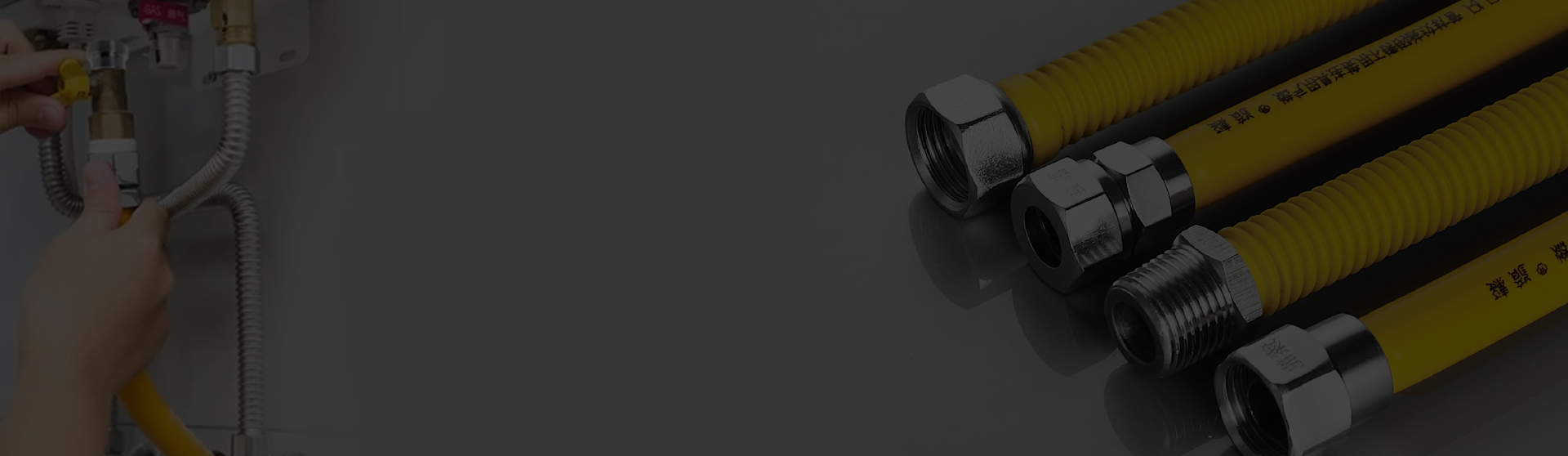

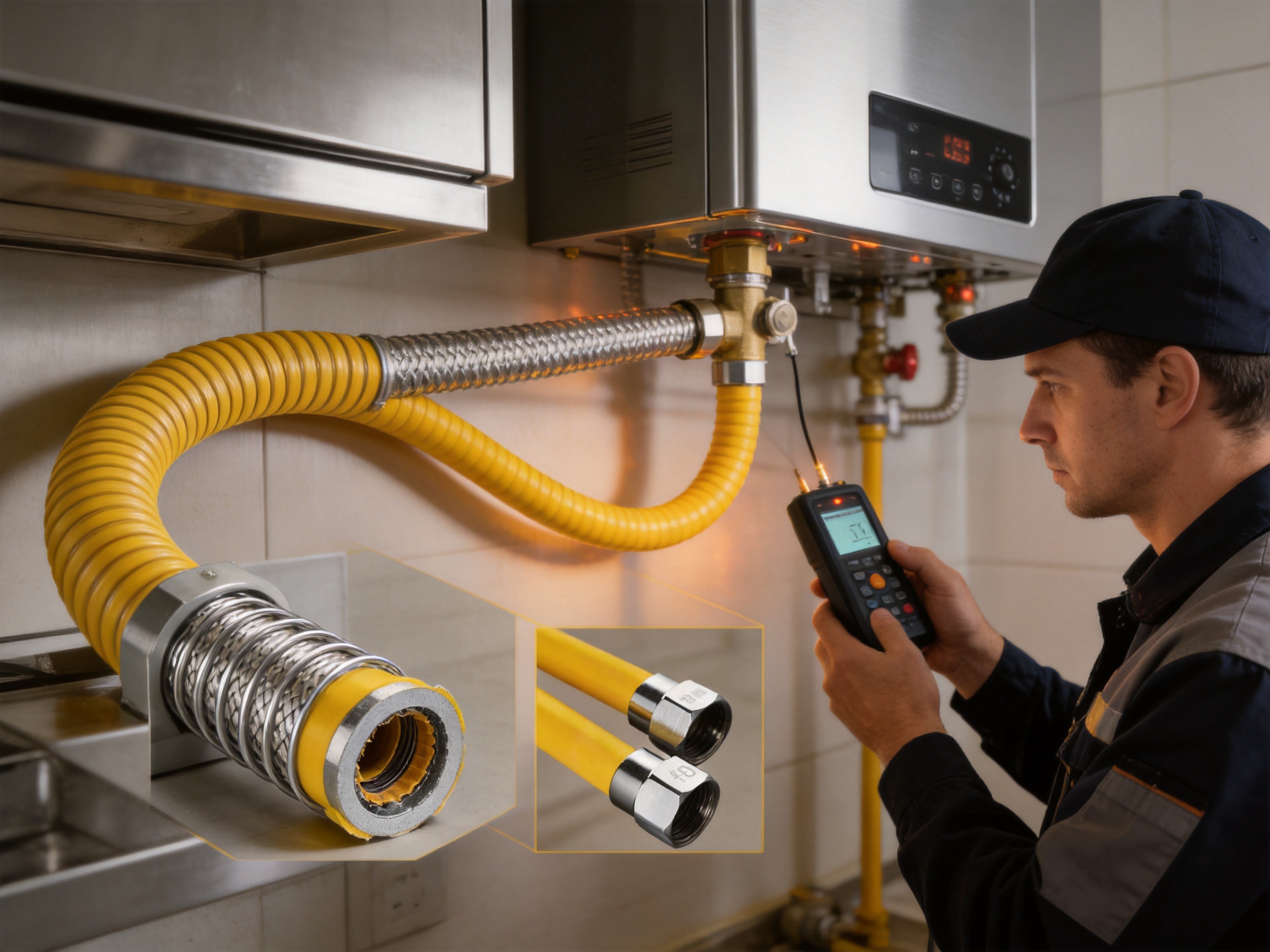
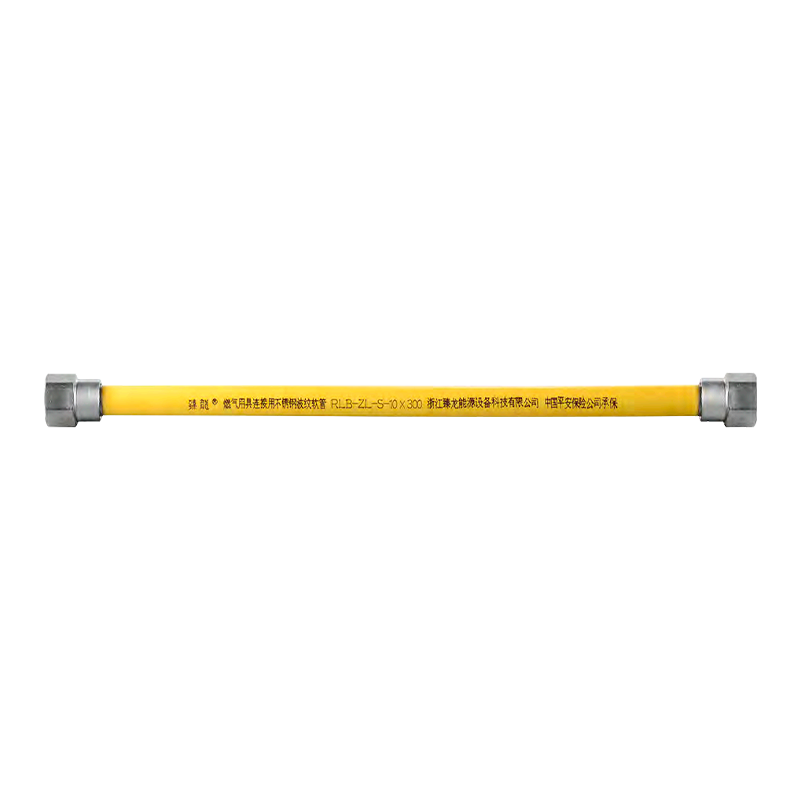
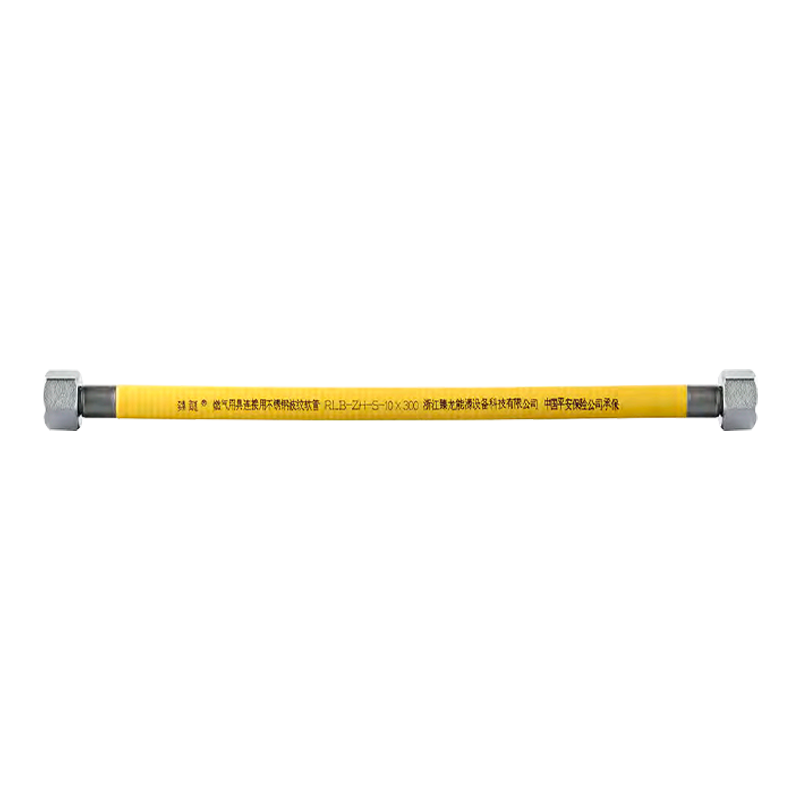
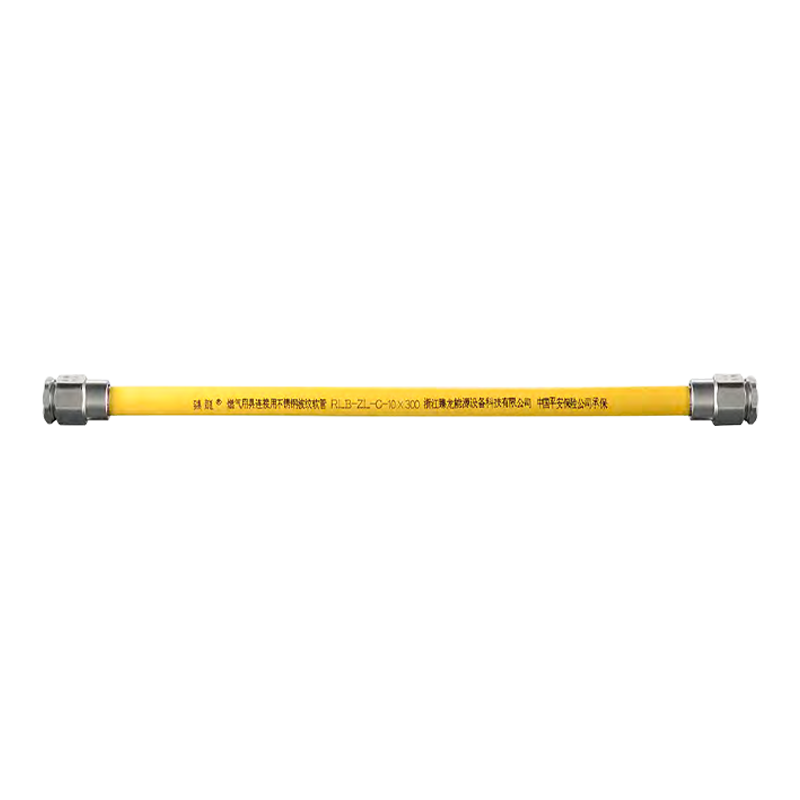
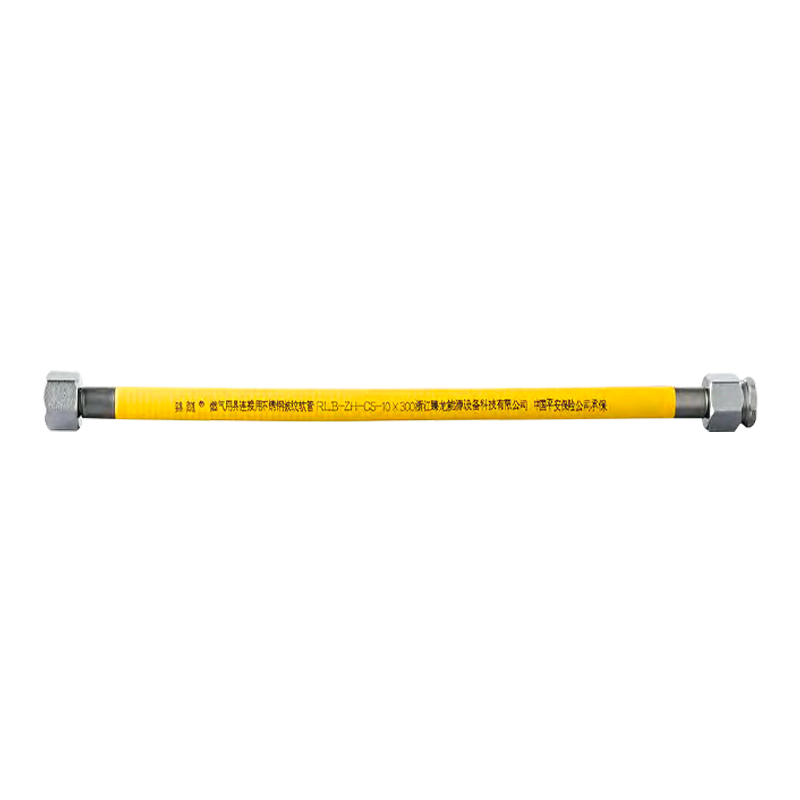
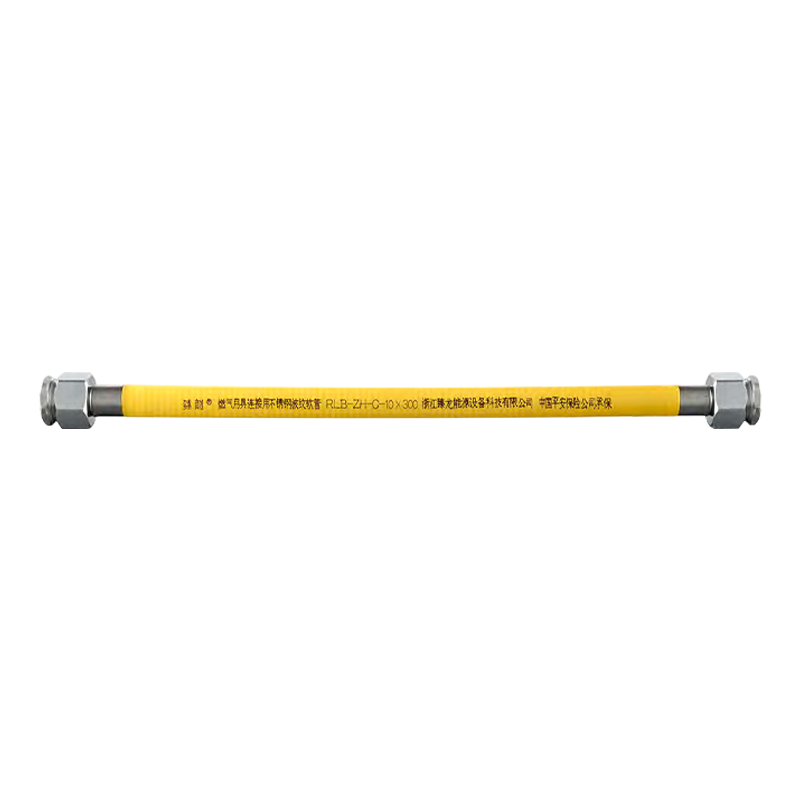
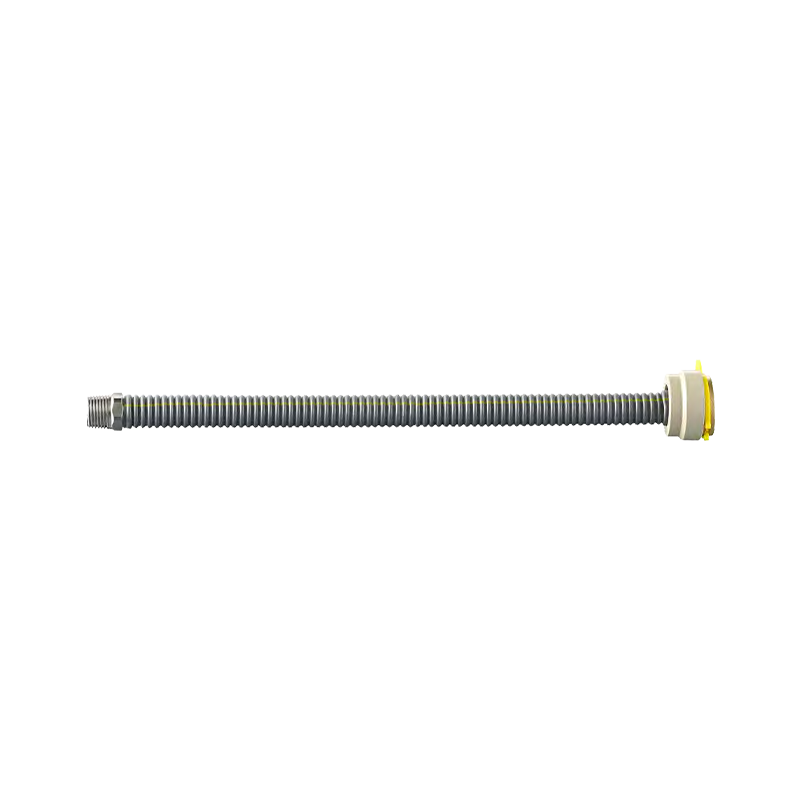
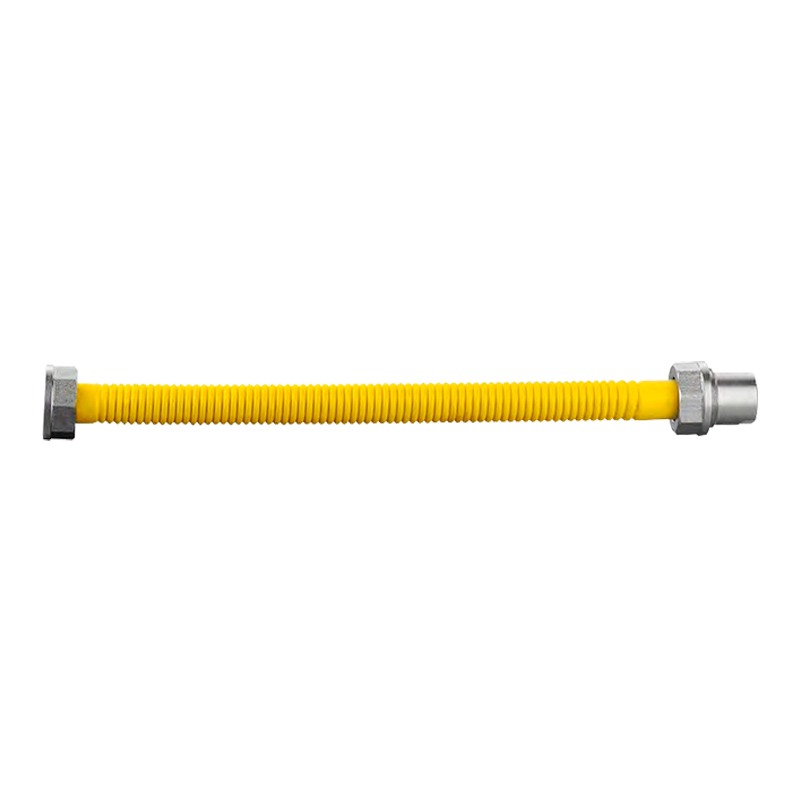
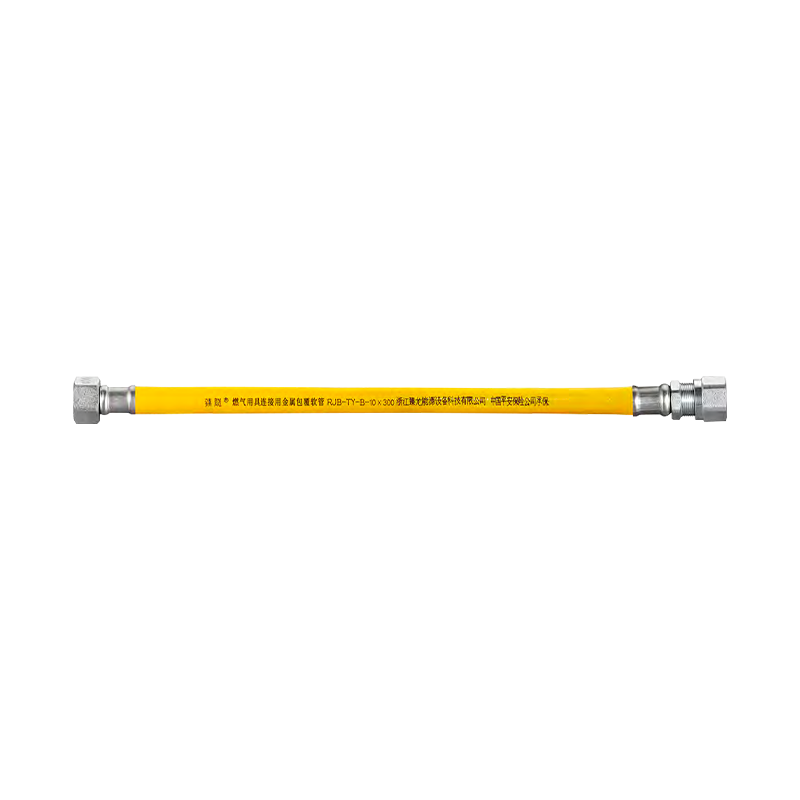
Gas connection systems require more than a flexible tube. They must accommodate movement, resist pressure, maintain a dependable seal, withstand temperature and environmental exposure, and remain stable throughout years of service. The Stainless Steel Corrugated Gas Hose with Strong Pressure Resistance ZLR-04 is designed to meet these requirements through a carefully integrated, multi-layer construction. Its combination of a 304 stainless steel bellows, stainless steel wire mesh, PVC outer cover, welded joints, and flat gaskets creates a flexible yet highly protected connection for gas appliances and related pipeline systems.
Unlike a basic rubber hose or an unreinforced flexible tube, the ZLR-04 is engineered as a complete connection assembly. Each layer performs a specific function. The corrugated stainless steel body supplies flexibility and structural strength. The woven stainless steel reinforcement improves pressure resistance and anti-burst performance. The PVC cover helps protect the assembly from external abrasion and common environmental influences. Precision-welded joints provide a durable transition between the bellows, flanges, and pipeline components, while flat gaskets support leak-resistant sealing at the connection points.
This integrated approach is particularly important in gas applications. A gas hose may be exposed to vibration from appliances, repeated movement during installation or maintenance, changes in temperature, accidental contact, and internal pressure. A reliable product must therefore balance flexibility with mechanical protection. The ZLR-04 addresses this balance while offering configurable lengths from 300 mm to 2000 mm for practical appliance connection and installation requirements.
Content
- 1 1. The Role of a Flexible Gas Connection
- 2 2. Product Construction and Layered Protection
- 3 3. Main Product Specification
- 4 4. Pressure Resistance and Anti-Burst Performance
- 5 5. Flexibility Without Sacrificing Structural Integrity
- 6 6. Sealing Reliability at Critical Interfaces
- 7 7. Advantages Compared with Common Alternative Hose Designs
- 8 8. Manufacturing Capabilities Behind the Product
- 9 9. Application Areas
- 10 10. Installation Guidance and Best Practices
- 11 11. Maintenance, Inspection, and Replacement
- 12 12. Procurement Considerations for Distributors and OEM Customers
- 13 13. Sustainability and Product Life Considerations
- 14 14. Why Manufacturing Strength Matters in Safety-Critical Hoses
- 15 15. Frequently Asked Questions
- 15.1 15.1 What is the ZLR-04 used for?
- 15.2 15.2 What materials are used in the hose?
- 15.3 15.3 How does the wire mesh improve performance?
- 15.4 15.4 Is the hose completely rigid because it contains stainless steel?
- 15.5 15.5 What lengths are available?
- 15.6 15.6 What is the nominal size of the listed model?
- 15.7 15.7 Why are welded joints important?
- 15.8 15.8 What is the purpose of the flat gasket?
- 15.9 15.9 Can the hose be installed next to a burner?
- 15.10 15.10 Can a damaged hose be repaired?
- 15.11 15.11 What testing capabilities does the manufacturer have?
- 15.12 15.12 Does the manufacturer support customized products?
- 15.13 15.13 Is the ZLR-04 suitable for every gas system?
- 15.14 15.14 How should the hose be inspected?
- 16 16. Conclusion
- 17 References
- 18 Product: Stainless steel corrugated gas hose with strong pressure resistance ZLR-04
1. The Role of a Flexible Gas Connection
Rigid piping is valuable for permanent gas distribution, but it is not always suitable for the final connection to an appliance. Cooking equipment, heating units, water heaters, commercial appliances, and other gas-powered devices may need to be moved, serviced, aligned, or isolated from vibration. A completely rigid connection can transfer stress to the appliance inlet, fitting, or building pipeline. It can also make installation more difficult when the final positions of the equipment and pipe outlet are not perfectly aligned.
A flexible gas hose creates a controlled transition between the fixed pipeline and the appliance. It allows limited movement without requiring the rigid pipe to absorb every displacement. When properly selected and installed, the hose can reduce installation stress, simplify alignment, and support maintenance access. However, flexibility alone is not enough. The hose must retain its shape, protect the internal passage, and maintain a secure seal under operating conditions.
The ZLR-04 is intended for connecting gas appliances and is categorized as a stainless steel corrugated tube for appliance connection. Its corrugated form allows the hose to bend within a suitable installation radius while preserving a continuous metallic passage. The reinforced structure is designed to provide a greater safety margin than a simple, single-layer flexible tube.
2. Product Construction and Layered Protection
The most important feature of the ZLR-04 is its multi-layer structure. The product is not dependent on one material to deliver every performance characteristic. Instead, the materials are arranged so that each component contributes to the overall function of the assembly.
2.1 304 Stainless Steel Bellows
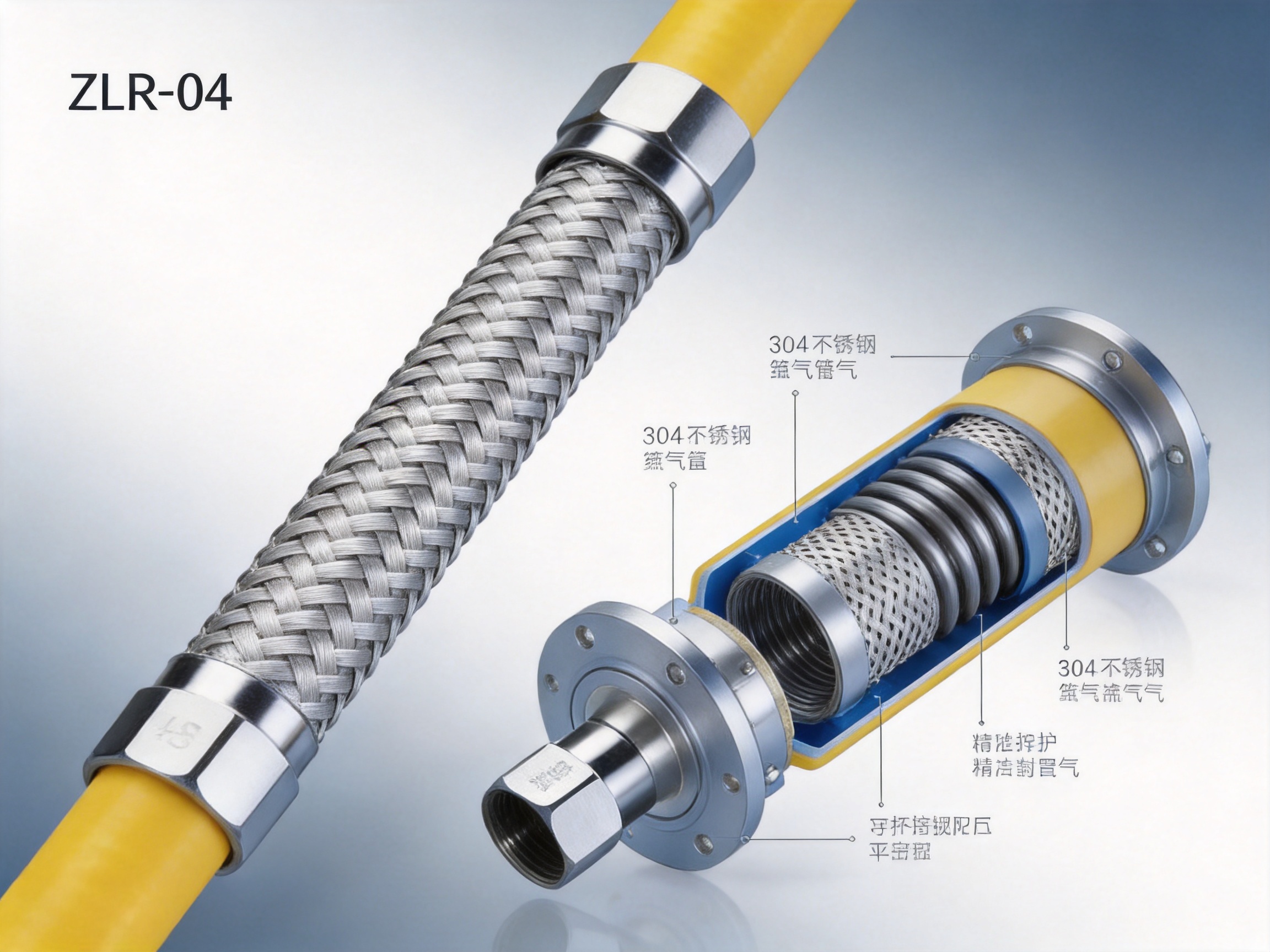
At the core of the hose is a 304 stainless steel corrugated bellows. Stainless steel is widely used in demanding piping applications because it combines corrosion resistance, strength, cleanability, and dimensional stability. The corrugated geometry increases flexibility compared with a straight-wall metal tube. It allows the hose to accommodate bending and limited movement while maintaining a defined flow passage.
The use of 304 stainless steel also gives the bellows a durable metallic foundation. It is less vulnerable to ordinary moisture and many common atmospheric conditions than untreated carbon steel. This is especially useful in kitchens, utility rooms, plant areas, service spaces, and other locations where humidity, cleaning agents, or incidental splashing may occur.
The bellows must be flexible without becoming unstable. Excessive deformation can shorten service life, while insufficient flexibility can make installation difficult. The ZLR-04 corrugated body is designed to provide a practical balance between these two requirements. Its form supports controlled bending rather than relying on the stretching of a soft polymer wall.
2.2 Stainless Steel Wire Mesh
A tightly woven stainless steel wire layer is positioned between the PVC outer cover and the corrugated stainless steel hose. This reinforcement is a central advantage of the ZLR-04 design. The wire mesh helps distribute mechanical loads around the hose and contributes to pressure resistance and anti-burst performance.
When internal pressure acts on a flexible hose, the wall may experience radial expansion and longitudinal loading. A woven metal reinforcement layer helps restrain this expansion. It also provides additional resistance to external compression, pulling forces, and accidental contact. In a common single-layer flexible tube, the working wall may have to handle pressure, movement, and impact protection by itself. In the ZLR-04, those duties are shared across a coordinated metallic structure.
The mesh also supports the hose during handling and installation. Although the product should never be pulled, twisted excessively, or used outside its intended application, reinforcement can help reduce the consequences of ordinary installation stresses. It is an important distinction between a reinforced engineered hose and a basic flexible connector.
2.3 PVC Outer Cover
The outer PVC cover provides a protective barrier around the metal reinforcement and bellows. It helps shield the underlying components from abrasion, incidental contact, dust, and other external influences. A covered hose is often easier to handle because the outer layer creates a smoother surface and reduces direct exposure of the metal braid.
The PVC cover can also help organize the external structure of the hose. In an installation environment, the hose may pass near cabinet edges, appliance panels, supports, or other components. The cover offers an additional level of protection against minor rubbing. It should not be treated as permission to install the hose against sharp edges or to expose it to unsuitable temperatures and chemicals, but it provides valuable everyday protection when the product is installed correctly.
By combining a polymer outer layer with a stainless steel internal structure, the ZLR-04 benefits from the complementary characteristics of both materials. Stainless steel supplies strength and durability, while PVC contributes surface protection and handling convenience.
2.4 Welded Joints
The hose assembly includes welded joints that connect the corrugated hose with flanges and other pipeline systems. The joint is one of the most critical areas in any flexible connection because it links the moving hose body to the fixed installation. A weak or poorly formed transition can compromise the entire assembly even when the hose wall itself is strong.
Precision welding creates a permanent metallic connection between compatible components. It can provide a cleaner and more stable transition than a connection that depends only on mechanical clamping. Proper welding also supports dimensional consistency, which is important when the hose must align with a flange, threaded connection, or appliance inlet.
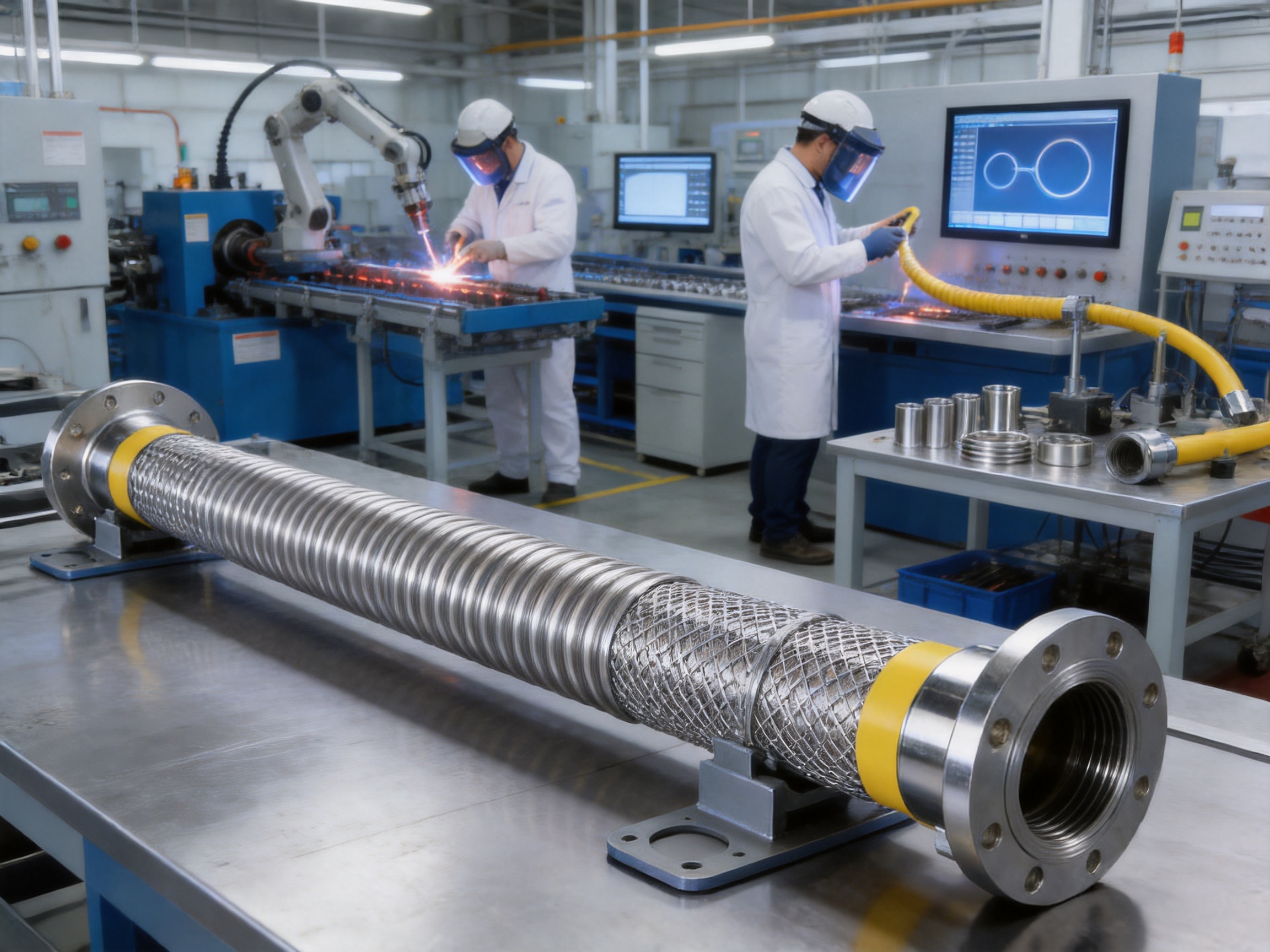
Welded interfaces require controlled preparation, suitable equipment, trained operators, and inspection. The manufacturing capabilities of Zhejiang Zhenlong Energy Equipment Technology Co., Ltd. include extensive welding and forming resources, helping the company produce metal hose assemblies with repeatable construction. The company operates 30 welding and forming production lines, supporting both production capacity and process specialization.
2.5 Flat Gaskets
Flat gaskets are employed at flange and welded interfaces to reinforce sealing. Even a precisely manufactured metal joint requires a suitable sealing element when two faces are brought together. The gasket fills small surface irregularities and helps maintain a continuous barrier against gas leakage when the connection is correctly assembled and tightened.
The inclusion of flat gaskets as part of the product configuration improves installation convenience and reduces the risk of using an unsuitable sealing component. It also reflects a complete-system approach: the hose is supplied not only as a flexible tube but as a connection assembly designed to work with its associated interfaces.
Gaskets must be selected and installed according to the applicable gas service, connection design, temperature range, and installation instructions. They should not be reused if the relevant standard or manufacturer guidance requires replacement. Correct alignment and tightening are equally important because over-tightening can damage a gasket or deform a connection, while under-tightening can result in leakage.
3. Main Product Specification
The following table summarizes the available product information for the ZLR-04 model.
| Item | Specification | Details |
|---|---|---|
| Model | ZLR-04 | Stainless steel corrugated gas hose with strong pressure resistance |
| Product code | RLB-ZH-S-10X1000 | Configuration identified for the listed model |
| Nominal size | DN10 | Nominal connection size |
| Outside diameter | 16 mm | Listed overall outside diameter |
| Connection | Gl/2 Rayon | Connection description supplied for the product |
| Core material | 304 stainless steel bellows | Corrugated metallic hose body |
| Reinforcement | Stainless steel wire mesh | Supports pressure resistance and anti-burst performance |
| External protection | PVC cover | Protective outer layer |
| Sealing components | Flat gasket | Used at applicable flange and welded interfaces |
| Joint construction | Welded joints | Connects the hose with flanges and pipeline systems |
| Available length | 300 mm to 2000 mm | Length range for different installation conditions |
The specification indicates a compact DN10 product with an outside diameter of 16 mm and a broad length range. The available lengths help installers select a hose that reaches the appliance without unnecessary loops, sharp bends, or excessive tension. The correct length should always be determined by the actual installation path and the requirements of the relevant gas system.
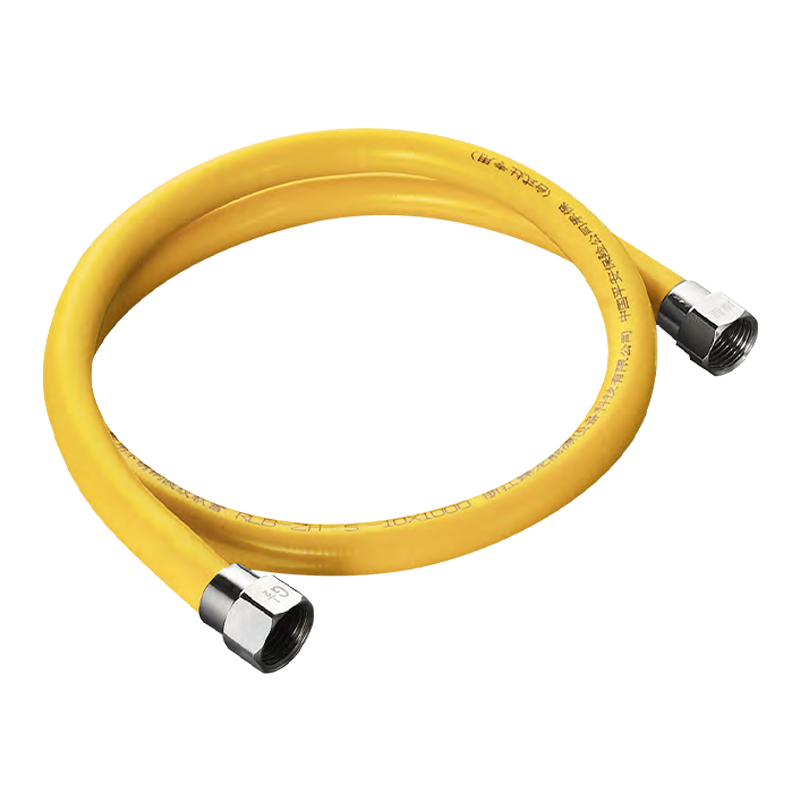
Stainless steel corrugated gas hose with strong pressure resistance ZLR-04
4. Pressure Resistance and Anti-Burst Performance
Pressure resistance is a major consideration in gas hose selection. The hose must contain internal pressure while maintaining its mechanical integrity during normal operation and foreseeable installation conditions. A pressure-resistant design also needs to tolerate pressure variations without excessive expansion, fatigue, or damage to the connection points.
The ZLR-04 improves pressure performance through the interaction of its stainless steel bellows and wire mesh. The bellows provides the primary metallic flow passage, while the woven reinforcement helps restrain expansion and distribute loads. This layered construction is more robust than relying on a flexible polymer wall without metallic reinforcement.
The term anti-burst performance refers to the product’s enhanced ability to resist sudden structural failure under pressure compared with a less reinforced design. It does not mean that the hose is immune to misuse, overpressure, sharp impact, fire, chemical attack, or improper installation. The operating pressure, temperature, gas type, connection method, and applicable certification requirements must always be verified before use.
In practical terms, the wire mesh helps the hose retain a stable shape when pressure is applied. It can reduce the tendency of the inner structure to expand and provides another load-bearing layer if the hose is exposed to mechanical stress. This is especially valuable in locations where the hose may be close to equipment that vibrates or where service personnel may handle the connection during maintenance.
A pressure-resistant gas hose should be selected as part of the entire installation. The pipework, valves, regulators, appliance inlet, fittings, and sealing elements must all be rated appropriately. The strongest hose cannot compensate for a weak valve, damaged thread, incompatible gasket, or incorrectly assembled connection.
5. Flexibility Without Sacrificing Structural Integrity
Flexibility is one of the primary reasons to use a corrugated hose. A flexible connection can help resolve minor differences in alignment between a fixed gas outlet and an appliance inlet. It can also facilitate equipment replacement and provide access for inspection or cleaning. However, a flexible hose should bend in a controlled manner rather than being forced into tight curves.
The ZLR-04 corrugated body is designed to accommodate practical movement while retaining a metallic structure. Corrugations allow the hose to flex along its length, while the stainless steel wire mesh helps support the body during bending. The PVC cover protects the exterior as the hose is handled and positioned.
This balance offers an advantage over rigid metal pipe in the final appliance connection. Rigid pipe may require more precise measurements, additional elbows, or more installation time. It can also transmit movement directly into fittings. Conversely, an unreinforced soft hose may be easier to bend but may offer less protection against pressure and mechanical damage. The ZLR-04 combines flexible installation with a reinforced metal construction.
Flexibility should not be confused with unlimited mobility. The hose should not be used as a lever, lifting strap, support bracket, or permanent substitute for properly supported piping. It should not be twisted to compensate for incorrect alignment. The best installation uses the shortest practical route that allows natural bending without tension, kinking, compression, or repeated flexing at one point.
6. Sealing Reliability at Critical Interfaces
Most gas connection failures occur at interfaces rather than in the uninterrupted middle section of a properly manufactured hose. This makes the design of welded joints, flanges, gaskets, and threaded connections especially important. The ZLR-04 addresses these areas through precision-welded joints and supplied flat gaskets.
A welded joint creates a stable transition from the bellows to the end connection. Because the connection is formed as part of the assembly, it does not depend on an installer clamping the hose body onto a fitting. This can improve consistency and reduce the number of variables during installation.
Flat gaskets support sealing between mating faces. They must be clean, correctly positioned, and compatible with the service. A gasket that is cut, contaminated, misaligned, or reused contrary to instructions may compromise the seal. Likewise, the mating surfaces should be free of burrs, heavy corrosion, and foreign material.
After installation, the connection should be inspected and tested using an approved leak-detection method. Open flames must never be used to search for gas leaks. Testing should be performed by qualified personnel in accordance with local regulations and the requirements of the gas system. A visual inspection should also confirm that the hose is not kinked, sharply bent, rubbing against a damaging edge, or exposed to prohibited heat sources.
7. Advantages Compared with Common Alternative Hose Designs
The ZLR-04 offers several design advantages when compared with common alternatives, although final product selection must always be based on the application and local requirements.
7.1 Compared with Basic Polymer Hoses
Basic polymer hoses can be lightweight and economical, but their performance depends heavily on the material formulation, wall thickness, reinforcement, aging resistance, and environmental conditions. Some may be more vulnerable to abrasion, cuts, heat, or long-term deterioration. A polymer hose without a metallic reinforcement layer may also have less resistance to expansion under pressure.
The ZLR-04 uses a 304 stainless steel bellows and stainless steel wire mesh as its primary structural elements. This gives it a more robust mechanical foundation. The PVC cover still provides the handling advantages of an outer polymer layer, but the main pressure-containing structure is metallic and corrugated.
7.2 Compared with Unreinforced Corrugated Tubes
An unreinforced corrugated metal tube can provide flexibility, but it may have less resistance to external loading and pressure-related expansion than a design with an added wire mesh. The ZLR-04 places the woven stainless steel reinforcement outside the corrugated hose and beneath the PVC cover. This additional layer strengthens the assembly while preserving the flexibility expected from a corrugated body.
7.3 Compared with Rigid Pipe Connections
Rigid pipe offers strong dimensional stability, but it requires accurate fabrication and careful alignment. Changes to the appliance position may involve cutting, threading, welding, or installing additional fittings. A flexible connector such as the ZLR-04 can simplify the final connection, reduce alignment difficulties, and make appliance servicing more practical.
The hose should not replace the rigid distribution network where rigid piping is required. Instead, it complements the permanent piping by providing a controlled flexible link at the appliance connection.
7.4 Compared with Low-Quality Flexible Assemblies
Low-quality assemblies may use inconsistent materials, weak end connections, poorly formed corrugations, or inadequate sealing components. Even when two products look similar, manufacturing control can create a significant difference in reliability. The ZLR-04 benefits from a company infrastructure that includes dedicated welding and forming lines, material analysis equipment, flow tightness testing, and an established quality management system.
The product’s advantage is therefore not limited to its visible layers. It also depends on how the bellows are formed, how the wire mesh is applied, how the joints are welded, how the gaskets are selected, and how the finished assembly is inspected.
8. Manufacturing Capabilities Behind the Product
Zhejiang Zhenlong Energy Equipment Technology Co., Ltd. is engaged in the research, development, manufacturing, and processing of energy equipment. Its product scope includes metal hoses, natural gas pipelines, plumbing fittings, sanitary ware, valves, plastic products, and hardware. This broad industrial background supports an understanding of both flexible hose production and the wider pipeline systems in which these products are used.
The company operates in Yuyao, Ningbo, Zhejiang, and has a facility covering approximately 40 acres with a factory building of about 30,000 square meters. This scale provides room for production organization, material handling, equipment deployment, quality control, and product development. It also supports the company’s ability to integrate industry and trade rather than functioning only as a small assembly operation.
Thirty welding and forming production lines are used for metal hose and related product manufacturing. Welding and forming are essential processes for the ZLR-04. Forming determines the geometry and consistency of the corrugated bellows, while welding creates the permanent connection between the hose body and the end components. Dedicated production lines can help separate processes, improve workflow, and support consistent output across different product specifications.
8.1 Material Analysis
Material identification and verification are important for stainless steel hose production. The company has metal material analysis equipment, including direct-reading spectrometers. Such equipment can support the verification of alloy composition and help ensure that incoming metal materials correspond to the required grade.
For a product specified with a 304 stainless steel bellows, material control is particularly relevant. The properties of stainless steel depend on its chemical composition, processing history, thickness, and forming conditions. Confirming the material grade helps establish a reliable foundation for corrosion resistance, strength, and manufacturing consistency.
8.2 Forming and Corrugation
The bellows-forming process must create uniform corrugations without introducing excessive damage, thinning, cracks, or undesirable residual stress. Consistent geometry supports predictable flexibility and helps the hose maintain a stable flow passage.
Production equipment and operator experience both influence the final result. The corrugation pitch, depth, wall condition, and overall length must be controlled according to the product design. Forming is not simply a cosmetic process; it directly affects the hose’s movement capability and mechanical behavior.
8.3 Welding and Joint Assembly
Welding must produce a sound connection between the bellows and the end fittings. The joint area should be properly prepared, aligned, and processed using suitable parameters. Inconsistent welding can result in incomplete fusion, excessive heat effects, distortion, or leakage paths. A structured production system helps control these factors through standardized procedures and inspection.
The company’s welding and forming lines indicate a manufacturing base capable of supporting repeated production of metal hose assemblies. For customers requiring consistent supply, this capacity can be as important as the design of a single sample.
8.4 Flow Tightness Testing
Flow tightness testers are used among the company’s listed testing equipment. Tightness testing is directly relevant to gas hose production because a gas connection must retain the working medium without leakage. Testing finished assemblies provides a practical verification of the hose, welds, interfaces, and sealing arrangement.
Testing cannot replace correct installation, but it can help identify manufacturing defects before products are shipped. A systematic inspection and testing process is an important strength when supplying safety-related pipeline components.
8.5 Quality Management
The company states that it implements the ISO9000:2008 quality management system. A quality management framework can support documented processes, responsibility assignment, inspection records, corrective actions, and continuous improvement. Although a management system does not automatically guarantee performance in every application, it demonstrates an organized approach to production control.
The company also holds a Special Equipment Manufacturing License for pressure pipelines in the People’s Republic of China and has EU CE certification testing reports. These credentials and reports should be reviewed against the exact product, market, application, and current regulatory requirements. Nevertheless, they indicate experience with regulated equipment and product conformity processes.
9. Application Areas
The ZLR-04 is intended for connecting gas appliances. Its compact DN10 specification and available length range make it suitable for many final-connection situations where a fixed gas outlet must be connected to an appliance inlet. Potential application environments include residential kitchens, utility areas, commercial cooking installations, heating equipment rooms, service compartments, and industrial or institutional appliance settings, provided the gas type, pressure, temperature, and regulatory requirements are compatible.
9.1 Residential Appliances
In residential environments, the hose may be used to connect a gas appliance to a prepared pipeline outlet. The flexible body can help accommodate cabinet dimensions and minor position differences. The protective cover is useful in areas where the hose may be exposed to ordinary contact during cleaning or appliance servicing.
Residential users should not install or modify gas connections without appropriate competence. Local laws may require work to be performed or inspected by a licensed gas professional. Appliance manufacturers may also specify particular hose types, connection sizes, lengths, and replacement intervals.
9.2 Commercial and Institutional Kitchens
Commercial kitchens and institutional food-service areas often contain multiple gas appliances, frequent cleaning activities, and regular maintenance. A reinforced flexible connection can simplify equipment arrangement and reduce installation time when appliances are positioned close to prepared outlets.
However, commercial applications may involve higher usage intensity, elevated ambient temperatures, grease exposure, chemical cleaning products, and frequent movement. The hose must be selected according to the actual environment. It should be routed away from burners, hot exhaust surfaces, sharp cabinet edges, and areas where carts or equipment could strike it.
9.3 Industrial and Utility Equipment
Industrial gas appliances and utility equipment may generate vibration or require periodic access. The corrugated hose can provide a flexible connection that helps isolate limited movement between the appliance and fixed piping. The stainless steel reinforcement contributes additional mechanical protection in demanding service spaces.
Industrial users should conduct a complete engineering review before installation. Gas composition, operating pressure, temperature, vibration frequency, chemical exposure, movement amplitude, and maintenance practices all influence the appropriate hose specification.
10. Installation Guidance and Best Practices
Correct installation is essential to achieving the intended benefits of the ZLR-04. The following principles provide general guidance, but they do not replace the product’s technical instructions, appliance requirements, or local gas regulations.
10.1 Confirm Compatibility Before Installation
Verify the gas type, operating pressure, connection size, temperature range, required length, and applicable standards. Confirm that the appliance inlet and fixed pipeline outlet are compatible with the hose’s connection arrangement. Do not assume that a physically similar fitting is suitable for gas service.
10.2 Choose the Correct Length
Select a length that reaches between the fixed outlet and appliance inlet without stretching or forcing the hose. A hose that is too short may be under tension, while one that is excessively long may form unnecessary loops and create opportunities for abrasion or kinking. The listed 300 mm to 2000 mm range provides flexibility in product selection, but the shortest practical length is generally preferable.
10.3 Avoid Sharp Bends and Kinks
The hose should follow a smooth curve. Sharp bends can concentrate stress in the corrugations and may reduce the available flow area. Kinking can damage the bellows, deform the reinforcement, and compromise long-term performance. The hose should never be bent beyond the manufacturer’s permitted minimum radius.
10.4 Prevent Twisting
Twisting during tightening can place torsional stress on the hose and welded joints. Align the connections before tightening and use appropriate tools on the designated fitting surfaces. The hose body should not be used to transmit tightening torque.
10.5 Protect Against Heat and Abrasion
Keep the hose away from direct flames, hot appliance surfaces, flue outlets, sharp edges, moving mechanisms, and locations where it may be crushed. The PVC cover is a protective layer, not a substitute for correct routing. If a support or guard is needed, it should be designed so that it does not clamp, cut, or sharply bend the hose.
10.6 Inspect and Test the Assembly
After installation, inspect the entire route and each connection. Confirm that gaskets are correctly positioned and that the fittings are tightened according to the relevant instructions. Conduct an approved leak test before placing the appliance into service. Repeat inspection after maintenance, relocation, or any event that may have affected the hose.
11. Maintenance, Inspection, and Replacement
A gas hose should be treated as a safety-related component and inspected periodically. The inspection interval depends on the environment, operating intensity, local requirements, and appliance manufacturer’s instructions.
Look for visible damage to the PVC cover, exposed or distorted wire mesh, deep scratches, crushing, kinks, corrosion, unusual discoloration, or contact with a hot surface. Check whether the hose has become taut because the appliance moved. Inspect the connections for signs of leakage, looseness, corrosion, or gasket deterioration.
A hose should be replaced if it has been damaged, exposed to fire, subjected to severe impact, or removed from service when the connection components cannot be reliably restored. Reuse of a gasket should follow the applicable instructions; many sealing elements are intended for one-time use.
Do not attempt to repair a damaged gas hose by taping, clamping, welding in the field, or applying an unapproved sealant. A flexible gas assembly is manufactured and tested as a complete product. Improvised repairs can create hidden failure points and may invalidate product approvals.
12. Procurement Considerations for Distributors and OEM Customers
For distributors, appliance manufacturers, project contractors, and OEM customers, product selection involves more than unit price. Important factors include material traceability, consistent dimensions, connection options, available lengths, production capacity, quality documentation, testing procedures, packaging, and after-sales support.
The ZLR-04 provides a defined model, DN10 nominal size, 16 mm listed outside diameter, and length options from 300 mm to 2000 mm. This makes it easier for purchasers to match the product to appliance programs and installation packages. The layered design also gives sales teams a clear technical value proposition: metallic corrugated flexibility, stainless steel wire reinforcement, PVC protection, welded joints, and flat gasket sealing.
OEM customers may require changes to length, end connection, marking, packaging, or assembly configuration. Customization should be confirmed through technical drawings and a formal specification review. Any change to material, welding method, gasket type, pressure rating, or connection geometry should be validated before mass production.
The manufacturer’s integrated capabilities can support communication across design, production, testing, and delivery. A company that manufactures metal hoses, pipeline products, valves, and fittings may also understand how the hose interacts with adjacent components. This broader product knowledge can be useful when developing a complete appliance connection package.
13. Sustainability and Product Life Considerations
Durable products can contribute to more responsible resource use by reducing premature replacement. The ZLR-04 uses a stainless steel structural core that is designed for long-term mechanical service when properly installed and maintained. The PVC cover and wire mesh protect the assembly during everyday use, while the welded construction avoids reliance on disposable clamps at the hose body.
Long service life depends on operating conditions. A hose exposed to excessive heat, incompatible chemicals, repeated over-bending, or mechanical damage may require early replacement regardless of its original construction. Proper specification and maintenance are therefore essential to achieving the product’s expected value.
At the end of service, disposal should follow local requirements for stainless steel, PVC, gaskets, and contaminated gas-service components. Before disposal, the hose must be isolated, depressurized, and handled safely by qualified personnel.
14. Why Manufacturing Strength Matters in Safety-Critical Hoses
Product design establishes the intended performance, but manufacturing determines whether that design is reproduced consistently. Small variations in wall condition, corrugation geometry, weld quality, braid placement, gasket fit, or final testing can affect the reliability of a gas hose.
The production resources described by Zhejiang Zhenlong Energy Equipment Technology Co., Ltd. address several of these variables. Welding and forming lines support controlled fabrication. Material analysis equipment supports alloy verification. Flow tightness testers support finished-product inspection. Quality management procedures support documentation and process discipline. The company’s R&D, design, and production teams provide additional support for product development and customization.
This combination is a meaningful advantage over suppliers that only assemble generic components without strong control over the manufacturing chain. It can help customers obtain more consistent products, clearer technical communication, and better support when a project requires a particular size or connection configuration.
The company’s membership in the China Urban Gas Association and its experience with pressure pipeline manufacturing further connect its product development work with the requirements of gas distribution and appliance connection markets. Customers should still verify the precise certificates, test reports, and regulatory approvals applicable to their destination country and installation type.
15. Frequently Asked Questions
15.1 What is the ZLR-04 used for?
The ZLR-04 is a stainless steel corrugated gas hose designed for connecting gas appliances with gas pipeline systems. It provides a flexible link between a fixed outlet and an appliance inlet when the connection is compatible with the applicable gas service requirements.
15.2 What materials are used in the hose?
The product includes a 304 stainless steel corrugated bellows, stainless steel wire mesh reinforcement, a PVC outer cover, welded joints, and flat gaskets. Each material or component performs a different function in the complete assembly.
15.3 How does the wire mesh improve performance?
The tightly woven stainless steel wire mesh helps restrain expansion, distribute mechanical loads, and improve pressure resistance and anti-burst performance. It also adds protection against certain external stresses. It does not make the hose immune to overpressure, misuse, or unsuitable installation.
15.4 Is the hose completely rigid because it contains stainless steel?
No. The corrugated bellows is specifically designed to provide flexibility. The stainless steel construction gives the hose structural strength while the corrugations allow controlled bending. The hose should still be routed with smooth curves and should not be kinked or twisted.
15.5 What lengths are available?
The listed length range is 300 mm to 2000 mm. The appropriate length depends on the distance between the pipeline outlet and appliance inlet, the required bending path, and the installation regulations.
15.6 What is the nominal size of the listed model?
The listed model is DN10, with an outside diameter of 16 mm. Connection compatibility must be confirmed using the complete technical specification, not only the nominal size.
15.7 Why are welded joints important?
Welded joints provide a permanent connection between the corrugated hose and the end components. They help create a stable transition to flanges and other pipeline systems and can improve assembly consistency when manufactured and inspected correctly.
15.8 What is the purpose of the flat gasket?
The flat gasket supports sealing between applicable mating surfaces, including flange or welded interfaces. It must be clean, correctly positioned, compatible with the service, and installed according to the relevant instructions.
15.9 Can the hose be installed next to a burner?
The hose should not be exposed to direct flame or excessive heat. It must be routed according to the appliance manufacturer’s requirements and kept away from hot surfaces, exhaust outlets, and other heat sources that could damage the PVC cover, gasket, or metallic components.
15.10 Can a damaged hose be repaired?
A damaged gas hose should not be repaired with tape, clamps, field welding, or unapproved sealants. It should be isolated and replaced with a suitable approved assembly. Gas-related work should be handled by qualified personnel.
15.11 What testing capabilities does the manufacturer have?
The manufacturer has testing equipment including metal material analysis equipment and flow tightness testers. These capabilities support material verification and leakage-related inspection during the production process.
15.12 Does the manufacturer support customized products?
The company has research, development, design, manufacturing, and processing capabilities and describes itself as serving OEM and ODM requirements. Custom length, connections, packaging, and other changes should be confirmed through technical drawings, specifications, samples, and formal approval procedures.
15.13 Is the ZLR-04 suitable for every gas system?
No product should be assumed to suit every gas system. The gas type, pressure, temperature, connection, installation environment, local standards, appliance requirements, and certification status must be checked before use.
15.14 How should the hose be inspected?
Inspect the PVC cover, wire mesh, corrugations, welded joints, fittings, and gasket interfaces. Look for cuts, crushing, corrosion, kinks, excessive bending, heat damage, looseness, or signs of leakage. Inspection should be performed by qualified personnel whenever there is concern about safety.
16. Conclusion
The Stainless Steel Corrugated Gas Hose with Strong Pressure Resistance ZLR-04 is designed as a reinforced, multi-layer connection for gas appliances. Its 304 stainless steel bellows provides a durable and flexible metallic passage. The stainless steel wire mesh improves pressure resistance and anti-burst performance. The PVC outer cover contributes external protection and easier handling. Precision-welded joints support stable connection to flanges and pipeline systems, while flat gaskets reinforce sealing at the interfaces.
Compared with basic polymer hoses, unreinforced corrugated tubes, and rigid final connections, the ZLR-04 offers a balanced combination of flexibility, mechanical strength, protection, and installation convenience. Its advantages are supported by the manufacturer’s production infrastructure, including 30 welding and forming lines, material analysis equipment, flow tightness testers, quality management practices, and experience in energy equipment and pressure pipeline products.
The product should always be selected and installed according to the actual gas service, pressure, temperature, appliance requirements, applicable standards, and local regulations. When these conditions are properly considered, the ZLR-04 can serve as a dependable flexible link between gas appliances and fixed pipeline systems in residential, commercial, industrial, and institutional environments.
References
1. Product specification and construction information for the ZLR-04 stainless steel corrugated gas hose, supplied technical materials.
2. ISO 9000 family, Quality Management Systems—Fundamentals and Vocabulary.
3. General engineering principles for metallic bellows, flexible metal hoses, welded pipe assemblies, and pressure-containing components.
4. General installation and inspection practices for gas appliance connectors and flexible gas piping systems.
5. Stainless steel material guidance for 304 stainless steel in piping, hose, and industrial equipment applications.
6. Manufacturer information concerning welding and forming production lines, metal material analysis, flow tightness testing, quality management, and pressure pipeline manufacturing.
7. General gasket selection and flange sealing practices for gas-service connections.
8. General workplace and residential safety principles for gas appliance installation, leak testing, inspection, maintenance, and replacement.