 English
 中文简体
 Español
 عربى

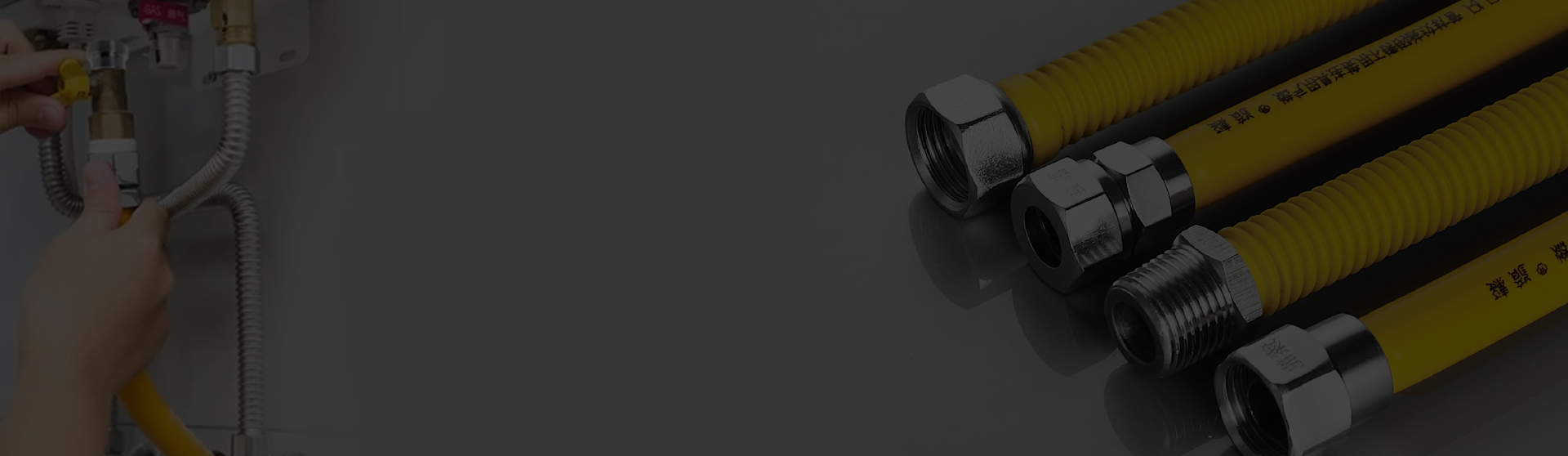

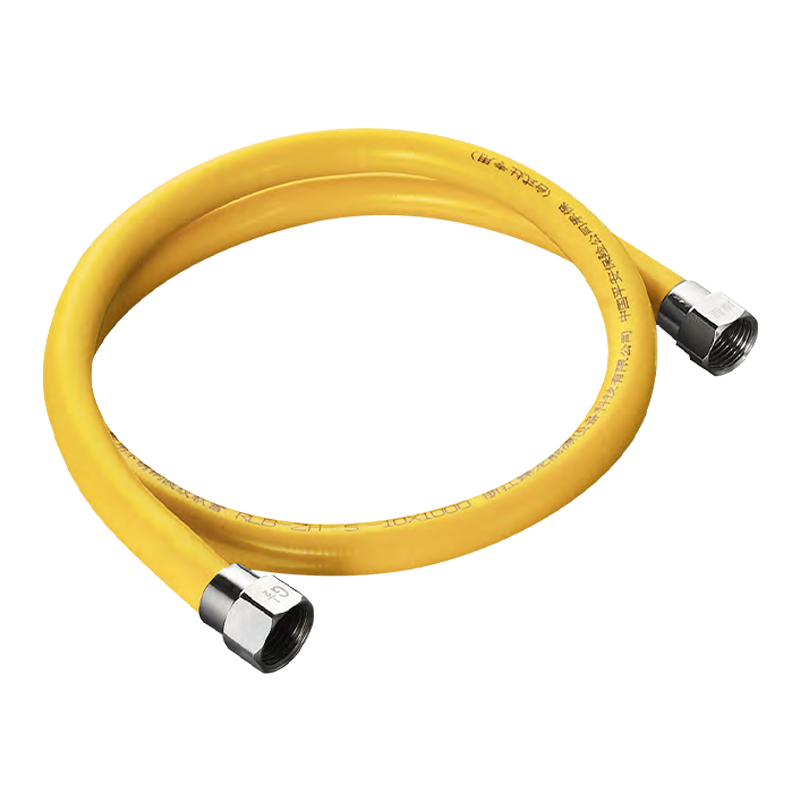
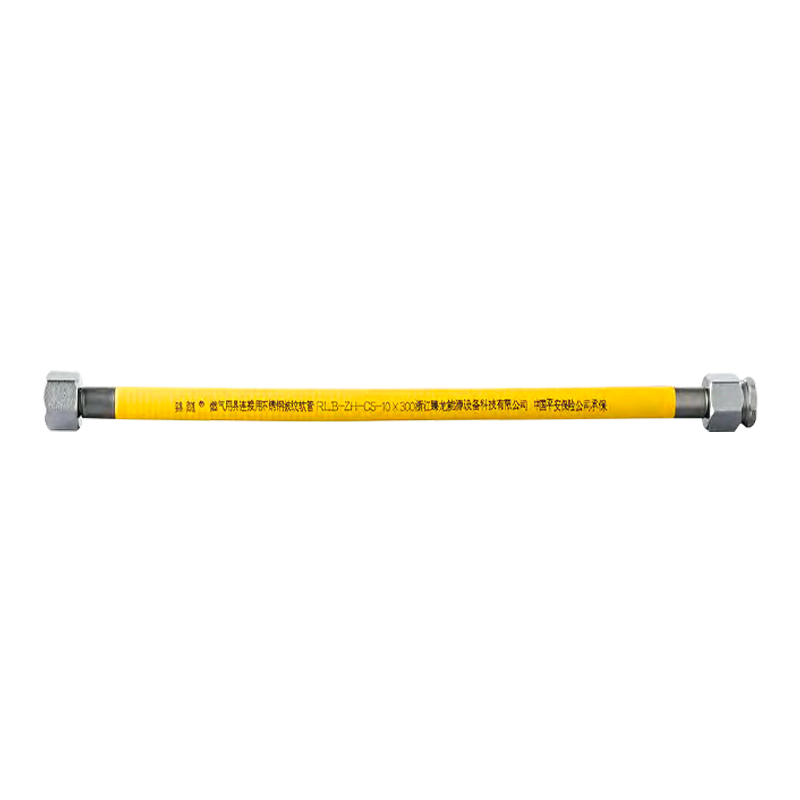
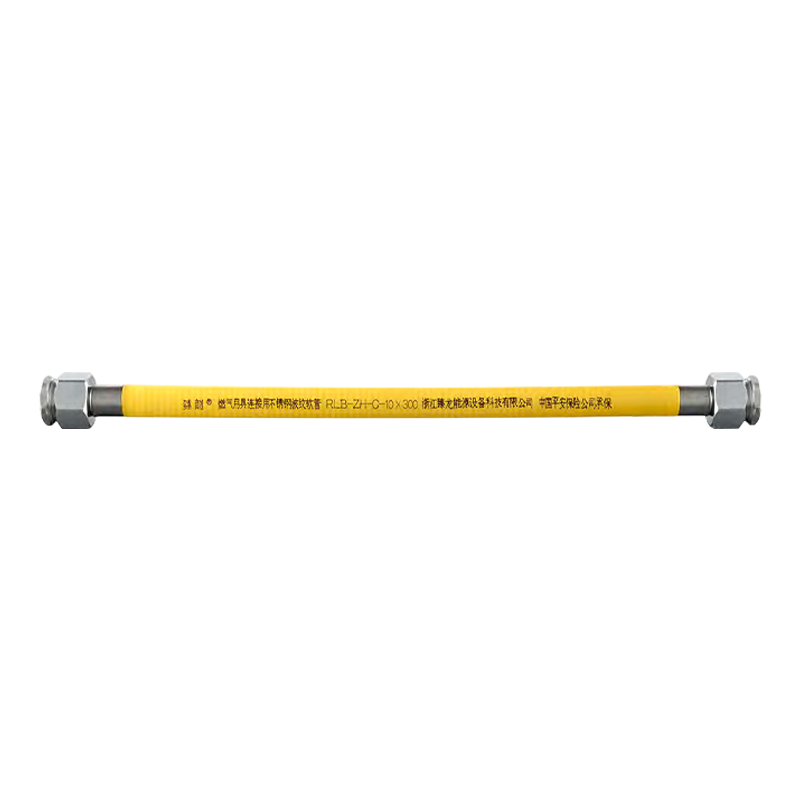
Gas appliance connection systems must combine flexibility, mechanical strength, corrosion resistance, and dependable sealing performance. A hose may be required to pass through a narrow installation space, accommodate movement and vibration, connect components with different orientations, and continue operating safely under demanding environmental conditions. The Metal-Wrapped Stainless Steel Corrugated Gas Hose ZLR-14 is designed to address these requirements through a multi-layer construction that combines a stainless steel corrugated tube, stainless steel braided mesh, protective PVC coating, stainless steel sleeves, and engineered flange connection components.
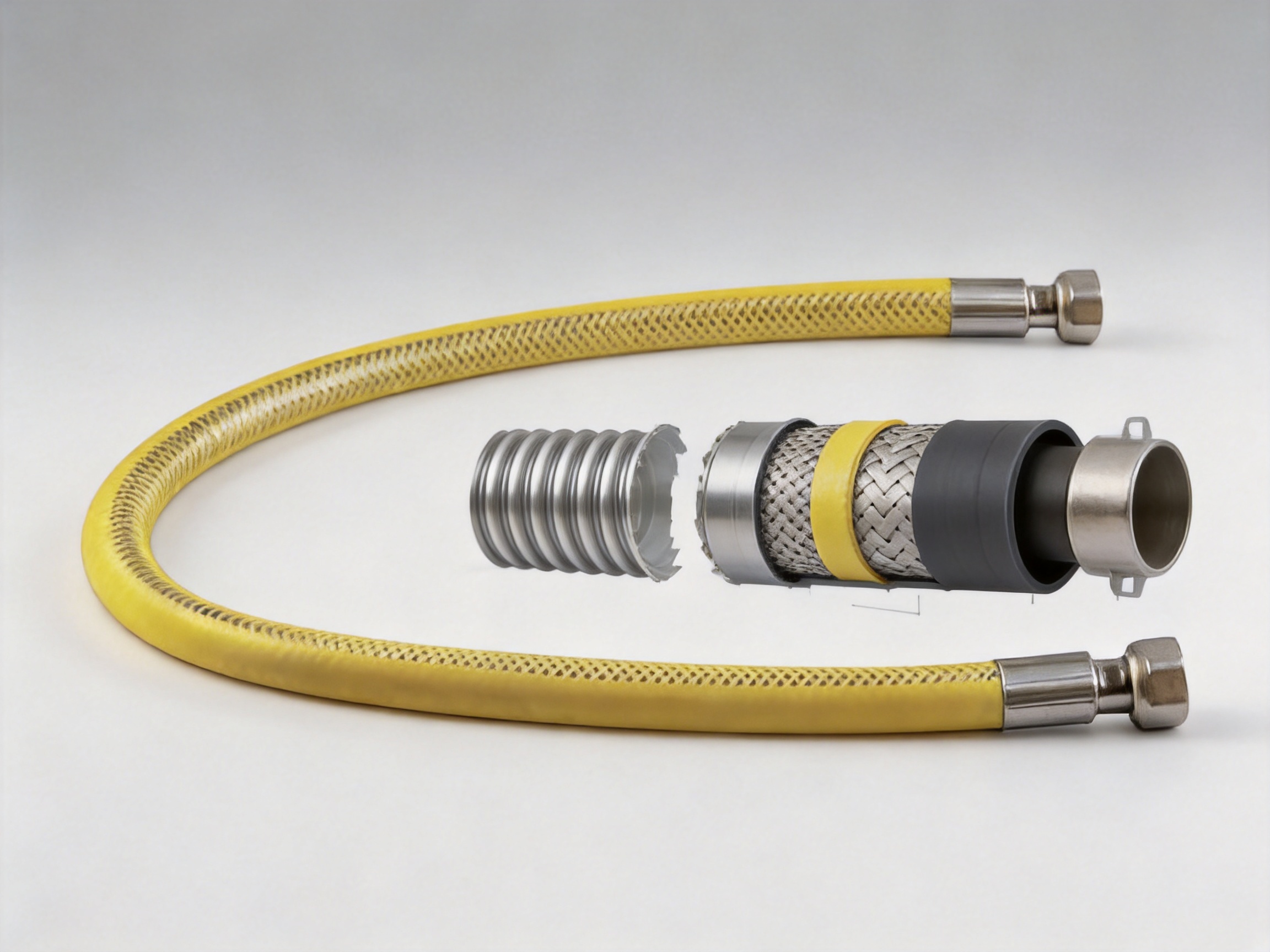
Unlike a simple rubber tube or an unprotected flexible pipe, the ZLR-14 uses a layered structure in which each component performs a specific function. The corrugated stainless steel core provides flexibility and bending capability. The external stainless steel mesh reinforces the hose and helps protect it from external pressure, vibration, and mechanical stress. The PVC coating provides an additional protective layer, while stainless steel sleeves support the ends of the assembly. Flange connectors, a G1/2 nut, and a flat gasket are incorporated to create a practical connection solution for gas appliances and related piping systems.
This construction makes the hose suitable for applications where installation convenience and long-term reliability are equally important. It is available in lengths from 30 cm to 200 cm, allowing installers to select a size that reduces unnecessary loops, excessive bending, and connection stress. With a nominal size of DN10 and an outside diameter of 16 mm, the ZLR-14 is a compact solution for many gas appliance connection requirements.
Content
- 1 Overview of the ZLR-14 Gas Hose
- 2 Why Corrugated Metal Construction Matters
- 3 Layered Construction and Functional Advantages
- 4 Advantages Compared with Conventional Flexible Hoses
- 5 Advantages Compared with Rigid Pipe Installations
- 6 Applications for Gas Appliances and Equipment
- 7 Manufacturing Capabilities and Production Strengths
- 8 Design Details That Support Installation Reliability
- 9 Safety, Service Life, and Inspection Considerations
- 10 Customization and OEM/ODM Support
- 11 How the ZLR-14 Supports Efficient Procurement
- 12 Comparison with Lower-Cost Alternatives
- 13 Quality Assurance from Raw Material to Finished Product
- 14 Technical Purchasing Checklist
- 15 Frequently Asked Questions
- 15.1 What is the ZLR-14 gas hose used for?
- 15.2 What makes the hose different from a basic flexible gas tube?
- 15.3 What are the available dimensions?
- 15.4 Why is the hose corrugated?
- 15.5 What is the function of the stainless steel mesh?
- 15.6 What does the PVC coating contribute?
- 15.7 Is the hose suitable for every gas appliance?
- 15.8 How should the hose be installed?
- 15.9 Can the hose be customized?
- 15.10 What manufacturing capabilities support the product?
- 15.11 How can buyers verify quality?
- 15.12 How should a damaged hose be handled?
- 16 Conclusion
- 17 References
- 18 Product: Metal-wrapped stainless steel corrugated gas hose ZLR-14
Overview of the ZLR-14 Gas Hose
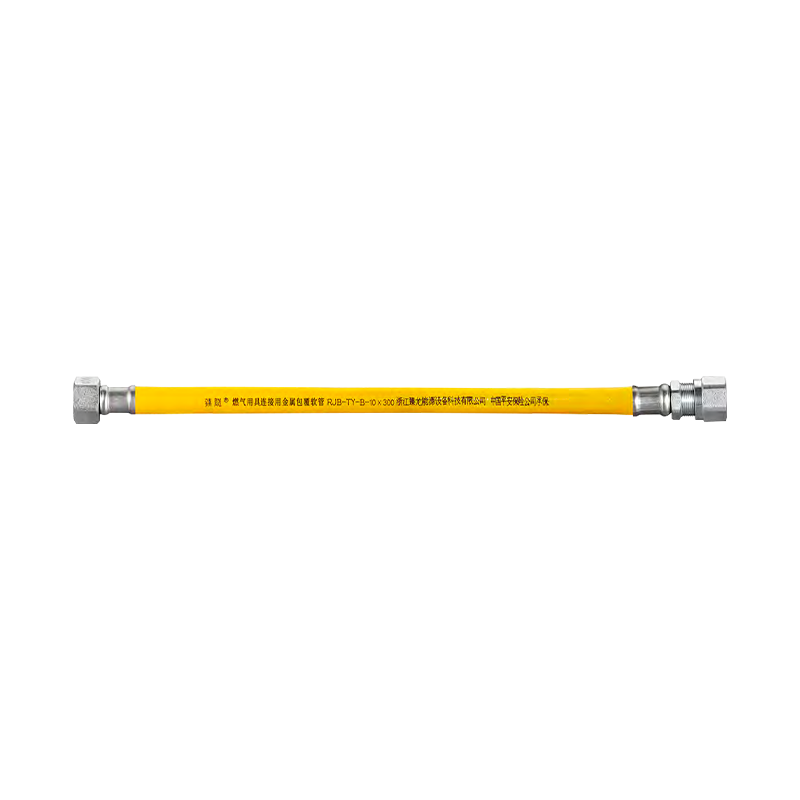
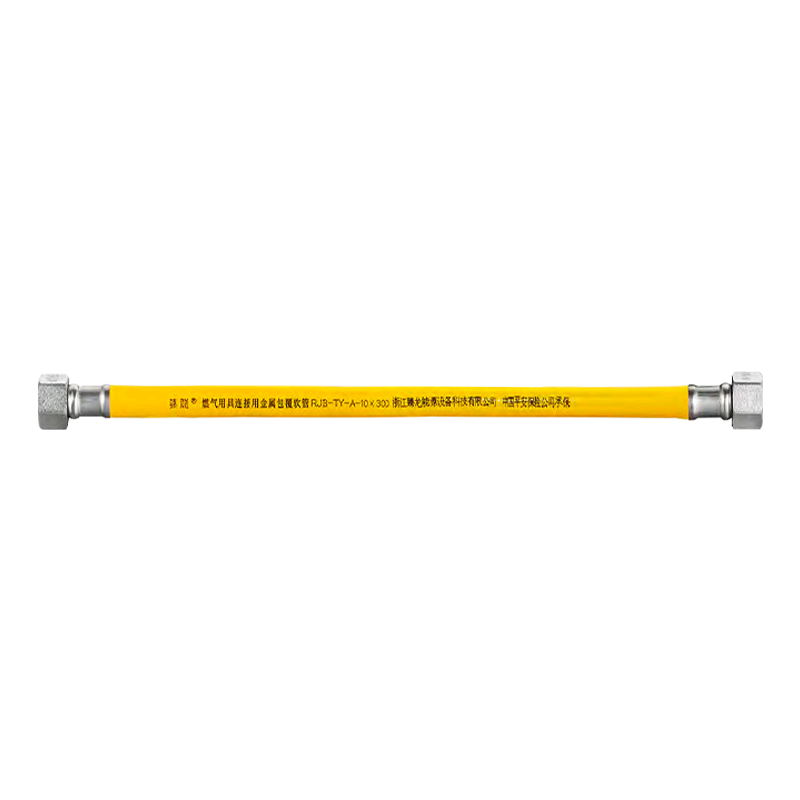
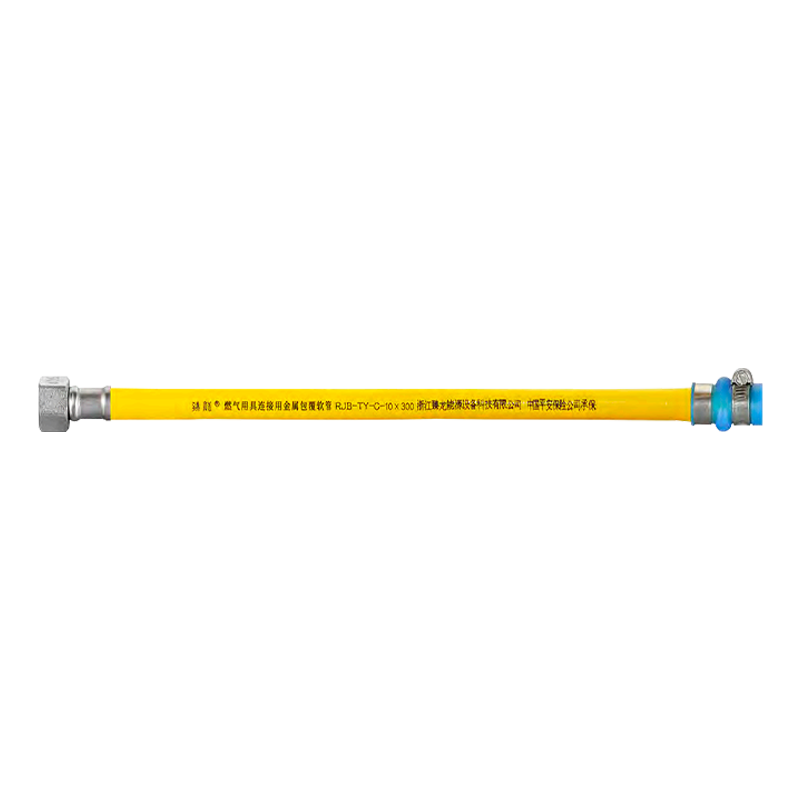
The ZLR-14 is a metal-wrapped stainless steel corrugated gas hose developed for gas appliance connections. Its design is based on the principle that a flexible gas connection should not rely on one material alone. Instead, the hose combines several carefully selected elements to balance flexibility, protection, connection security, and service durability.
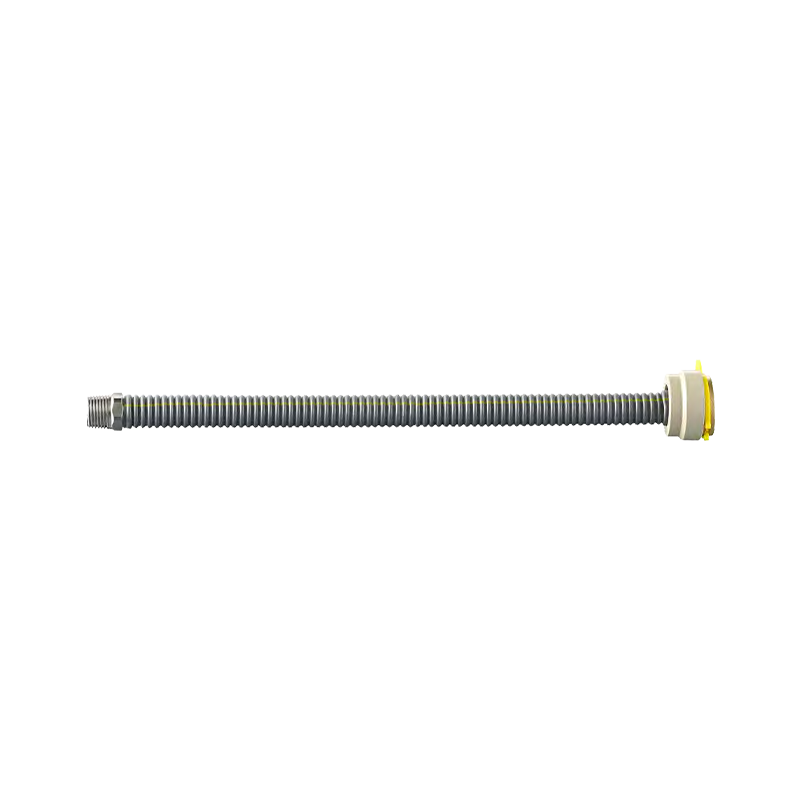
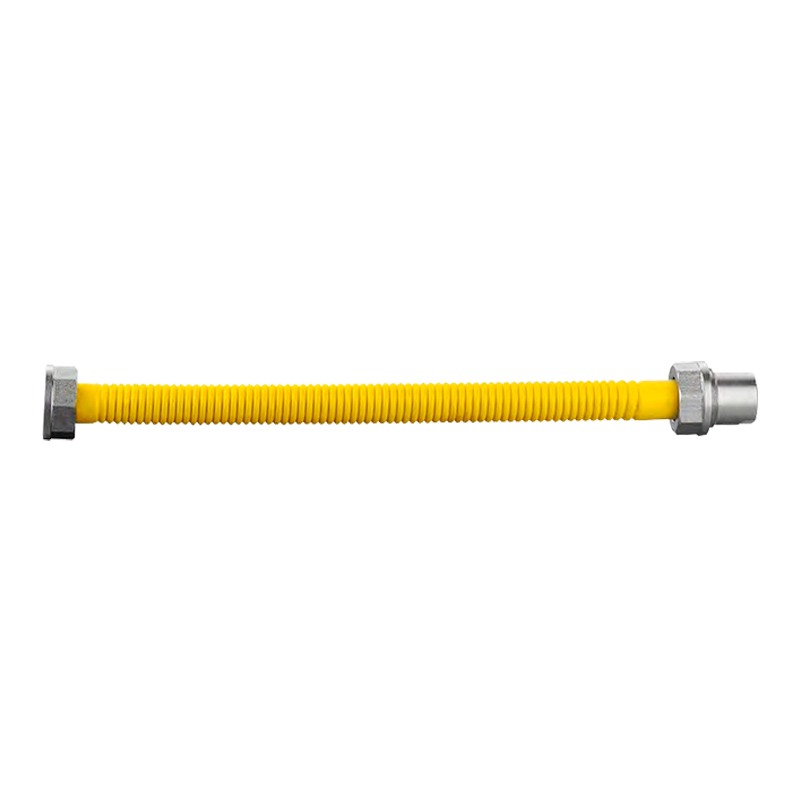
The stainless steel bellows form the flexible internal passage. The wave-shaped profile enables the tube to bend more easily than a straight-wall metal pipe while retaining the advantages associated with stainless steel construction. This is particularly useful when a gas appliance must be positioned close to a wall, cabinet, valve, or other fixed component. The corrugations allow the hose to accommodate installation geometry without requiring extensive rigid pipework or multiple elbows.
Surrounding the bellows is stainless steel mesh. The mesh acts as a reinforcement layer, helping the assembly resist external compression, vibration, and handling forces. It also provides a shielding function that protects the corrugated tube from some forms of mechanical contact and environmental exposure. The PVC coating adds another protective barrier and helps provide a finished exterior that is easier to handle during installation.
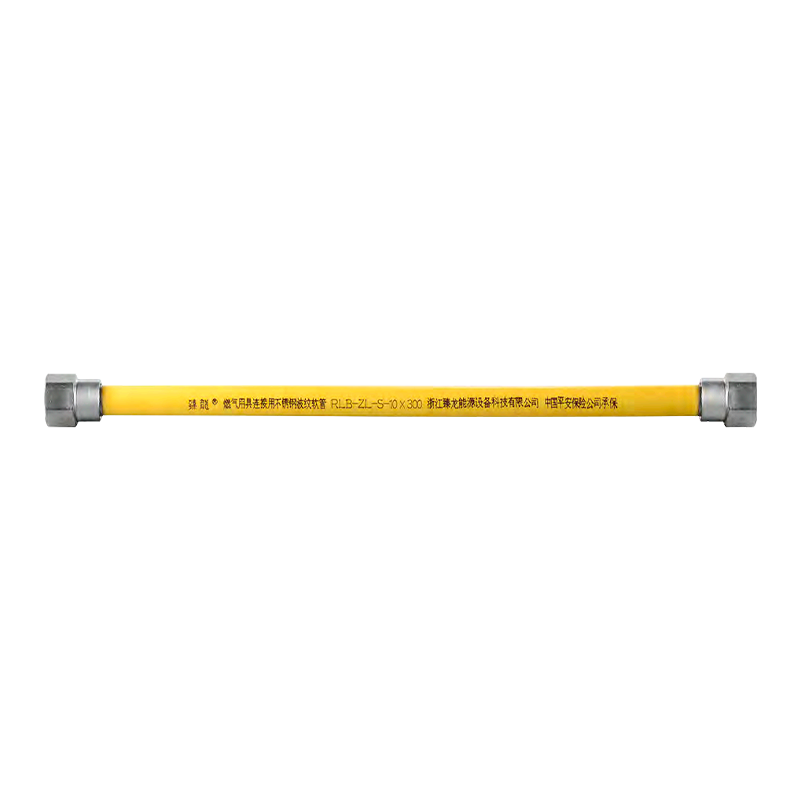
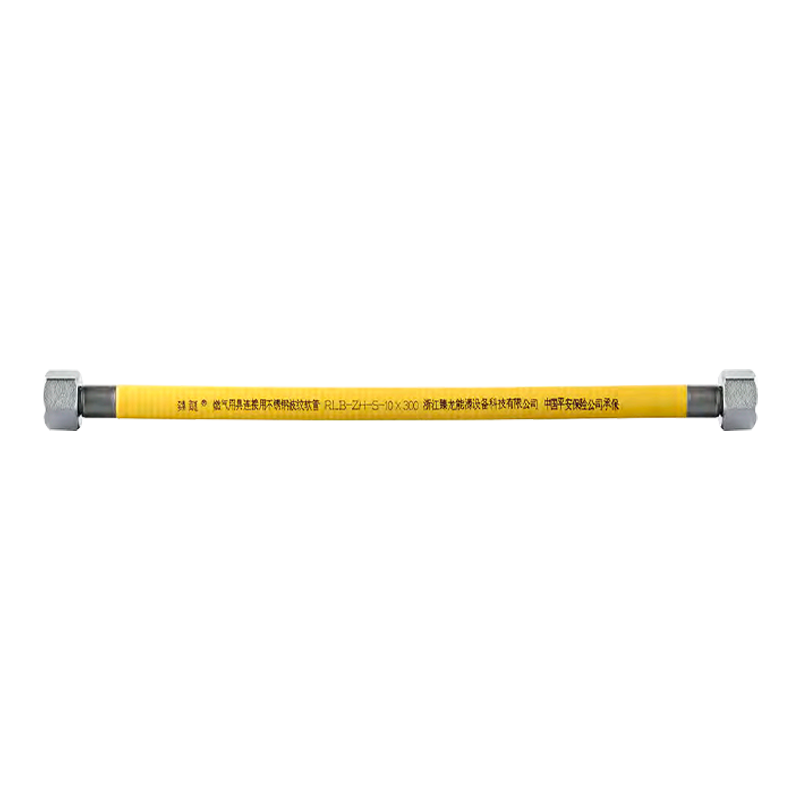
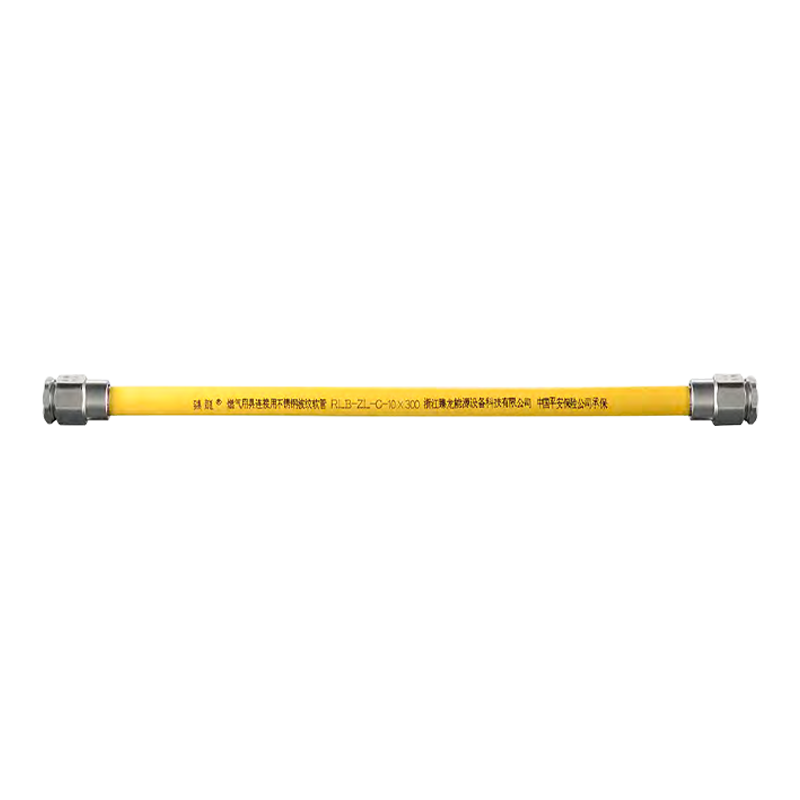
At the connection ends, the assembly includes stainless steel sleeves, flange connectors, a G1/2 nut, and a flat gasket. These components are intended to support reliable attachment to compatible gas appliance connection points, piping systems, valves, or other equipment. The use of machined and assembled connection components is important because hose performance depends not only on the flexible tube but also on the quality of the end fittings and sealing surfaces.
| Item | Specification | Details |
|---|---|---|
| Model | ZLR-14 | Metal-wrapped stainless steel corrugated gas hose |
| Product model | RLB-ZH-S-10X300 | Configured gas appliance connection assembly |
| Nominal size | DN10 | Compact gas connection size |
| Outside diameter | 16 mm | Approximate external diameter of the assembly |
| Available length | 30 cm to 200 cm | Multiple length options for different installations |
| Flexible core | Stainless steel bellows | Corrugated structure for bending and installation flexibility |
| Reinforcement | Stainless steel mesh | Support against external pressure, vibration, and mechanical stress |
| Outer protection | PVC coating | Additional protective and handling layer |
| Connection components | Flange connector, G1/2 nut, flat gasket | Components for secure connection and sealing |
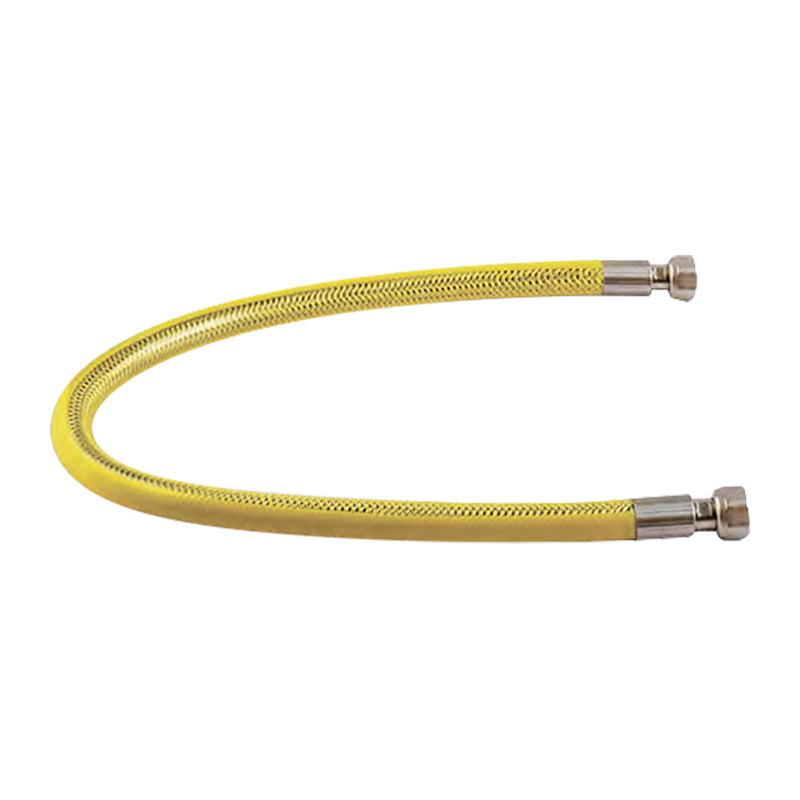
Metal-wrapped stainless steel corrugated gas hose ZLR-14
Why Corrugated Metal Construction Matters
Rigid metal pipe provides excellent structural stability, but it can be difficult to install where the available space is restricted or where the connection points are not perfectly aligned. A flexible metal hose solves many of these practical problems while preserving the strength and temperature resistance advantages of metal construction.
The corrugated profile is central to this performance. A straight metal tube must be bent with specialized equipment or connected with elbows. By contrast, a corrugated tube is formed with a series of controlled waves. These waves increase the tube’s ability to flex and absorb small installation movements. The hose can therefore be routed around obstacles and aligned with an appliance connection without forcing the appliance, valve, or pipework into an unnatural position.
Corrugation also helps distribute bending across a longer section of the hose. When an installer bends a properly designed corrugated hose, the movement is not concentrated at one sharp point in the same way that it may be in a rigid tube. This reduces the need for abrupt directional changes and supports a cleaner installation layout. However, the hose should still be installed according to appropriate technical practices, because excessive bending, twisting, crushing, or repeated movement can affect any flexible connection.
The metal core provides a firm internal passage and a durable foundation for the external reinforcement. Compared with basic polymer-only hoses, stainless steel corrugated construction offers a stronger mechanical profile and a more stable structure under many common installation conditions. The result is a flexible connection that is not simply soft and pliable, but engineered to retain its form and support its service environment.
Layered Construction and Functional Advantages
Stainless Steel Corrugated Bellows
The stainless steel bellows are the principal flexible element of the ZLR-14. Stainless steel is widely selected for demanding piping applications because it offers a useful combination of strength, corrosion resistance, cleanliness, and dimensional stability. The bellows structure adds flexibility without eliminating the mechanical advantages of metal.
The wave-like form allows the hose to bend around installation obstacles and accommodate moderate alignment differences. It is especially valuable in appliance connections where a rigid line would require additional fittings or where the appliance may need to be moved slightly for maintenance. The corrugated core can also help simplify assembly by reducing the number of rigid pipe sections required between the supply line and the appliance.
The quality of the bellows depends on accurate forming. If the corrugations are inconsistent, the hose may exhibit uneven flexibility, concentrated stress, or irregular connection alignment. Controlled forming processes are therefore essential. The manufacturer’s production capabilities, including dedicated welding and forming lines, support the repeatable production of metal hose components and assemblies.
Stainless Steel Braided Mesh
The stainless steel mesh is wrapped around the corrugated tube to provide reinforcement and protection. Its primary mechanical role is to help the hose resist external forces. During transport, installation, and service, a hose may encounter vibration, contact with nearby surfaces, pressure from surrounding components, or accidental handling loads. The mesh helps distribute these forces over the hose surface rather than allowing them to act directly on the bellows alone.
The mesh also serves as a shielding layer. It can help reduce exposure of the corrugated core to external abrasion and incidental contact. In some product descriptions, the mesh is also associated with a filtering or protective function. In practical terms, its most important contribution in this assembly is reinforcement and shielding, not replacement of a separate gas filtration system.
Stainless steel mesh is advantageous over many lower-strength wrapping materials because it maintains a robust structure while remaining flexible. The braid can follow the movement of the corrugated core without preventing normal hose bending. This balance between reinforcement and flexibility is one of the key differences between a properly designed metal-wrapped hose and a basic unreinforced flexible tube.
PVC Protective Coating
The PVC coating provides an additional outer layer around the stainless steel mesh. It helps protect the hose from environmental contact, minor abrasion, and handling damage. It can also make the hose more comfortable to install because the exterior is smoother than exposed metal braid.
A protective coating may be particularly useful where the hose passes near cabinets, appliance panels, or other components that could otherwise contact the metal mesh. The coating also gives the assembly a finished appearance and helps reduce the chance that the braid will snag on adjacent surfaces during installation.
The PVC layer should not be viewed as a substitute for correct installation. It does not eliminate the need to avoid sharp edges, excessive heat, heavy loads, or improper routing. Its role is to enhance the multi-layer construction and provide another level of protection around the reinforced metal hose.
Stainless Steel Sleeves and End Support
Stainless steel sleeves are positioned near the ends of the hose assembly. These components help support the transition between the flexible hose body and the connection hardware. End transitions are critical in flexible assemblies because the highest handling forces may occur where the hose meets a fitting.
A well-designed sleeve can help maintain alignment and reduce localized deformation near the connection. It also contributes to a more finished and durable assembly. The use of stainless steel at this location maintains material continuity with the hose reinforcement and supports resistance to corrosion and mechanical wear.
Flange Connector, Nut, and Flat Gasket
The connection system includes a flange connector, a G1/2 nut, and a flat gasket. These parts work together to establish a secure and sealed connection when matched with compatible components. The gasket provides the sealing interface, while the nut and connector maintain the mechanical connection.
Connection reliability depends on several factors, including clean sealing surfaces, correct alignment, suitable tightening, compatible thread and flange dimensions, and the condition of the gasket. The inclusion of a flat gasket as part of the assembly helps simplify installation and ensures that a basic sealing component is available with the hose.
Installers should always verify that the connection configuration is suitable for the intended appliance and gas system. A flexible hose should not be forced to compensate for incompatible fittings. Correct component matching is essential to achieving the leak-resistant performance expected from a gas connection assembly.
Advantages Compared with Conventional Flexible Hoses
The ZLR-14 offers several advantages over simple polymer hoses and unreinforced flexible tubes. The most important difference is its metal-based, multi-layer construction. A conventional hose may depend primarily on a single flexible material, while the ZLR-14 distributes performance responsibilities among the bellows, braid, coating, sleeves, and connection hardware.
One advantage is improved resistance to external mechanical stress. The stainless steel mesh helps protect the hose from pressure and handling loads that could deform or damage a less-supported tube. This is valuable in compact appliance installations, where the hose may be routed through a crowded area and may be close to other equipment.
A second advantage is a stronger balance between flexibility and structural stability. The corrugated metal core can bend around obstacles, but it does not behave like a soft unsupported tube. It retains a more controlled shape, which can contribute to a neater installation and help prevent accidental kinking.
A third advantage is corrosion resistance. Stainless steel is well suited to environments where moisture, temperature variation, or contact with airborne contaminants may challenge less durable materials. The PVC coating adds another protective layer, while the stainless steel mesh and sleeves support the durability of the external structure.
A fourth advantage is connection security. The ZLR-14 is supplied as a coordinated assembly with flange components, a G1/2 nut, a flat gasket, and end-support parts. This can reduce the need to combine unrelated components from different sources. A preconfigured assembly may also improve installation consistency when the selected length and connection arrangement match the application.
The product’s available length range is another practical advantage. Options from 30 cm to 200 cm provide flexibility for both short and more extended connection routes. Selecting an appropriate length can reduce excessive slack, minimize sharp turns, and keep the hose away from hot or moving components.
Advantages Compared with Rigid Pipe Installations
Rigid pipe remains an important option for permanent gas distribution systems, but it is not always the most efficient choice for the final appliance connection. A rigid installation may require accurate measurement, threading, cutting, bending, and additional elbows. Each added operation can increase labor time and introduce another potential connection point.
The ZLR-14 can simplify the final connection between a fixed gas outlet and an appliance. Its flexible body allows the installer to accommodate moderate differences in position without adding multiple rigid fittings. This can be particularly useful when the appliance is installed in a cabinet or when access is limited.
Flexibility also supports maintenance and equipment replacement. When a compatible appliance needs to be removed, a flexible connection may make access easier than a rigid assembly that has been precisely fixed in place. The hose should not be used as a lifting handle or subjected to repeated unnecessary movement, but its design can provide practical installation and service advantages.
Another benefit is reduced visual and physical complexity. A correctly selected hose length can create a direct route between the connection points. Fewer elbows and joints may help produce a cleaner installation and reduce the number of components that require inspection.
Even so, the ZLR-14 is not intended to replace every rigid pipe application. The choice between flexible hose and rigid pipe depends on system design, local regulations, operating conditions, appliance requirements, and installation access. The strength of the ZLR-14 lies in its role as a flexible, reinforced connection solution for suitable gas appliance applications.
Applications for Gas Appliances and Equipment
The ZLR-14 is categorized as a metal-wrapped hose for gas appliance connections. Its compact DN10 configuration and available length range make it suitable for connection tasks where a gas appliance must be linked to a fixed supply point or associated piping component.
Potential application environments include residential kitchens, commercial food-service areas, equipment rooms, utility spaces, and other locations where compatible gas appliances require a flexible metal connection. The final application must always be reviewed against the applicable gas type, pressure, temperature, fitting configuration, certification requirements, and local installation rules.
The hose may be useful for installations involving cooking appliances, heating equipment, compact gas devices, or other approved equipment with compatible connection interfaces. The flange connector and G1/2 nut provide a practical connection arrangement, but the installer must confirm the appliance-side connection before installation.
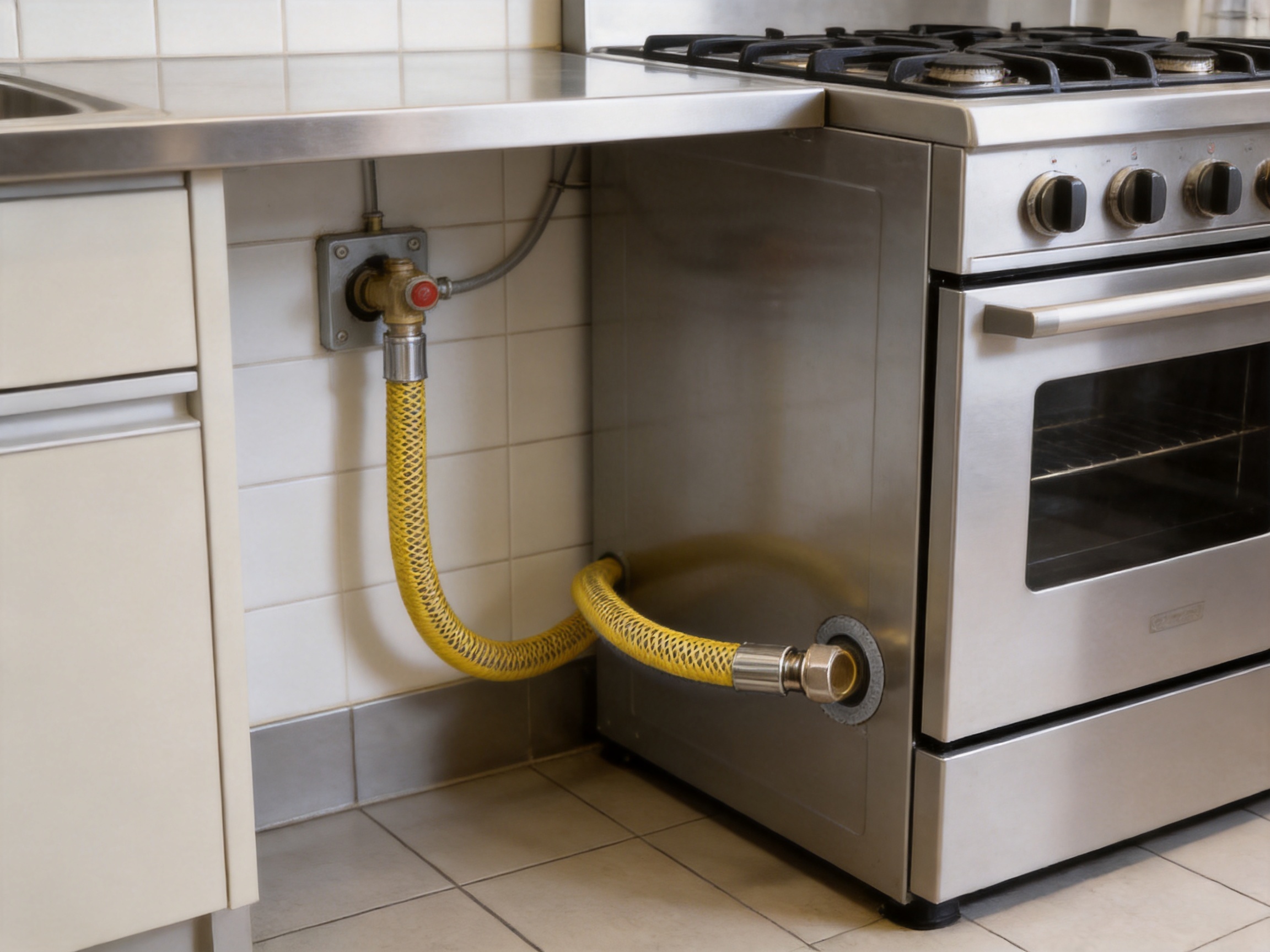
In restricted spaces, the corrugated structure is particularly valuable. Appliances are often positioned close to walls or enclosed within cabinetry, leaving limited room for rigid piping. The ZLR-14 can be routed through an appropriate path while maintaining a controlled bend radius and avoiding unnecessary stress at the fittings.
The product can also support equipment layouts where vibration is present. The stainless steel mesh and corrugated structure are designed to provide a more robust connection than a basic soft hose. However, the hose must not be used in an application that exceeds its specified service conditions or places continuous movement and unsupported weight on the assembly.
Manufacturing Capabilities and Production Strengths
The performance of a metal hose depends heavily on manufacturing precision. Material selection alone is not sufficient. The corrugations must be formed consistently, welds must be controlled, braiding must be properly applied, coatings must be uniform, and connection components must be accurately assembled. The manufacturer of the ZLR-14 combines product development, manufacturing, and processing capabilities to support this type of integrated production.
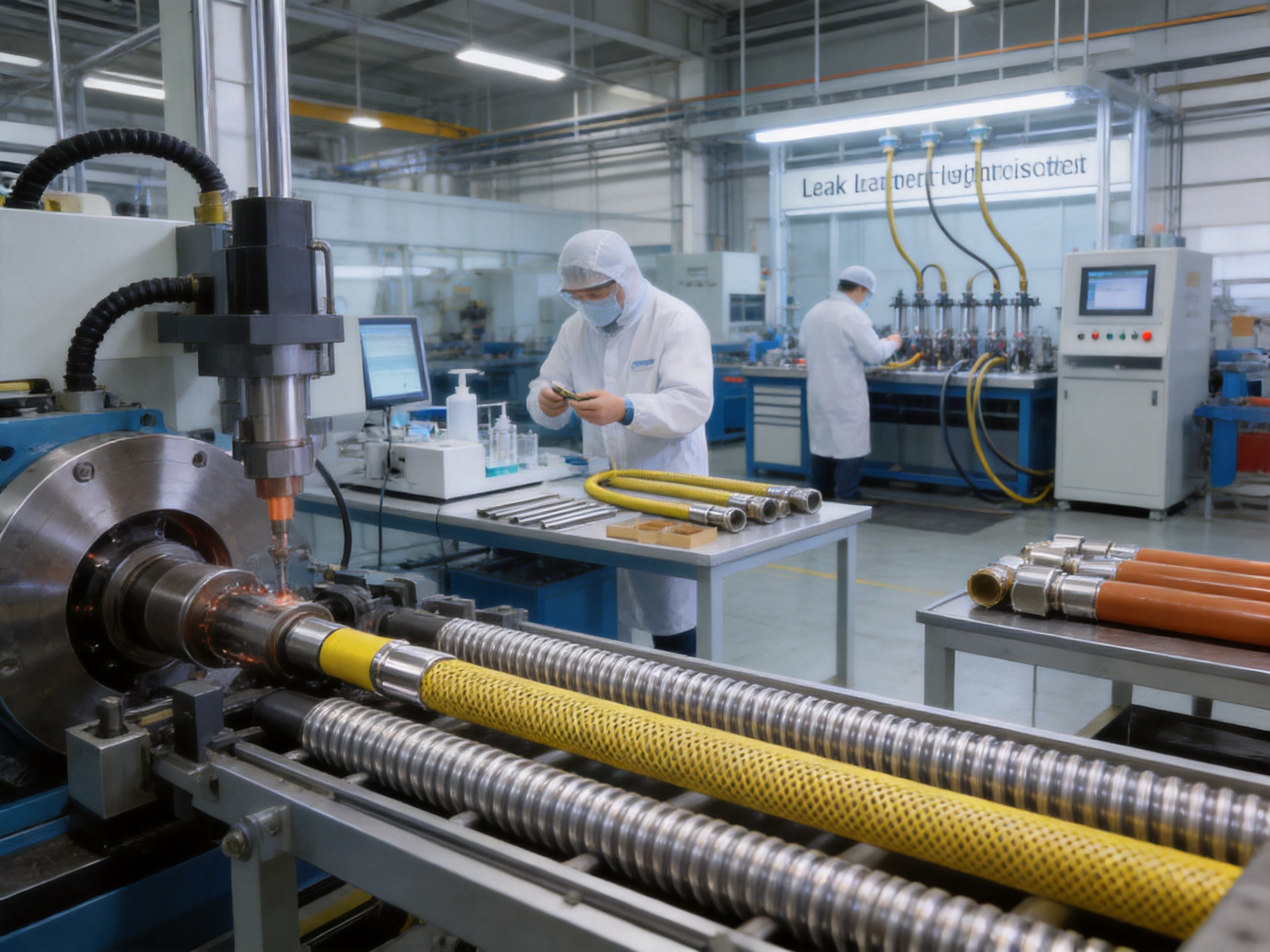
The company operates a substantial production facility in Yuyao, Zhejiang, with a factory building of approximately 30,000 square meters on a site covering about 40 acres. Its reported production resources include 30 welding and forming production lines. These lines support the manufacture of metal hoses and related energy equipment components, allowing the organization to coordinate multiple stages of production within its own manufacturing system.
Dedicated welding and forming capacity is especially important for corrugated metal hose production. Welding creates the foundational joints in the metal assembly, while forming establishes the bellows profile and its controlled flexibility. When these processes are supported by dedicated equipment and experienced production personnel, it becomes easier to maintain repeatability across product batches.
The company also operates two uninterrupted solid melting hydrogen furnace production lines. Furnace capabilities of this type support controlled material processing and can contribute to the production of metal components with stable physical characteristics. Consistent material treatment is relevant to the strength, corrosion resistance, and forming behavior of stainless steel hose components.
The manufacturing organization integrates industry and trade, which can provide advantages in product coordination, customer communication, and supply management. Its product range includes metal hoses, natural gas pipelines, plumbing fittings, sanitary ware, valves, plastic products, and hardware. This broad portfolio gives the company experience across several related categories of fluid and energy equipment.
Material Analysis and Process Control
Material verification is a critical part of quality management for stainless steel products. The company reports the use of metal material analysis direct-reading spectrometers. Such equipment can be used to analyze material composition and help verify that incoming or processed metal corresponds to the required material specification.
Reliable material identification supports consistent manufacturing. Stainless steel grades can differ in chemical composition and performance, so composition analysis helps reduce the risk of using unsuitable material in a product designed for corrosion resistance and mechanical durability. It also supports traceability and process documentation when properly integrated into the quality system.
For a corrugated gas hose, material analysis works together with forming and welding controls. A material may meet its composition requirements but still require correct forming parameters, weld preparation, heat control, and inspection. The combination of material verification and controlled production is therefore more valuable than either activity alone.
Leak Tightness Testing
Gas hose assemblies must be evaluated for sealing integrity. The manufacturer reports the use of flow tightness testers, which are intended to support inspection of whether an assembly maintains the required level of tightness under test conditions.
Leak tightness testing is relevant to the complete assembly, not just the flexible tube. Potential leakage paths may occur at welds, end transitions, fittings, gaskets, or connection interfaces. Testing finished products helps identify assembly problems that may not be visible through visual inspection alone.
Testing equipment and procedures should be managed according to documented quality requirements. The exact test conditions, acceptance criteria, sampling plan, and records depend on the product specification and applicable standards. The reported testing capability nevertheless demonstrates that the manufacturer recognizes the importance of evaluating the finished gas connection rather than relying only on component inspection.
Quality Management and Certifications
The company states that it implements the ISO9000:2008 quality management system and holds a People’s Republic of China Special Equipment Manufacturing License for pressure pipelines. It also reports EU CE certification testing reports and membership in the China Urban Gas Association.
These qualifications and industry affiliations indicate an organized approach to quality management, pressure-related manufacturing, and gas-sector participation. Buyers should review the specific certificates, test reports, product scope, validity, and applicable standards for the exact ZLR-14 configuration being ordered. Certification status can vary by model, fitting arrangement, market, and production revision.
A documented quality system can support consistency in purchasing, production, inspection, corrective action, and customer service. For international customers, clear technical documentation and certificate verification are important parts of the procurement process. The manufacturer’s ability to provide relevant records can help distributors, contractors, and equipment producers evaluate suitability for their target market.
Design Details That Support Installation Reliability
Installation reliability begins with selecting the correct hose length. The ZLR-14 is available from 30 cm to 200 cm. A hose should be long enough to connect the appliance without tension, but not so long that it forms unnecessary loops or can contact hot surfaces, sharp edges, moving parts, or areas where it may be crushed.
Correct routing is also important. The hose should follow a smooth path with gradual bends. Sharp folding, twisting, flattening, or forced rotation at the fittings should be avoided. The corrugated structure provides flexibility, but it is not designed to compensate for careless installation or repeated extreme deformation.
The end fittings should be aligned before tightening. If the hose is used to pull two misaligned connection points into position, stress may remain in the assembly after installation. A better practice is to position the appliance and supply connection so that the hose rests naturally, then tighten the fittings using suitable tools and procedures.
The flat gasket should be clean, correctly positioned, and compatible with the connection arrangement. Sealing surfaces should be free from dirt, metal particles, excessive scratches, and other contamination. Threaded components should not be cross-threaded, and tightening should follow the requirements of the applicable connection standard or installation instructions.
After installation, the complete system should be inspected and tested according to local gas safety requirements. A visual inspection should confirm that the hose is not kinked, crushed, stretched, or in contact with a damaging surface. A suitable leak test should be performed by a qualified person using an approved method. Open flames should never be used to check for gas leakage.
Safety, Service Life, and Inspection Considerations
Flexible gas hoses are safety-critical connection products and should be treated accordingly. The ZLR-14’s stainless steel construction, reinforcing mesh, protective coating, and engineered fittings are intended to support safe performance, but proper selection and installation remain essential.
The hose should be used only for the gas service and operating conditions for which it is approved. Buyers should confirm the gas medium, working pressure, temperature range, connection type, and required approvals before placing an order. If the application involves unusual chemicals, extreme temperatures, outdoor exposure, buried installation, or continuous movement, additional technical review may be necessary.
Routine inspection can identify damage before it becomes a serious problem. Inspection points may include the PVC coating, stainless steel mesh, sleeves, fittings, gasket area, and the region where the hose connects to the appliance or fixed pipe. Signs of concern may include deep cuts, severe abrasion, deformation, corrosion, exposed braid, crushed corrugations, loose fittings, or visible displacement.
A hose should not be repaired with tape, clamps, adhesives, or improvised fittings. If the assembly is damaged or its service history is uncertain, replacement with a suitable approved product is generally the safer approach. Gaskets should also be replaced when required rather than reused beyond their intended service condition.
Service life depends on the installation environment and operating conditions. Heat, ultraviolet exposure, chemical contact, vibration, movement, mechanical abrasion, and incorrect routing can all affect durability. A robust construction can improve resistance, but it cannot eliminate the effect of severe or unsuitable conditions.
Customization and OEM/ODM Support
The manufacturer identifies itself as an OEM and ODM producer of metal hoses, corrugated hoses, pipe fittings, and related precision-engineered pipe products. This capability can be valuable for distributors, appliance manufacturers, engineering companies, and project contractors that require more than a standard catalog configuration.
Customization may involve hose length, connection arrangement, sleeve design, coating requirements, packaging, labeling, or integration with a specific appliance interface. Any customized configuration should be reviewed technically before mass production. The key considerations include material compatibility, pressure and temperature requirements, bend performance, end fitting security, sealing method, testing criteria, and applicable certifications.
OEM/ODM production also requires stable communication between the customer and manufacturer. Technical drawings, samples, specifications, inspection plans, and approval procedures help ensure that the final product corresponds to the intended application. The company’s integrated manufacturing structure and broad experience in pipe fittings and energy equipment can support this type of project coordination.
For larger orders, customers may also request batch consistency data, material certificates, test records, packaging specifications, and production samples. Establishing these requirements at the quotation stage can help reduce delays and ensure that the hose assembly is suitable for the customer’s distribution or equipment program.
How the ZLR-14 Supports Efficient Procurement
Procurement teams often need to balance product performance, installation practicality, quality documentation, availability, and total cost. The ZLR-14 addresses several of these purchasing considerations in one assembly.
First, the product combines the hose body and key connection components into a coordinated design. This can reduce the number of separate items that need to be sourced and checked. Second, the range of available lengths allows buyers to select a configuration suited to different appliance layouts. Third, the stainless steel and reinforced structure may provide a longer-lasting solution than lower-cost, lightly protected hoses in demanding environments.
Manufacturing scale can also support supply continuity. A facility with multiple welding and forming lines may be better positioned to handle repeat orders and varied product requirements than a small workshop that relies on a limited number of production operations. The availability of material analysis and leak tightness testing further supports quality assurance during procurement.
Buyers should still compare products based on complete technical information rather than appearance alone. Important comparison points include actual materials, connection specifications, test procedures, certifications, length tolerance, packaging, traceability, and after-sales support. A metal-wrapped hose should be evaluated as a complete engineered assembly, not simply as a length of braided tubing.
Comparison with Lower-Cost Alternatives
Some flexible hoses are manufactured with minimal reinforcement or basic polymer construction. These products may be suitable for limited applications, but their performance can be more sensitive to abrasion, heat, compression, and installation damage. A metal-wrapped corrugated hose generally offers a more substantial mechanical structure and may provide greater confidence in installations where external protection is important.
Uncoated metal braid can provide reinforcement, but the addition of PVC coating can improve handling and offer a smoother external surface. A corrugated metal core without external reinforcement may be flexible, but the stainless steel mesh helps distribute external forces and supports the hose during handling.
Improvised combinations of hose, adapters, and separate gaskets may appear economical at the initial purchase stage. However, every additional component creates another compatibility and sealing consideration. The ZLR-14’s coordinated design can help reduce such complexity when its connection configuration is appropriate for the application.
The most meaningful comparison is therefore based on total installed value. A hose that is easier to route, more resistant to external stress, supported by inspection procedures, and available with appropriate documentation may reduce installation uncertainty and maintenance concerns over time. The correct product remains the one that meets the technical requirements of the specific gas system.
Quality Assurance from Raw Material to Finished Product
Quality assurance for the ZLR-14 can be understood as a chain of controlled activities. It begins with the selection and verification of metal materials. It continues through welding, bellows forming, mesh application, coating, sleeve installation, fitting assembly, and gasket integration. It concludes with inspection and leak tightness testing of the completed product.
Each stage influences the final result. Poor material control may affect corrosion resistance or forming quality. Inconsistent welding may create weak points or leakage paths. Incorrect bellows forming may reduce flexibility or create stress concentration. Poor braiding may leave areas insufficiently supported. Uneven coating may reduce protection. Incorrect fitting assembly may compromise sealing even when the hose body is sound.
An integrated manufacturer can coordinate these operations more effectively than a supply chain in which every component is produced by a different unrelated vendor. The manufacturer’s welding, forming, furnace, material analysis, and leak testing resources provide a foundation for a more controlled production process.
For customers, quality assurance should be supported by clear documentation. Product drawings, specifications, inspection records, test reports, and packaging labels can help identify the supplied model and confirm that it matches the approved configuration. This is particularly important when the hose is purchased for large appliance programs or distributed across multiple regions.
Technical Purchasing Checklist
Before purchasing the ZLR-14, customers should confirm the following points with the supplier or qualified technical representative:
- Whether the DN10 configuration matches the appliance and supply connection requirements.
- Whether the G1/2 nut and flange connector are compatible with the installation interface.
- Which hose length between 30 cm and 200 cm is most suitable for the intended route.
- Whether the gas type, working pressure, and temperature fall within the approved service conditions.
- Which certifications and test reports apply to the exact product configuration.
- Whether the application involves outdoor exposure, chemicals, continuous vibration, or unusual heat.
- What installation, inspection, and replacement practices are recommended.
- Whether customized fittings, labels, packaging, or documentation are required.
Answering these questions before purchase can reduce the risk of selecting a hose that is mechanically suitable but incompatible with the connection system or regulatory requirements. It also helps ensure that the product is installed in a manner that preserves its intended performance.
Frequently Asked Questions
What is the ZLR-14 gas hose used for?
The ZLR-14 is designed for gas appliance connections. It provides a flexible, reinforced connection between compatible gas supply piping, valves, pumps, or appliance connection points. The exact application must meet the product’s approved service conditions and local gas installation requirements.
What makes the hose different from a basic flexible gas tube?
The ZLR-14 uses a stainless steel corrugated bellows, stainless steel braided mesh, PVC coating, stainless steel sleeves, and engineered connection components. This layered construction provides a stronger combination of flexibility, external protection, corrosion resistance, and connection stability than a simple unreinforced tube.
What are the available dimensions?
The listed configuration is DN10 with an outside diameter of approximately 16 mm. Available lengths range from 30 cm to 200 cm. Customers should confirm dimensional tolerances and connection details for the specific order.
Why is the hose corrugated?
The corrugated profile allows the stainless steel tube to bend more easily than a straight-wall metal tube. It helps the hose accommodate restricted installation spaces, alignment differences, and routing around obstacles while maintaining a stable metal structure.
What is the function of the stainless steel mesh?
The stainless steel mesh reinforces the corrugated tube and helps protect it against external pressure, vibration, abrasion, and handling stress. It also acts as a shielding layer around the flexible metal core.
What does the PVC coating contribute?
The PVC coating provides an additional protective outer layer. It can help reduce exposure to minor abrasion and make the hose easier to handle near cabinets, appliance panels, and other surrounding components.
Is the hose suitable for every gas appliance?
No. Suitability depends on the appliance connection, gas type, pressure, temperature, installation environment, required approvals, and local regulations. The DN10 and G1/2 connection details must be matched with the specific appliance and supply system.
How should the hose be installed?
The hose should be routed smoothly without kinking, twisting, crushing, stretching, or contact with sharp edges and excessive heat. The connection points should be aligned before tightening, and the flat gasket should be clean and correctly seated. Installation and leak testing should be performed by a qualified person in accordance with applicable requirements.
Can the hose be customized?
The manufacturer provides OEM and ODM production for metal hoses, corrugated hoses, pipe fittings, and related products. Depending on the project, customization may include length, connection components, coating, labeling, packaging, or other engineered details. Custom specifications should be confirmed before production.
What manufacturing capabilities support the product?
The company reports 30 welding and forming production lines, two uninterrupted solid melting hydrogen furnace production lines, metal material analysis equipment, and flow tightness testers. These resources support material verification, forming, welding, assembly, and finished-product testing.
How can buyers verify quality?
Buyers can request the applicable product specification, material information, test records, certification documents, inspection requirements, and sample approval records. They should verify that all documents apply to the exact ZLR-14 configuration and intended market.
How should a damaged hose be handled?
A hose showing deep abrasion, exposed braid, severe deformation, crushed corrugations, damaged fittings, or signs of leakage should be removed from service and replaced with a suitable approved assembly. It should not be repaired with tape, clamps, adhesives, or improvised components.
Conclusion
The Metal-Wrapped Stainless Steel Corrugated Gas Hose ZLR-14 is designed as a practical and durable connection solution for compatible gas appliances. Its stainless steel corrugated bellows provide flexibility for restricted installations, while the stainless steel braided mesh strengthens and shields the hose. The PVC coating adds external protection, and stainless steel sleeves support the transition to the flange connector, G1/2 nut, and flat gasket.
Compared with basic flexible tubes, the ZLR-14 offers a more comprehensive multi-layer construction. Compared with rigid pipe connections, it can simplify routing and accommodate moderate alignment differences. Its available lengths from 30 cm to 200 cm help customers select a configuration suited to different appliance layouts.
The product is supported by a manufacturer with extensive production resources, including welding and forming lines, furnace production lines, material analysis equipment, flow tightness testing, and experience in metal hoses, pipelines, valves, fittings, and energy equipment. Its reported quality management system, pressure pipeline manufacturing license, and CE-related testing documentation provide additional points for customer evaluation.
For the best results, the hose must be correctly specified, installed, inspected, and tested. When matched with the appropriate gas appliance and service conditions, the ZLR-14 can provide a flexible, reinforced, and professionally manufactured connection for modern gas equipment applications.
References
1. Product specification information for the ZLR-14 metal-wrapped stainless steel corrugated gas hose, including model, dimensions, materials, and available lengths.
2. Manufacturer-provided technical information regarding welding, forming, material analysis, furnace processing, leak tightness testing, and quality management.
3. General engineering principles for corrugated metal hoses, braided reinforcement, flexible piping, and gas appliance connection assemblies.
4. General installation and inspection practices for flexible gas appliance connectors and sealed piping systems.
5. Quality management principles associated with ISO-based manufacturing systems and documented production control.
6. General technical guidance concerning stainless steel material verification, pressure pipeline manufacturing, and finished-product leak testing.