 English
 中文简体
 Español
 عربى


Content
- 1 Introduction
- 2 Product Overview
- 3 Material Advantages of 304 Stainless Steel
- 4 Corrugated Construction and Flexibility
- 5 Outer PVC Protection
- 6 Connection Design and Sealing Reliability
- 7 Application Range
- 8 Manufacturing Process and Production Strength
- 9 Quality Management and Compliance Orientation
- 10 Advantages for OEM and ODM Buyers
- 11 Installation and Maintenance Guidance
- 12 Performance Comparison by Design Feature
- 13 Safety and Responsible Product Selection
- 14 Why This Product Is a Practical Connection Solution
- 15 Frequently Asked Questions
- 15.1 What is the primary use of this hose?
- 15.2 What material is used for the corrugated bellows?
- 15.3 What is the purpose of the PVC outer cover?
- 15.4 What connection does the standard configuration use?
- 15.5 What lengths are available?
- 15.6 Can the hose be used with chemicals?
- 15.7 Does the corrugated structure allow unlimited bending?
- 15.8 Why is a flat gasket important?
- 15.9 How should the hose be checked after installation?
- 15.10 What manufacturing capabilities support this product?
- 15.11 Does the manufacturer support OEM and ODM production?
- 15.12 What should buyers request before placing an order?
- 16 Conclusion
- 17 References
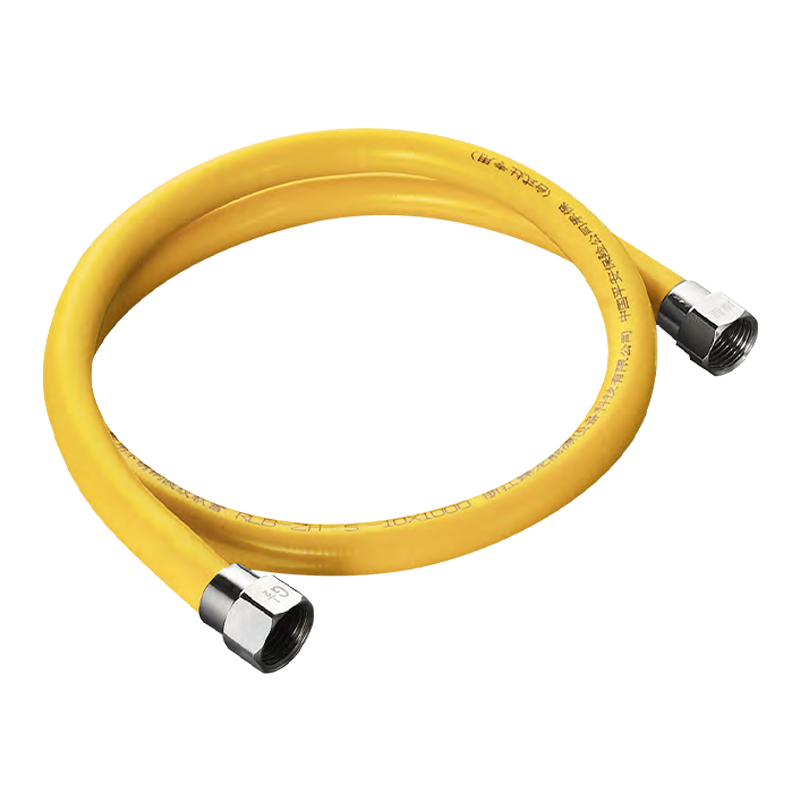
- 18 Product: Stainless steel corrugated gas hose corrosion-resistant ZLR-05
Introduction
Reliable hose assemblies are essential wherever gas appliances, water systems, industrial equipment, and process pipelines require a flexible connection. A suitable hose must do more than carry a medium from one point to another. It must withstand movement, vibration, temperature variation, pressure changes, installation stress, moisture, and exposure to potentially corrosive surroundings. At the same time, its connectors must remain mechanically secure and sufficiently tight throughout the service life of the assembly.
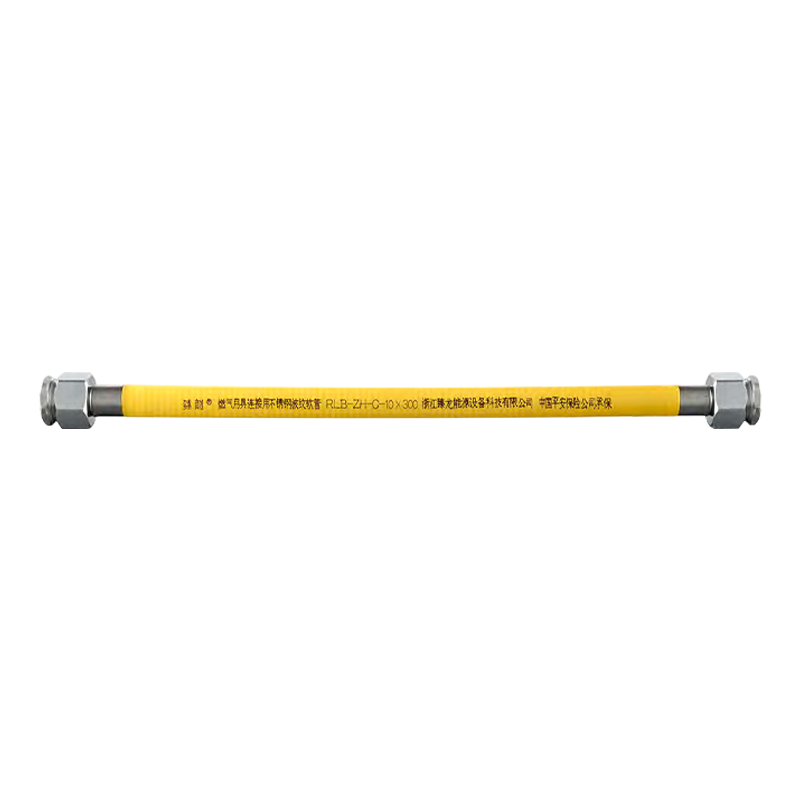
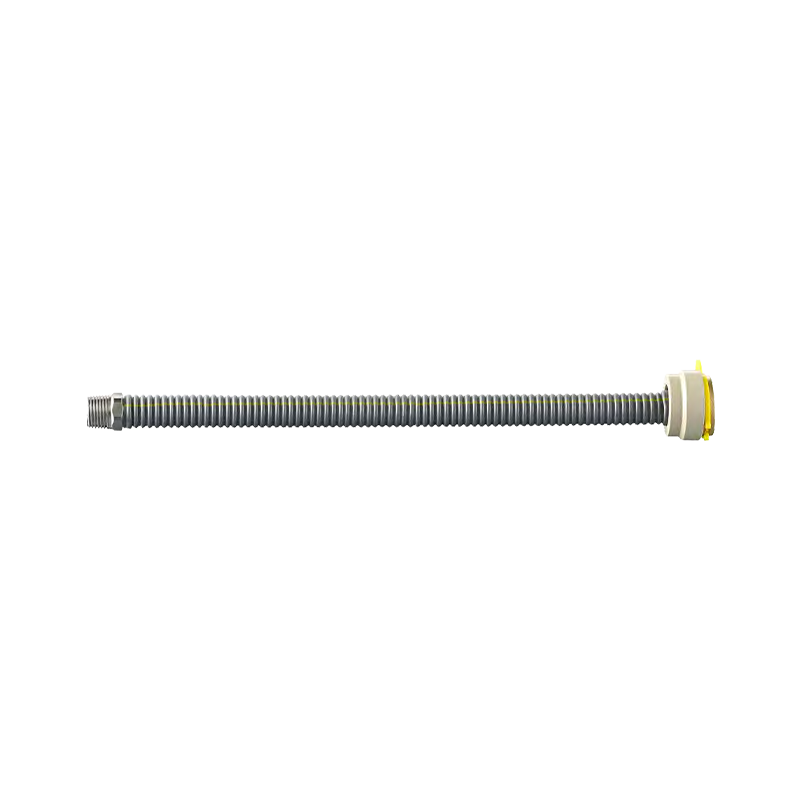
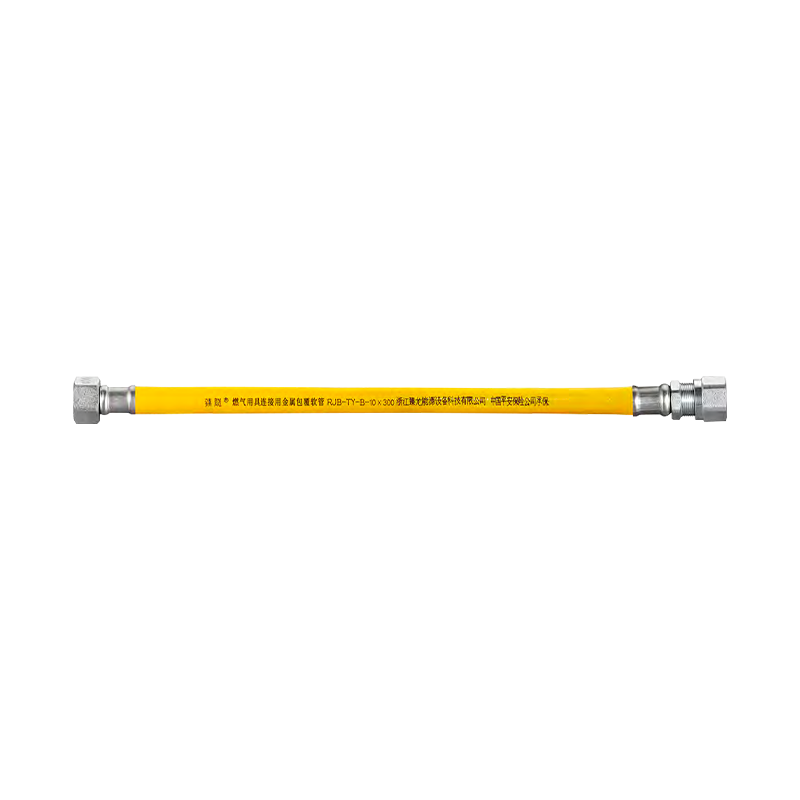
The stainless steel corrugated gas hose described in this article is designed to address these requirements through a combination of 304 stainless steel, a flexible corrugated bellows structure, a protective PVC outer layer, flat sealing gaskets, and stainless steel fastening nuts. Its construction provides a practical balance between flexibility, corrosion resistance, mechanical strength, installation convenience, and long-term sealing performance.
With an available length range of 300 mm to 2000 mm and a DN10 specification, this hose is suitable for many connecting applications involving gas appliances and related piping systems. Its nominal outside diameter is 16 mm, and the standard configuration includes G1/2 nuts, flat washers, a 304 stainless steel bellows, a PVC cover, and stainless steel sleeves.
The product is manufactured by Zhejiang Zhenlong Energy Equipment Technology Co., Ltd., a specialized energy equipment producer with capabilities covering research, development, manufacturing, processing, and industry-trade integration. The company’s production resources include multiple welding and forming lines, hydrogen furnace production lines, material analysis equipment, flow and tightness testing equipment, and documented quality management practices. These capabilities support consistent production and help the company respond to OEM and ODM requirements.
This article examines the hose’s construction, performance advantages, manufacturing process, quality controls, application value, installation considerations, and the technical strengths of the producing company.
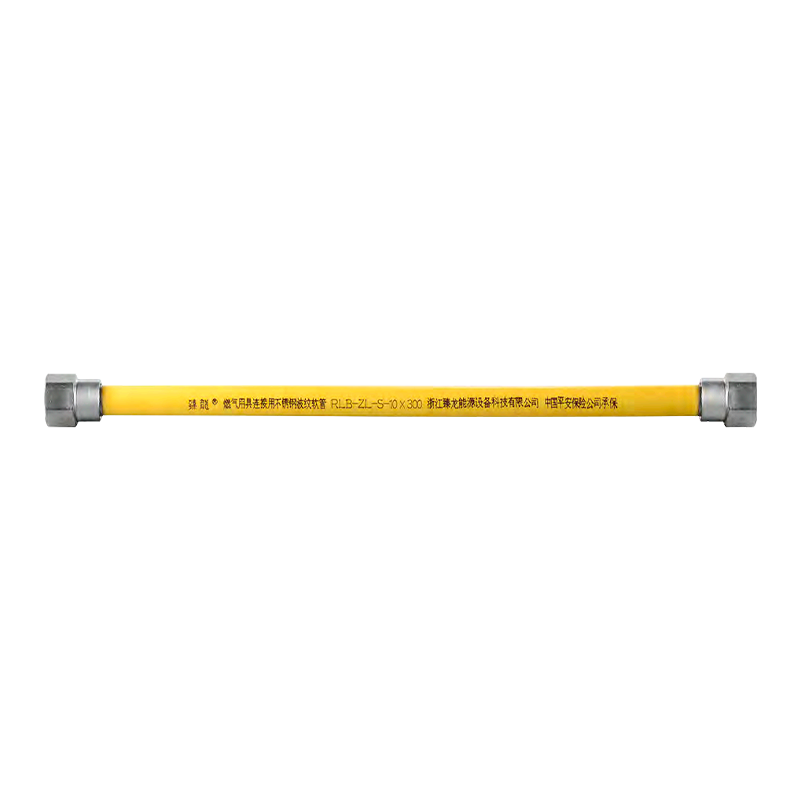
Stainless steel corrugated gas hose corrosion-resistant ZLR-05
Product Overview
The stainless steel corrugated gas hose is a flexible metal hose assembly intended primarily for connecting gas appliances to fixed or semi-fixed pipeline systems. Unlike a rigid pipe, it can accommodate limited movement, alignment differences, and installation tolerances. Unlike a basic rubber or unprotected plastic hose, its metal bellows core provides a more stable structural foundation and higher resistance to heat, pressure, and external mechanical effects.
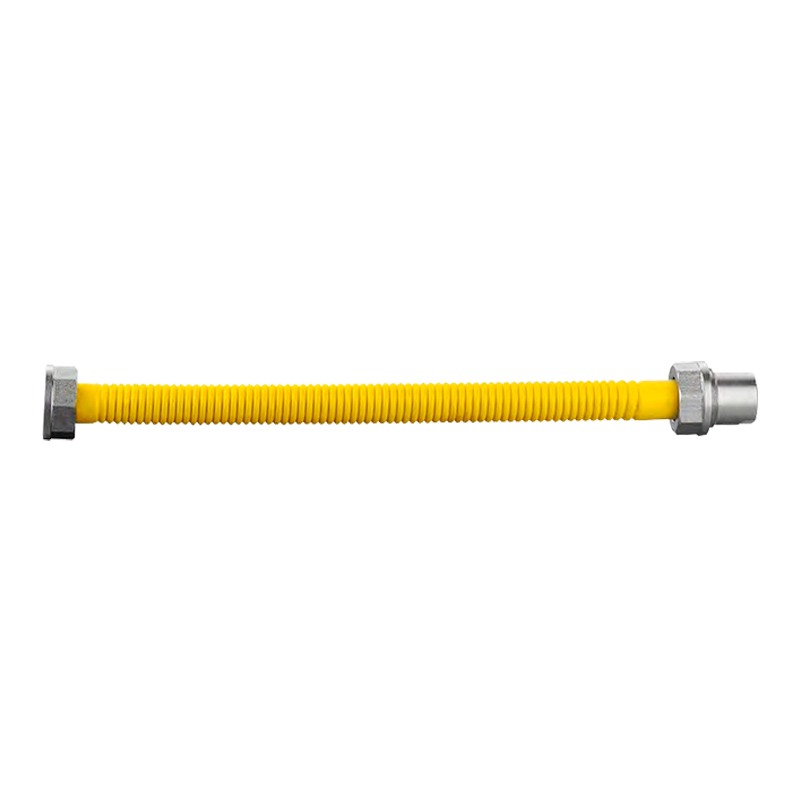
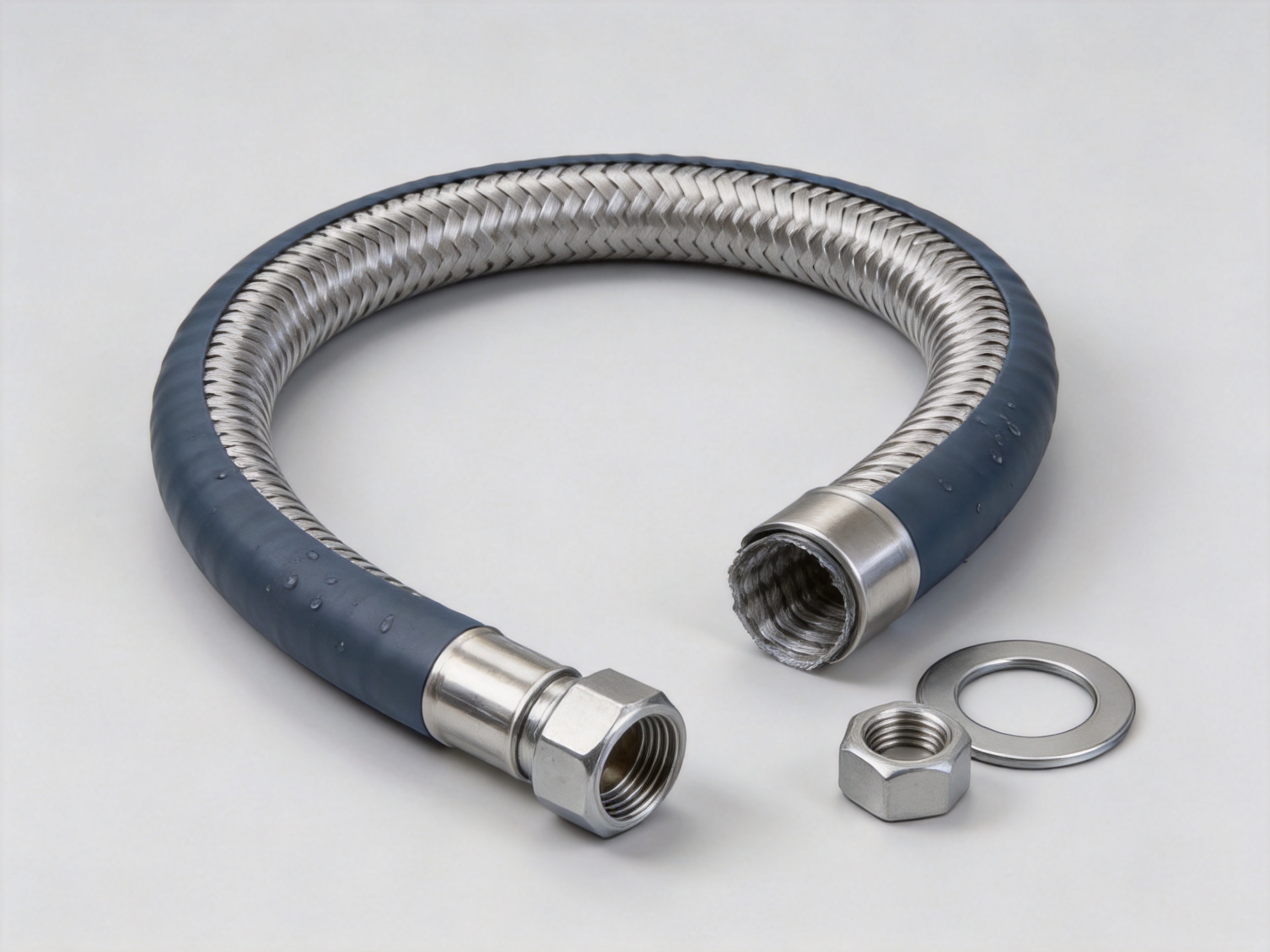
The core component is a corrugated tube formed from premium 304 stainless steel. Corrugation creates a series of controlled folds along the tube wall. These folds allow the hose to bend while maintaining a continuous flow passage. The structure can absorb limited displacement and reduce the need to force rigid pipes into alignment during installation.
The metal bellows is protected by an outer PVC cover. This layer helps shield the stainless steel body from water, moisture, surface abrasion, and incidental contact with surrounding objects. It also creates a useful barrier in environments where condensation, splashing, or dust could otherwise accumulate on the hose surface.
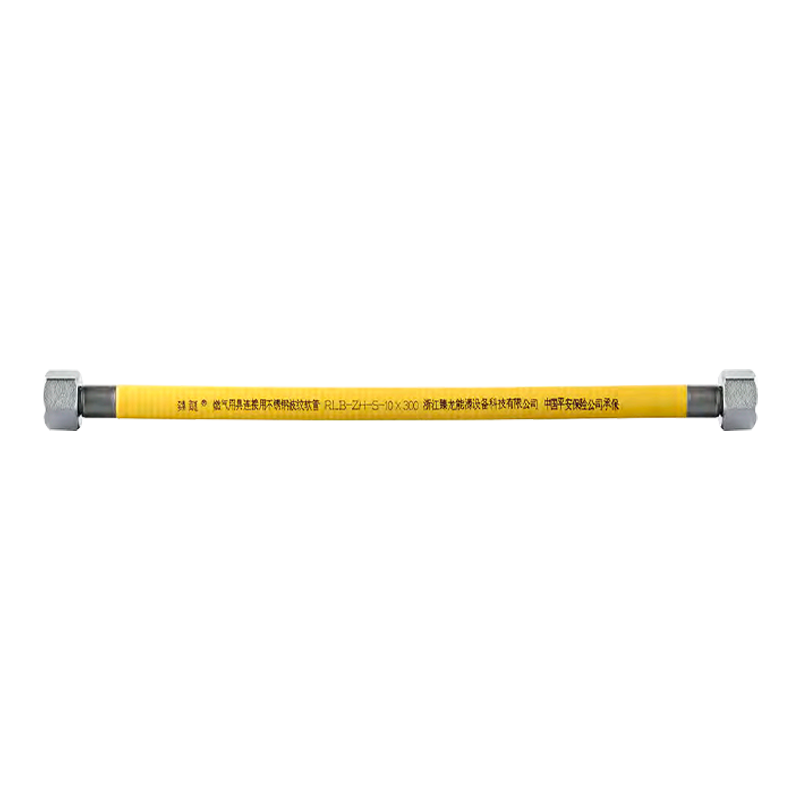
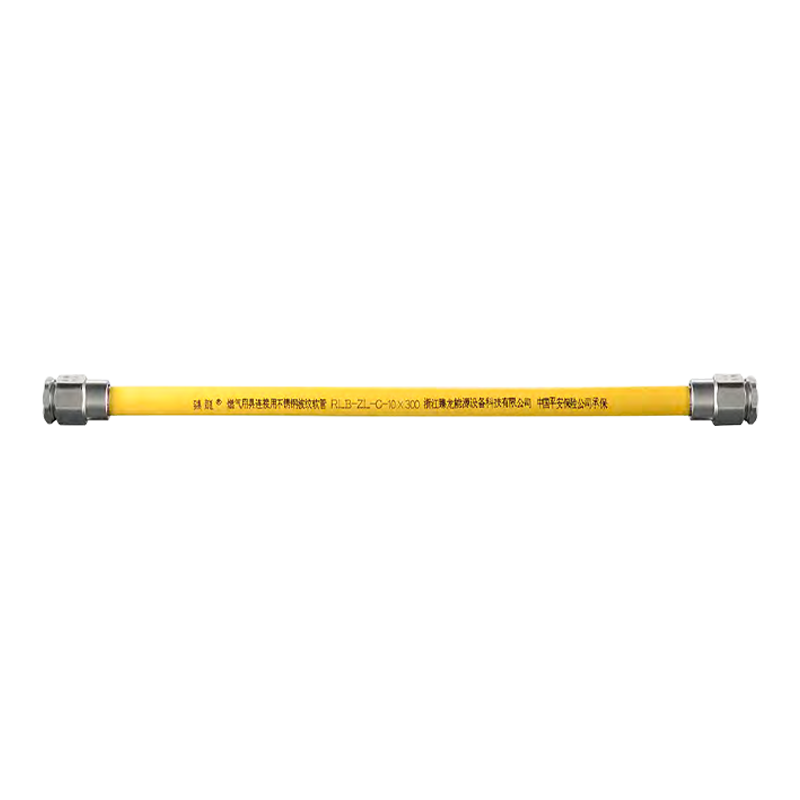
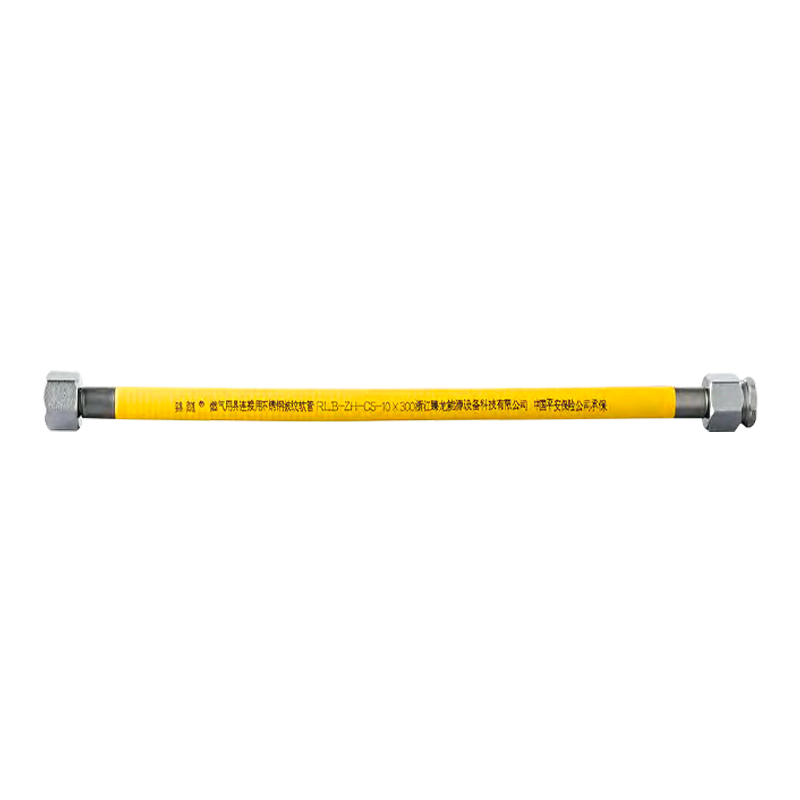
At both ends, the assembly incorporates connection hardware and sealing components. The G1/2 nuts provide a practical interface for compatible connections, while flat gaskets enlarge the contact area between mating surfaces. Stainless steel sleeves and nuts help support the end structure and maintain mechanical stability when the hose is connected and tightened.
The product is therefore not simply a flexible tube. It is a complete connection assembly in which the bellows, protective cover, fittings, gaskets, and fastening elements work together. The quality of the final assembly depends on the compatibility and precision of all these components.
Main Technical Configuration
| Item | Specification | Details |
|---|---|---|
| Product model | ZLR-05 | Stainless steel corrugated gas hose |
| Reference model | RLB-ZL-S-10×300 | Standard configuration |
| Nominal size | DN10 | Compact connecting hose size |
| Outside diameter | 16 mm | Measured external diameter of the assembly |
| Connection | G1/2 nut | Threaded connection hardware |
| Sealing element | Flat washer or gasket | Supports leak-resistant joining |
| Bellows material | 304 stainless steel | Flexible corrugated metal tube |
| Outer protection | PVC cover | Waterproofing, moisture, and abrasion protection |
| Fastening materials | Stainless steel nut and sleeve | Mechanical support and connection stability |
| Available length | 300 mm to 2000 mm | Multiple length options for installation flexibility |
Material Advantages of 304 Stainless Steel
Material selection is one of the most important factors in the performance of a flexible hose. The use of 304 stainless steel for the corrugated bellows provides a strong foundation for applications that require resistance to corrosion, temperature changes, and mechanical stress.
304 stainless steel is widely used in industrial, commercial, and residential equipment because it offers a useful combination of strength, formability, and corrosion resistance. It can be shaped into a corrugated profile while retaining sufficient structural integrity for a flexible connection. The material is also familiar to manufacturers, installers, and maintenance teams, which simplifies procurement and technical evaluation.
In humid areas, ordinary carbon steel can be vulnerable to surface rust and progressive corrosion. A stainless steel bellows reduces this risk and is better suited to environments where condensation or occasional moisture is expected. This does not mean that the hose is immune to every chemical or atmospheric condition. Compatibility should always be assessed according to the exact medium, concentration, temperature, and exposure time. However, 304 stainless steel offers a significantly more durable material platform than many unprotected metallic alternatives.
The stainless steel bellows also provides improved resistance to elevated temperatures compared with many conventional polymer hoses. Gas appliance connections may be exposed to heat generated by nearby equipment, especially when ventilation, clearance, or installation conditions are not ideal. A metal core helps maintain the integrity of the flow passage under temperature fluctuations, provided that the complete assembly is used within its approved operating limits.
Another advantage is mechanical stability. The corrugated metal wall is capable of handling normal installation movement and vibration more effectively than a thin, unsupported flexible tube. When properly installed, the bellows can accommodate small changes in position without requiring sharp bends or excessive force at the fittings.
304 stainless steel is also compatible with precision forming and welding processes. This allows the manufacturer to produce repeatable bellows geometry, stable end sections, and consistent connections. Material quality, forming accuracy, and weld integrity must work together; using stainless steel alone does not guarantee performance unless the manufacturing process is carefully controlled.
Resistance to Corrosion and Environmental Exposure
Corrosion resistance is particularly valuable in kitchens, utility rooms, mechanical spaces, outdoor cabinets, industrial workshops, and other areas where water vapor or cleaning agents may be present. The 304 stainless steel body helps reduce the risk of rapid deterioration, while the PVC cover adds a further layer of environmental protection.
The PVC cover can help prevent direct contact between the metal surface and splashing water, dust, and abrasive particles. It may also reduce the accumulation of contaminants in the corrugations. By protecting the exterior profile, the cover can contribute to easier cleaning and longer service life.
Even with these protective features, the hose should not be installed in locations where it is continuously submerged, exposed to incompatible chemicals, placed against sharp edges, or subjected to temperatures beyond the capabilities of the PVC material. Correct application remains essential to achieving the expected benefits.
Corrugated Construction and Flexibility
The corrugated structure is central to the product’s performance. A smooth-walled metal tube has limited ability to bend without developing high stress at a few concentrated points. A corrugated tube distributes bending across a series of formed ridges and valleys, allowing the assembly to flex over a controlled radius.
This design is useful when the connection points of an appliance and pipeline are not perfectly aligned. It can also help accommodate small movements caused by vibration, thermal expansion, equipment servicing, or building settlement. The installer can route the hose more conveniently than a rigid tube, reducing the need for multiple elbows or complicated pipe adjustments.
Flexibility can simplify installation in confined areas. For example, a compact appliance may be positioned near a wall, inside a cabinet, or beneath a counter where access is limited. A flexible hose can reduce installation time because the connection does not need to be fabricated as a rigid assembly on site.
However, flexibility should not be confused with unrestricted bending. A corrugated hose should never be sharply kinked, twisted, stretched, crushed, or repeatedly bent beyond its recommended radius. The purpose of the corrugation is to permit controlled movement, not to allow careless handling. Proper routing preserves the shape of the bellows and prevents excessive stress at the end fittings.
The structure also helps reduce force transfer to the connected appliance. If a rigid pipe is misaligned, the installer may unintentionally load the appliance inlet or valve. A correctly selected flexible hose can absorb a portion of this alignment difference and help create a less-stressed connection.
Advantages Over Basic Flexible Hoses
Compared with ordinary unreinforced rubber or plastic hoses, a stainless steel corrugated hose offers a metal pressure boundary and improved resistance to external heat. The outer PVC layer preserves some of the handling convenience associated with polymer products while the internal bellows contributes additional mechanical robustness.
Compared with unprotected metal hoses, the PVC cover adds protection against abrasion, moisture, and incidental surface damage. It can be especially useful where the assembly passes near cabinet panels, equipment frames, or other surfaces that could rub against the metal profile.
Compared with rigid pipe connections, the corrugated hose is faster to position and more tolerant of small alignment differences. It can reduce the number of fittings required and may make future maintenance easier because the appliance can be disconnected without dismantling a larger section of piping.
Compared with poorly integrated low-cost assemblies, this product combines the bellows, protective cover, end sleeves, nuts, and flat gaskets as a coordinated system. The sealing and mechanical functions are considered together rather than treating the hose as a tube with separately selected accessories.
These advantages should be evaluated in relation to the application. A flexible metal hose is not intended to replace every type of pipe. Long-distance distribution, underground service, high-cyclic industrial movement, or aggressive chemical transport may require a different product design and certification. The strength of this hose is its role as a compact, flexible connection for compatible gas and fluid systems.
Outer PVC Protection
The PVC outer layer is an important part of the product’s environmental protection strategy. It covers the corrugated stainless steel body and helps reduce exposure to water, condensation, humidity, dust, and abrasion. The result is a hose assembly that is better prepared for practical installation conditions than a bare corrugated tube.
Waterproofing and moisture resistance are valuable around sinks, kitchens, utility rooms, wash areas, equipment enclosures, and other locations where water may occasionally splash or condense. The cover also provides a smoother external surface, which can reduce the tendency of dust and dirt to collect in the deep folds of the corrugation.
A protective polymer layer can also provide an additional visual inspection benefit. Damage to the cover may indicate that the hose has been exposed to rubbing, impact, excessive bending, or another abnormal condition. Regular inspection of the cover can therefore help maintenance personnel identify potential installation problems before the metal core or connection points are compromised.
Although the PVC cover is durable, it should not be treated as a substitute for correct routing. The hose should be kept away from sharp edges, direct flame, severe heat sources, aggressive solvents, and moving machine components unless the complete assembly has been specifically approved for those conditions. Where high temperatures are unavoidable, the application should be reviewed against the operating limits of both the stainless steel bellows and the PVC cover.
Connection Design and Sealing Reliability
A flexible hose is only as reliable as its end connections. The ZLR-05 configuration includes G1/2 nuts, flat gaskets, stainless steel sleeves, and supporting end components. These parts are designed to establish a secure mechanical interface and a dependable seal when used with compatible mating connections.
The flat gasket plays a key role in sealing. It enlarges the contact surface between the hose end and the mating face, helping distribute tightening pressure more evenly. By reducing stress concentration, it can support a more stable seal and reduce the risk that a small surface irregularity will become a leakage path.
A flat gasket also makes the connection less dependent on thread sealing alone. Threaded components provide mechanical engagement, but the gasket is responsible for sealing across the contact face in a compatible flat-face arrangement. Installers must use the correct gasket type and ensure that the sealing surfaces are clean, aligned, and free from damage.
The stainless steel nut provides firm fastening and helps maintain connection stability during normal service. Stainless steel hardware is beneficial in damp or corrosive environments because it provides better environmental resistance than many untreated steel alternatives. The sleeve supports the end structure and contributes to the controlled transfer of tightening force.
Correct tightening is essential. Under-tightening may lead to leakage or movement, while over-tightening can damage the gasket, distort the connection, or place excessive stress on the hose end. Installation should follow the applicable technical instructions, local gas regulations, and the requirements of the connected appliance.
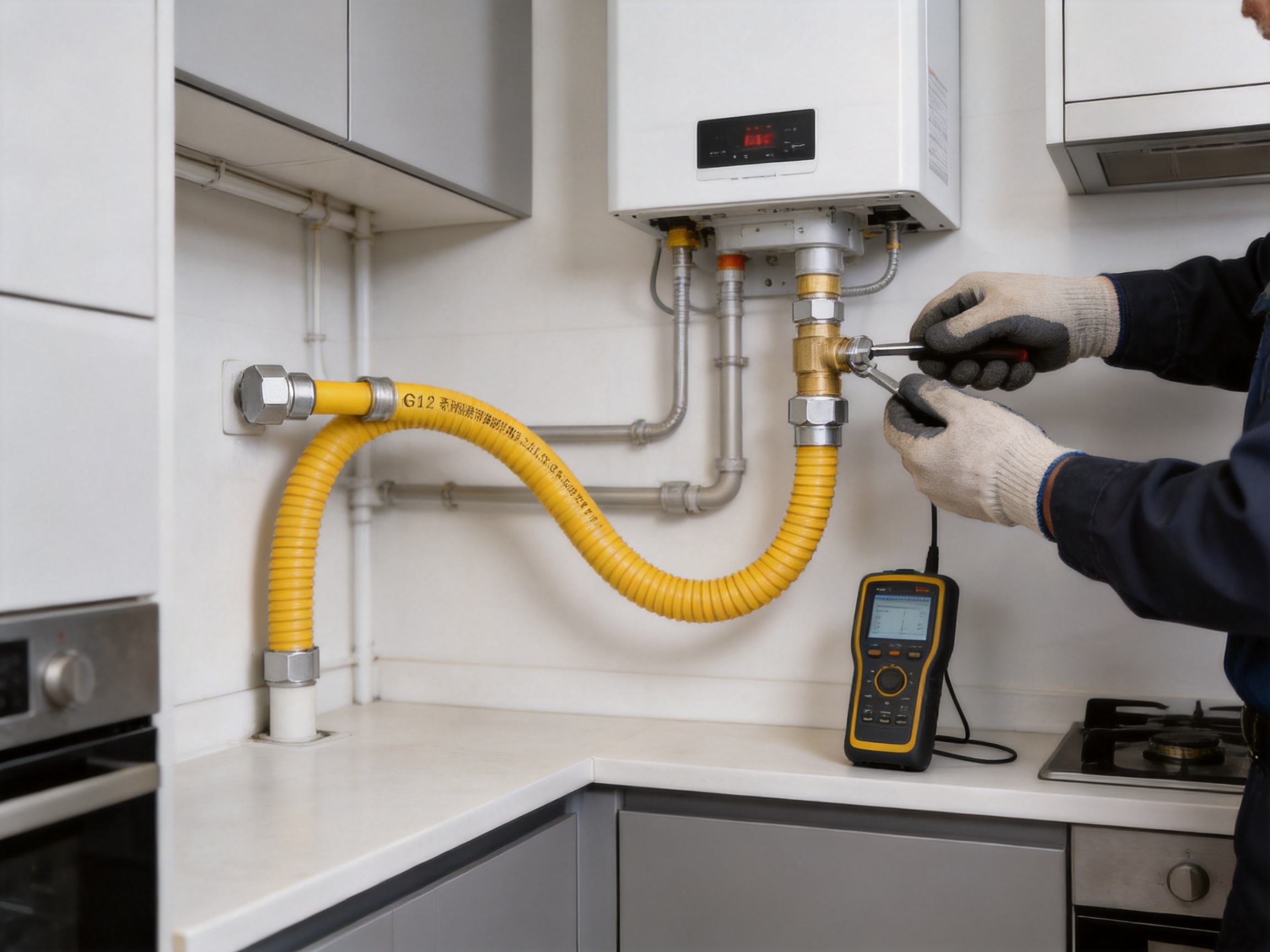
After installation, the connection should be tested using an approved leak-detection method. Open flames must never be used to check for gas leakage. Maintenance personnel should also periodically inspect the gasket, nut, cover, and nearby piping for signs of damage, corrosion, movement, or deterioration.
Application Range
The primary application is the connection of gas appliances to compatible gas supply systems. The compact DN10 design and G1/2 connection hardware make the assembly suitable for many appliance connection arrangements, subject to local standards, thread compatibility, pressure requirements, and certification conditions.
Potential installation environments include residential kitchens, commercial cooking areas, utility rooms, equipment cabinets, heating equipment, and other locations where a flexible gas connection is required. The available 300 mm to 2000 mm length range allows users to select a hose that fits the distance without creating unnecessary loops or tension.
The hose may also be considered for compatible water and general fluid connection duties. The product information identifies gas, water, and chemical pipeline applications, but actual use must be determined through material compatibility analysis and applicable regulations. A gas hose should not automatically be used for every chemical or high-temperature fluid simply because the metal bellows is stainless steel.
For water applications, the PVC cover and stainless steel construction can be advantageous in humid environments. For industrial service, the hose may be useful where equipment vibration or limited movement makes rigid piping inconvenient. In all cases, the working pressure, temperature, medium, movement frequency, and connection standard must be verified before selection.
Typical Application Considerations
When selecting a hose for a gas appliance, the first consideration is compatibility with the gas type and system pressure. The second is the connection size and thread form. The third is the required length and routing path. The hose should be long enough to connect without tension but not so long that it forms unsupported loops, contacts hot surfaces, or becomes exposed to unnecessary movement.
In water systems, users should consider water temperature, pressure surges, water chemistry, and the possibility of external condensation. In industrial settings, vibration frequency, movement amplitude, cleaning chemicals, exposure to oil, and installation supports may be more important than simple static pressure.
Where the hose is installed in a public, commercial, or regulated facility, local codes may specify approved hose types, inspection intervals, connection methods, and certification requirements. The product should be selected and installed only where its documentation and approvals meet those requirements.
Manufacturing Process and Production Strength
The performance of a corrugated hose depends heavily on manufacturing consistency. Small variations in wall thickness, corrugation geometry, welding quality, connector alignment, or gasket seating can influence the final product. A manufacturer with dedicated forming, welding, testing, and material-control capabilities is better positioned to manage these variables.
The producing company operates as an energy equipment manufacturer with research, development, manufacturing, processing, and trade capabilities. Its product range includes metal hoses, natural gas pipelines, plumbing fittings, sanitary ware, valves, plastic products, and hardware. This breadth gives the company practical experience with both flexible metal components and the connection systems used around them.
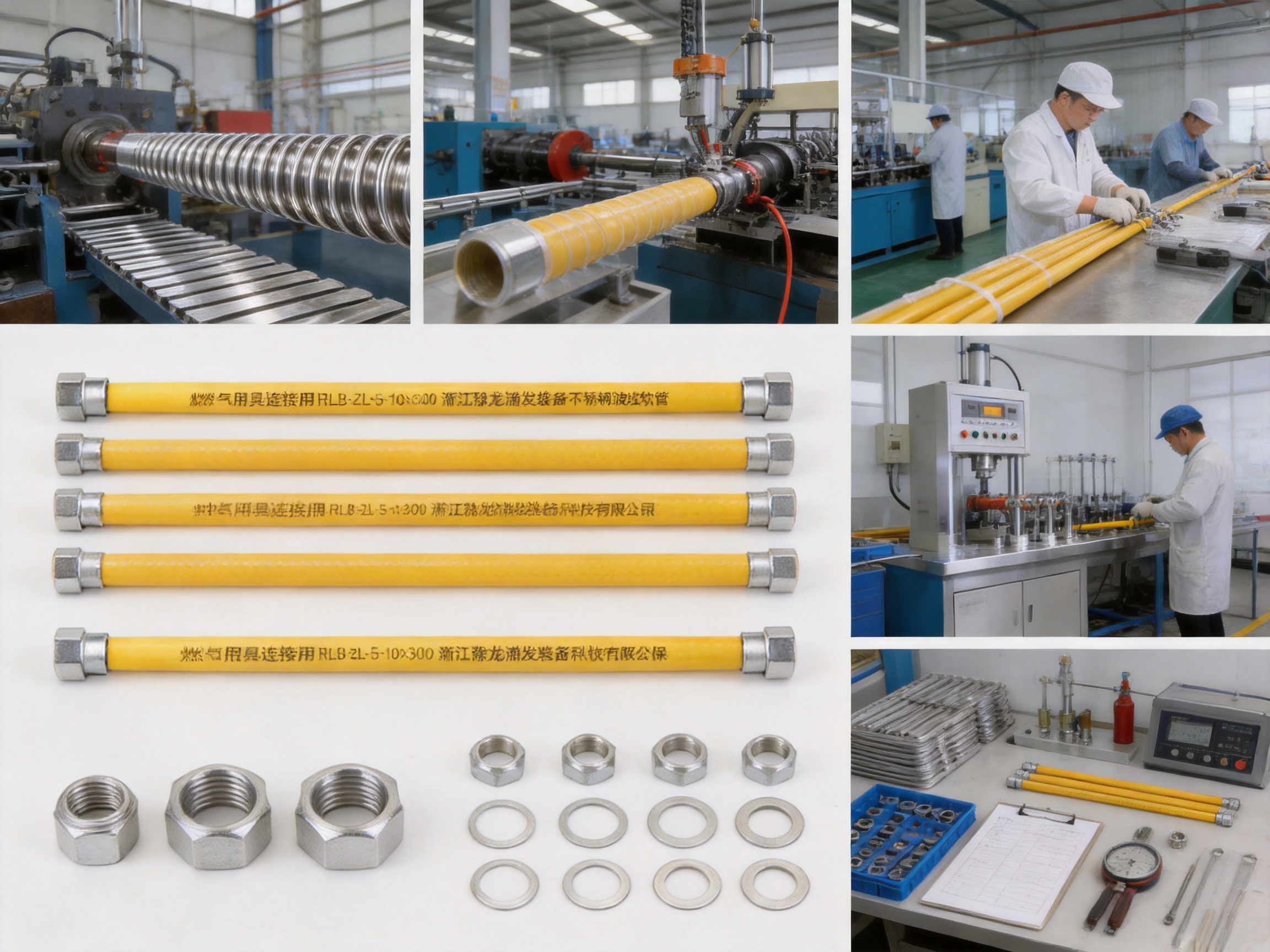
The company’s manufacturing site covers approximately 40 acres and includes a factory building of about 30,000 square meters. Its production resources include 30 welding and forming lines. Multiple production lines can support capacity, product diversification, and more efficient organization of different models and specifications.
Welding and forming are particularly important for corrugated hose production. Forming equipment creates the bellows profile and controls the shape of the flexible section. Welding processes are used in relevant component and assembly operations, where joint consistency and heat control are essential. A stable manufacturing environment helps reduce variation between production batches.
The company also operates two uninterrupted solid melting hydrogen furnace production lines. Furnace capability supports controlled processing of metal materials and can contribute to stable material quality for suitable product components. Continuous production resources may also help improve process repeatability and manufacturing efficiency.
Material Analysis and Laboratory Resources
Material verification is an important part of quality assurance. The company has metal material analysis equipment, including direct-reading spectrometers. Such equipment can be used to analyze the composition of metal materials and help verify whether incoming materials correspond to required grades.
Material analysis is valuable because visual appearance alone cannot confirm stainless steel grade. Chemical composition influences corrosion resistance, formability, weldability, and long-term performance. By maintaining analytical capabilities, a manufacturer can better control raw material selection and reduce the risk of material substitution or inconsistency.
Testing equipment also includes flow and tightness testers. Flow testing can help evaluate whether the internal passage meets functional expectations, while tightness testing is directly relevant to gas and fluid connection safety. Leak testing is especially important because a hose can appear visually acceptable while still having a problem at a weld, gasket interface, or end fitting.
Testing should be integrated into production rather than reserved only for occasional investigations. A structured testing program can include incoming material checks, process inspections, dimensional verification, pressure or tightness testing, visual examination, and final assembly inspection. The specific tests and acceptance criteria depend on the product standard and intended application.
Quality Management and Compliance Orientation
The company states that it implements the ISO9000:2008 quality management system. A documented quality system provides a framework for organizing production procedures, inspection responsibilities, corrective actions, traceability, and customer service. Although a management system does not replace product testing, it can help ensure that testing and production controls are applied consistently.
The company also holds a Special Equipment Manufacturing License issued in the People’s Republic of China for pressure pipelines. This qualification is relevant to its involvement in pipeline and pressure-related equipment manufacturing. In addition, the company has EU CE certification testing reports and is a member of the China Urban Gas Association.
These qualifications and industry affiliations demonstrate an orientation toward regulated products and technical compliance. Buyers should still request the specific certificate, report, standard, pressure rating, and scope applicable to the exact hose model and intended market. Certifications are meaningful only when the documented product, configuration, and application correspond to the actual purchase.
For OEM and ODM customers, documented process control can be particularly valuable. Custom production may involve different lengths, connection styles, cover colors, packaging requirements, markings, or assembly specifications. A capable quality system helps manage these changes without losing control over critical characteristics.
Advantages for OEM and ODM Buyers
OEM and ODM buyers often need more than a standard catalog product. They may require a specific length, connection arrangement, label, package, inspection procedure, or delivery schedule. The manufacturer’s integrated approach to research, production, processing, and trade can simplify communication between product design and factory execution.
The available hose length range from 300 mm to 2000 mm already provides flexibility for many standard applications. Where project requirements are different, the company’s engineering and manufacturing resources may support discussions about customized configurations, subject to technical feasibility and applicable approvals.
Having forming, welding, material analysis, and leak-testing resources within the manufacturing organization can reduce dependence on unrelated subcontractors. This may help improve coordination and shorten feedback cycles when a customer requests a design adjustment or identifies a field issue.
Customers can also benefit from the company’s broader product knowledge. Since the company manufactures metal hoses, gas pipelines, plumbing fittings, valves, and related hardware, it can better understand how a flexible hose interacts with the rest of a pipeline or appliance connection system.
For international buyers, pre-sales documentation is important. Useful documents may include product drawings, dimensional data, material information, testing records, packaging specifications, installation guidance, and compliance documents. The exact documentation package should be agreed before purchase, especially for gas-related products.
Installation and Maintenance Guidance
Before installation, confirm the hose model, length, connection type, medium, working pressure, and temperature range. Inspect the hose for shipping damage, cuts, crushed sections, distorted corrugations, damaged threads, missing gaskets, or deformation of the nuts and sleeves.
Check that the mating connections are compatible with the G1/2 hardware. Threads should be clean and correctly aligned. The sealing faces should be free from dirt, burrs, scratches, old gasket material, and other contamination that could interfere with the flat gasket.
Route the hose with smooth bends and adequate clearance. Avoid sharp kinks, twisting, compression, and unnecessary loops. Do not use the hose to support the weight of an appliance or other equipment. The assembly should connect two stable points without being pulled into position through excessive force.
Keep the hose away from direct flame, hot exhaust surfaces, sharp cabinet edges, and moving parts. Do not paint, clamp, staple, drill, or otherwise modify the hose unless the manufacturer has approved the specific procedure. Modifications can damage the protective cover, bellows, or sealing system.
Install a new gasket where required. Used gaskets may have permanent deformation or surface damage and may not provide the same sealing performance after removal. Tighten the connection according to the relevant installation instructions. Avoid using excessive force or tools in a way that twists the corrugated body.
After assembly, carry out a suitable leak test and inspect the entire routing path. For gas installations, follow local regulations and use an approved gas-leak detection method. If a leak is detected, shut off the supply, release pressure safely, inspect the connection, and correct the problem before placing the equipment into service.
Maintenance inspections should consider the condition of the PVC cover, visible stainless steel areas, fittings, gaskets, and surrounding equipment. Replace the hose if it shows significant abrasion, cracking, crushing, severe corrosion, leakage, permanent deformation, or evidence of overheating.
Performance Comparison by Design Feature
| Design feature | Practical benefit | Value compared with simpler alternatives |
|---|---|---|
| 304 stainless steel bellows | Corrosion resistance, heat tolerance, and structural strength | More robust than many unreinforced polymer hoses in demanding environments |
| Corrugated profile | Controlled flexibility and movement absorption | More installation-tolerant than rigid pipe sections |
| PVC outer cover | Moisture, waterproofing, and abrasion protection | Better environmental shielding than an exposed metal bellows |
| Flat gasket | Broad contact surface and improved sealing support | Helps reduce stress concentration at the connection face |
| Stainless steel nuts and sleeves | Secure fastening and mechanical stability | Better suited to humid surroundings than many untreated steel fittings |
| 300 mm–2000 mm length range | Selection flexibility for different layouts | Reduces the need for improvised extensions or excessive routing |
| Integrated quality testing | Material and tightness verification | Supports more consistent production than visual inspection alone |
Safety and Responsible Product Selection
Gas connection products should always be treated as safety-critical components. A high-quality construction helps reduce risk, but safe performance also depends on correct selection, installation, inspection, and replacement. Users should never exceed the product’s approved pressure, temperature, medium, movement, or environmental limits.
The term corrosion-resistant does not mean universally resistant to all chemicals. Stainless steel can be affected by certain chlorides, acids, cleaning agents, and industrial substances. PVC also has its own compatibility and temperature limitations. When the hose will be exposed to chemicals, the buyer should provide the manufacturer with detailed information about concentration, temperature, exposure duration, and cleaning methods.
Hose length should be selected carefully. A hose that is too short may be stretched or forced into a sharp bend. A hose that is too long may sag, rub against nearby surfaces, or become vulnerable to accidental movement. The best installation uses the shortest practical length that permits smooth routing, safe access, and normal equipment servicing.
In areas with repeated equipment movement, users should confirm whether the product is designed for continuous flexing or only for limited installation adjustment. A corrugated hose can absorb normal movement, but repetitive high-cycle motion may require a specialized industrial hose assembly with a documented fatigue rating.
Why This Product Is a Practical Connection Solution
The main strength of this stainless steel corrugated gas hose is the way several complementary features are combined in one assembly. The 304 stainless steel bellows provides the pressure boundary and flexible metal structure. The corrugation enables controlled bending. The PVC cover protects the exterior. The gasket supports sealing. The stainless steel nut and sleeve provide secure fastening.
This combination addresses the most common weaknesses found in basic connecting hoses. A simple hose may be flexible but vulnerable to heat. A bare metal bellows may be strong but more exposed to abrasion and moisture. A rigid pipe may be durable but difficult to align. A connection without a properly selected gasket may be mechanically tight but vulnerable to leakage. The integrated design seeks to balance these requirements in a compact product.
The product is also supported by a manufacturer with broad energy equipment experience and substantial production infrastructure. Multiple forming and welding lines, furnace resources, material analysis equipment, tightness testing equipment, documented quality management practices, and industry qualifications create a foundation for repeatable manufacturing.
For distributors, contractors, appliance manufacturers, and industrial buyers, these features can translate into easier product selection, more dependable installation, and better support for customized procurement. The product is particularly suitable for buyers who want a flexible metal hose with environmental protection and a complete connection configuration rather than an unassembled tube.
Frequently Asked Questions
What is the primary use of this hose?
Its primary use is connecting compatible gas appliances to gas supply systems. It can also be considered for selected water or fluid applications when the medium, pressure, temperature, fittings, and local requirements have been verified.
What material is used for the corrugated bellows?
The corrugated bellows is manufactured from 304 stainless steel. This material provides a practical combination of corrosion resistance, strength, formability, and resistance to elevated temperatures.
What is the purpose of the PVC outer cover?
The PVC cover helps protect the stainless steel bellows from moisture, water, dust, and abrasion. It also creates a smoother external surface and provides an additional barrier against everyday environmental exposure.
What connection does the standard configuration use?
The listed configuration uses G1/2 nuts with flat washers or gaskets. Buyers must verify that the mating equipment uses compatible connection dimensions and thread specifications.
What lengths are available?
The listed length range is 300 mm to 2000 mm. The correct length should allow smooth routing without stretching, sharp bending, twisting, or unnecessary loops.
Can the hose be used with chemicals?
Potential chemical use must be evaluated individually. The compatibility of 304 stainless steel and PVC depends on the chemical type, concentration, temperature, exposure time, and operating conditions. Technical confirmation should be obtained before chemical service.
Does the corrugated structure allow unlimited bending?
No. The corrugated structure provides controlled flexibility, but the hose should not be kinked, twisted, crushed, or bent below its recommended minimum radius. It should be routed smoothly and protected from mechanical abuse.
Why is a flat gasket important?
The flat gasket enlarges the sealing contact area and helps distribute tightening pressure. It can reduce stress concentration and support a more reliable connection when the sealing faces are clean, aligned, and compatible.
How should the hose be checked after installation?
Inspect the hose routing, fittings, gasket seating, outer cover, and connection alignment. Then perform an approved leak test appropriate to the service. Gas connections must never be tested with an open flame.
What manufacturing capabilities support this product?
The manufacturer operates welding and forming production lines, uninterrupted solid melting hydrogen furnace lines, metal material analysis equipment, and flow and tightness testing equipment. These resources support material control, forming, assembly, and product verification.
Does the manufacturer support OEM and ODM production?
The company’s integrated research, development, manufacturing, processing, and trade structure supports OEM and ODM discussions. Customized lengths, connection details, packaging, markings, and documentation should be confirmed according to technical feasibility and approval requirements.
What should buyers request before placing an order?
Buyers should request the applicable product drawing, material information, dimensions, connection details, pressure and temperature data, test documentation, certification scope, packaging information, and installation instructions. The documents should correspond to the exact product configuration being purchased.
Conclusion
The corrosion-resistant stainless steel corrugated gas hose provides a dependable solution for flexible connections in compatible gas, water, and selected industrial fluid systems. Its 304 stainless steel bellows offers a durable and corrosion-resistant core, while the corrugated construction provides controlled flexibility for installation and limited movement.
The PVC outer cover adds waterproofing, moisture resistance, and abrasion protection. Flat gaskets improve the sealing interface by enlarging the contact surface and reducing stress concentration. Stainless steel nuts and sleeves contribute to secure fastening and long-term mechanical stability. Together, these features create a more complete and application-ready assembly than a basic unprotected tube.
The manufacturer strengthens the product offering through broad energy equipment experience, a substantial production site, multiple welding and forming lines, furnace resources, material analysis instruments, tightness testing equipment, quality management practices, and relevant industry qualifications. These capabilities are important for maintaining consistent product quality and supporting the needs of OEM, ODM, distributor, and project customers.
As with every gas and fluid connection product, performance depends on correct selection and installation. Users should verify compatibility, observe local regulations, avoid excessive bending or environmental exposure, and conduct appropriate leak and maintenance inspections. When applied within its intended conditions, this stainless steel corrugated hose offers a practical combination of flexibility, corrosion resistance, environmental protection, and connection reliability.
References
1. Stainless Steel 304 Material Characteristics and General Engineering Applications, technical materials reference.
2. General Principles for Flexible Metal Hose Design, Forming, Installation, and Maintenance, industrial piping guidance reference.
3. Quality Management Systems for Manufacturing Organizations, ISO 9000 series reference.
4. General Safety Practices for Gas Appliance Connections and Leak Testing, gas installation safety guidance.
5. Principles of Gasketed Flange and Flat-Face Sealing, mechanical joining reference.
6. Stainless Steel Corrosion Resistance in Moist and Industrial Environments, materials engineering reference.
7. Flexible Hose Routing, Bend Radius, Vibration, and Mechanical Installation Practices, industrial equipment maintenance reference.