 English
 中文简体
中文简体 Español
 عربى
عربى

Content
- 1 Introduction
- 2 Product Overview
- 3 Why Stainless Steel Is Suitable for Residential Gas Fittings
- 4 Internal and External Thread Design
- 5 Reinforced Base for Stable Installation
- 6 Ball Mechanism and Flow Control
- 7 Advantages Over Basic or Less Adaptable Alternatives
- 8 Manufacturing Strengths and Process Control
- 9 Certification and Compliance Considerations
- 10 Installation Guidance for Professional Use
- 11 Maintenance and Service Life
- 12 Applications
- 13 Purchasing Advantages for Distributors and Project Buyers
- 14 Company Manufacturing and Service Capabilities
- 15 Comparison of Key Product Features
- 16 Safety Responsibilities
- 17 Q&A
- 17.1 What is the main purpose of this valve?
- 17.2 What does DN15 mean?
- 17.3 Why does the valve have both internal and external threads?
- 17.4 What is the purpose of the base?
- 17.5 Is stainless steel better than ordinary metal for a gas valve?
- 17.6 Can the valve be used outdoors?
- 17.7 Can this valve be used for industrial gas pipelines?
- 17.8 Does the valve eliminate the need for leak testing?
- 17.9 Can the valve handle be used to tighten the connection?
- 17.10 What should be checked before ordering?
- 17.11 What manufacturing resources support this product?
- 17.12 Can the manufacturer provide customized products?
- 18 Conclusion
- 19 References
- 20 Product: Stainless steel Internal and external wire ball valve with base for home gas hose
Introduction
Reliable gas flow control is essential in every residential gas installation. A valve used with a home gas hose must do more than open and close a passage. It must maintain a secure connection, withstand corrosion, tolerate temperature variation, operate smoothly, and remain stable during daily use. The stainless steel internal and external thread ball valve with base for home gas hose is designed to address these requirements in a compact DN15 configuration.
This valve belongs to the category of stainless steel corrugated hose fittings for gas transmission. It is engineered for connection with residential gas hose systems, including installations in which the valve is mounted inside or alongside a buried wall box. Its internal and external thread arrangement provides installation flexibility, while the reinforced base supports stable positioning and reduces mechanical stress on connected components.
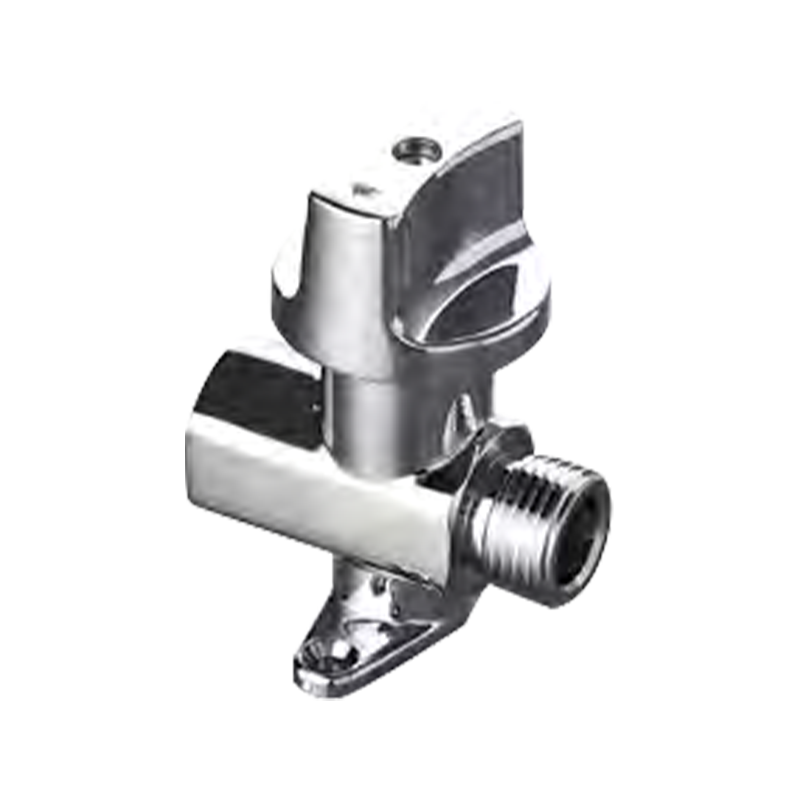
The product is identified as ZLP-003 and is specified as an internal and external thread ball valve with base for a buried wall box. Its construction is based on stainless steel, a material widely selected for gas-related fittings because of its strength, corrosion resistance, hygienic surface, and ability to retain mechanical performance across a broad range of service conditions.
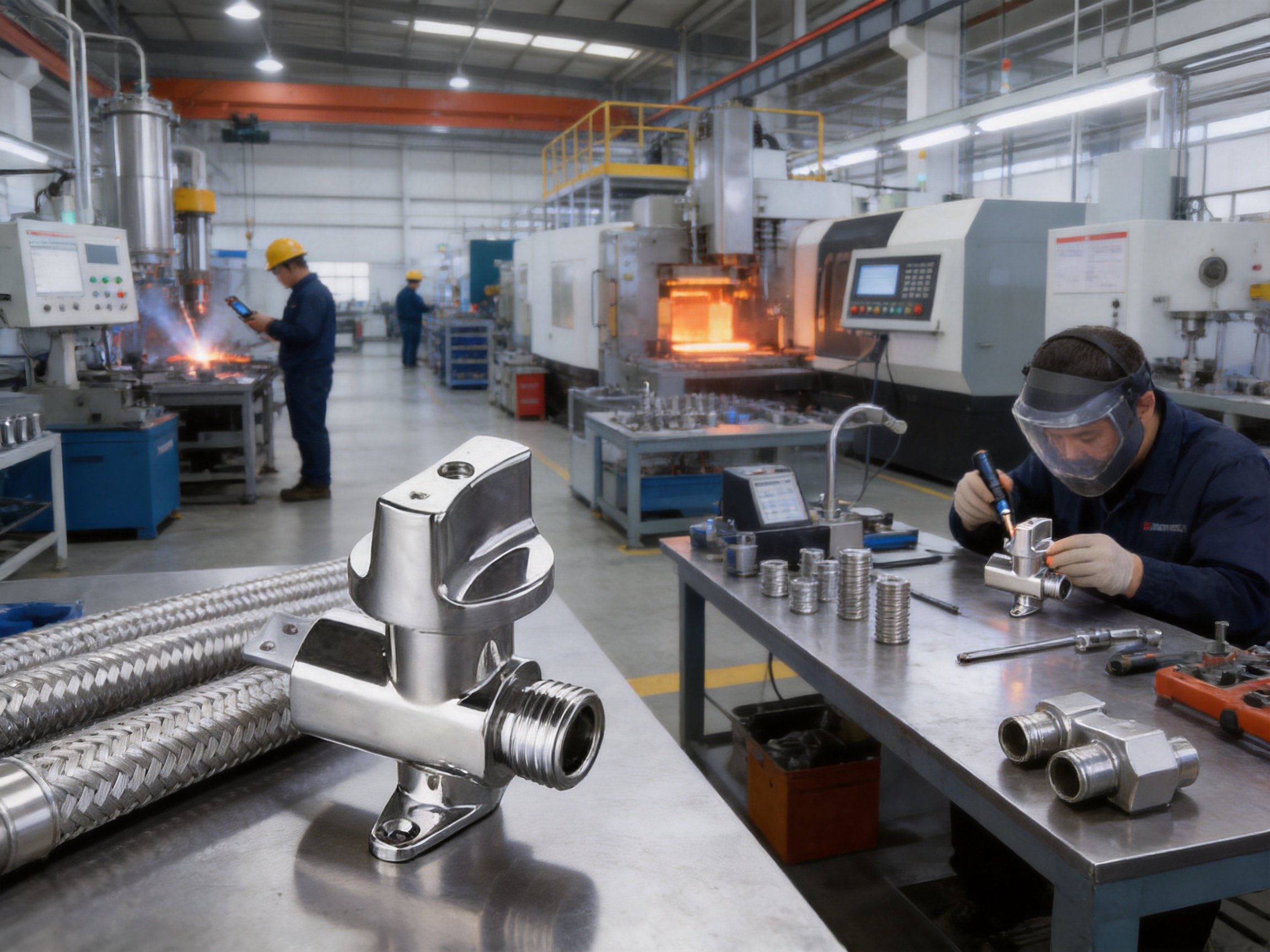
Beyond the valve itself, the product reflects the manufacturing capabilities of Zhejiang Zhenlong Energy Equipment Technology Co., Ltd. The company develops and manufactures metal hoses, natural gas pipelines, plumbing fittings, sanitary ware, valves, plastic products, and hardware. Its facilities include multiple welding and forming production lines, solid melting hydrogen furnace production lines, material analysis equipment, and flow and tightness testing equipment. These capabilities support a controlled production process from raw material handling through forming, machining, assembly, and inspection.
Stainless steel Internal and external wire ball valve with base for home gas hose
Product Overview
The stainless steel internal and external thread ball valve with base is a compact shut-off and flow-control component intended for home gas hose applications. The valve uses a ball mechanism with a drilled passage. When the handle is rotated to the open position, the passage aligns with the gas route. When rotated to the closed position, the solid side of the ball blocks the passage and interrupts flow.
The ball valve principle is valued for its simple operating action and relatively low resistance when fully open. Unlike some multi-turn valve designs, a ball valve normally requires only a quarter-turn movement between open and closed positions. This makes it convenient for household users and allows a gas supply to be isolated quickly during maintenance, replacement, or an emergency situation.
The ZLP-003 design combines the valve body with a base intended for stable installation in a buried wall box. This integrated arrangement is important because a gas connection should not depend entirely on the hose or threaded joint to support the weight and movement of the valve. A mounting base distributes force and helps keep the valve in its intended position when the handle is operated or when connected piping experiences minor movement.
The internal and external thread configuration offers two different connection directions. Depending on the surrounding system design, one side can accept a male threaded component while the other side can connect to a female threaded component. This arrangement can reduce the number of adapters needed in certain installations and can simplify alignment in compact residential service spaces.
| Item | Specification |
|---|---|
| Product code | ZLP-003 |
| Product type | Internal and external thread ball valve with base |
| Intended installation | Buried wall box and residential gas hose systems |
| Nominal size | DN15 |
| Primary material | Stainless steel |
| Application category | Stainless steel corrugated hose fittings for gas transmission |
| Operating function | Gas shut-off and flow control |
Why Stainless Steel Is Suitable for Residential Gas Fittings
Corrosion resistance
Residential gas fittings can be exposed to humidity, condensation, cleaning chemicals, salts, and changing indoor or outdoor environmental conditions. Corrosion can damage threads, weaken the valve body, interfere with handle movement, and eventually affect sealing performance. Stainless steel provides a strong level of resistance against many common corrosive influences, helping the valve retain its appearance and structural integrity over a long service period.
Corrosion resistance is particularly useful in wall boxes, kitchens, utility rooms, balconies, and other locations where moisture may be present. It also supports use in installations where the fitting is not continuously visible and where early surface deterioration could otherwise go unnoticed.
Mechanical strength
A gas valve must withstand the forces created during installation, tightening, handle operation, and connection to adjacent piping. Stainless steel offers high mechanical strength compared with many lower-strength materials. This allows the valve body and threaded sections to resist deformation when properly installed.
High strength does not eliminate the need for correct installation. Excessive tightening, cross-threading, unsupported hose loads, or the use of unsuitable tools can damage any fitting. However, a properly manufactured stainless steel valve provides a robust foundation for a secure gas connection.
Temperature stability
Residential gas systems may experience seasonal temperature changes, heat from nearby appliances, and occasional outdoor exposure. Stainless steel maintains useful mechanical performance across a wide temperature range and is less likely than some alternative materials to soften or become brittle under ordinary service conditions.
The permitted pressure and temperature range for a specific installation must always be confirmed through the applicable technical documentation, local regulations, and system design. Material suitability is one part of safe performance; seal selection, connection method, and certification are equally important.
Clean and professional appearance
Stainless steel provides a clean metallic surface that suits exposed utility installations and modern residential equipment. Its appearance is especially useful where a valve is positioned near a visible appliance, service panel, or kitchen connection. The surface can also be cleaned more easily than many porous or heavily textured alternatives when appropriate maintenance procedures are followed.
Internal and External Thread Design
The internal and external thread arrangement is one of the main practical advantages of the product. In a gas piping assembly, connection direction and available installation space can vary considerably. A valve with complementary thread forms can provide greater layout flexibility than a valve with the same connection type on both ends.
An internal thread, sometimes called a female thread, receives a matching external threaded component. An external thread, sometimes called a male thread, enters a matching internal threaded component. The two thread types must have compatible dimensions, profiles, standards, and sealing methods. They should never be forced together if the thread form is uncertain.
For installers, the combined configuration can simplify the transition between corrugated gas hose fittings, wall-box components, pipe fittings, and other approved connection parts. It may reduce the need for additional nipples, adapters, or short connecting sections. Fewer components can mean fewer potential leakage points, although every joint still requires proper preparation and testing.
The thread surfaces must be manufactured accurately. A thread that is too loose can compromise alignment and sealing. A thread that is too tight, rough, or inaccurately formed can cause installation damage. Precision machining and inspection are therefore important elements of valve manufacturing.
The use of thread sealant must follow the requirements of the gas system and the applicable installation standard. Some gas connections seal through a gasket, while others use a specified thread sealant or a tapered thread design. A sealant should never be used as a substitute for correct thread compatibility or proper tightening.
Reinforced Base for Stable Installation
The reinforced base distinguishes this product from a basic stand-alone valve. In a buried wall box installation, the valve should remain securely positioned while the user turns the handle and while the connected hose or pipe experiences normal movement. The base helps transfer these forces to the mounting structure rather than allowing them to concentrate at the threaded joints.
A stable base can offer several practical benefits. It can make the valve easier to align during installation, reduce unwanted rotation, support a cleaner finished appearance, and limit mechanical stress on nearby components. It may also make future servicing more convenient because the valve is less likely to move when a connection is being checked or disconnected by a qualified technician.
Mounting stability is especially important for gas hoses. Flexible hoses are designed to accommodate movement, but they should not be used to support the weight of a valve or to compensate for poor alignment. The base provides a dedicated structural point that helps separate the functions of mounting and gas sealing.
The exact mounting method depends on the wall-box design and the installation environment. Installers should confirm that the base is properly seated, that fastening hardware is compatible with the enclosure, and that the valve remains accessible for inspection and shut-off. A concealed valve should still be reachable without unnecessary dismantling.
Ball Mechanism and Flow Control
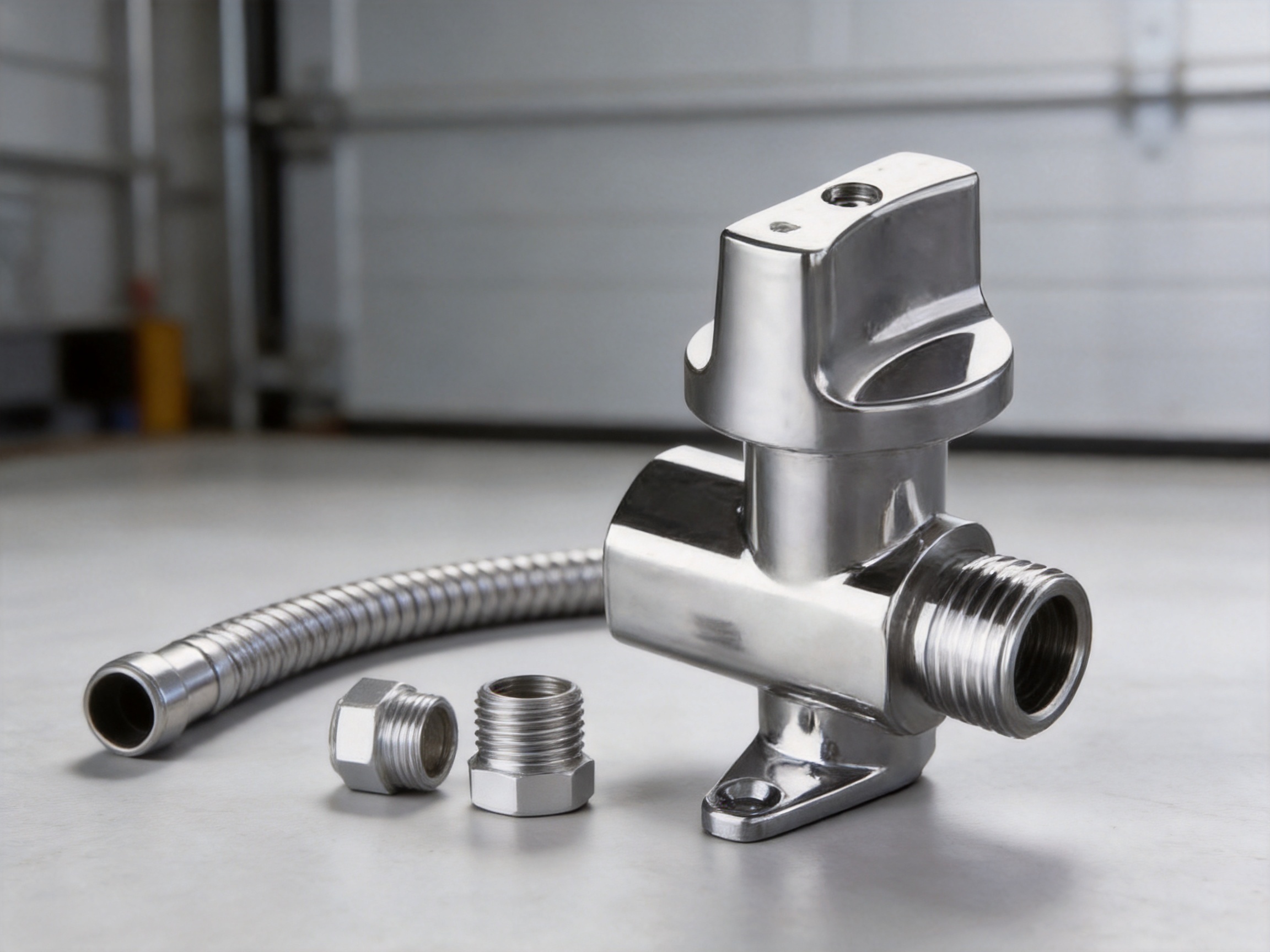
The precision-machined ball mechanism is designed to provide smooth control of gas flow. The spherical closure element rotates inside the valve body, and its central passage aligns with the inlet and outlet when open. Turning the handle across a quarter turn moves the ball into the closed position.
When fully open, a ball valve can provide a relatively direct flow path. This may help limit unnecessary turbulence and pressure loss compared with some valve designs that leave an obstruction in the passage. In a household gas system, the actual pressure drop depends on the valve size, internal geometry, gas type, flow rate, upstream pressure, hose configuration, and other components in the line.
The quick operating action is another advantage. A user can identify the handle position and operate the valve without repeated rotations. For service work, this short movement can reduce operating time. For emergency isolation, the ability to close the valve quickly can be valuable, provided the user can safely reach it.
Although the valve is suitable for on-off control and basic flow regulation, it should not automatically be treated as a precision throttling device. Keeping a ball valve partially open for long periods may increase wear or create undesirable flow conditions in some systems. The valve should be used according to its intended service and the instructions provided for the specific gas installation.
Advantages Over Basic or Less Adaptable Alternatives
Compared with ordinary single-thread valves
A conventional valve with the same thread type at both ends may require one or more adapters when the surrounding piping uses different connection directions. The internal and external thread arrangement of the ZLP-003 can improve compatibility with varied layouts and may reduce the total number of fittings in a compact wall-box assembly.
Every additional adapter introduces another joint, another dimensional tolerance, and another point that must be inspected for leakage. Reducing unnecessary components can simplify assembly and make the overall arrangement easier to understand. The benefit depends on the actual system design, but the dual-thread configuration gives installers more options.
Compared with non-mounted valves
A basic valve without a base can place operating and installation forces on the hose or threaded connections. The integrated base of this product provides a more stable mounting approach, particularly for buried wall boxes. It supports the valve independently and can help maintain alignment during operation.
Compared with lower-grade metal fittings
Lower-grade materials may be more vulnerable to corrosion, deformation, or surface deterioration. Stainless steel provides a stronger and more durable material platform for a residential gas fitting. Its resistance to common environmental influences can help preserve the valve’s serviceability and appearance.
Compared with complex multi-turn valves
The quarter-turn ball mechanism is mechanically straightforward and easy to operate. The user does not need to count multiple rotations to determine whether the valve is fully open or closed. This simple action is well suited to household shut-off duties and routine maintenance.
Compared with poorly controlled generic products
A product’s performance depends not only on its design but also on manufacturing consistency. Controlled forming, machining, assembly, material analysis, and leakage testing can provide advantages over products made without systematic process control. The production capabilities associated with this valve support repeatable dimensions and a more dependable quality-control process.
Manufacturing Strengths and Process Control
The manufacturer operates as an integrated research, development, manufacturing, and processing enterprise. This combination is valuable because the company can coordinate product design, material selection, production planning, inspection, and customer support within one organization. For buyers of gas fittings, an integrated supplier can offer more consistent communication than a fragmented sourcing chain.
Material preparation and analysis
Material quality is the starting point for valve reliability. Stainless steel components must be selected with attention to composition, mechanical properties, surface condition, and intended service. The company uses metal material analysis equipment, including direct-reading spectrometers, to support the identification and verification of metallic materials.
Material analysis can help confirm whether incoming metal is consistent with the required grade and production specification. This is important because two materials may look similar while offering different corrosion resistance, strength, or forming behavior. A controlled material verification process reduces the risk of unsuitable metal entering production.
Forming and welding capacity
The company has 30 welding and forming production lines. This production infrastructure supports the manufacture of metal hoses, gas pipelines, fittings, and related components. Forming operations influence the dimensional accuracy and geometry of valve-related parts, while welding quality affects the integrity of welded assemblies and connected products.
Multiple production lines can also improve manufacturing flexibility. Different product sizes, configurations, and order quantities can be scheduled according to equipment capability and customer requirements. This is useful for OEM and ODM customers seeking customized dimensions, packaging, markings, or assembly arrangements.
Welding and forming must be controlled through suitable parameters, tooling, operator procedures, and inspection. Consistent heat input, alignment, surface preparation, and post-process handling all affect the final quality of metal components. A systematic production environment provides a stronger basis for repeatability than manual production without documented controls.
Hydrogen furnace technology
The company operates two uninterrupted solid melting hydrogen furnace production lines. Furnace technology is important for certain metal processing and material treatment operations because temperature control and atmosphere management can influence surface quality, material consistency, and production stability.
Continuous or uninterrupted furnace operation can support consistent production conditions when properly managed. Stable thermal processes may help reduce variation between batches and support efficient manufacturing. The exact influence depends on the specific alloy, furnace parameters, and treatment requirements, but the presence of dedicated furnace capacity demonstrates investment in controlled metal processing.
Precision machining
The internal passage, ball seat, thread sections, and sealing interfaces of a valve require accurate machining. Dimensional errors can affect handle movement, flow characteristics, connection fit, and sealing performance. Precision machining helps create a smoother operating mechanism and more consistent assembly relationship between the ball, body, stem, and seals.
Machining quality also affects installation efficiency. Properly formed threads engage more smoothly and are less likely to cause cross-threading when installed correctly. Clean internal passages reduce the chance that manufacturing debris will interfere with the ball mechanism or enter the gas system.
Flow and tightness testing
The company uses flow tightness testers as part of its testing equipment. Tightness testing is a critical quality-control step for a gas valve. It is intended to identify leakage through the body, joints, stem area, seat, and other relevant sealing locations under defined test conditions.
Flow testing can provide information about passage behavior and functional performance. Together, flow and tightness checks help evaluate whether a finished product operates as intended and maintains containment. Testing conditions must be defined according to the applicable product standard and customer specification, including test medium, pressure, duration, and acceptance criteria.
Testing should not be confused with field installation verification. Even a factory-tested valve can leak if it is damaged, incorrectly sealed, cross-threaded, over-tightened, contaminated, or connected to incompatible components. Site testing by a qualified installer remains necessary after the complete gas system has been assembled.
Quality-management system
The company states that it implements the ISO9000:2008 quality-management system. A quality-management framework generally supports documented procedures, process responsibilities, inspection records, corrective action, traceability, and continual improvement. These elements can help transform quality from a final inspection activity into a controlled process throughout production.
For professional buyers, quality-system practices are important when evaluating a long-term supplier. They can support more consistent product batches, clearer handling of nonconforming materials, and better communication of technical requirements. Customers should request current certificates, test reports, and applicable compliance documents when a project requires formal verification.
Certification and Compliance Considerations
The company holds a Special Equipment Manufacturing License for pressure pipelines in the People’s Republic of China and has EU CE certification testing reports. These credentials indicate experience with regulated equipment and international market requirements. However, the relevant certification for a particular valve, gas hose, or complete assembly must be confirmed separately.
Gas installations are safety-critical systems. Product selection must consider the gas type, working pressure, operating temperature, connection standard, installation location, local building codes, and required certification. A valve that is appropriate for one country or application may require additional documentation or a different configuration in another market.
Purchasers should confirm whether the supplied product is certified for the intended gas service and whether the certification applies to the exact model, size, material, and sealing configuration. Technical documentation should also clarify installation orientation, allowable media, pressure rating, temperature range, inspection requirements, and replacement recommendations.
Compliance is a shared responsibility. The manufacturer must produce the valve according to the stated specification, the distributor must communicate accurate information, and the installer must use approved methods and compatible components. End users should operate the valve only as intended and should arrange professional inspection if they notice unusual odor, damage, stiffness, noise, or suspected leakage.
Installation Guidance for Professional Use
Pre-installation inspection
Before installation, inspect the valve body, threads, base, handle, and sealing surfaces. Confirm that the product code and nominal size match the design documents. Check that protective caps or packaging have prevented dirt from entering the connection openings.
Do not install a valve with damaged threads, visible cracks, distorted mounting points, severe scratches across sealing surfaces, or a handle that does not operate normally. A damaged fitting should be isolated and reported rather than forced into service.
Connection compatibility
Confirm the thread standard and size on every mating component. DN15 identifies the nominal size but does not by itself define every dimensional detail of the thread. The valve must be matched with the correct connection type and an approved gas hose or pipe fitting.
Internal and external threads should be aligned by hand before tools are used. If resistance is encountered immediately, stop and inspect the connection. Cross-threading can damage both components and may create a leak path that is difficult to detect visually.
Mounting the base
Secure the base to the designated wall-box structure using compatible hardware and the approved mounting method. The valve should not be left hanging from the gas hose. The base should support the valve without imposing distortion on the body or connection points.
After mounting, verify that the handle remains accessible and that the valve can be operated through its full intended range. The installation should also provide adequate clearance for inspection, testing, and future replacement.
Sealing and tightening
Use only a seal or thread-sealing method approved for the specific gas service. Apply it carefully and keep excess material away from the internal gas passage. Excess sealant can migrate into the valve and interfere with the ball mechanism or downstream equipment.
Tighten connections using appropriate tools and procedures. Do not use the valve handle as a lever, and do not apply force that could twist the valve body against the base. The base is designed to improve stability, but it should not be used to compensate for excessive tightening torque.
Leak testing
After installation, the complete assembly must be tested by a qualified professional according to local requirements. Testing should cover all new connections and should be performed before the system is placed into normal operation.
Never use an open flame to check for gas leakage. Approved leak-detection methods and instruments should be used. If a leak is suspected, close the gas supply when safe to do so, ventilate the area, avoid electrical switches or ignition sources, and contact a qualified gas professional or emergency service.
Maintenance and Service Life
A stainless steel ball valve is designed for durability, but regular visual inspection remains important. Inspect the body, base, threads, handle, and connected hose for corrosion, impact damage, movement, discoloration, or signs of leakage. The inspection frequency should reflect the installation environment and local regulations.
The handle should move smoothly without excessive force. A stiff handle may indicate contamination, mechanical damage, seal deterioration, or an installation problem. Do not apply unapproved lubricants or attempt to dismantle a gas valve while it is connected to a live gas system.
The surrounding hose should not be kinked, sharply bent, stretched, crushed, or used to support other equipment. A stable valve base does not remove the need to maintain the hose within its specified bend radius and service conditions.
Where a valve is installed inside a wall box, the enclosure should remain accessible and free from materials that could obstruct operation. Concealment should not prevent routine inspection or emergency shut-off.
Replacement should be considered if the valve shows leakage, severe corrosion, damaged threads, cracked housing, unusual operating resistance, or repeated failure to maintain the closed position. Repairs and replacements should be performed by qualified personnel using compatible parts.
Applications
The primary application is residential gas distribution using a compatible home gas hose. The valve can be used at a connection point where a household gas supply must be isolated or controlled before reaching an appliance or downstream section of flexible piping.
It is particularly suited to buried wall-box arrangements. In these installations, the valve’s base helps maintain a fixed position, while the internal and external thread configuration provides layout flexibility. The compact DN15 size is appropriate for many residential connection designs, subject to the flow and pressure requirements of the complete system.
Potential installation environments include residential kitchens, utility spaces, apartment service boxes, gas appliance connection points, and other approved household gas distribution locations. Indoor and outdoor use may be possible when the complete product specification and local installation requirements permit it. Environmental exposure, enclosure protection, temperature, and connection materials must be evaluated before outdoor use.
The valve may also be considered for projects requiring OEM or ODM supply. The manufacturer’s broad product range, production lines, testing resources, and experience with metal hoses and gas pipelines can support coordinated sourcing of related components. Buyers should provide drawings, thread standards, material requirements, packaging instructions, inspection criteria, and target markets when requesting a customized solution.
Purchasing Advantages for Distributors and Project Buyers
For distributors, a well-defined model such as ZLP-003 simplifies product identification and inventory management. The DN15 specification and stated installation purpose allow buyers to separate this valve from products intended for larger industrial pipelines or unrelated plumbing applications.
The stainless steel construction offers a clear value proposition in markets where corrosion resistance, appearance, and service durability are important. The base and dual-thread design provide functional features that can differentiate the product from low-cost, minimally configured valves.
For engineering contractors, the integrated mounting feature can help simplify wall-box planning. Fewer adapters may be needed in some layouts, and a stable valve position can support a more orderly installation. Nevertheless, engineers should confirm all dimensions and connection standards before finalizing a design.
For OEM customers, the manufacturer’s integrated production structure may support private-label programs, packaging customization, product marking, and coordinated supply of related metal hose or pipe-fitting products. The company’s research and development team can also assist with design adjustments when the required changes are technically feasible and properly documented.
For international buyers, the stated CE testing experience and pressure-pipeline manufacturing credentials may be useful during supplier evaluation. Buyers should still conduct product-specific verification, factory audits, sample testing, and document review according to the risk level and regulatory requirements of the target market.
Company Manufacturing and Service Capabilities
Zhejiang Zhenlong Energy Equipment Technology Co., Ltd. is located in Yuyao City, Zhejiang Province, and operates a factory with a reported area of approximately 30,000 square meters on a site covering about 40 acres. This scale provides space for production equipment, material storage, assembly, testing, research and development, and logistics operations.
The company’s product portfolio covers metal hoses, corrugated hoses, natural gas pipelines, plumbing fittings, sanitary ware, valves, plastic products, and hardware. This range gives the company experience across several connected product categories. Such experience can be valuable when a customer needs a complete connection solution rather than one isolated fitting.
Its production resources include welding and forming lines, hydrogen furnace lines, material analysis equipment, and flow tightness testing equipment. These resources support the key stages involved in manufacturing and verifying gas-related metal products. An internal combination of processing and testing can shorten feedback cycles when a dimensional or performance issue is identified.
The company also emphasizes research, development, design, and production capabilities. This is important for customers seeking more than standard catalog products. Gas connection projects may require changes to thread combinations, mounting arrangements, hose lengths, surface treatments, packaging, labeling, or inspection documentation. A supplier with design and manufacturing functions can evaluate such requirements more efficiently than a trading-only source.
Pre-sales and after-sales service are additional strengths. Clear technical communication before purchase can prevent errors involving size, thread, gas type, and installation method. After-sales support can assist with product documentation, installation questions, quality feedback, and replacement coordination. For safety-related products, service quality should be considered together with material and manufacturing quality.
Comparison of Key Product Features
| Evaluation point | Stainless steel internal and external thread ball valve with base | Basic single-thread valve | Non-mounted valve assembly |
|---|---|---|---|
| Connection flexibility | Internal and external thread arrangement supports varied layouts | May require additional adapters | Depends on the selected connection design |
| Mounting stability | Integrated base supports wall-box installation | May need a separate bracket | Often relies on connected piping or hose support |
| Operating action | Quarter-turn ball mechanism | Depends on valve type | Depends on valve type |
| Material advantage | Stainless steel offers corrosion resistance and mechanical strength | Varies by material and grade | Varies by material and grade |
| Potential joint reduction | May reduce adapters in compatible systems | May require extra fittings | May require extra mounting and connection parts |
| Best-fit application | Residential gas hose and buried wall-box arrangements | General applications matching its connection format | Installations with independent mounting provisions |
Safety Responsibilities
Gas equipment should be installed, tested, and serviced only by personnel qualified under the applicable local rules. The valve is a component of a larger system, and its safety depends on correct selection and installation of every connected part.
Users should know the location of the valve and understand its open and closed positions. The valve should remain accessible and should not be blocked by cabinets, stored materials, insulation, or construction finishes. If the valve is intended as an emergency shut-off, household occupants should receive appropriate instructions.
Any smell of gas, hissing sound, visible damage, or unexplained appliance performance should be treated seriously. The gas supply should be isolated if safe, ignition sources should be avoided, and professional assistance should be requested. The valve should not be modified, drilled, welded, or disassembled in the field.
Product literature, installation instructions, and regional codes take priority over general descriptions. The information in this article describes the product’s design and manufacturing advantages but does not replace the official technical specification or the requirements of a licensed gas installer.
Q&A
What is the main purpose of this valve?
The valve is designed to shut off and control gas flow in residential gas hose systems. Its ball mechanism provides quarter-turn operation, allowing the gas passage to be opened or closed quickly when the valve is installed and used correctly.
What does DN15 mean?
DN15 is the nominal size designation of the valve. It indicates the general size class of the flow connection, but it does not replace confirmation of the exact thread dimensions, standard, pressure rating, or installation requirements.
Why does the valve have both internal and external threads?
The two thread forms provide connection flexibility. One end can connect to a compatible male threaded component and the other to a compatible female threaded component. This may reduce the need for adapters in certain gas hose and wall-box layouts.
What is the purpose of the base?
The base supports stable mounting, particularly in a buried wall box. It helps prevent the valve from rotating or hanging from the hose and can reduce mechanical stress on the connected joints during handle operation and servicing.
Is stainless steel better than ordinary metal for a gas valve?
Stainless steel generally offers strong corrosion resistance, mechanical strength, and temperature stability. The actual performance still depends on the stainless steel grade, manufacturing quality, seals, installation environment, and compliance with the relevant gas-system requirements.
Can the valve be used outdoors?
Outdoor use depends on the exact product specification, environmental exposure, enclosure, temperature range, local regulations, and protection of the connected hose and joints. The product should not be installed outdoors unless the complete application has been verified as suitable.
Can this valve be used for industrial gas pipelines?
The described product is intended primarily for home gas hose and residential gas transmission applications. Industrial use requires separate confirmation of pressure, flow, media compatibility, temperature, certification, size, and duty cycle. A household DN15 valve should not be substituted for an industrial valve without engineering approval.
Does the valve eliminate the need for leak testing?
No. Factory testing supports product quality, but the completed installation must still be tested after assembly. Incorrect thread matching, sealant, tightening, hose routing, or accidental damage can create leakage even when the valve itself passed factory inspection.
Can the valve handle be used to tighten the connection?
No. The handle should only be used to operate the ball mechanism. Installation tools should be applied to the appropriate body or connection surfaces according to the manufacturer’s instructions. Using the handle as a lever can damage the stem or valve mechanism.
What should be checked before ordering?
Buyers should confirm the nominal size, thread standards, gas type, working pressure, temperature range, base dimensions, installation location, certification requirements, seal materials, packaging, and documentation. Sample approval is recommended for projects with strict technical or regulatory requirements.
What manufacturing resources support this product?
The manufacturer reports 30 welding and forming production lines, two uninterrupted solid melting hydrogen furnace lines, metal material analysis equipment, and flow tightness testing equipment. These resources support material verification, metal processing, forming, assembly, and performance inspection.
Can the manufacturer provide customized products?
The company provides OEM and ODM manufacturing services and has research, development, design, and production capabilities. Customization should be discussed with drawings and written technical requirements covering dimensions, thread standards, materials, markings, packaging, testing, and target-market compliance.
Conclusion
The stainless steel internal and external thread ball valve with base for home gas hose is designed as a practical, durable, and adaptable component for residential gas systems. Its stainless steel body provides corrosion resistance and mechanical strength, while the quarter-turn ball mechanism allows efficient shut-off and straightforward operation.
The internal and external thread configuration gives installers additional connection flexibility, potentially reducing the need for adapters in compact layouts. The reinforced base adds a dedicated mounting function for buried wall boxes, helping keep the valve stable and reducing strain on hoses and threaded joints.
Its competitive value is strengthened by the manufacturing capabilities behind the product. Material analysis, multiple welding and forming lines, hydrogen furnace production, precision machining, flow testing, tightness testing, and quality-management procedures provide a foundation for consistent production. The company’s broad experience with metal hoses, corrugated hoses, gas pipelines, valves, and pipe fittings also supports complete project sourcing and customized OEM or ODM requirements.
For safe and effective use, the valve must be matched with compatible components and installed by qualified professionals. Pressure, temperature, gas type, thread standard, certification, sealing method, and local regulations must be verified before purchase and installation. When these requirements are properly addressed, the ZLP-003 valve offers a strong solution for stable and dependable residential gas flow control.
References
1. ISO 9000 Quality Management Systems—Fundamentals and Vocabulary.
2. ISO 9001 Quality Management Systems—Requirements.
3. General principles of stainless steel material selection for corrosion-resistant piping components.
4. Residential gas installation practice: threaded joints, appliance connections, shut-off valves, and leak testing.
5. Ball valve design principles for quarter-turn flow isolation and control.
6. Pressure pipeline component manufacturing and inspection practices.
7. European conformity assessment principles for gas-related mechanical products.
8. Manufacturer-provided product information for model ZLP-003, DN15 internal and external thread ball valve with base.