 English
 中文简体
 Español
 عربى


Modern gas distribution, water service, industrial processing, and equipment connection systems require valves that can do more than simply open or close a pipeline. A practical valve must provide dependable shutoff, stable flow control, convenient installation, resistance to corrosion, and long service life under demanding operating conditions. The internal and external thread ball valve is designed to meet these needs in a compact and versatile format.
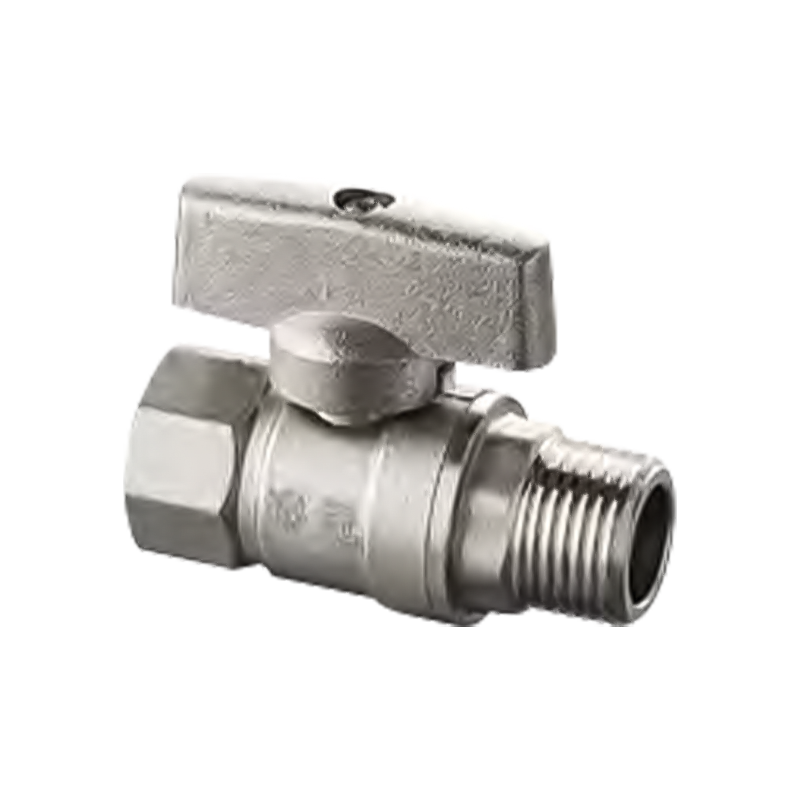
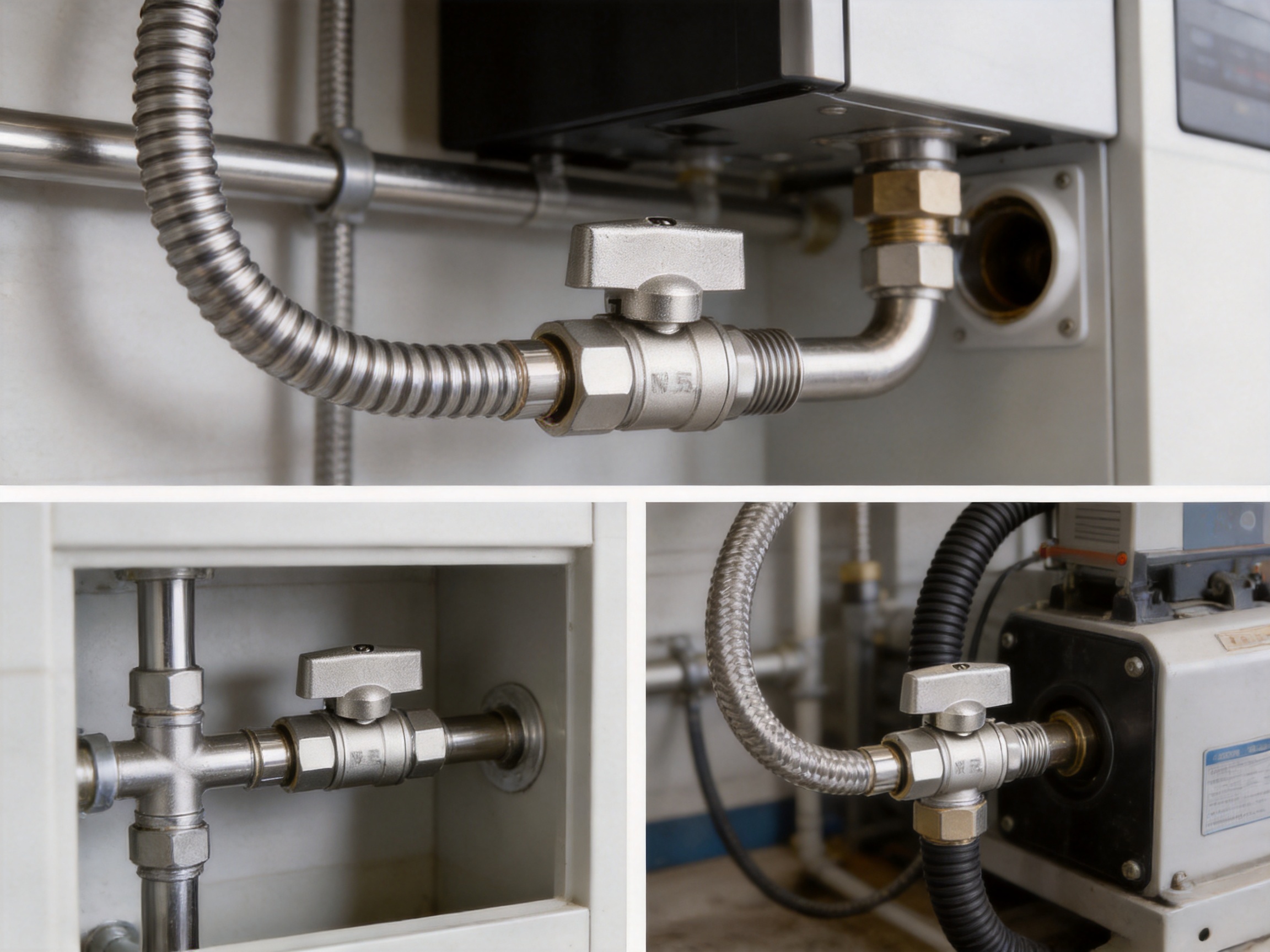
This type of valve combines a precision-machined spherical closure element with threaded connection ends. One end uses an internal thread while the other uses an external thread, allowing the valve to connect efficiently with different types of pipe fittings, adapters, hoses, and equipment interfaces. This configuration can simplify installation where a pipeline includes both male-threaded and female-threaded components, reducing the need for additional adapters and helping create a more organized connection assembly.
The product described in this article is a DN15 double external wire ball valve identified as ZLP-015 in the supplied product information. It belongs to the broader field of stainless steel corrugated hose fittings for gas transmission and can also be considered for compatible water, air, and industrial fluid applications when the material, pressure, temperature, and regulatory requirements have been verified.
Its central value lies in the combination of a compact structure, smooth quarter-turn operation, secure threaded connection, and tight shutoff performance. When correctly selected and installed, the valve can support reliable flow management while helping maintenance teams reduce installation time and simplify future servicing.
Internal and external thread ball valve
Content
- 1 Understanding the Internal and External Thread Configuration
- 2 Product Profile and Primary Specification
- 3 Advantages of the Ball Valve Operating Principle
- 4 Leak Prevention and Sealing Reliability
- 5 Material Selection and Resistance to Challenging Conditions
- 6 Applications in Gas Transmission Systems
- 7 Applications in Water and Plumbing Systems
- 8 Industrial Hose and Equipment Connections
- 9 Manufacturing Precision and Process Control
- 10 Inspection, Testing, and Quality Assurance
- 11 Advantages Compared with Conventional Threaded Shutoff Solutions
- 12 Installation Recommendations
- 13 Maintenance and Service Life
- 14 Purchasing and Customization Considerations
- 15 Why Integrated Manufacturing Matters to Buyers
- 16 Selection Checklist
- 17 Frequently Asked Questions
- 17.1 What is an internal and external thread ball valve?
- 17.2 What is the listed size of this product?
- 17.3 Can this valve be used for natural gas?
- 17.4 Can it be used for water?
- 17.5 Is a ball valve suitable for flow regulation?
- 17.6 What are the main advantages of the mixed-thread design?
- 17.7 How should the valve be sealed during installation?
- 17.8 How should the valve be tested after installation?
- 17.9 What should buyers request from the manufacturer?
- 17.10 Can the manufacturer supply related products?
- 17.11 How can service life be improved?
- 18 Conclusion
- 19 References
- 20 Product: Internal and external thread ball valve
Understanding the Internal and External Thread Configuration
A threaded ball valve uses a spherical body element with a drilled passage through its center. When the passage is aligned with the pipeline, fluid can flow through the valve. When the handle is turned approximately ninety degrees, the solid side of the ball blocks the passage and stops the flow. This simple operating principle provides fast and efficient isolation compared with many multi-turn valve designs.
The distinguishing feature of the internal and external thread model is the different thread arrangement at its connection ends. An internal thread, often called a female thread, is machined inside the valve port. An external thread, often called a male thread, is formed on the outside of the opposite port. This arrangement enables the valve to connect directly to components with corresponding thread patterns.
In compact gas and water installations, connection space may be limited. A conventional valve with two identical connection ends can require a reducer, nipple, union, or extra adapter before it can be joined to the next component. Each additional fitting increases the total assembly length and introduces another sealing interface. The internal and external thread configuration can reduce the number of parts required in suitable installations.
Fewer connection components may provide several practical benefits. The assembly can occupy less space, the installation can be completed more quickly, and the number of possible leakage points may be reduced. A simpler connection layout can also make the system easier to inspect, clean, repair, or replace during scheduled maintenance.
Thread compatibility must always be confirmed before installation. The nominal diameter, thread standard, thread pitch, sealing method, and component material should match the pipeline design. A valve should never be forced onto a mismatched thread, even when the components appear visually similar. Correct thread engagement is essential for mechanical strength and leak prevention.
Product Profile and Primary Specification
The supplied product information identifies the valve as an internal and external thread ball valve for gas transmission applications. The available specification lists the product number as ZLP-015, the product name as a double external wire ball valve, and the nominal size as DN15.
| Item | Specification | Practical Significance |
|---|---|---|
| Product type | Internal and external thread ball valve | Provides quarter-turn flow isolation with mixed threaded connections |
| Product number | ZLP-015 | Identifies the supplied model for quotation and production communication |
| Nominal size | DN15 | Suitable for compact nominal 15 millimeter pipeline systems, subject to actual standards |
| Primary application | Gas and fluid transmission | Can support appropriate gas, water, air, or industrial fluid systems after verification |
| Operating principle | Quarter-turn ball mechanism | Enables rapid opening and closing |
| Connection type | Internal and external threaded ends | Facilitates connection between different pipeline components |
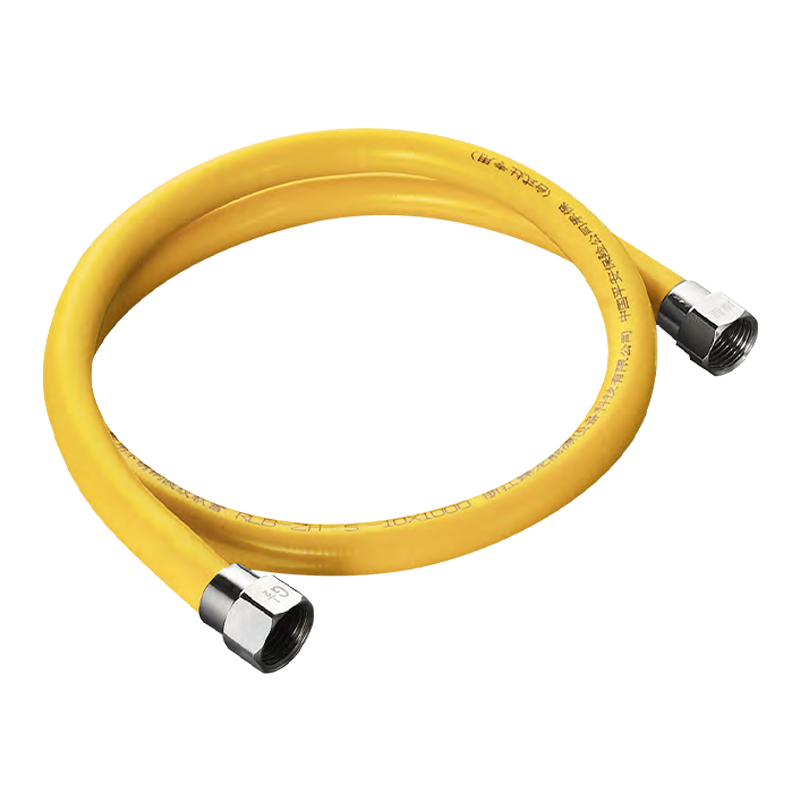
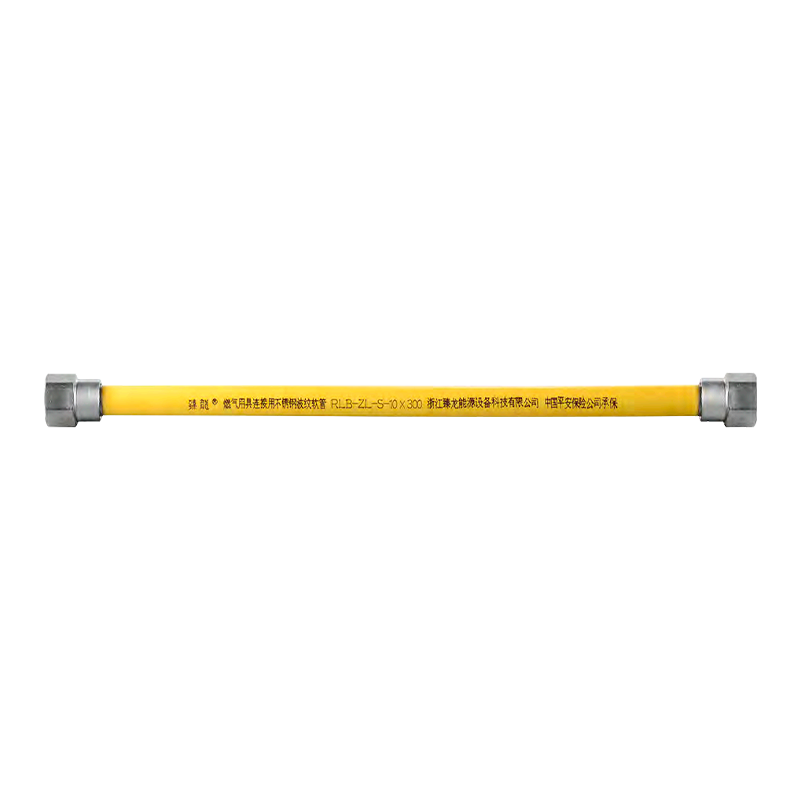
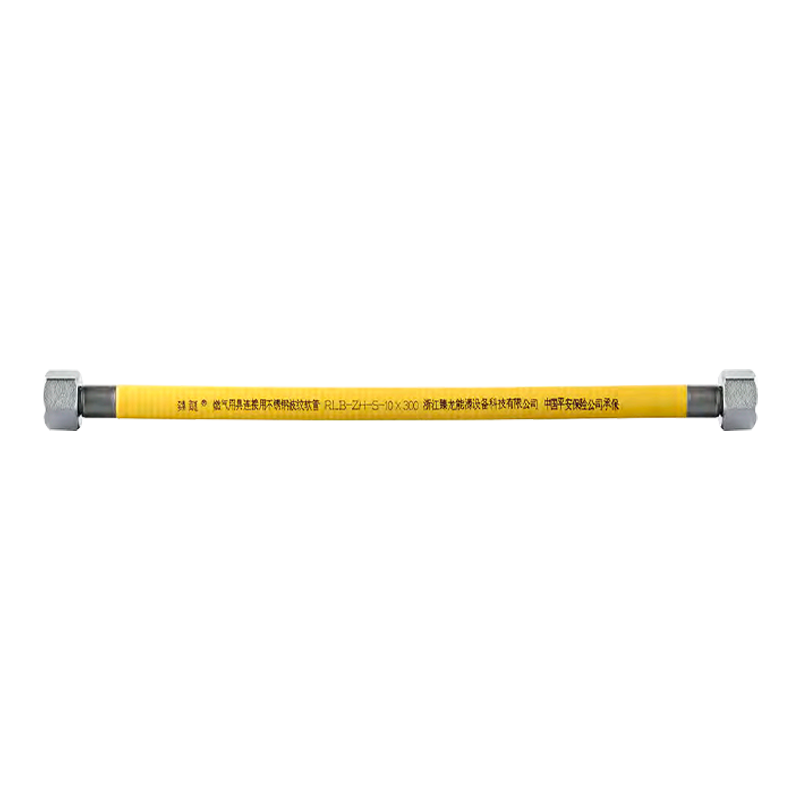
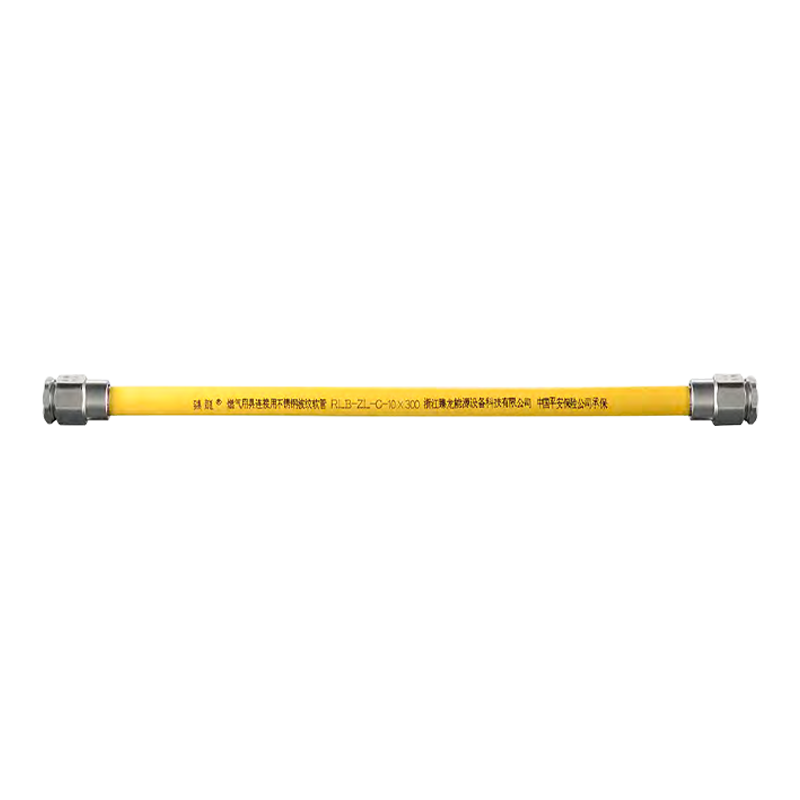
| Product category | Stainless steel corrugated hose fittings for gas transmission | Supports use with compatible flexible hose and pipe assemblies |
DN15 is commonly used in branch lines, appliance connections, domestic utility systems, equipment supply lines, and compact industrial assemblies. However, nominal size alone does not determine whether a valve is suitable for a particular project. Engineers and installers should also evaluate flow requirements, operating pressure, operating temperature, medium compatibility, connection standards, installation orientation, and applicable local codes.
For procurement, the model number should be stated together with all required technical conditions. A professional inquiry may include the medium, working pressure, temperature range, preferred connection standard, required quantity, inspection requirements, packaging expectations, and destination-market certifications. This allows the manufacturer to confirm the correct configuration instead of treating DN15 as the only selection criterion.
Advantages of the Ball Valve Operating Principle
The ball valve mechanism is valued for its straightforward design and efficient operation. A handle movement of approximately one quarter turn changes the valve from fully open to fully closed. This is especially useful in emergency isolation situations, equipment servicing, and routine line maintenance, where operators need to identify the valve position and act quickly.
When fully open, the straight passage through the ball can offer relatively low flow resistance compared with valve types that place a gate, disc, or globe-shaped obstruction in the flow path. Lower resistance can help preserve available pressure in compact systems and may reduce unnecessary turbulence. The exact flow performance depends on the internal port design, valve size, medium, and system conditions.
The closing action is also efficient. As the ball rotates, sealing surfaces around the ball and valve body create a controlled barrier. Properly manufactured sealing components can provide reliable shutoff without requiring repeated handwheel turns. This makes the valve convenient for operators who frequently isolate sections of a gas, water, or equipment supply line.
Another important benefit is visual status recognition. In many quarter-turn designs, the handle position is arranged parallel to the pipeline when the valve is open and perpendicular to the pipeline when it is closed. Although users should confirm the actual operating instructions for the supplied configuration, this general arrangement makes field inspection easier.
The ball valve structure also contains relatively few primary moving parts. Fewer moving elements can simplify operation and reduce opportunities for mechanical wear when compared with more complicated control assemblies. Nevertheless, the valve should not be used as a substitute for a dedicated throttling or modulating valve unless the manufacturer specifically approves continuous partial-opening service.
Leak Prevention and Sealing Reliability
Leak prevention is one of the most important performance objectives in gas and fluid transmission systems. A valve must control leakage through two principal areas: the internal sealing zone around the ball and stem, and the external threaded connections joining the valve to the pipeline.
The ball and seat arrangement is engineered to maintain contact around the flow passage when the valve is closed. The quality of the sealing material, the dimensional accuracy of the ball, the surface finish, the seat design, and the consistency of assembly all affect shutoff performance. A precisely manufactured ball and properly fitted seat can support a tight seal while maintaining smooth handle movement.
The stem area requires equal attention. The stem transfers handle movement to the internal ball, so it passes through the valve body and must be sealed against external leakage. Suitable stem sealing elements, controlled assembly pressure, and accurate machining are necessary to maintain reliable performance during repeated operation.
Threaded connections must be sealed using a method compatible with the thread design and transported medium. Depending on the applicable standard and installation practice, this may include approved thread sealant, sealing tape, a gasket, or a face-sealing arrangement. Sealant should not be applied in a way that enters the flow passage or interferes with the ball mechanism.
During installation, the valve body should be held with the correct wrenching surface. Torque must not be transferred through the handle, stem, or other operating components. Over-tightening can distort parts, damage threads, or place unnecessary stress on the valve body. Under-tightening can leave the connection mechanically insecure or allow leakage. The correct installation torque should be determined according to the thread standard, material, sealant, pipe material, and project instructions.
After installation, the assembly should be inspected and pressure tested according to the governing code or project procedure. Testing should be performed with suitable safety controls, particularly when the line will carry combustible gas, toxic fluid, high pressure, or high-temperature media. A valve that passes an initial visual inspection should not be assumed to be fully leak-free without appropriate testing.
Material Selection and Resistance to Challenging Conditions
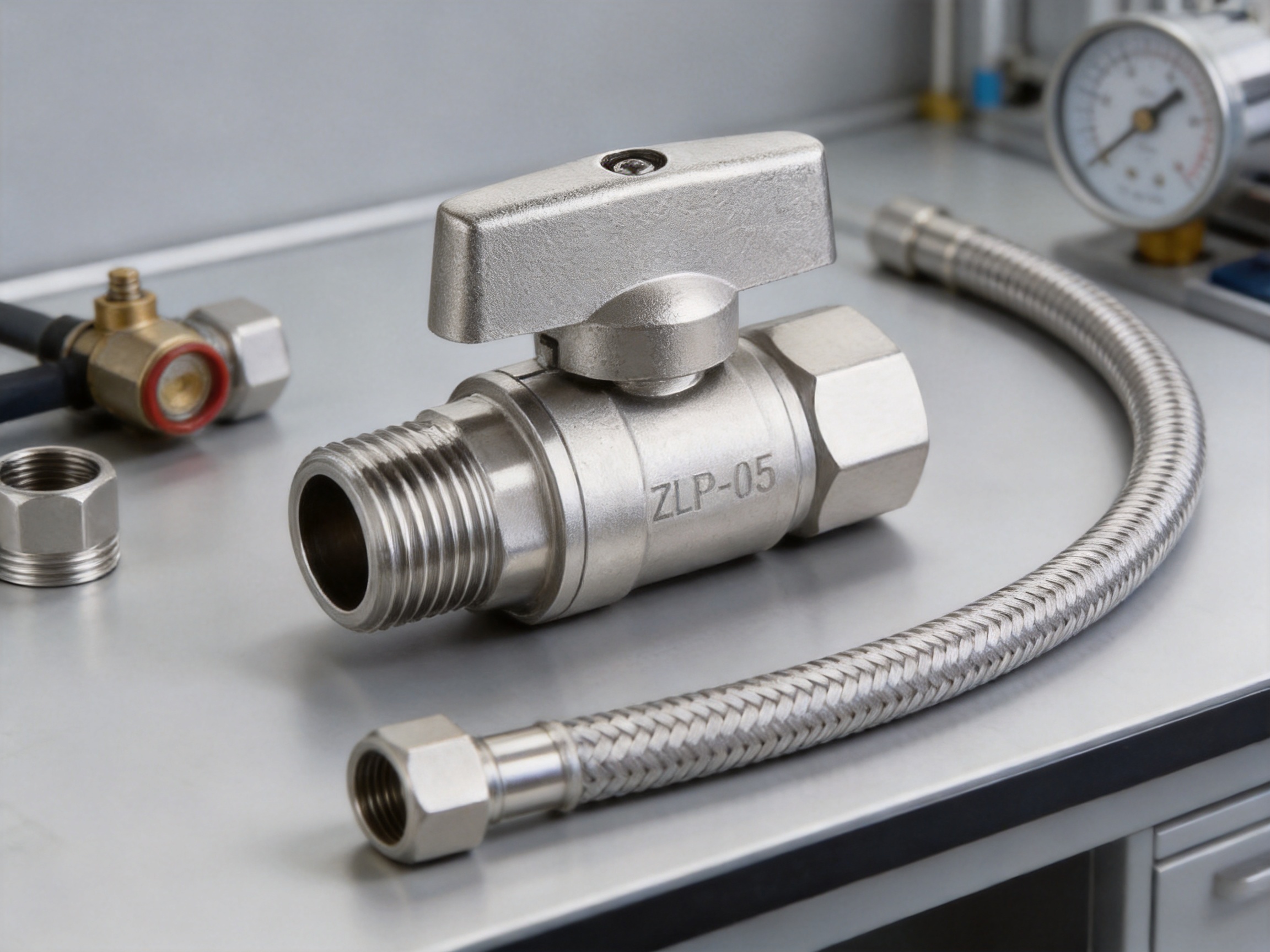
The supplied product description states that the valve is constructed from high-quality, corrosion-resistant materials. This characteristic is particularly important for fittings used in gas transmission, plumbing, and industrial environments, where exposure to moisture, condensation, cleaning agents, atmospheric pollutants, or chemically active media may gradually degrade unsuitable materials.
Corrosion resistance helps protect the valve body, threaded areas, internal mechanism, and external surfaces. It can support longer service life and help maintain the dimensional accuracy needed for dependable sealing. In installations where the valve is exposed to humidity or frequent cleaning, corrosion-resistant construction can also improve appearance and reduce maintenance requirements.
Material suitability must be evaluated against the actual medium. Gas, potable water, treated water, compressed air, oils, chemicals, and process fluids can interact differently with metals and sealing materials. A material that performs well in dry natural gas service may not be appropriate for an aggressive chemical, a high-concentration disinfectant, or a fluid containing abrasive particles.
Temperature is another essential consideration. Both the metal body and the internal sealing elements must remain stable across the operating range. Extreme cold may affect elasticity, while excessive heat may soften or degrade polymeric seals. Pressure and temperature should be considered together because the allowable working pressure of a valve may decrease at elevated temperatures.
The phrase “high pressure” should not be interpreted as a universal rating. The actual pressure capability depends on the final construction, materials, size, thread standard, test procedure, and certification requirements. Buyers should request the manufacturer’s official pressure and temperature ratings for the intended service rather than relying on general product-category assumptions.
Applications in Gas Transmission Systems
Compact threaded ball valves are widely useful in gas-related assemblies because they provide fast isolation and can be integrated with flexible and rigid pipeline components. In a gas appliance connection, for example, a valve may be installed between a supply line and a corrugated metal hose or equipment inlet. The valve can allow the appliance to be isolated during inspection, cleaning, replacement, or emergency response.
In low-volume branch lines, a DN15 valve can provide a practical shutoff point without occupying excessive space. It may also be used at the inlet of selected equipment, within a manifold, or near a service connection where a compact quarter-turn device is preferred.
Gas systems require particularly careful attention to sealing, ventilation, pressure testing, and approved installation methods. The valve should be selected for the exact gas type and service conditions. Installation must be performed by qualified personnel in accordance with applicable gas safety standards and local regulations.
The mixed thread configuration can be advantageous in gas assemblies that transition from a rigid threaded fitting to a hose connector or equipment interface. By reducing the need for multiple transition pieces, the valve can support a shorter and potentially more stable connection arrangement. The installer must still verify that all adjacent hose ends, adapters, gaskets, and sealants are approved for gas use.
Gas transmission applications also benefit from clear maintenance access. A valve that can be reached and operated without dismantling surrounding equipment can shorten response time during servicing. The installation should therefore leave enough clearance around the handle and body for safe operation, inspection, and future replacement.
Applications in Water and Plumbing Systems
In water systems, a DN15 ball valve can be used for fixture isolation, branch-line shutoff, equipment connections, small circulation circuits, and plumbing maintenance points. Its quick operation is convenient when a sink, heater, filter, pump, or other device must be isolated without shutting down the complete building or production area.
The internal and external thread arrangement is useful where a valve must connect between a female-threaded fitting and a male-threaded pipe or adapter. It may help reduce assembly length in compact cabinets, wall cavities, equipment frames, or utility panels.
For potable water service, all wetted materials and sealing compounds must comply with the applicable drinking-water requirements in the target market. The fact that a material is corrosion-resistant does not automatically confirm potable-water approval. Certification, extraction limits, cleanliness, and manufacturing controls should be reviewed before specifying the valve for drinking-water contact.
Water hammer should also be considered. Because a ball valve can close rapidly, abrupt operation in high-velocity systems may generate pressure surges. Operators should follow project instructions regarding opening and closing speed, and system designers should evaluate surge risk where long pipelines, pumps, elevated pressure, or sensitive equipment are involved.
Industrial Hose and Equipment Connections
Industrial hoses often require compact end fittings that can withstand movement, vibration, and repeated connection or disconnection. A threaded ball valve can serve as an isolation component between a hose and a fixed pipeline or machine inlet, provided the valve and hose assembly are rated for the operating conditions.
In industrial environments, the valve may be exposed to vibration, oil mist, cleaning fluids, temperature changes, and accidental contact. Its compact metal construction can be advantageous where plastic components may be vulnerable to heat, impact, or chemical exposure. The correct material still depends on the medium and environmental conditions.
When used with a corrugated metal hose, the valve should not be expected to absorb excessive bending, twisting, or unsupported hose weight. Flexible hose assemblies need correct routing, bend radius, support, and strain relief. The valve should remain aligned with the connection and should not become a structural anchor for a hose that is subject to continuous movement.
Industrial users may also value the valve’s ability to create a clear isolation point near machinery. During preventive maintenance, operators can close the valve before disconnecting a hose or removing equipment. Lockout and identification procedures should be followed whenever the isolated medium could create a safety hazard.
Manufacturing Precision and Process Control
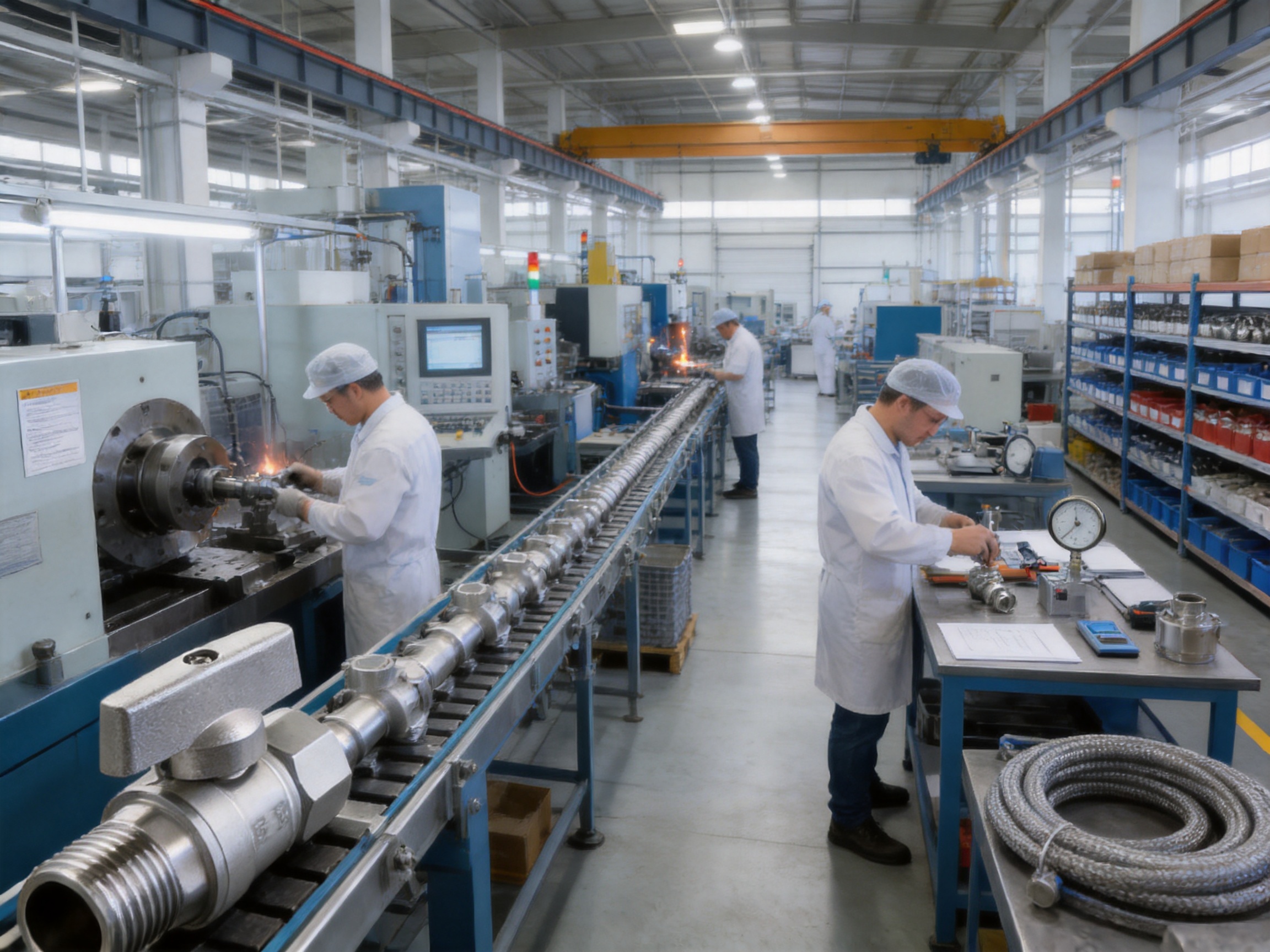
Reliable valve performance begins with controlled manufacturing rather than final assembly alone. The supplied company information describes a production organization engaged in research, development, manufacturing, and processing of energy equipment and related pipe products. Its product range includes metal hoses, natural gas pipelines, plumbing fittings, sanitary ware, valves, plastic products, and hardware.
The manufacturing facility is reported to cover approximately forty acres, with a factory building of about thirty thousand square meters. A production site of this scale can support dedicated material handling, component processing, assembly, inspection, warehousing, and order coordination. For customers purchasing valves together with hoses or other fittings, an integrated production environment may simplify technical communication and product matching.
The company information also identifies thirty welding and forming production lines. Although the exact process used for each valve component depends on the model and material, a broad welding and forming capability can support the manufacture of associated corrugated hose assemblies, pipe components, and formed metal parts. Controlled forming is important because inconsistent geometry can affect alignment, thread engagement, sealing, and connection strength.
Two uninterrupted solid melting hydrogen furnace production lines are also listed among the facility’s capabilities. Furnace processing can be important in the preparation and treatment of metallic materials used in energy equipment and pipe products. Stable thermal conditions and controlled production parameters can help improve consistency in material structure and surface quality. Customers should request product-specific material and heat-treatment documentation when such records are required.
Production capability becomes especially valuable when valves are supplied as part of a larger connection system. A manufacturer familiar with hoses, pipes, fittings, and valves can better understand the interaction between components. This can help reduce mismatched dimensions, unsuitable thread transitions, and inconsistent sealing approaches across an assembly.
The company states that it operates a research, design, and production team. This combination supports product improvement, customized manufacturing, and technical communication. OEM and ODM customers may benefit when they need adjustments to packaging, identification, connection configuration, production quantity, or related fitting combinations.
Inspection, Testing, and Quality Assurance
Valve quality cannot be judged only by external appearance. Internal dimensions, thread accuracy, ball surface finish, seat compression, stem sealing, and body integrity all affect performance. A professional manufacturing process therefore requires inspection at several stages rather than relying solely on a final visual check.
The supplied company profile mentions equipment including direct-reading spectrometers for metal material analysis and flow tightness testers. A direct-reading spectrometer can help identify the composition of metallic materials and support verification against specified alloy requirements. Material analysis is useful for preventing incorrect material substitution and improving traceability for corrosion-sensitive components.
Flow tightness testing is directly relevant to valve performance. Such testing can help identify leakage through the closed valve, stem area, body, or connection region under defined test conditions. The test method, pressure, duration, medium, acceptance criteria, and sampling plan should be documented because a test result is meaningful only in relation to its conditions.
Other useful controls may include dimensional inspection, thread-gauge verification, pressure testing, visual examination, torque testing, cleanliness checks, packaging inspection, and batch traceability. The specific inspection plan should correspond to the application risk and customer requirements.
The company states that it implements the ISO9000:2008 quality management system. Customers should confirm the current certification status, scope, and applicable standard version during procurement. They may also request quality documents such as inspection reports, material certificates, test records, declarations of conformity, and batch identification where required by the project.
The company profile further refers to a Chinese special equipment manufacturing license for pressure pipelines and European CE certification testing reports. These statements may support confidence in the manufacturer’s experience with regulated equipment, but certification applicability depends on the exact product, market, pressure category, and sales configuration. Buyers should ask for product-specific certificates and verify that documents cover the intended use.
Advantages Compared with Conventional Threaded Shutoff Solutions
The internal and external thread ball valve offers several design-level advantages over more basic or less integrated alternatives. The first is connection flexibility. A valve with identical ends may require an additional fitting to transition between male and female components, while a mixed-thread valve can make that transition directly in suitable layouts.
The second advantage is installation compactness. Every adapter adds length, weight, and another mechanical interface. Reducing the number of parts can be particularly beneficial in equipment cabinets, wall-mounted systems, meter assemblies, and narrow service spaces. A shorter arrangement may also be easier to support and protect from accidental impact.
The third advantage is operating speed. Compared with a multi-turn gate or globe valve, a quarter-turn ball valve can isolate a line rapidly. This is valuable for emergency response and routine maintenance. The handle position can also provide a simple visual indication of the approximate operating state.
The fourth advantage is flow efficiency when the valve is fully open. A ball passage can offer a relatively direct route for the medium, which may be useful in small-diameter systems where pressure loss matters. Actual performance should be confirmed using the manufacturer’s flow data and the complete pipeline design.
The fifth advantage is suitability for integrated product packages. A manufacturer that produces metal hoses, corrugated hoses, pipe fittings, valves, and related hardware may be able to coordinate component dimensions and supply requirements more effectively than a supplier focused on only one isolated product type.
These advantages do not mean that this valve is automatically superior for every application. A control valve may be more appropriate where continuous flow modulation is required. A flanged valve may be preferable in larger pipelines. A welded connection may be selected for permanent high-integrity systems. The internal and external thread ball valve is strongest when compact isolation, mixed threaded connections, and convenient service access are central requirements.
Installation Recommendations
Before installation, inspect the valve for damage, contamination, distorted threads, missing components, or handle obstruction. Confirm the model, nominal size, connection standard, medium compatibility, pressure rating, temperature rating, and required certification.
Clean the mating pipe threads and remove chips, dirt, oil, and old sealant. The pipe should be properly aligned with the valve. Misalignment can place bending stress on the body and may compromise threaded connections over time.
Apply only an approved sealing material and use it in the correct location. Excess sealant can enter the valve passage, interfere with the ball, or contaminate downstream equipment. For systems carrying gas or potable water, the sealant must be approved for that specific service.
Use a suitable wrench on the valve body or designated flats. Do not tighten by gripping the handle, stem, or decorative parts. Avoid using excessive force, impact tools, or pipe extensions unless the installation procedure expressly permits them.
After connection, operate the handle carefully through its full range. The movement should be smooth and should not require abnormal force. If the handle binds, stop the installation and investigate possible thread stress, contamination, misalignment, or internal damage.
Pressure testing should be completed before the system is placed into service. The test medium and pressure must be appropriate for the system and safe for the personnel involved. After testing, inspect all connection points and the stem area for signs of leakage.
Where the valve is installed in a gas system, provide appropriate ventilation and follow all requirements for purging, leak detection, ignition control, and commissioning. Never use an open flame to search for gas leakage. Where the valve is used in a hazardous industrial line, follow the site’s isolation, lockout, and permit procedures.
Maintenance and Service Life
Ball valves are generally low-maintenance products, but low maintenance does not mean no maintenance. Periodic inspection should confirm that the valve body, threads, handle, and surrounding pipeline remain free from corrosion, impact damage, contamination, and unauthorized modification.
The valve should be operated periodically when permitted by the system owner and safety procedure. Regular movement can help confirm that the mechanism remains functional. It can also reveal developing stiffness before an emergency requires immediate operation.
Do not use the valve as a support point, step, lifting point, or hose restraint. Mechanical loads from unsupported pipe, vibration, thermal expansion, or repeated hose movement can damage the body or threaded connection. Proper pipe supports and flexible hose routing are essential.
If leakage is detected, first isolate and depressurize the line using the approved procedure. Never attempt to tighten or dismantle a pressurized gas or fluid connection. Once safe, determine whether the leakage comes from the threaded joint, stem area, body, or another nearby component.
A valve that has been exposed to severe corrosion, fire, overpressure, freezing, chemical attack, or physical impact should be removed from service until it has been evaluated. Replacing a small valve is often more economical and safer than attempting an uncertain repair, particularly in critical gas service.
Purchasing and Customization Considerations
For routine purchasing, the buyer should identify the product number, nominal size, thread type, required quantity, medium, operating pressure, temperature, and destination market. It is also useful to specify whether the valve will be installed with a corrugated metal hose, rigid pipe, sanitary fitting, appliance connector, or industrial equipment.
OEM and ODM projects may require more detailed coordination. Potential requirements include a modified handle, special surface treatment, laser marking, private packaging, customized labels, alternative thread standards, matched hose fittings, batch documentation, or special inspection procedures. These requirements should be agreed before mass production.
Packaging deserves attention because small threaded valves can be damaged by impact, contamination, or uncontrolled movement during transport. Protective caps, separators, moisture protection, clear model identification, and carton traceability can reduce receiving problems and support inventory management.
Customers should also establish the inspection and acceptance plan in advance. Important questions include whether every valve or a sample quantity will be tested, which pressure test method will be used, what records will be supplied, how nonconforming products will be handled, and how production batches will be identified.
For export projects, the buyer should confirm the documentation required by the destination country. This may include declarations, material information, product test reports, pressure equipment documentation, customs descriptions, packaging marks, and language-specific instructions. The manufacturer’s stated experience with international certification testing can be useful, but final compliance remains dependent on the project and market requirements.
Why Integrated Manufacturing Matters to Buyers
Valve performance is connected to the quality of the complete pipeline assembly. A well-made valve can still perform poorly if it is joined to an unsuitable hose, mismatched thread, weak adapter, contaminated sealant, or improperly supported pipe. An integrated supplier with experience across metal hoses, corrugated hoses, fittings, and valves may help customers evaluate the complete connection rather than purchasing isolated components.
The described manufacturer combines industry and trade activities with research, design, manufacturing, and processing. This structure can provide a single communication channel for technical questions, quotation, production, inspection, packaging, and after-sales support. It may be particularly useful for distributors and project contractors that need several related products from one source.
The reported facility scale, multiple production lines, material-analysis equipment, tightness-testing capability, quality-management practices, and engineering team indicate a manufacturing system designed for both standard products and customized requirements. Buyers should still conduct their own supplier qualification, including document review, sample evaluation, factory audit, and product testing where appropriate.
A strong supplier relationship should continue after delivery. Clear installation instructions, replacement support, technical responses, batch traceability, and warranty procedures can reduce downtime and improve confidence over the product life cycle. These service capabilities are especially important for gas and industrial applications, where an apparently small fitting can influence the safety and availability of an entire system.
Selection Checklist
Before approving an internal and external thread ball valve, confirm the following points:
- Confirm that DN15 is appropriate for the required flow and pipeline size.
- Verify the internal and external thread standards and dimensions.
- Confirm the intended medium and chemical compatibility of all wetted parts.
- Check the working pressure and temperature rating for the actual service.
- Verify that sealing materials are suitable for gas, water, air, or process fluid use.
- Determine whether potable-water, gas, pressure-equipment, or other certification is required.
- Confirm the correct installation orientation and available handle clearance.
- Plan adequate pipe support and prevent excessive load on the valve.
- Request product-specific test records when the application requires them.
- Define packaging, labeling, batch identification, and after-sales requirements.
This checklist helps prevent a common purchasing mistake: selecting a valve only by nominal size and appearance. The best product is the one that matches the complete operating environment and installation method.
Frequently Asked Questions
What is an internal and external thread ball valve?
It is a quarter-turn shutoff valve with a spherical internal closure element and two different threaded connection configurations. One end has an internal thread and the other has an external thread, allowing connection to corresponding male- and female-threaded components.
What is the listed size of this product?
The supplied information lists the model as ZLP-015 with a nominal size of DN15. The buyer should still confirm the exact thread standard and dimensional details before ordering.
Can this valve be used for natural gas?
It is described for gas transmission applications, but suitability must be confirmed for the specific gas type, pressure, temperature, local code, sealing method, and certification requirements. Installation and testing should be performed by qualified personnel.
Can it be used for water?
It may be suitable for compatible water systems when the material, pressure, temperature, and sealing elements meet the application requirements. Potable-water use requires confirmation of applicable drinking-water approvals.
Is a ball valve suitable for flow regulation?
It is primarily intended for rapid opening and closing or isolation. Continuous throttling at partial opening can cause turbulence, noise, and wear unless the manufacturer specifically approves that service. A dedicated control valve may be preferable for precise modulation.
What are the main advantages of the mixed-thread design?
The design can simplify connection between components with different thread genders, reduce the need for extra adapters, save installation space, shorten assembly time, and reduce the number of separate threaded joints in suitable layouts.
How should the valve be sealed during installation?
The sealing method depends on the thread design and application. Use an approved sealant, tape, gasket, or face seal according to the applicable standard and manufacturer’s instructions. Keep sealant out of the valve passage and use only products compatible with the conveyed medium.
How should the valve be tested after installation?
It should be tested according to the system specification and applicable safety procedure. The test should verify connection tightness and, where required, closed-valve performance. Gas systems require especially careful leak testing and safe commissioning procedures.
What should buyers request from the manufacturer?
Buyers may request dimensional information, thread specifications, pressure and temperature ratings, material details, applicable certificates, inspection records, packaging information, and product-specific test reports. OEM or ODM requirements should be agreed before production.
The supplied company information describes production of metal hoses, corrugated hoses, natural gas pipelines, plumbing fittings, sanitary ware, valves, plastic products, and hardware. Customers can discuss matched hose and fitting assemblies as part of a broader sourcing program.
How can service life be improved?
Use the valve within its rated conditions, install it without misalignment or over-tightening, protect it from excessive vibration and external loads, operate it periodically when safe, and inspect it for corrosion, leakage, and mechanical damage.
Conclusion
The internal and external thread ball valve is a compact solution for reliable isolation in gas, water, hose, and industrial fluid systems. Its DN15 configuration is suited to many small pipeline and equipment connection applications, while the mixed threaded ends can simplify installation where male- and female-threaded components must be joined in a limited space.
The ball mechanism provides rapid quarter-turn operation, a direct flow path when open, and dependable shutoff when correctly manufactured, installed, and maintained. Corrosion-resistant construction and precision engineering support use in demanding environments, although final suitability must always be confirmed against the actual medium, pressure, temperature, and regulatory requirements.
The manufacturer’s reported strengths include broad energy-equipment production, a substantial factory facility, multiple welding and forming lines, furnace capabilities, material-analysis equipment, flow tightness testing, quality-management practices, engineering resources, and experience with related pipe and hose products. These capabilities can provide meaningful advantages for customers seeking both standard valves and coordinated OEM or ODM assemblies.
For distributors, contractors, equipment manufacturers, and industrial users, the most important purchasing decision is not simply choosing a small threaded valve. It is selecting a complete, compatible, tested, and supportable connection solution. When the valve, hose, fittings, sealing materials, installation method, and inspection plan are properly coordinated, the internal and external thread ball valve can contribute to safer operation, easier maintenance, and efficient long-term pipeline performance.
References
1. Product specification information supplied for the DN15 internal and external thread ball valve, model ZLP-015.
2. Manufacturer-provided company profile and manufacturing capability statement.
3. General engineering principles for threaded pipe connections, quarter-turn ball valves, and fluid-system isolation.
4. General quality-control practices for metallic valves, pipe fittings, flexible hose assemblies, and pressure-containing components.
5. General installation and safety practices for gas transmission, plumbing, industrial hose, and pressurized fluid systems.