 English
 中文简体
 Español
 عربى


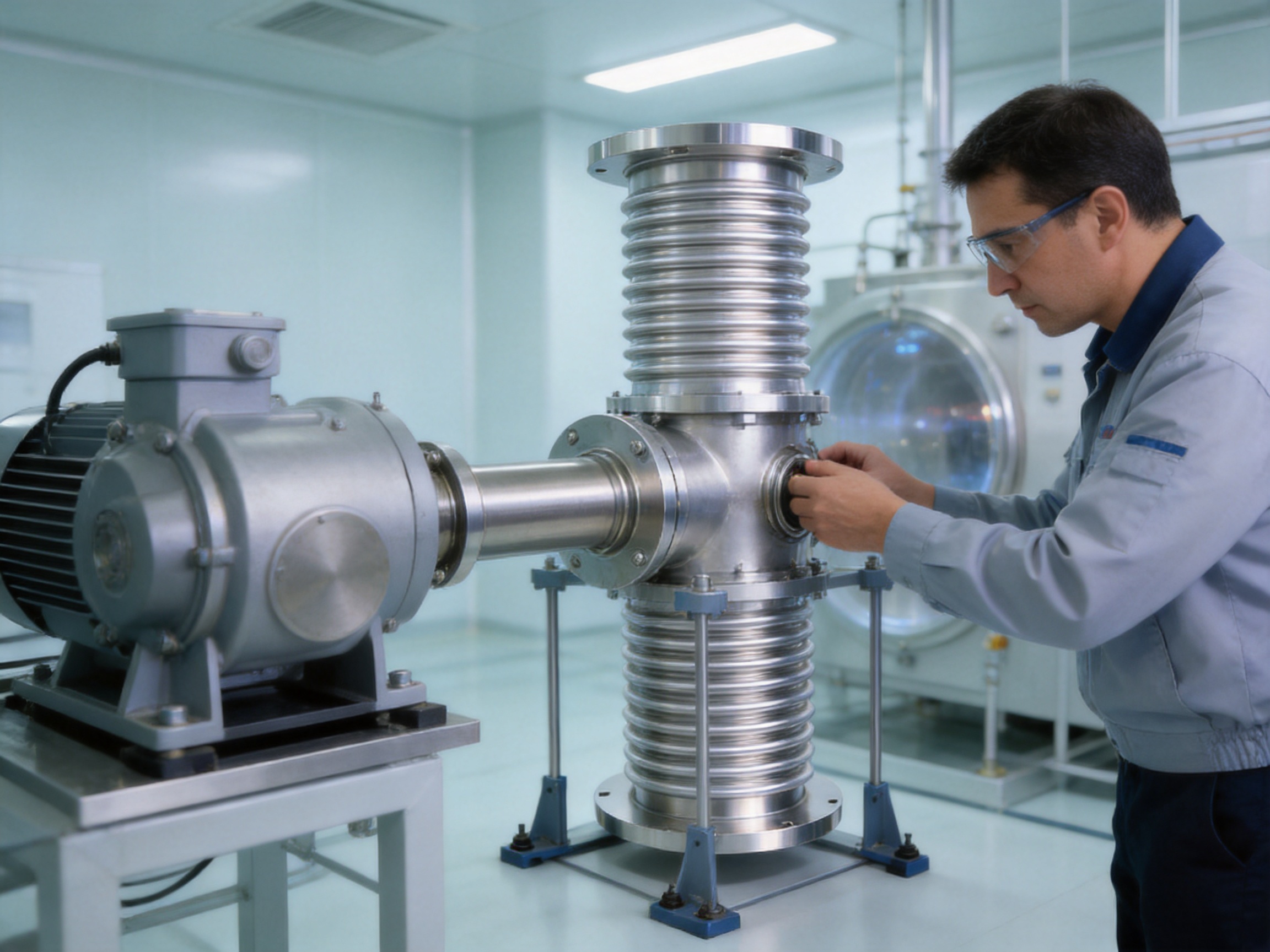
Vacuum equipment depends on stable, clean, and leak-resistant connections. A flange assembly may appear simple, but its performance directly influences the efficiency, safety, and reliability of an entire vacuum system. Any unwanted leakage, excessive vibration, thermal movement, or mechanical stress can reduce process quality and increase maintenance costs. For this reason, engineers often select metal bellows with precision flanges when flexible movement and dependable vacuum integrity are required.
The ISO Flange Type vacuum bellows described in this article are designed for industrial vacuum applications that require a flexible corrugated pipe combined with ISO-K or ISO-F flange connections. The product uses stainless steel corrugated tubing and stainless steel flanges, with SUS304 and SUS316L available for different service conditions. It is engineered for operation from vacuum to atmospheric pressure and has a specified allowable leak rate of 1.33 × 10⁻¹⁰ Pa·m3/sec or below.
This product is suitable for vacuum pipelines, semiconductor and electronics equipment, laboratory systems, coating equipment, analytical instruments, industrial processing machinery, and other installations where a reliable flexible connection is necessary. Its main value lies in the combination of corrosion-resistant materials, carefully formed corrugations, standardized flange dimensions, controlled welding, and strict leak testing.
Content
- 1 What Is an ISO Flange Vacuum Bellows Assembly?
- 2 Product Construction and Material Selection
- 3 Key Technical Specifications
- 4 Standard ISO-K Dimensions
- 5 Standard ISO-F Dimensions
- 6 Advantages Compared with Conventional Rigid Pipe Connections
- 7 Advantages Compared with Non-Metallic Flexible Hoses
- 8 Advantages of Standardized ISO Flange Interfaces
- 9 Manufacturing Process and Production Strengths
- 10 Quality Management and Certification Strengths
- 11 Customization Options
- 12 Application Areas
- 13 Selection Guide for Engineers and Buyers
- 14 Installation and Maintenance Recommendations
- 15 Why Choose This Product for Industrial Vacuum Connections?
- 16 Questions and Answers
- 16.1 What is the main purpose of an ISO flange vacuum bellows?
- 16.2 What materials are available?
- 16.3 What pressure range is specified?
- 16.4 What is the allowable leak rate?
- 16.5 What nominal diameters are available as standard?
- 16.6 What standard lengths are available?
- 16.7 What is the difference between ISO-K and ISO-F?
- 16.8 Can the ISO flange be replaced with another flange type?
- 16.9 Can the bellows be used to correct major pipe misalignment?
- 16.10 How should the bellows be supported?
- 16.11 What information should be provided for a quotation?
- 16.12 Why is leak testing important?
- 16.13 Is SUS316L always better than SUS304?
- 17 Conclusion
- 18 References
- 19 Product: ISO FLANGETVPE
What Is an ISO Flange Vacuum Bellows Assembly?
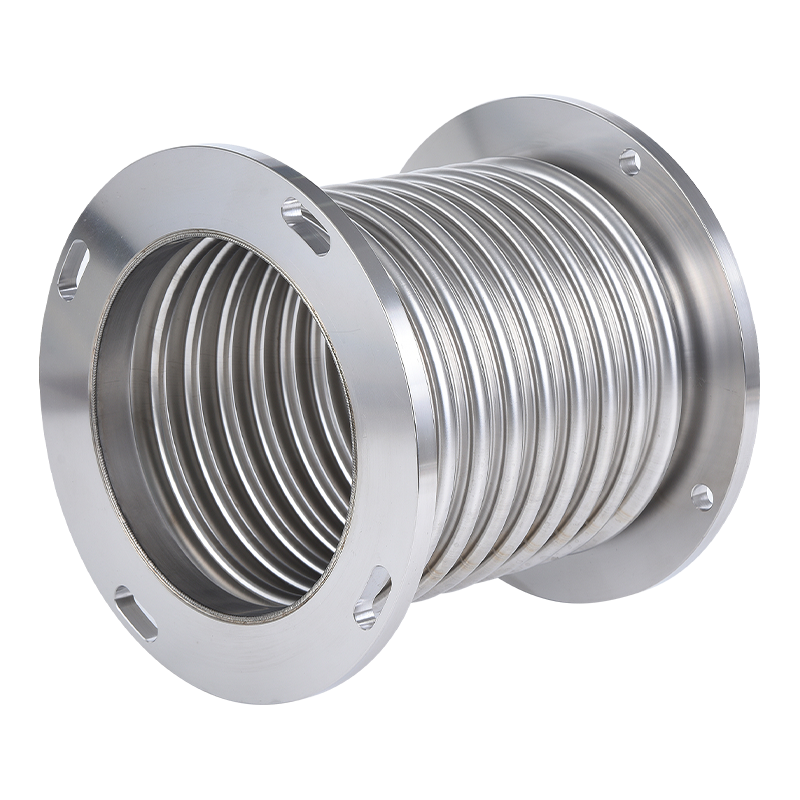
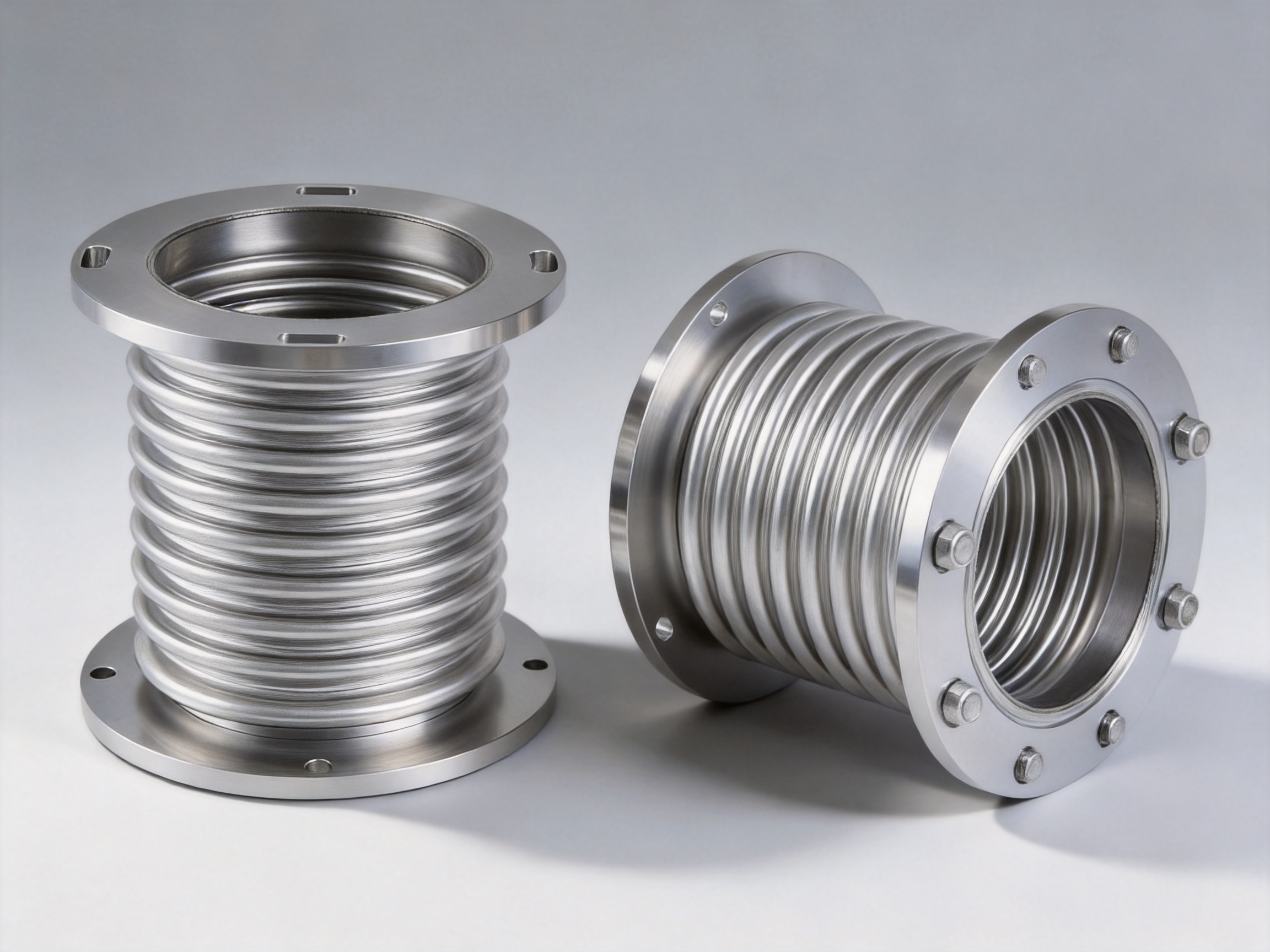
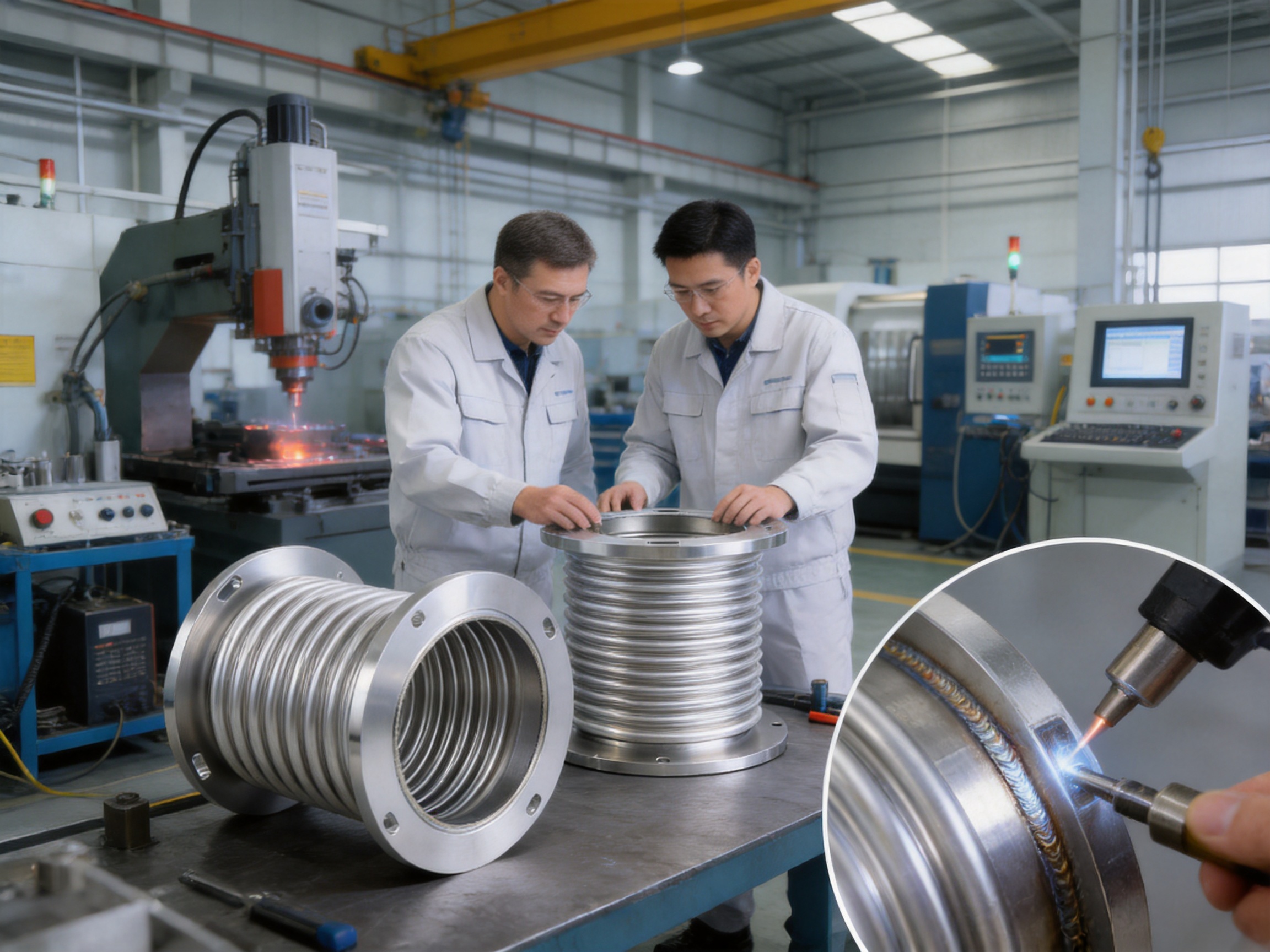
An ISO flange vacuum bellows assembly is a flexible vacuum component consisting of a thin-wall corrugated metal tube and one flange at each end. The corrugated section allows the component to absorb limited axial movement, vibration, installation misalignment, and thermal expansion. The flanges provide a standardized mechanical interface for connecting the bellows to vacuum chambers, valves, pumps, pipes, and other equipment.
Unlike a rigid pipe, a bellows assembly can accommodate movement without transferring the full load to connected equipment. This is especially important when a vacuum pump produces vibration, when a chamber changes temperature, or when two pieces of equipment cannot be aligned perfectly during installation. The bellows also helps reduce mechanical stress at the connection points.
The ISO flange range in this product includes two common connection styles: ISO-K and ISO-F. Both are widely used in medium- and large-diameter vacuum systems. The selection between them depends on the equipment interface, fastening method, available installation space, and the requirements of the complete vacuum system.
ISO-K Configuration
ISO-K is a clamped vacuum flange configuration commonly used where fast installation and convenient maintenance are important. It is typically secured with suitable clamps, centering components, and sealing elements. This arrangement can be practical in systems that require frequent disassembly, component replacement, or cleaning.
The ISO-K vacuum bellows dimensions supplied for this product cover nominal diameters from DN63 through DN200. Standard lengths include 150 mm and 200 mm, while non-standard lengths can be manufactured according to customer requirements.
ISO-F Configuration
ISO-F is a bolted flange configuration. It offers a robust connection for systems where a more permanent or mechanically secure joint is preferred. The bolt-hole pattern provides a defined mounting arrangement and can be integrated into equipment designed around ISO-F interfaces.
The ISO-F vacuum bellows range also covers DN63 to DN200 in the standard specification. Depending on nominal diameter, the flange includes different bolt quantities and hole diameters. The standard lengths are 150 mm and 200 mm, with custom lengths available when the application requires a different installation dimension.
Product Construction and Material Selection
The product is manufactured with corrugated stainless steel pipe and stainless steel flanges. The standard material options include SUS304 and SUS316L. These stainless steels provide a useful combination of strength, cleanliness, corrosion resistance, formability, and suitability for industrial vacuum equipment.
| Component | Available Material | Primary Function |
|---|---|---|
| Corrugated pipe | SUS304 or SUS316L | Provides flexibility, movement absorption, and vacuum containment |
| ISO flange | SUS304 or SUS316L | Provides a standardized mechanical connection to vacuum equipment |
| Welded joint | Compatible stainless steel construction | Creates a sealed connection between the bellows and flange |
SUS304 Stainless Steel
SUS304 is a widely used austenitic stainless steel. It offers good general corrosion resistance, strong formability, and dependable performance in many industrial environments. It is a practical choice for general vacuum piping, equipment connections, clean process systems, and applications where the operating atmosphere is not especially aggressive.
Its broad availability also supports economical production and convenient replacement. When the system operates under ordinary industrial conditions and does not involve especially corrosive chemicals or chloride-rich environments, SUS304 can provide an effective balance between cost and performance.
SUS316L Stainless Steel
SUS316L contains molybdenum and has improved resistance to many corrosive environments compared with SUS304. The low-carbon grade is also suitable for welded assemblies because it helps reduce the risk of corrosion associated with welding heat exposure when appropriate manufacturing procedures are followed.
SUS316L is often selected for demanding vacuum equipment, chemical processing systems, high-cleanliness installations, laboratory equipment, and applications where resistance to moisture, chemicals, or process contamination is especially important. The availability of SUS316L gives customers a higher-resistance option without changing the basic bellows architecture.
Key Technical Specifications
The standard product is designed for service from vacuum to atmospheric pressure. Its stated allowable leak rate is 1.33 × 10⁻¹⁰ Pa·m3/sec or below. This specification is important because a vacuum system can lose performance even when a leak is too small to be detected by ordinary visual inspection.
| Specification | Product Requirement |
|---|---|
| Product type | ISO flange vacuum bellows |
| Flange configurations | ISO-K and ISO-F |
| Corrugated pipe materials | SUS304 and SUS316L |
| Flange materials | SUS304 and SUS316L |
| Working pressure | Vacuum to atmospheric pressure |
| Allowable leak rate | 1.33 × 10⁻¹⁰ Pa·m3/sec or below |
| Standard nominal diameters | DN63, DN80, DN100, DN125, DN160, DN200 |
| Standard lengths | 150 mm and 200 mm, depending on nominal diameter |
| Custom options | Non-standard lengths, double-headed bolts, DN250 and larger sizes, and alternative flange types |
The stated leak-rate value should be considered together with the complete system design. The sealing material, flange assembly, bolt tightening, surface condition, test method, temperature, and connected equipment can all influence final vacuum performance. The bellows itself is manufactured to support high-integrity vacuum connections, but correct installation remains essential.
Standard ISO-K Dimensions
The following table presents the standard ISO-K vacuum bellows dimensions supplied for the product. D1, D2, h, C, and L should be interpreted according to the manufacturer’s drawing and the purchaser’s technical documentation. Before ordering, customers should confirm the exact dimensional meaning, tolerances, sealing arrangement, and interface requirements for their equipment.
| DN | ∅D1 | ∅D2 | h | C | L |
|---|---|---|---|---|---|
| 63 | 95 | 10 | 4.5 | 12 | 150 |
| 80 | 110 | 83 | 4.5 | 12 | 150 |
| 100 | 130 | 102 | 4.5 | 12 | 150 |
| 125 | 155 | 127 | 4.5 | 12 | 200 |
| 160 | 180 | 153 | 4.5 | 12 | 200 |
| 200 | 240 | 213 | 4.5 | 12 | 200 |
The standard size range makes it possible to select a bellows that matches many existing vacuum system interfaces. Standardized dimensions can shorten the design process, simplify spare-parts management, and reduce the need for special adapters. Where the standard length does not match the available installation space, the manufacturer can produce another length.
ISO FLANGETVPE
Standard ISO-F Dimensions
The ISO-F version is available in the same principal nominal diameter range. Its flange dimensions and bolt patterns vary by DN size. The N-∅L notation identifies the number and diameter of the bolt holes. Customers should verify the bolt circle, flange thickness, gasket arrangement, bolt grade, and tightening procedure against the final equipment drawing before installation.
| DN | ∅D1 | ∅K | C | N-∅L | L |
|---|---|---|---|---|---|
| 63 | 130 | 110 | 10 | 4-∅9 | 150 |
| 80 | 145 | 125 | 10 | 8-∅9 | 150 |
| 100 | 165 | 145 | 10 | 8-∅9 | 150 |
| 125 | 200 | 175 | 10 | 8-∅11 | 200 |
| 160 | 225 | 200 | 10 | 8-∅11 | 200 |
| 200 | 285 | 260 | 14 | 12-∅11 | 200 |
Bolted ISO-F connections can be advantageous where the assembly must withstand repeated mechanical loads, where the flange is integrated into a rigid equipment frame, or where the installation specification requires a bolted connection. A properly tightened bolt pattern distributes the clamping load around the flange and supports consistent sealing.
Advantages Compared with Conventional Rigid Pipe Connections
A rigid pipe can provide a direct and economical flow path, but it does not absorb movement effectively. When connected equipment moves or vibrates, the rigid pipe can transfer stress to valves, pumps, chambers, and welded joints. Over time, this may contribute to deformation, fatigue, misalignment, or premature failure.
The ISO flange bellows provides controlled flexibility. Its corrugated geometry allows movement while maintaining a sealed metallic flow boundary. This flexibility is particularly valuable at pump inlets and outlets, between a vacuum chamber and a fixed pipeline, and at equipment interfaces where thermal expansion is unavoidable.
Vibration Isolation
Vacuum pumps and other rotating equipment can generate vibration. If the equipment is joined directly to a rigid pipe, vibration may travel through the entire pipeline. A properly selected bellows can help reduce the transmission of mechanical vibration and protect sensitive equipment. It can also reduce the chance that vibration will loosen or fatigue other components.
The bellows should not be treated as a substitute for a complete vibration-control design. Pump supports, guides, alignment, operating speed, and system geometry remain important. Nevertheless, the flexible connection provides an important mechanical separation point that rigid piping cannot offer.
Thermal Movement Compensation
Vacuum systems used in coating, heat treatment, research, and industrial processing may experience significant temperature changes. Stainless steel pipes and equipment expand when heated and contract when cooled. If this movement is restrained, stress can build at the connection points.
The corrugated bellows can accommodate a controlled amount of axial movement and help prevent thermal loads from being transferred directly into the equipment. The actual movement capacity depends on the bellows design, number of convolutions, temperature, pressure, installation condition, and allowable fatigue life. Engineers should therefore confirm movement limits before selecting the product for a high-cycle application.
Installation Misalignment
Real-world installation conditions are rarely perfect. Minor differences between the designed pipe centerline and the equipment connection can occur because of manufacturing tolerance, foundation movement, or field assembly conditions. A flexible bellows can accommodate limited misalignment more effectively than a rigid spool piece.
However, the component should never be forced into position or used to correct excessive misalignment. Improper offset can cause the corrugations to operate outside their intended range, reduce service life, or create unwanted stress at the welds and flanges. Correct support and alignment remain necessary.
Advantages Compared with Non-Metallic Flexible Hoses
Non-metallic hoses can be useful in selected applications, but metal bellows offer important advantages where vacuum integrity, cleanliness, temperature resistance, and long-term dimensional stability are priorities. A stainless steel bellows is less likely to permeate gases than many polymeric materials and is generally more compatible with elevated temperatures and demanding vacuum environments.
Metal construction also provides a clean internal surface when properly manufactured and handled. This is important in applications where particles, outgassing, or contamination can affect the process. SUS316L can be selected for environments requiring greater corrosion resistance.
Metal bellows do require appropriate handling. They should be protected from sharp objects, excessive bending, torsion, impact, and contamination. Unlike a thick-walled rubber hose, the corrugated metal section should not be dragged across rough surfaces or used as a lifting handle. Correct installation preserves the advantages of the design.
Advantages of Standardized ISO Flange Interfaces
Standardized interfaces provide significant practical benefits. Engineers can design equipment around known flange dimensions, maintenance teams can keep compatible replacement parts, and system integrators can connect components from different equipment suppliers when the interfaces are manufactured to the required standard.
ISO-K and ISO-F options also allow the same basic bellows concept to serve different system architectures. A customer may choose the clamped configuration for frequent maintenance or the bolted configuration for a more permanent assembly. The ability to select between these interfaces reduces redesign effort and makes the product suitable for a broader range of equipment.
The manufacturer can also change the ISO flange to KF or CF flanges according to customer requirements. This flexibility is useful when a system includes several vacuum standards or when a customer has already established a preferred flange family.
Manufacturing Process and Production Strengths
The manufacturer operates as an integrated industrial and trading company with capabilities covering research, development, manufacturing, and processing of energy equipment and related piping products. Its product range includes metal hoses, natural gas pipelines, plumbing fittings, sanitary ware, valves, plastic products, and hardware.
This broad manufacturing background is relevant to the production of ISO flange vacuum bellows. A bellows assembly requires more than a formed tube. It depends on material control, forming accuracy, flange processing, welding quality, dimensional inspection, leak testing, packaging, and technical communication with the customer. Experience across multiple pipe and fitting categories can support a more complete understanding of these connected requirements.
The company’s production site covers approximately 40 acres and includes a factory building of approximately 30,000 square meters. It operates 30 welding and forming production lines, together with two uninterrupted solid-melting hydrogen furnace production lines. This equipment base supports production capacity, process continuity, and the manufacture of customized components.
Material Preparation and Traceability
Material selection is the first foundation of a dependable vacuum component. Stainless steel coil, sheet, tube, and flange materials should be checked against the required grade and production specification. Material analysis equipment helps verify composition and supports appropriate material identification during production.
The company uses direct-reading spectrometers for metal material analysis. Such equipment can assist in confirming the alloy composition of incoming materials and reducing the risk of material mix-ups. For SUS304 and SUS316L products, correct identification is especially important because the two grades have different corrosion-resistance characteristics and may be specified for different service conditions.
Corrugation Forming
The corrugated pipe is formed to create a series of controlled convolutions. The shape, pitch, height, wall thickness, and consistency of the corrugations influence flexibility, movement capability, flow behavior, and fatigue performance. Forming must therefore be controlled carefully to avoid wrinkles, cracks, uneven geometry, or excessive thinning.
Stable forming equipment and experienced operators help maintain repeatability from one assembly to the next. Dimensional checks can be used to confirm that the bellows body corresponds to the approved drawing. Where the customer requires a special length or a larger diameter, the forming process can be adapted to the specific design.
Flange Manufacturing
Flanges must meet dimensional and surface requirements so that they can be connected correctly to the mating equipment. Important characteristics include outside diameter, bolt-hole pattern, bore, flange thickness, flatness, and surface condition. An error in any of these areas can cause assembly difficulty or compromise sealing.
Using stainless steel for both the bellows and flanges can reduce concerns associated with dissimilar materials and supports a coherent corrosion-resistance strategy. The final choice between SUS304 and SUS316L should be based on the operating environment, process media, cleaning requirements, temperature, and customer specification.
Welding and Joint Integrity
The connection between the corrugated pipe and the flange is one of the most important areas of the assembly. Welding must produce a continuous, clean, and mechanically sound joint without creating defects that could become a leak path. Heat input, joint fit-up, shielding, electrode or filler selection, and post-weld handling all influence the result.
The manufacturer’s extensive welding production capability supports the production of welded pipe and fitting assemblies. For vacuum service, the objective is not merely a visually acceptable weld. The joint must also be compatible with leak testing and the required service conditions. Careful welding practices help maintain the low leak-rate specification of the finished bellows.
Hydrogen Furnace Capability
The company operates two uninterrupted solid-melting hydrogen furnace production lines. Furnace processes can be relevant to metal processing, material treatment, and the production of components requiring controlled thermal conditions. Continuous equipment can support stable production scheduling and consistent process management.
The exact furnace treatment applied to a particular product should be confirmed in the technical documentation because not every bellows assembly requires the same thermal process. Nevertheless, the availability of advanced thermal production equipment demonstrates broader industrial capability and supports the company’s ability to handle demanding metal-product manufacturing requirements.
Leak Testing and Quality Verification
Leak testing is essential for a vacuum bellows. A component can appear perfect externally while still having a microscopic leakage path through a weld, flange connection, or material defect. The company uses flow tightness testing equipment as part of its quality-control resources.
The specified allowable leak rate of 1.33 × 10⁻¹⁰ Pa·m3/sec or below indicates that the product is intended for controlled vacuum service rather than ordinary atmospheric piping. Customers should confirm the test method, test pressure, calibration practice, acceptance criteria, and inspection records required for their project.
Quality Management and Certification Strengths
The company states that it strictly implements the ISO9000:2008 quality management system. A quality management system provides a framework for controlling documents, production procedures, inspection records, corrective actions, supplier management, and customer requirements.
For a customized bellows assembly, this framework is valuable because the product may include special dimensions, alternative flange types, selected stainless-steel grades, non-standard lengths, or special fastening arrangements. Controlled documentation helps ensure that the approved drawing and purchase requirements are transferred accurately into production.
The company also holds a Special Equipment Manufacturing License for pressure pipelines in the People’s Republic of China and has EU CE certification testing reports. These qualifications and reports can support customer confidence, although the precise applicability to a specific project should always be confirmed with the manufacturer and the relevant regulatory authority.
Membership in the China Urban Gas Association further reflects the company’s involvement in gas-related piping and equipment industries. This experience can be useful when a customer requires knowledge of gas pipelines, metal hose connections, valves, fittings, or related infrastructure.
Customization Options
Standard products are useful for common applications, but many industrial systems require a customized connection. The manufacturer provides several options to adapt the ISO flange bellows to the customer’s installation.
Non-Standard Lengths
The listed standard lengths are 150 mm and 200 mm, but the manufacturer can produce corrugated pipes with lengths not shown in the standard table. A custom length can help reduce the need for additional adapters and minimize unnecessary joints in the vacuum line.
When requesting a custom length, customers should provide the required overall length, flange orientation, allowable tolerance, movement requirement, installation condition, and whether the measurement is taken in the free or installed state.
Double-Headed Bolts
Double-headed bolts can be manufactured to help prevent loosening. This option may be considered for installations exposed to vibration or where fastener retention is an important design concern. The correct bolt arrangement should be selected together with the customer’s flange, clamp, gasket, and maintenance requirements.
Larger Nominal Diameters
Although the standard table covers DN63 to DN200, the manufacturer can produce bellows of DN250 or larger. Larger diameters may be required for high-throughput vacuum lines, large chambers, industrial coating equipment, and specialized research systems.
Large-diameter bellows require careful evaluation of pressure conditions, mechanical support, handling, flange stiffness, shipping protection, and allowable movement. Customers should provide complete drawings and operating information before production begins.
Alternative Flange Types
The ISO flange can be changed to KF or CF flanges according to customer requirements. KF flanges are commonly used in smaller vacuum systems and maintenance-friendly assemblies, while CF flanges are selected for applications requiring metal sealing and high vacuum performance.
Changing the flange type may affect the overall length, connection hardware, gasket arrangement, bolt or clamp requirements, and compatible equipment. The revised assembly should therefore be confirmed through an approved technical drawing rather than treated as a simple visual substitution.
Application Areas
Vacuum Pumps and Pumping Lines
Vacuum pumps often generate vibration and require service access. A flexible bellows connection between the pump and the fixed pipeline can help limit vibration transmission and make installation easier. The selected size should support the required conductance without creating an unnecessary restriction in the pumping line.
Vacuum Chambers
Vacuum chambers may be connected to external valves, pumps, gauges, and process pipelines. A bellows can compensate for limited movement between the chamber and its connected equipment. It can also simplify alignment during installation and help isolate the chamber from mechanical vibration.
Semiconductor and Electronics Equipment
Electronics manufacturing equipment often requires stable vacuum conditions and careful contamination control. Stainless steel bellows are suitable for many connections in deposition, etching, inspection, and related systems, subject to the specific cleanliness, temperature, and process-compatibility requirements of the equipment.
Coating and Thin-Film Equipment
Vacuum coating equipment commonly includes chambers, rotating fixtures, pumps, valves, and feedthroughs. Thermal cycling and vibration can occur during operation. The flexible ISO flange bellows can help connect these components while maintaining a controlled vacuum boundary.
Laboratory and Research Systems
Research installations are often modified over time. A standardized flange bellows makes it easier to connect new instruments or rearrange a test system. The availability of different materials, flange types, lengths, and diameters supports a wide variety of experimental configurations.
Industrial Gas and Energy Equipment
The company’s broader experience in natural gas pipelines, energy equipment, pipe fittings, and valves supports applications beyond laboratory vacuum systems. However, the suitability of this particular product for a gas-service application must be assessed according to pressure, gas composition, temperature, regulatory requirements, and the complete system design.
Selection Guide for Engineers and Buyers
Selecting the correct bellows requires more than matching the nominal diameter. The buyer should identify the connection standard, operating pressure, temperature, movement, vacuum level, media, material, installation length, and maintenance conditions.
| Selection Factor | Questions to Confirm |
|---|---|
| Nominal diameter | Does the bellows match the connected pipe, chamber, valve, or pump port? |
| Flange type | Is the equipment designed for ISO-K, ISO-F, KF, or CF? |
| Material | Is SUS304 sufficient, or is SUS316L preferred for corrosion resistance or cleanliness? |
| Length | Will the standard 150 mm or 200 mm length fit, or is a custom length required? |
| Movement | What axial, lateral, or angular movement must the bellows accommodate? |
| Pressure | Will the product operate only under vacuum and atmospheric pressure, or is another rating required? |
| Temperature | What are the minimum, normal, and maximum temperatures? |
| Leak requirement | What leak-rate acceptance value and test method are required? |
| Installation | Will the assembly be clamped, bolted, frequently removed, or permanently installed? |
| Environment | Will the product encounter chemicals, moisture, particles, vibration, or repeated thermal cycling? |
Movement and Fatigue Considerations
Bellows are flexible, but their movement capacity is not unlimited. Repeated movement can produce fatigue. The greater the displacement and the number of operating cycles, the more important it becomes to evaluate bellows geometry and fatigue life.
The bellows should be installed without torsion. Angular movement, lateral offset, and axial compression should remain within the approved design limits. If the system includes frequent movement, automated equipment, or significant thermal cycling, the customer should provide cycle data so that the manufacturer can confirm suitability.
Support and Alignment
A bellows should not carry the unsupported weight of a long pipeline or heavy valve. Suitable pipe supports, guides, and anchors should be installed so that the bellows absorbs only the intended movement. Excessive external loading can shorten service life and affect flange alignment.
During installation, the flanges should be brought into alignment without using bolts to pull the system into position. Forcing a misaligned flange can introduce permanent stress into the bellows. The connected equipment should be independently supported before the bellows is tightened.
Installation and Maintenance Recommendations
Before installation, inspect the bellows for dents, scratches, contamination, damaged flange faces, bent bolt holes, or other visible defects. Do not install a product that has been dropped or exposed to conditions that may have damaged the corrugated section.
Keep protective caps in place until the component is ready to be connected. Vacuum systems can be sensitive to dust, oil, fibers, and other contaminants. Clean gloves and suitable cleanroom procedures may be required for high-cleanliness applications.
Use the correct gasket or sealing element for the selected ISO flange configuration. Confirm that the sealing surfaces are clean and free from scratches. Tighten bolts or clamps using an appropriate sequence and torque procedure. Uneven tightening can create local leakage or distort the flange.
After installation, perform the required leak test before placing the system into normal operation. If a leak is found, do not immediately increase bolt force or bend the bellows. First inspect the gasket, flange alignment, sealing surface, and test setup. Excessive tightening can damage the connection or create a new problem.
During maintenance, check for signs of fatigue, discoloration, corrosion, dents, abnormal deformation, or repeated rubbing against nearby components. Any bellows that has exceeded its movement limit or has experienced an unexpected pressure event should be evaluated before reuse.
Why Choose This Product for Industrial Vacuum Connections?
The product combines several characteristics that are important to industrial buyers: stainless steel construction, standardized ISO interfaces, a choice of SUS304 or SUS316L, low allowable leakage, standard sizes from DN63 to DN200, custom lengths, larger-size production, and alternative flange options.
Its advantage over a basic rigid pipe is flexibility. Its advantage over many non-metallic hoses is metallic vacuum integrity, temperature capability, and lower gas permeation potential. Its advantage over a narrowly standardized component is customization. The customer can request different lengths, flange standards, bolt arrangements, materials, and larger diameters.
The manufacturing organization adds further value through material-analysis equipment, welding and forming lines, thermal-processing resources, flow-tightness testing equipment, a quality management framework, and experience with energy equipment and pipe products. Together, these strengths support the production of bellows for both standard orders and technically customized projects.
For buyers, the most important benefit is not simply the availability of a stainless steel corrugated tube. It is the ability to obtain a complete engineered connection that is matched to the flange standard, material requirement, installation length, vacuum performance, and operating environment.
Questions and Answers
What is the main purpose of an ISO flange vacuum bellows?
The main purpose is to provide a flexible, sealed connection in a vacuum pipeline or equipment assembly. The corrugated section can absorb limited movement, vibration, thermal expansion, and installation misalignment while the flanges connect the bellows to compatible vacuum equipment.
What materials are available?
The standard material options are SUS304 and SUS316L for the corrugated pipe and flanges. SUS304 is suitable for many general industrial applications, while SUS316L is often selected when improved corrosion resistance, cleanliness, or demanding process conditions are required.
What pressure range is specified?
The stated working pressure is from vacuum to atmospheric pressure. If the intended application includes positive pressure above atmospheric pressure, pulsation, pressure cycling, or a special gas, the customer should request a separate technical evaluation.
What is the allowable leak rate?
The specified allowable leak rate is 1.33 × 10⁻¹⁰ Pa·m3/sec or below. The exact test method and acceptance procedure should be confirmed in the product documentation or purchase specification.
What nominal diameters are available as standard?
The standard tables include DN63, DN80, DN100, DN125, DN160, and DN200. DN250 and larger sizes can also be manufactured according to customer requirements and technical confirmation.
What standard lengths are available?
The standard lengths shown are 150 mm and 200 mm, depending on nominal diameter and flange configuration. Other lengths can be manufactured when the customer provides the required dimensions and installation conditions.
What is the difference between ISO-K and ISO-F?
ISO-K generally uses a clamped connection, which can be convenient for maintenance and repeated disassembly. ISO-F uses a bolted flange connection, which is often preferred for a more permanent or mechanically robust installation. The correct choice depends on the mating equipment and system design.
Can the ISO flange be replaced with another flange type?
Yes. The product information states that ISO flanges can be changed to KF or CF flanges according to customer requirements. The complete dimensional drawing and sealing arrangement should be approved before production.
Can the bellows be used to correct major pipe misalignment?
No. The bellows can accommodate limited movement, but it should not be used to force together significantly misaligned equipment. Excessive offset or torsion can reduce service life and damage the corrugations or welded joints.
How should the bellows be supported?
The connected pipe, pump, valve, or chamber should be independently supported. The bellows should not carry the weight of a long pipeline or heavy equipment. Proper supports and guides help ensure that the bellows absorbs only the intended movement.
What information should be provided for a quotation?
The customer should provide the nominal diameter, flange type, material, overall length, operating pressure, vacuum level, temperature range, process medium, movement requirement, number of cycles, leak-rate requirement, and any special requirements such as double-headed bolts or larger dimensions.
Why is leak testing important?
Very small leaks may not be visible and can still prevent a vacuum system from reaching its required pressure. Leak testing verifies the integrity of the bellows body, welded joints, and other relevant parts of the assembly.
Is SUS316L always better than SUS304?
Not necessarily. SUS316L offers improved resistance in many corrosive environments, but SUS304 may be fully suitable for general industrial service and can be more economical. The correct material depends on the process medium, environment, cleaning procedure, temperature, and customer specification.
Conclusion
The ISO Flange Type vacuum bellows is a practical solution for industrial systems that require a flexible, standardized, and leak-resistant vacuum connection. Its SUS304 or SUS316L corrugated pipe and flange construction provides a durable metallic flow path, while the ISO-K and ISO-F configurations support different installation and maintenance preferences.
With standard sizes from DN63 to DN200, lengths of 150 mm and 200 mm, custom-length production, double-headed bolt options, DN250 and larger manufacturing, and the ability to change to KF or CF flanges, the product can be adapted to a broad range of equipment layouts.
The company’s manufacturing strengths reinforce the product offering. Welding and forming production lines, metal material analysis, hydrogen furnace production lines, flow-tightness testing equipment, quality-system implementation, special-equipment qualifications, and experience in energy equipment and pipe fittings provide a strong foundation for consistent production and technical customization.
For engineers and purchasing teams, the best results come from specifying the complete application rather than ordering by nominal diameter alone. When the flange standard, material, length, movement, temperature, pressure, and leak-rate requirements are properly confirmed, this stainless steel bellows assembly can provide a dependable connection for vacuum equipment, industrial processing systems, energy equipment, and specialized research installations.
References
1. Product specification and dimensional information supplied for the ISO flange vacuum bellows.
2. General engineering principles for metallic bellows design, flexible piping, and movement compensation.
3. Stainless steel material guidance for SUS304 and SUS316L industrial components.
4. Vacuum technology practices for flange sealing, leak testing, cleanliness, and installation.
5. Quality management principles associated with ISO9000-series production systems.
6. General guidance for industrial pipe supports, alignment, vibration control, and thermal expansion management.