 English
 中文简体
中文简体 Español
 عربى
عربى

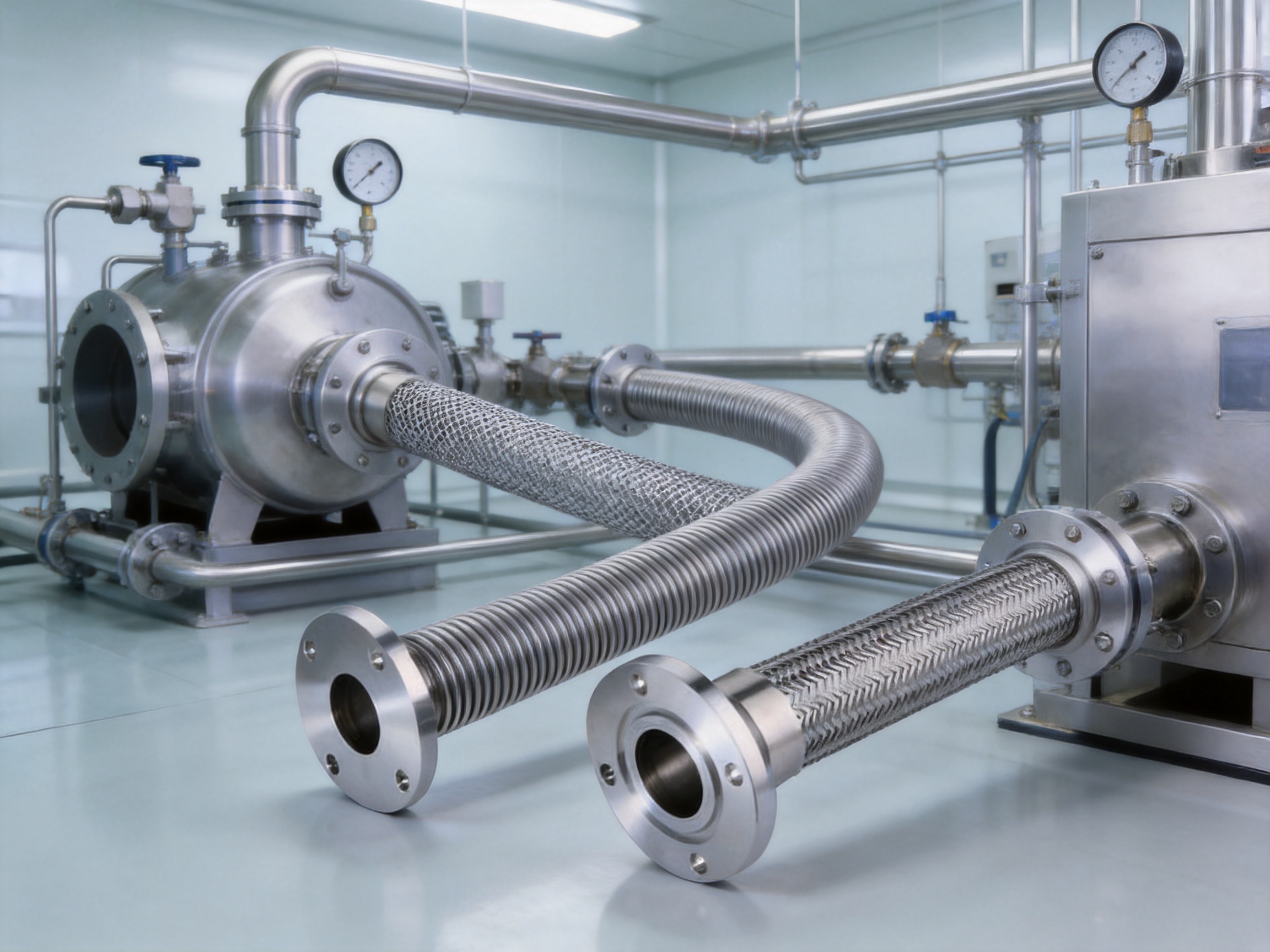
Industrial hose assemblies are essential components in vacuum systems, pressure-transfer equipment, gas installations, chemical processing lines, semiconductor machinery, laboratory devices, and many other engineered systems. In these applications, a hose must do much more than transport a medium. It must absorb vibration, accommodate movement, compensate for installation tolerances, resist corrosion, maintain a reliable seal, and operate safely over its intended service life.
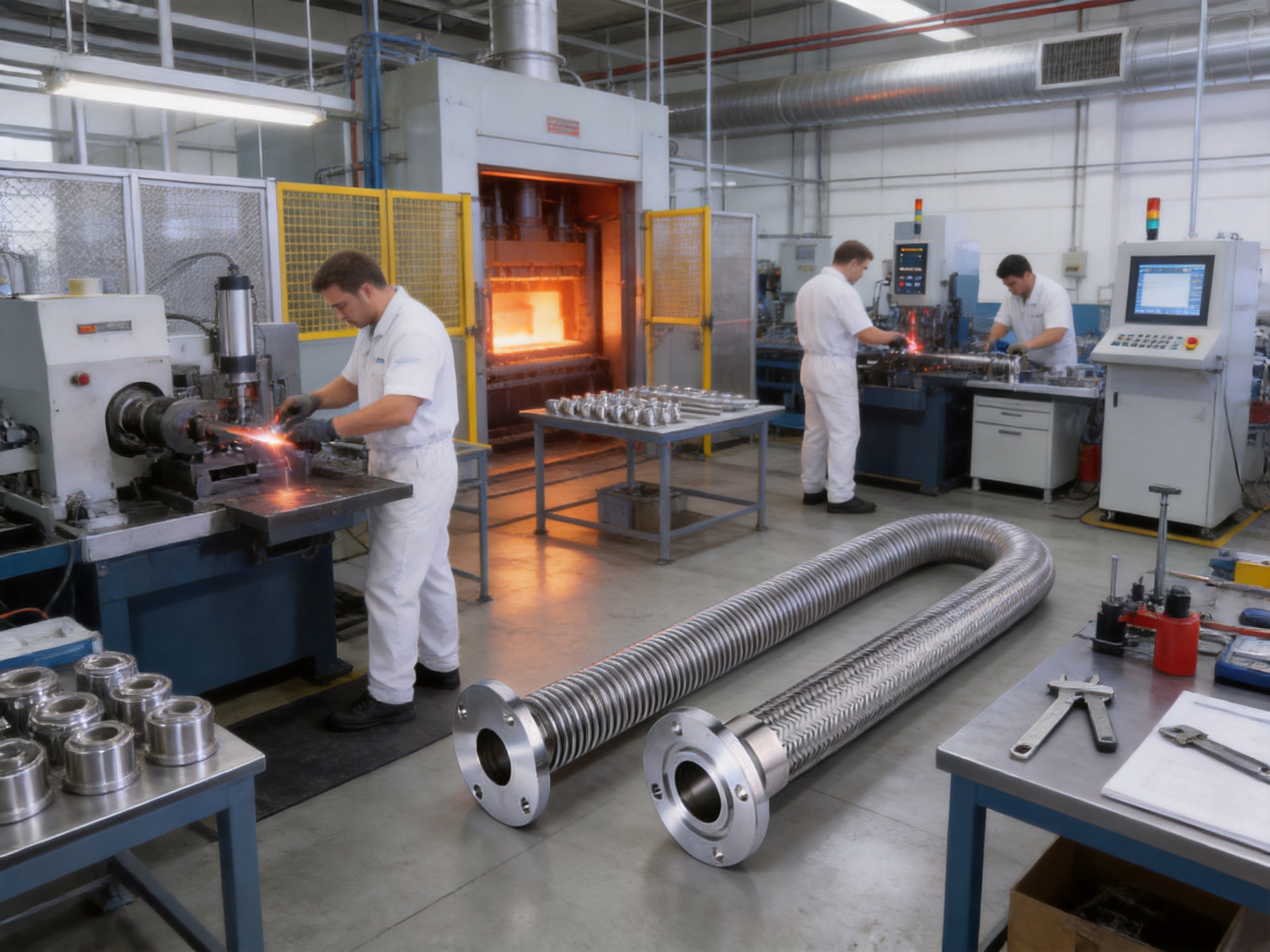
The JIS flange-type industrial hose is designed for these demanding requirements. It combines a stainless steel flexible hose body with stainless steel flange connections and, where required, a stainless steel mesh sleeve. The result is a robust assembly suitable for vacuum service and low-to-moderate pressure applications. Its flange configuration is particularly useful when equipment must be connected and disconnected efficiently or when a standardized vacuum flange interface is required.
This product is manufactured by Zhejiang Zhenlong Energy Equipment Technology Co., Ltd., a Chinese manufacturer specializing in metal hoses, corrugated hoses, pipe fittings, gas pipelines, plumbing fittings, valves, sanitary products, plastic products, and related hardware. The company integrates research, development, manufacturing, processing, and trade, allowing it to support customers from product selection and engineering design through production, inspection, delivery, and after-sales service.
The JIS flange-type hose is available in several standard bore sizes, including 20, 25, 40, and 50 millimeters. Standard lengths range from 200 to 5,000 millimeters, while non-standard lengths can also be produced. Larger dimensions, including DN65 and above, may be manufactured according to application requirements. This combination of standardized interfaces and manufacturing flexibility makes the hose suitable for original equipment manufacturers, maintenance departments, system integrators, and industrial distributors.
Content
- 1 Product Overview
- 2 Core Construction and Material Selection
- 3 Technical Specifications
- 4 Advantages Over Conventional Industrial Hoses
- 5 Manufacturing Strengths of the Producer
- 6 Quality Management and Compliance Orientation
- 7 Applications of the JIS Flange-Type Hose
- 8 Installation Guidelines
- 9 Maintenance and Service Life Considerations
- 10 Why Choose This Product for Industrial Projects?
- 11 How to Select the Correct Configuration
- 12 Q&A
- 12.1 What is a JIS flange-type industrial hose?
- 12.2 What materials are available?
- 12.3 Can the hose be used under vacuum?
- 12.4 Can the hose be used for pressure service?
- 12.5 What is the difference between a mesh and non-mesh hose?
- 12.6 What standard sizes are available?
- 12.7 What lengths can be produced?
- 12.8 Why is the dynamic bending radius larger than the static bending radius?
- 12.9 Can the hose compensate for pipe misalignment?
- 12.10 Is SUS316L always better than SUS304?
- 12.11 What information should be provided when requesting a quotation?
- 12.12 How should the hose be maintained?
- 13 Conclusion
- 14 References
- 15 Product: JIS FLANGETYPE
Product Overview
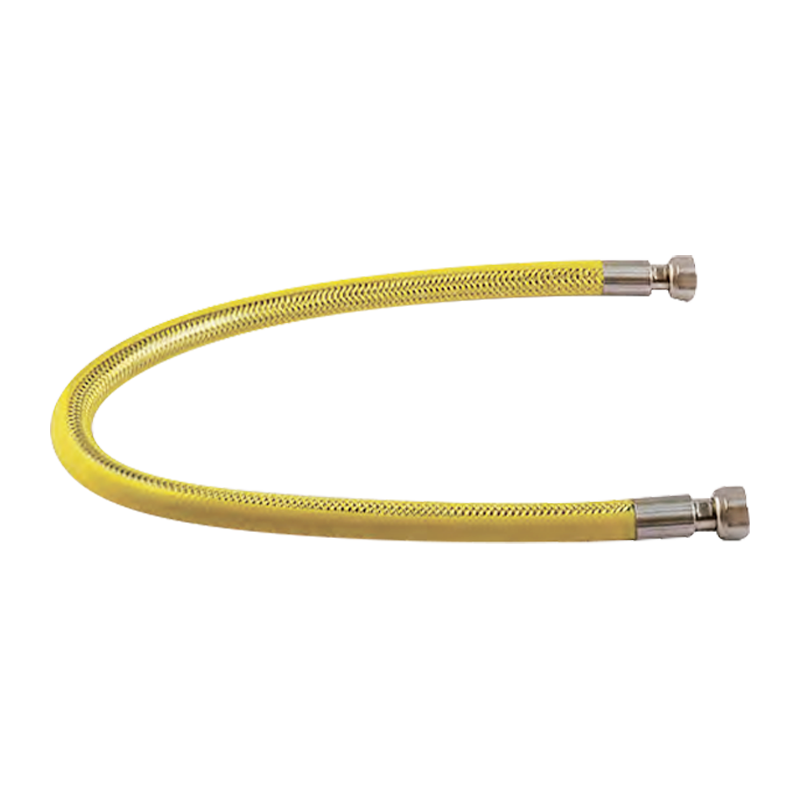
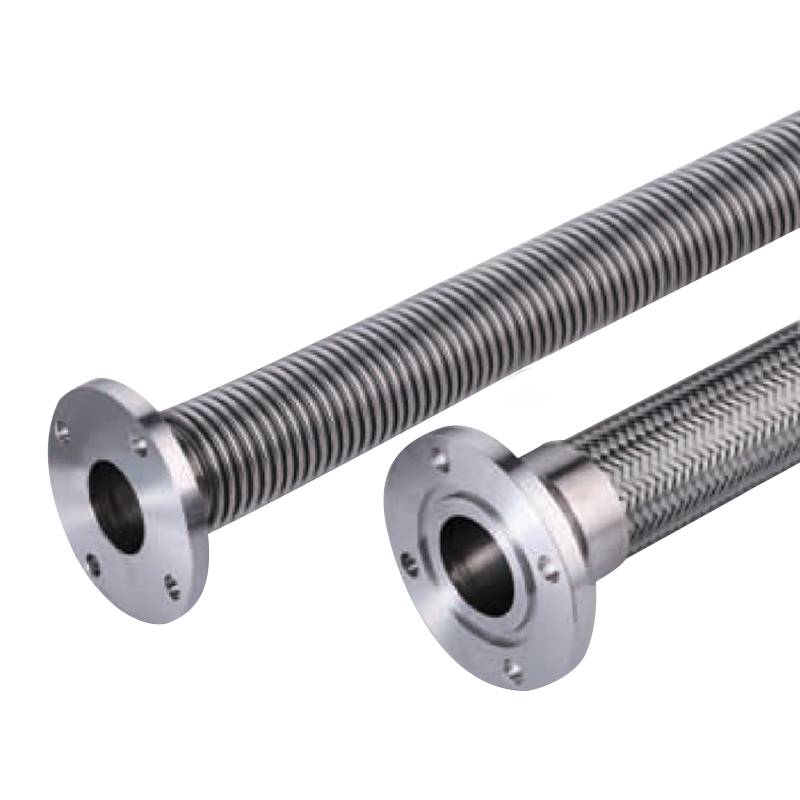
The JIS flange-type industrial hose is a flexible stainless steel assembly engineered for vacuum and pressure service. Its primary configuration consists of a flexible hose section connected to flanges at both ends. Depending on operating conditions, the assembly may be supplied without a mesh sleeve or with an external stainless steel mesh sleeve.
The non-mesh configuration is intended for applications where flexibility, vacuum performance, corrosion resistance, and compact installation are the primary concerns. The mesh-sleeved configuration adds an external reinforcement layer that improves pressure resistance and helps protect the corrugated hose from certain forms of mechanical contact.
The hose and flange materials are available in SUS304 and SUS316L stainless steel. SUS304 provides a practical balance of corrosion resistance, mechanical strength, availability, and cost. SUS316L contains molybdenum and offers improved resistance to many corrosive environments, particularly those involving chlorides, chemical exposure, or demanding hygienic and process conditions.
The product is rated for service from vacuum to atmospheric pressure in its standard specification. The allowable leak rate is 1.33 × 10⁻¹⁰ Pa·m3/sec or below. This leak-rate specification is important for vacuum applications, where even a small leak can reduce system efficiency, contaminate a process, increase pump workload, or prevent the equipment from reaching the required vacuum level.
Unlike ordinary rubber or plastic hoses, the stainless steel construction provides high resistance to aging, temperature-related deterioration, permeation, and many common industrial fluids. The metallic structure also offers dimensional stability and a clean internal flow path when properly selected, manufactured, installed, and maintained.
Core Construction and Material Selection
Stainless Steel Hose Body
The flexible hose body is manufactured from stainless steel, with SUS304 and SUS316L available as standard material choices. A corrugated metallic structure allows the hose to bend and absorb movement while maintaining a continuous pressure boundary.
Corrugation is a central feature of the hose design. Instead of relying on the elastic deformation of rubber, the corrugated metal wall flexes through a series of formed convolutions. This structure provides controlled flexibility and allows the hose to compensate for vibration, thermal expansion, minor misalignment, and equipment movement.
The quality of the corrugated body depends on accurate material preparation, forming control, weld integrity, and dimensional inspection. Excessive variation in corrugation depth or pitch can affect flexibility, fatigue life, pressure capacity, and leak performance. For this reason, the manufacturing process must be carefully controlled from raw material selection through final testing.
Stainless Steel Flanges
The flanges provide a stable connection between the flexible hose and the equipment, pipeline, valve, pump, chamber, or other system component. Flange connections are often preferred in industrial systems because they allow reliable bolted installation and convenient maintenance access.
Flanges are available in SUS304 and SUS316L to match the hose body and the application environment. Selecting compatible materials reduces the risk of galvanic corrosion and improves the long-term integrity of the assembly. In corrosive, high-purity, or chemically sensitive systems, SUS316L may be preferred because of its enhanced resistance characteristics.
The JIS flange-type design uses standardized flange dimensions for common vacuum connections, including VG20, VF20, VG25, VF25, VG40, VF40, VG50, and VF50. The availability of these interfaces helps simplify system design and allows the hose to be integrated with existing equipment that uses compatible JIS vacuum flange standards.
Stainless Steel Mesh Sleeve
For applications requiring additional reinforcement, the hose can be supplied with a stainless steel mesh sleeve. The mesh is formed around the corrugated hose and serves several functions. It helps control hose expansion under pressure, contributes to pressure resistance, and provides a layer of mechanical protection.
The mesh sleeve is particularly valuable when a hose is exposed to repeated movement, vibration, external contact, or higher pressure within the stated rating. It may also help stabilize the assembly during operation and reduce the possibility of excessive deformation.
Mesh reinforcement does not eliminate the need for correct installation. The hose should not be twisted, stretched beyond its allowable movement, bent below its minimum radius, or used outside its pressure and temperature design limits. Reinforcement improves performance, but proper system design remains essential.
Technical Specifications
The following table summarizes the standard specifications and available sizes for the JIS flange-type hose.
| Item | Specification |
|---|---|
| Hose material | SUS304 or SUS316L stainless steel |
| Flange material | SUS304 or SUS316L stainless steel |
| Mesh sleeve material | SUS304 or SUS316L stainless steel |
| Working pressure | Vacuum to atmospheric pressure for the standard specification |
| Allowable leak rate | 1.33 × 10⁻¹⁰ Pa·m3/sec or below |
| Standard bore sizes | 20, 25, 40, and 50 millimeters |
| Available flange interfaces | VG20/VF20, VG25/VF25, VG40/VF40, and VG50/VF50 |
| Standard hose lengths | 200 to 5,000 millimeters |
| Optional manufacturing | Non-standard lengths and DN65 or larger dimensions by consultation |
| Construction options | Non-mesh vacuum hose or vacuum hose with stainless steel mesh |
Pressure and minimum bending radius values vary according to the size and configuration. A product selection should therefore be based on the specific operating pressure, movement pattern, installation geometry, temperature, medium, and required service life.
Standard Size Data
| Bore | Flange | D | K | Number and Hole Diameter | D1 | Length | Static Pressure | Dynamic Pressure | Static Minimum Bending Radius | Dynamic Minimum Bending Radius |
|---|---|---|---|---|---|---|---|---|---|---|
| 20 mm | VG20/VF20 | 80 mm | 60 mm | 4 holes, 10 mm diameter | 28.2 mm | 200–5,000 mm | -0.1 to 2.0 MPa | -0.1 to 1.6 MPa | 160 mm | 360 mm |
| 25 mm | VG25/VF25 | 90 mm | 70 mm | 4 holes, 10 mm diameter | 34 mm | 200–5,000 mm | -0.1 to 2.0 MPa | -0.1 to 1.6 MPa | 175 mm | 400 mm |
| 40 mm | VG40/VF40 | 105 mm | 85 mm | 4 holes, 10 mm diameter | 53 mm | 200–5,000 mm | -0.1 to 2.0 MPa | -0.1 to 1.6 MPa | 280 mm | 640 mm |
| 50 mm | VG50/VF50 | 120 mm | 100 mm | 4 holes, 10 mm diameter | 64 mm | 200–5,000 mm | -0.1 to 2.0 MPa | -0.1 to 1.6 MPa | 350 mm | 800 mm |
The static and dynamic minimum bending radius values should not be interpreted as interchangeable. A hose installed in a stationary position may be bent to the applicable static radius, subject to the manufacturer’s installation guidance. A hose exposed to repeated movement requires the larger dynamic radius because cyclic flexing places greater demands on the corrugated body and end connections.
JIS FLANGETYPE
Advantages Over Conventional Industrial Hoses
Improved Vacuum Integrity
One of the most significant advantages of this product is its low allowable leak rate. Many general-purpose hoses are designed primarily for fluid transfer and may permit gas permeation through rubber or plastic walls. In contrast, a properly manufactured stainless steel hose provides a metallic barrier with very low permeability.
This characteristic is valuable in vacuum equipment, where maintaining pressure stability is central to process performance. A hose with good leak integrity can help reduce pump-down time, preserve vacuum levels, prevent unwanted atmospheric ingress, and minimize the risk of process contamination.
The stated allowable leak rate of 1.33 × 10⁻¹⁰ Pa·m3/sec or below demonstrates that the product is intended for applications requiring controlled leakage performance rather than merely basic fluid containment. Final suitability should always be verified against the complete system specification, including flange seals, adjacent components, cleaning requirements, and testing procedures.
Resistance to Corrosion and Aging
Stainless steel offers a durable alternative to materials that can harden, crack, swell, or deteriorate over time. SUS304 is appropriate for many general industrial environments, while SUS316L can be selected for more aggressive conditions.
Metallic construction also reduces concerns associated with ultraviolet exposure, ozone, atmospheric aging, and long-term elastomer degradation. This does not mean that stainless steel is immune to all forms of corrosion. Chlorides, stagnant moisture, chemical attack, high temperatures, and dissimilar-metal contact must still be considered. However, the use of appropriate stainless steel grades gives engineers a strong foundation for long-term reliability.
Controlled Flexibility
Rigid pipe can transmit vibration, impose loads on connected equipment, and make alignment difficult. A flexible metal hose addresses these problems by allowing controlled movement between components. It can absorb pump vibration, compensate for thermal expansion, and make installation possible where fixed pipe would be difficult to align.
Compared with soft rubber hose, the corrugated stainless steel structure provides more predictable dimensional behavior under vacuum and pressure. It is less likely to collapse due to permeation or lose its shape through aging when properly selected and installed.
Standardized Flange Integration
A flange-type hose can be integrated into a system without creating a special connection method. Standardized flange dimensions reduce engineering time, simplify replacement, and support compatibility with existing vacuum equipment.
The availability of VG and VF flange interfaces is especially useful for vacuum chambers, pumps, valves, gauges, and process equipment built around JIS vacuum flange conventions. The flange connection also allows a damaged or worn hose assembly to be removed without cutting or permanently modifying the surrounding pipework.
Reinforced Pressure Performance
The mesh-sleeved option provides additional reinforcement compared with an unreinforced corrugated hose. The mesh helps manage pressure-related forces and supports the hose structure during operation. For installations in which movement and pressure occur together, this can be an important design advantage.
The published size data identifies static pressure values up to 2.0 MPa and dynamic pressure values up to 1.6 MPa for the listed standard configurations. These values must be considered together with temperature, medium, cycle frequency, bend radius, and installation method. In practical engineering, the most demanding operating condition determines the appropriate selection.
Customization Without Abandoning Standardization
Standard sizes simplify procurement, but industrial projects often require special dimensions. The manufacturer can produce lengths not shown in the standard length range and can manufacture larger dimensions, including DN65 and above, following technical consultation.
This approach offers a useful balance: customers can begin with established flange and bore standards while still obtaining a hose that fits the actual installation. Custom length production can reduce unnecessary loops, excessive bending, or additional adapters, all of which may increase pressure loss, installation complexity, and maintenance requirements.
Manufacturing Strengths of the Producer
Integrated Industry and Trade Capability
Zhejiang Zhenlong Energy Equipment Technology Co., Ltd. integrates industrial production with commercial and technical service. This structure can improve communication between customers, engineers, production personnel, and quality teams.
For industrial hose projects, effective communication is important because product selection involves more than nominal bore size. Customers may need to discuss vacuum level, pressure variation, movement, flange type, materials, length, bending radius, cleaning, packaging, delivery schedules, and documentation. An integrated organization can coordinate these requirements more efficiently than a distributor with no direct manufacturing resources.
Dedicated Production Infrastructure
The company operates a factory building covering approximately 30,000 square meters on a site of about 40 acres. Its production resources include 30 welding and forming production lines, providing a substantial manufacturing base for metal hoses, formed components, pipe fittings, and related products.
A broad production infrastructure supports both standard and customized orders. It can also help separate different processes, manage production scheduling, and maintain continuity when multiple product categories are being manufactured simultaneously.
For customers purchasing industrial hose assemblies, manufacturing capacity is relevant because it affects lead-time stability, repeat-order consistency, and the ability to support larger projects. A factory with dedicated forming and welding resources is better positioned to produce assemblies according to controlled procedures rather than relying entirely on outsourced operations.
Metal Forming and Welding Expertise
The performance of a corrugated metal hose depends heavily on forming accuracy and weld quality. Forming must create consistent convolutions without excessive thinning, cracking, distortion, or residual defects. Welding must provide a continuous and reliable joint while limiting heat-related deformation.
The company’s production lines for welding and forming are central to its ability to manufacture metal hoses and pipe components. These processes require careful control of material preparation, tooling, alignment, heat input, protective conditions, and inspection.
Accurate forming improves the repeatability of flexibility and dimensional properties. Controlled welding reduces the risk of leakage and helps ensure that the hose body, braid, and flange connection operate as a unified assembly. These manufacturing factors distinguish an engineered metal hose from a simple flexible tube.
Hydrogen Furnace Resources
The company has two uninterrupted solid melting hydrogen furnace production lines. Furnace processing can be important for producing and processing metal components that require controlled thermal conditions. Hydrogen-based furnace environments may help support clean processing and material quality when operated according to appropriate procedures.
The presence of dedicated furnace resources demonstrates that the company has invested in core manufacturing capabilities rather than focusing only on final assembly. This can strengthen control over material processing, production scheduling, and the consistency of metal products.
For customers, internal process capability can also support product development. When a manufacturer understands forming, welding, heat treatment, material behavior, and final assembly, it can respond more effectively to custom requirements and engineering changes.
Testing and Measurement Equipment
Quality assurance depends on reliable measurement. The company uses testing equipment including direct-reading spectrometers for metal material analysis and flow tightness testers.
A direct-reading spectrometer can support verification of alloy composition. Confirming the chemical composition of stainless steel is important because the selected grade affects corrosion resistance, mechanical performance, weldability, and compatibility with the intended environment. Material analysis can help distinguish SUS304 from SUS316L and support traceability within the manufacturing process.
Flow tightness testing is directly relevant to hose assemblies. A leak or tightness test helps identify defects in welds, formed sections, flange joints, or other portions of the pressure boundary. For vacuum hose applications, leak testing is especially important because a visually acceptable assembly may still contain a small leak that affects system performance.
Testing should be applied at suitable stages of production. Incoming material verification, in-process inspection, dimensional inspection, weld inspection, and final tightness testing each contribute to a more reliable quality system. The exact inspection plan should be agreed according to the product specification and customer requirements.
Quality Management and Compliance Orientation
The company states that it strictly implements the ISO9000:2008 quality management system. A quality management system provides a framework for documented procedures, process control, corrective action, customer feedback, and continual improvement.
For industrial hose manufacturing, such a system can help ensure that production activities are repeatable and that responsibilities are defined. It may cover purchasing, incoming inspection, material identification, forming, welding, assembly, testing, storage, packaging, and shipment.
The company also holds a Special Equipment Manufacturing License for pressure pipelines issued in the People’s Republic of China. This qualification is relevant to the company’s experience in manufacturing products associated with pressure pipeline applications.
In addition, the company has EU CE certification testing reports. Customers exporting equipment or purchasing components for European projects may consider this documentation during supplier evaluation. The exact conformity requirements depend on the final application, system design, pressure category, medium, and applicable regulations. Customers should request the specific documentation required for their project.
The company is also a member of the China Urban Gas Association. This industry connection is consistent with its product range, which includes natural gas pipelines and related fittings. Experience in gas-related applications can be valuable when manufacturing hoses and fittings that require attention to sealing, material suitability, installation, and operational safety.
Applications of the JIS Flange-Type Hose
Vacuum Equipment
The most direct application is vacuum equipment using compatible JIS flange connections. The hose may be installed between a vacuum pump and chamber, between a valve and process vessel, or between fixed sections of a vacuum line that require vibration isolation or movement compensation.
Its low leak-rate specification makes it suitable for systems where vacuum stability matters. The stainless steel body also reduces gas permeation compared with many polymeric hose materials. This can be beneficial in laboratory systems, coating equipment, analytical instruments, and industrial vacuum lines.
Gas and Natural Gas Systems
Metal hoses are widely used in gas equipment because they can provide a durable barrier and accommodate movement near regulators, valves, burners, meters, and other equipment. The JIS flange-type product may be considered for gas-related applications when the pressure, medium, flange standard, local regulations, and safety requirements are compatible.
Gas service requires careful engineering. The hose must be selected for the specific gas, pressure, temperature, movement, and installation environment. Leak testing and appropriate sealing procedures are essential. The product should not be used for a gas application solely because it is made from stainless steel; the complete assembly and its approvals must be evaluated.
Industrial Machinery
Industrial machinery often includes pumps, compressors, motors, hydraulic units, vacuum generators, and moving process modules. Flexible hose assemblies can isolate vibration and prevent rigid piping from transferring excessive stress to equipment connections.
The flange ends provide a secure mechanical interface, while the corrugated body accommodates limited movement. This combination can simplify equipment layout and improve maintainability.
Chemical and Process Equipment
SUS316L may be appropriate for certain chemical and process environments, subject to compatibility review. The choice of stainless steel grade, gasket material, cleaning method, and surface condition should be made according to the transported medium.
Applications may include process gas lines, chemical equipment, material handling systems, laboratory apparatus, and production machinery. A compatibility review should consider concentration, temperature, pressure, exposure time, flow velocity, and the possibility of chloride-induced corrosion or stress corrosion cracking.
Laboratory and Research Systems
Research equipment frequently requires compact connections, low leakage, flexible installation, and the ability to modify or replace components. A flange-type vacuum hose can support such requirements while maintaining a standardized interface.
In a laboratory, the hose may connect pumps, chambers, test fixtures, vacuum gauges, and experimental equipment. The correct hose length and bending radius are important because tight laboratory layouts can encourage excessive bending or twisting.
Semiconductor and High-Purity Equipment
Stainless steel vacuum hoses are often considered in high-purity equipment because they can provide low permeability and a metallic process boundary. SUS316L may be selected when corrosion resistance and cleanability are priorities.
High-purity service may require additional controls, such as special cleaning, surface treatment, particle management, packaging, and documentation. These requirements should be confirmed with the manufacturer before ordering. The standard product specification should not automatically be interpreted as a complete high-purity qualification.
Installation Guidelines
Confirming the Flange Standard
Before installation, verify that the hose flange matches the mating equipment. VG and VF interfaces should not be treated as interchangeable without checking the complete dimensional and sealing arrangement. Confirm the nominal size, bolt-hole pattern, sealing surface, gasket type, and required hardware.
Using a flange that appears similar but does not match the equipment can create leakage, misalignment, uneven loading, or damage to the sealing surface. Flange compatibility should be checked before the hose is shipped to the installation site whenever possible.
Preventing Torsion
A corrugated hose should bend in the intended plane, but it should not be twisted around its longitudinal axis. Torsion can place additional stress on the corrugations, braid, welds, and flange connections.
During installation, align the equipment first and then position the hose naturally. Do not use the hose to pull components into alignment. If the flange holes do not line up, the pipework or equipment should be corrected rather than forcing the hose to compensate.
Respecting the Minimum Bending Radius
The applicable minimum bending radius must be respected at all times. The dynamic radius is larger than the static radius because repeated movement produces fatigue over time. A hose used in a moving application should be routed with a smooth bend and sufficient allowance for the full range of motion.
Sharp bends near the flange can create concentrated stress. Where possible, a straight section should be maintained near each end connection before the hose begins to bend. Supports, guides, and clamps should be designed so they do not crush or restrict the corrugated body.
Managing Pressure and Temperature
Pressure ratings are influenced by temperature and movement. The published values should be treated as application-specific limits rather than universal values for every operating condition. Higher temperatures, frequent cycling, aggressive media, and small bending radii can reduce allowable performance.
Engineers should calculate the maximum working pressure, surge pressure, vacuum level, temperature range, and number of expected movement cycles. A safety margin should be maintained between normal operation and the product limit.
Using Proper Sealing Components
The hose assembly alone cannot guarantee system tightness if the flange seal is incorrect or improperly installed. Use a gasket or sealing component that is compatible with the flange system, operating medium, temperature, and vacuum level.
Sealing surfaces should be clean, undamaged, and free from particles. Bolts should be tightened evenly in a suitable sequence. Excessive tightening may deform a gasket or flange, while insufficient tightening may permit leakage. The installation procedure should follow the relevant equipment and flange recommendations.
Maintenance and Service Life Considerations
Regular inspection helps identify problems before they become system failures. Inspect the hose body, mesh sleeve, flanges, weld areas, bolts, gaskets, and nearby supports. Look for corrosion, dents, abrasion, braid damage, unusual discoloration, deformation, leakage, or evidence of repeated over-bending.
A hose that has been exposed to significant movement should be inspected more frequently than one installed in a static position. The inspection interval should reflect pressure, temperature, movement frequency, medium hazard, and the consequences of failure.
Do not repair a damaged corrugated hose by cutting out a section or welding in the field unless an approved engineering procedure and qualified personnel are available. Uncontrolled repair can alter the pressure boundary and compromise the leak-rate performance.
When replacing a hose, verify that the new assembly has the correct bore, flange, length, material, pressure rating, and bending radius. A replacement that is too short may be forced into an unsuitable bend, while an excessively long assembly may sag, vibrate, or contact nearby components.
Storage conditions also matter. Hoses should be protected from impact, contamination, moisture accumulation, direct chemical exposure, and sharp objects. Flange sealing surfaces should be covered during transportation and storage to prevent damage.
Why Choose This Product for Industrial Projects?
The JIS flange-type hose offers a combination of features that is difficult to obtain from a basic flexible tube. It provides a stainless steel pressure boundary, standardized flange connections, low allowable leakage, optional mesh reinforcement, multiple material choices, and custom production capability.
Its main advantage is application balance. The product is not limited to one narrow industry. It can support vacuum systems, gas equipment, industrial machinery, process lines, laboratories, and custom equipment assemblies. The manufacturer’s experience across metal hose, gas pipeline, plumbing, valve, and hardware products further supports its ability to understand different connection and installation requirements.
Compared with non-metallic hose, the stainless steel design offers stronger resistance to permeation, aging, and many environmental factors. Compared with rigid pipe, it provides flexibility and vibration isolation. Compared with an unreinforced metal hose, the mesh-sleeved configuration can offer additional structural support for suitable pressure and movement conditions.
Another important advantage is manufacturing adaptability. Standard products can be supplied for common sizes, while non-standard lengths and larger nominal dimensions can be discussed. This allows customers to avoid unnecessary adapters and to specify a hose that fits the actual equipment arrangement.
The company’s production scale, welding and forming lines, furnace resources, material analysis equipment, tightness testing capability, quality management orientation, pressure pipeline manufacturing license, and technical service structure provide a strong foundation for consistent production.
How to Select the Correct Configuration
Product selection should begin with the application rather than the hose size alone. The following factors should be reviewed before an order is placed.
Medium
Identify the gas, liquid, vapor, or vacuum environment that will contact the hose. Confirm chemical compatibility with SUS304 or SUS316L, the flange material, gasket, and any internal or external components.
Pressure and Vacuum
Record the normal working pressure, maximum operating pressure, pressure surges, vacuum level, and whether the condition is static or dynamic. The pressure rating must be selected for the most demanding combination of pressure, temperature, and movement.
Temperature
Operating temperature affects material strength, gasket performance, thermal expansion, and fatigue. Both the normal and abnormal temperature ranges should be considered.
Movement
Determine whether the hose will remain stationary, move occasionally, or cycle continuously. Identify axial movement, lateral movement, angular movement, and vibration. The required dynamic bending radius may be considerably larger than the static value.
Length and Routing
Measure the installed distance without forcing the hose into position. Allow enough length for smooth routing and movement, but avoid unnecessary slack. The manufacturer can produce lengths outside the standard range when the application requires them.
Material Grade
SUS304 is suitable for many general applications. SUS316L should be considered for more corrosive environments or where a higher level of corrosion resistance is required. The final decision should be supported by a compatibility review.
Mesh Requirement
Select a non-mesh configuration when the application is primarily vacuum service and the additional reinforcement is not required. Select a mesh-sleeved configuration when pressure, movement, or external mechanical exposure makes reinforcement desirable.
Documentation
For regulated or safety-critical projects, request the relevant material certificates, inspection records, leak-test information, dimensional data, and compliance documentation. The required documents may differ by industry and destination market.
Q&A
What is a JIS flange-type industrial hose?
It is a flexible stainless steel hose assembly equipped with flange connections designed for compatible JIS vacuum or industrial piping interfaces. It may be supplied as a non-mesh hose or with an external stainless steel mesh sleeve.
What materials are available?
The hose, flange, and mesh sleeve can be manufactured from SUS304 or SUS316L stainless steel. The appropriate grade depends on corrosion exposure, medium compatibility, temperature, cleanliness requirements, and project specifications.
Can the hose be used under vacuum?
Yes. The standard specification covers vacuum to atmospheric pressure, and the allowable leak rate is 1.33 × 10⁻¹⁰ Pa·m3/sec or below. The complete vacuum system must still be checked, including flange seals, pumps, valves, and adjacent pipework.
Can the hose be used for pressure service?
The listed standard sizes include pressure ratings for static and dynamic conditions. Static pressure is shown up to 2.0 MPa, while dynamic pressure is shown up to 1.6 MPa for the specified configurations. Actual selection must consider temperature, movement, medium, cycle frequency, and safety margins.
What is the difference between a mesh and non-mesh hose?
A non-mesh hose is a corrugated stainless steel hose without an external braided reinforcement layer. A mesh-sleeved hose includes stainless steel mesh that helps reinforce and protect the corrugated body. The correct choice depends on pressure, movement, external exposure, and installation conditions.
What standard sizes are available?
Standard bore sizes are 20, 25, 40, and 50 millimeters, with corresponding VG and VF flange interfaces. Larger dimensions, including DN65 and above, may be manufactured following technical consultation.
What lengths can be produced?
Standard lengths range from 200 to 5,000 millimeters. Hoses with lengths outside the listed range can be manufactured according to customer requirements and technical feasibility.
Why is the dynamic bending radius larger than the static bending radius?
Repeated movement causes fatigue in the corrugated hose body and places additional demands on the braid and end connections. A larger dynamic bending radius reduces stress concentration and helps support longer service life.
Can the hose compensate for pipe misalignment?
It can accommodate limited installation movement and minor alignment variation, but it should not be used to force badly misaligned pipework into position. The connected equipment should be aligned before the hose is installed.
Is SUS316L always better than SUS304?
Not necessarily. SUS316L offers enhanced resistance in many corrosive environments, but SUS304 may be fully suitable for general industrial service and can be more economical. The grade should be selected based on the actual medium and environment.
What information should be provided when requesting a quotation?
Provide the required bore, flange type, length, hose material, mesh requirement, medium, operating pressure, vacuum level, temperature, movement pattern, installation orientation, quantity, and documentation requirements. Photographs or drawings of the installation can also help technical evaluation.
How should the hose be maintained?
Inspect the corrugated body, braid, flange, welds, seals, and supports for corrosion, abrasion, deformation, leakage, and excessive movement. Replace the assembly if its pressure boundary or sealing performance has been compromised.
Conclusion
The JIS flange-type industrial hose is a practical and technically capable solution for vacuum, gas, pressure, and flexible connection applications. Its stainless steel hose body provides controlled flexibility, corrosion resistance, low permeability, and dimensional stability. Its flange ends support standardized equipment integration, while the optional mesh sleeve adds reinforcement for suitable pressure and movement conditions.
The product range includes SUS304 and SUS316L materials, 20 to 50 millimeter standard bores, VG and VF flange interfaces, 200 to 5,000 millimeter standard lengths, and custom manufacturing for special lengths and larger dimensions. The published leak-rate specification and pressure data provide a useful basis for engineering evaluation, provided that the complete application is reviewed.
Zhejiang Zhenlong Energy Equipment Technology Co., Ltd. supports this product with substantial manufacturing resources, including welding and forming production lines, hydrogen furnace lines, material analysis equipment, flow tightness testing, quality management procedures, and experience in metal hoses, gas pipelines, pipe fittings, valves, and energy equipment. These capabilities strengthen the company’s position as a supplier for both standard and customized industrial hose projects.
For the best result, customers should provide complete operating information before selection. Correct material choice, flange compatibility, pressure evaluation, bending-radius control, leak testing, and proper installation are essential to achieving the expected performance of any industrial hose assembly.
References
1. ISO 9000 Family of Quality Management System Standards, general principles and terminology.
2. JIS Vacuum Flange Interface Practices, dimensional and connection considerations for compatible vacuum equipment.
3. Stainless Steel Material Selection Guidelines, comparison of SUS304 and SUS316L corrosion-resistance characteristics.
4. Industrial Metal Hose Engineering Principles, corrugation, braid reinforcement, flexibility, fatigue, and installation practices.
5. Vacuum System Engineering Practices, leak-rate evaluation, flange sealing, pump-down performance, and contamination control.
6. Pressure Pipeline Safety and Inspection Principles, pressure boundaries, material verification, testing, and operational safety.
7. Manufacturer-provided standard size data and technical information for JIS flange-type industrial hoses.