 English
 中文简体
中文简体 Español
 عربى
عربى
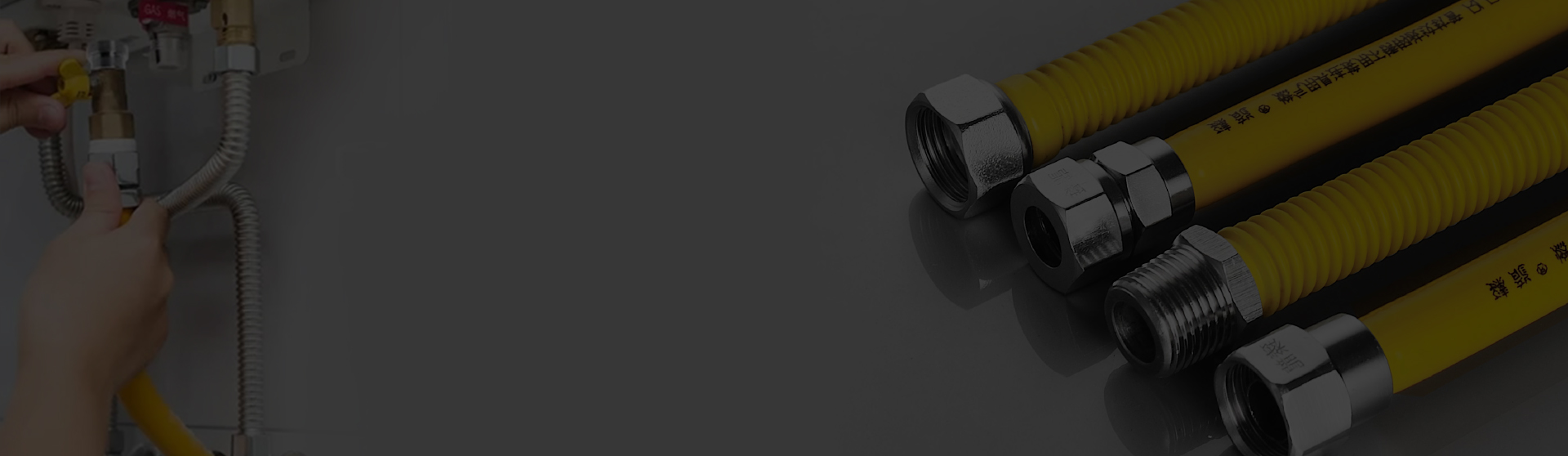

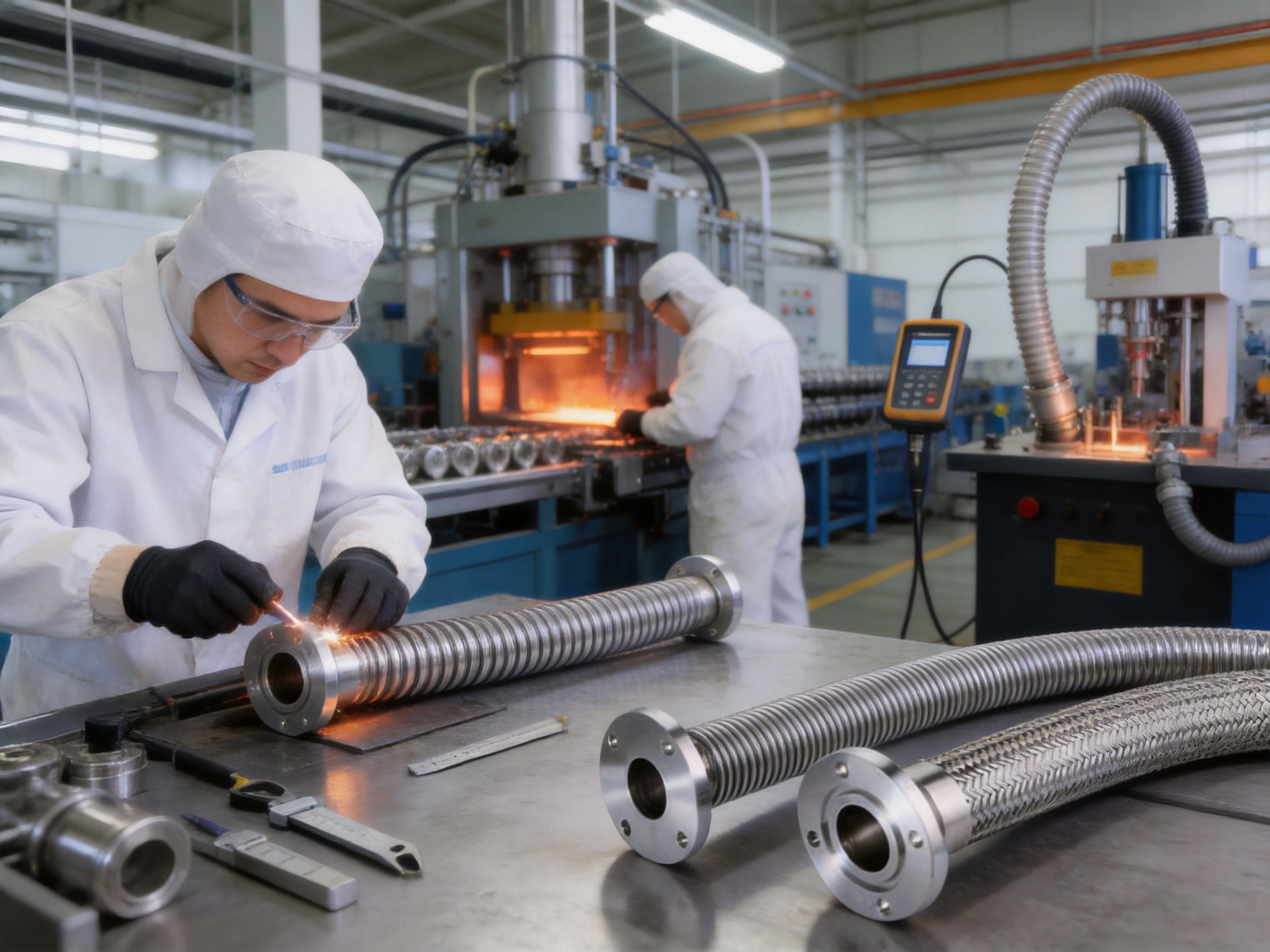
Reliable hose assemblies are essential wherever piping systems must accommodate movement, absorb vibration, simplify installation, or maintain a controlled vacuum environment. The JIS Flange Type stainless steel hose is designed for these demanding applications. It combines a flexible metal hose body with stainless steel flanges and an optional stainless steel mesh sleeve, creating a durable connection for vacuum systems, industrial equipment, gas piping, and other precision fluid-handling installations.
This product is available with SUS304 or SUS316L for the hose, flange, and mesh sleeve. It is manufactured in standard bore sizes from 20 mm to 50 mm, with JIS VG or VF flange configurations. Standard lengths range from 200 mm to 5,000 mm, while customized lengths and larger nominal sizes can also be produced. Depending on the installation condition, the hose can operate in static or dynamic service and withstand pressures ranging from vacuum to positive pressure.
Beyond its dimensional range, the product is defined by several important performance features: a specified allowable leak rate of 1.33 × 10⁻¹⁰ Pa·m3/sec or below, stainless steel construction, flexible installation, optional mesh reinforcement, and compatibility with industrial vacuum and gas-handling environments. These characteristics make it a practical alternative to rigid pipe sections and less specialized flexible connectors.
Content
- 1 1. What Is a JIS Flange Type Hose?
- 2 2. Key Product Advantages
- 3 3. Standard Sizes and Technical Specifications
- 4 4. Applications Across Industrial Systems
- 5 5. Advantages Compared With Alternative Flexible Connections
- 6 6. Manufacturing Capabilities and Technical Strengths
- 7 7. Manufacturing Process for a High-Quality Flanged Metal Hose
- 8 8. Correct Installation Practices
- 9 9. Inspection, Maintenance, and Service Life
- 10 10. How to Select the Right Configuration
- 11 11. Frequently Asked Questions
- 11.1 Q1: What materials are available for the JIS Flange Type hose?
- 11.2 Q2: Is the product suitable for vacuum service?
- 11.3 Q3: What positive pressure can the hose withstand?
- 11.4 Q4: What is the difference between a non-mesh and mesh hose?
- 11.5 Q5: What standard sizes are available?
- 11.6 Q6: Can a custom hose length be ordered?
- 11.7 Q7: Can the hose be used in a moving application?
- 11.8 Q8: How should the hose be installed?
- 11.9 Q9: What manufacturing capabilities support this product?
- 11.10 Q10: What information should be provided for a quotation?
- 12 12. Conclusion
- 13 References
- 14 Product: JIS FLANGETYPE
1. What Is a JIS Flange Type Hose?
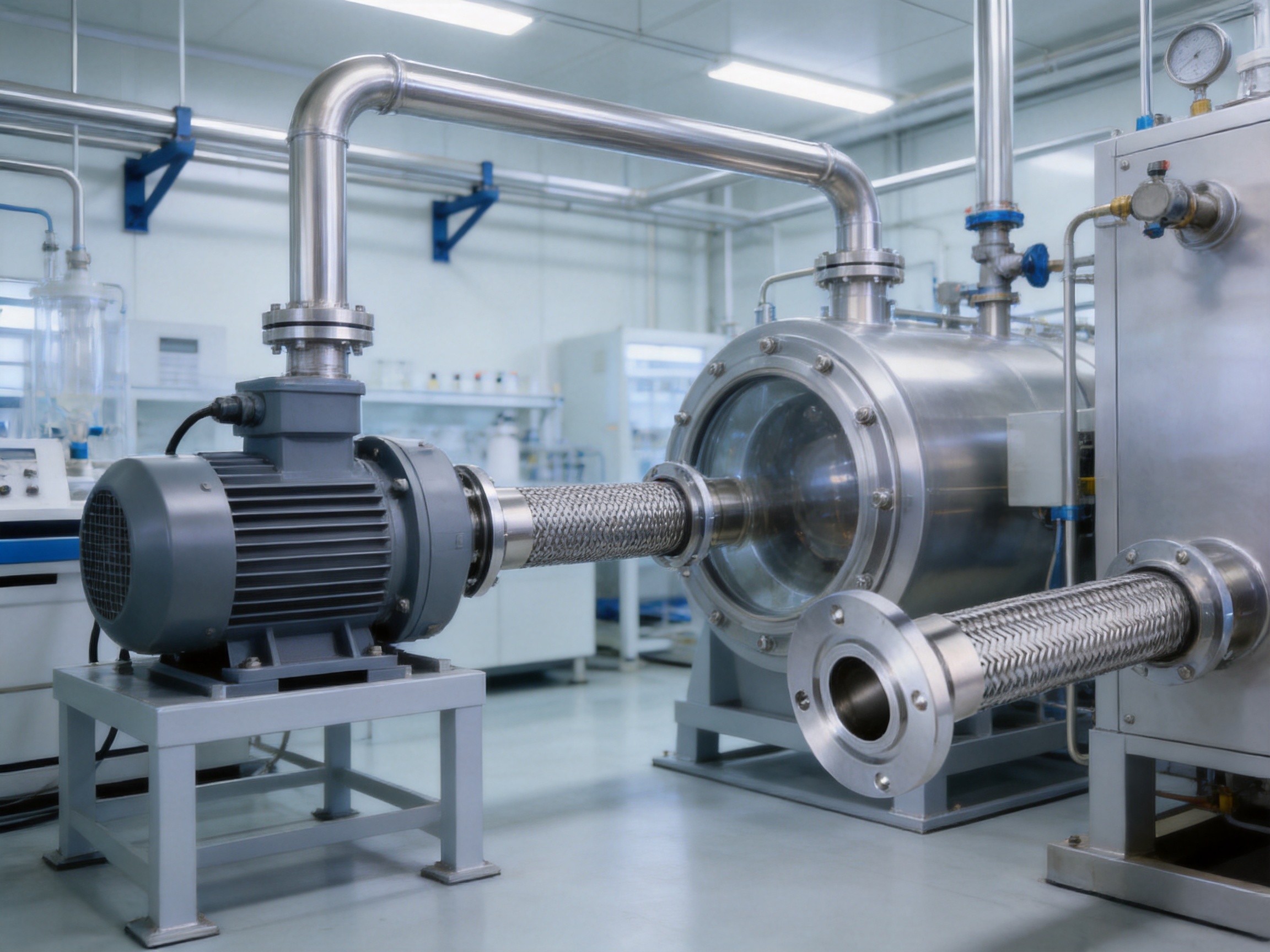
A JIS Flange Type hose is a flexible metal hose assembly fitted with flanges designed according to Japanese Industrial Standards flange configurations. The flange connection allows the hose to be bolted directly to compatible equipment, valves, chambers, pipelines, pumps, and other components. Compared with threaded or clamp-style connections, a flanged assembly can provide a stable, repeatable, and serviceable joint for industrial installations.
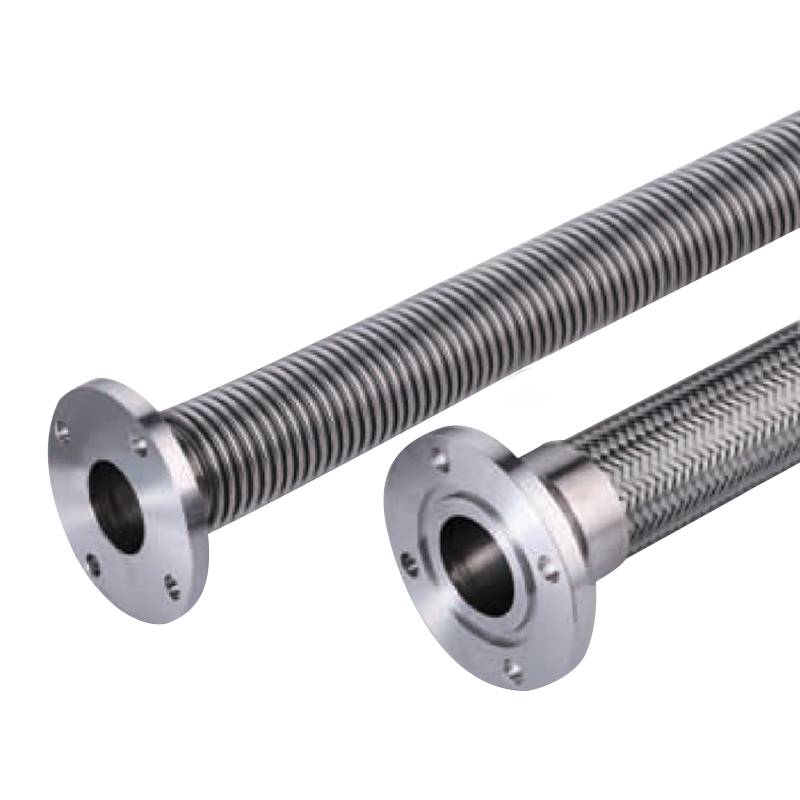
The flexible element is manufactured from stainless steel, generally SUS304 or SUS316L. Stainless steel is selected because it offers mechanical strength, corrosion resistance, cleanliness, and good performance over a wide range of industrial environments. The hose may be supplied without a mesh sleeve for applications where flexibility and vacuum service are the primary requirements, or with a stainless steel mesh sleeve when additional pressure support and mechanical protection are needed.
The product is particularly suitable for systems in which rigid piping cannot accommodate movement. Equipment vibration, thermal expansion, misalignment, installation tolerances, and regular maintenance can all create stress in a fixed pipeline. A flexible hose absorbs or reduces these stresses, helping protect connected equipment and reducing the risk of premature damage at welded or flanged joints.
Although the product is classified as an industrial hose, it is not intended to be treated like a general-purpose rubber or plastic hose. Its metal construction and controlled leak-rate specification make it more appropriate for vacuum lines, gas equipment, industrial machinery, process systems, and applications where cleanliness, dimensional stability, and connection reliability are important.
1.1 Main Construction Options
The standard material combinations are as follows:
| Component | Available material | Primary function |
| Flexible hose | SUS304 or SUS316L | Provides flexibility, pressure containment, and resistance to corrosion |
| Flange | SUS304 or SUS316L | Creates a bolted connection to compatible equipment or piping |
| Mesh sleeve | SUS304 or SUS316L | Supports the hose and provides additional mechanical protection |
The final material selection should consider the gas or fluid being handled, temperature, environmental exposure, cleaning method, pressure, and required service life. SUS304 is widely used for general industrial conditions, while SUS316L is often selected when improved resistance to chlorides, aggressive environments, or demanding cleanliness requirements is needed.
2. Key Product Advantages
The JIS Flange Type hose offers a combination of features that can be difficult to achieve with a conventional flexible connector. Its advantages come from the interaction between the stainless steel corrugated hose, the flange assembly, the optional braid or mesh sleeve, and the controlled manufacturing process.
2.1 Stainless Steel Durability
Stainless steel provides a strong foundation for long-term industrial service. It resists rust and many common forms of atmospheric corrosion, maintains dimensional stability, and performs more consistently than many organic hose materials in environments involving heat, oil mist, gas, moisture, or mechanical vibration.
SUS304 is suitable for many general-purpose applications, including equipment connections, utility systems, industrial vacuum lines, and standard gas-handling installations. SUS316L offers a higher level of corrosion resistance in applications exposed to chlorides, chemical residues, humid environments, or more demanding process conditions. The low-carbon composition associated with 316L is also useful where welding quality and resistance to intergranular corrosion are important considerations.
Metal construction can also reduce concerns associated with aging, hardening, swelling, permeation, and deformation that may occur with some rubber or polymeric hoses. The appropriate material must still be selected based on actual service conditions, but stainless steel gives engineers a broad and reliable operating platform.
2.2 Vacuum and Positive-Pressure Capability
The hose is specified for service from vacuum to atmospheric pressure in its standard vacuum application description. The dimensional table also identifies pressure ranges for static and dynamic conditions. The standard data lists static pressure from -0.1 to 2.0 MPa and dynamic pressure from -0.1 to 1.6 MPa.
These figures indicate that installation movement affects allowable pressure. A hose that remains stationary can generally tolerate a higher pressure than one subjected to repeated flexing. This distinction is important when selecting a product for moving machinery, reciprocating equipment, or vibration-prone systems. Pressure capability should never be evaluated independently from temperature, bending radius, movement frequency, fluid compatibility, and installation geometry.
The vacuum rating is especially relevant to equipment that must remove air or maintain a reduced-pressure environment. Vacuum systems are sensitive to leakage because even a small leak can reduce pump efficiency, lengthen evacuation time, or prevent the system from reaching its target pressure. The specified allowable leak rate of 1.33 × 10⁻¹⁰ Pa·m3/sec or below provides a defined reference for evaluating assembly tightness.
2.3 Low Allowable Leak Rate
Leak control is one of the product’s most important advantages over ordinary flexible hoses. A general-purpose hose may be adequate for water or low-risk utility service, but vacuum applications require greater attention to permeability, weld integrity, flange seating, and connection quality.
The stated allowable leak rate is 1.33 × 10⁻¹⁰ Pa·m3/sec and below. This value gives customers a measurable acceptance criterion rather than relying only on visual inspection. It is particularly useful for vacuum equipment manufacturers, laboratory system builders, gas equipment integrators, and industrial users that need consistent leakage performance from one assembly to another.
Actual system performance depends on the complete installation. Flange faces, sealing components, bolts, alignment, surface cleanliness, and assembly torque can all influence the final leak rate. A properly manufactured hose must therefore be combined with suitable installation procedures and appropriate leak testing.
2.4 Flexible Installation
Rigid pipework requires accurate alignment. If two pieces of equipment are not positioned perfectly, installers may need additional elbows, adaptors, supports, or field modifications. These additions increase the number of joints and can make maintenance more complicated.
A flexible metal hose can compensate for limited misalignment and simplify the connection between fixed components. It can also absorb vibration from pumps, motors, compressors, vacuum equipment, and other machinery. By reducing the transfer of movement into the pipeline, the hose can help protect flanges, welded connections, and sensitive equipment ports.
The standard product is available in lengths from 200 mm to 5,000 mm. This range covers short equipment connections as well as longer flexible sections used to route piping around machinery or structural obstacles. Hoses with lengths not shown in the standard table can be manufactured according to customer requirements.
2.5 Mesh-Reinforced Design
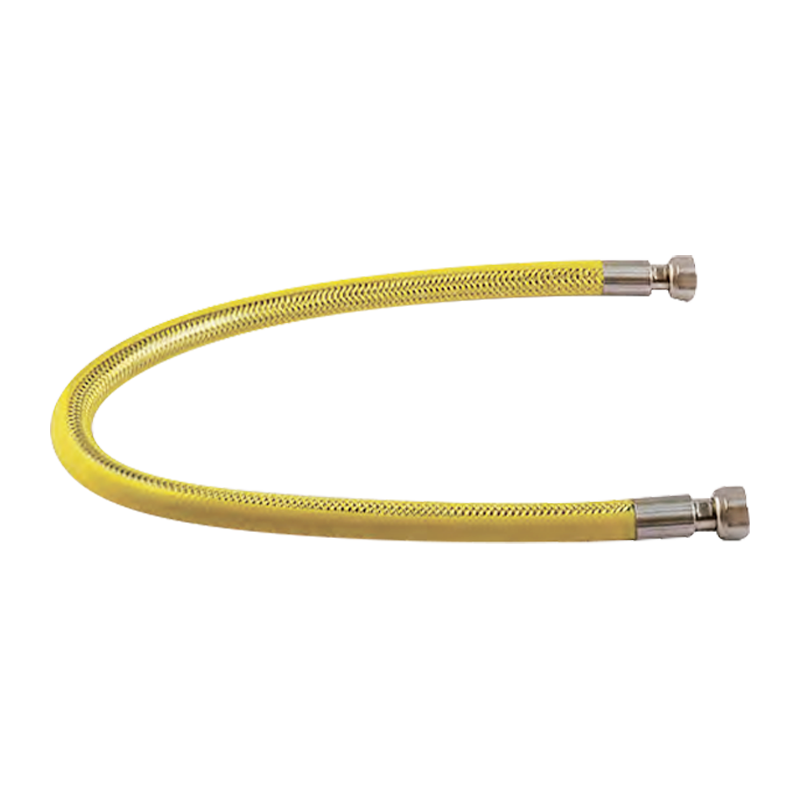
The mesh sleeve option provides additional reinforcement around the flexible hose. It can help distribute mechanical loads, reduce the risk of external damage, and improve resistance to pressure-related expansion. The mesh may also protect the corrugated hose from incidental contact with nearby components.
For systems that experience movement, vibration, or higher positive pressure, a mesh-reinforced assembly can offer a practical advantage over a non-mesh hose. The choice depends on the operating conditions. A non-mesh vacuum hose may be preferred where maximum flexibility, low weight, or a simple vacuum connection is the priority. A mesh hose may be more suitable where mechanical support and protection are more important.
The mesh should not be used as a reason to exceed the manufacturer’s pressure or bending specifications. Reinforcement improves the overall construction, but correct installation remains essential. The hose should not be twisted, sharply bent, pulled beyond its allowable movement, or used as a structural support for adjacent pipework.
JIS FLANGETYPE
3. Standard Sizes and Technical Specifications
The product range includes nominal bore sizes of 20 mm, 25 mm, 40 mm, and 50 mm. Each size is available with VG or VF flange configurations. The table below summarizes the standard dimensional and performance information supplied for the product.
| Bore | Flange designation | D | K | Number and diameter of holes | D1 | Standard length L | Static pressure | Dynamic pressure | Static minimum bending radius | Dynamic minimum bending radius |
| 20 mm | VG20 / VF20 | 80 mm | 60 mm | 4-Ø10 | 28.2 mm | 200–5,000 mm | -0.1 to 2.0 MPa | -0.1 to 1.6 MPa | 160 mm | 360 mm |
| 25 mm | VG25 / VF25 | 90 mm | 70 mm | 4-Ø10 | 34 mm | 200–5,000 mm | -0.1 to 2.0 MPa | -0.1 to 1.6 MPa | 175 mm | 400 mm |
| 40 mm | VG40 / VF40 | 105 mm | 85 mm | 4-Ø10 | 53 mm | 200–5,000 mm | -0.1 to 2.0 MPa | -0.1 to 1.6 MPa | 280 mm | 640 mm |
| 50 mm | VG50 / VF50 | 120 mm | 100 mm | 4-Ø10 | 64 mm | 200–5,000 mm | -0.1 to 2.0 MPa | -0.1 to 1.6 MPa | 350 mm | 800 mm |
The dimensions D, K, N-ØH, and D1 should be confirmed against the customer’s mating flange and equipment drawings before ordering. Different systems may use different sealing arrangements, flange standards, or dimensional tolerances. Even when the nominal bore appears identical, connection compatibility should be checked carefully.
3.1 Understanding Static and Dynamic Bending Radius
The minimum bending radius is not simply a recommended installation dimension; it is a limit that protects the hose from excessive deformation. Static bending radius applies when the hose is installed in a fixed position and does not undergo repeated movement. Dynamic bending radius applies when the hose flexes during operation.
The dynamic minimum bending radius is larger than the static value for every standard size. For example, the 20 mm bore has a listed static minimum bending radius of 160 mm and a dynamic minimum bending radius of 360 mm. This difference reflects the additional fatigue generated by repeated bending.
Installers should use a smooth curve rather than forcing the hose into a tight angle. The hose should be supported so that its natural centerline is maintained. Movement should occur along the designed direction of flexibility and should not be combined with twisting unless the assembly has been specifically engineered for that condition.
3.2 Pressure Selection
The pressure range in the standard table includes both negative and positive pressure values. The negative value of -0.1 MPa represents a vacuum reference commonly used in engineering specifications. The listed positive values distinguish between static and dynamic service.
When selecting a hose, engineers should consider the highest working pressure, pressure surges, pulsation, operating temperature, and the type of movement. A system with intermittent pressure spikes may require additional design margin. The hose should never be selected solely by matching the normal operating pressure if the system can experience emergency, start-up, shut-down, or pump-induced transients.
4. Applications Across Industrial Systems
The JIS Flange Type hose can be used in a broad range of applications where a flexible, corrosion-resistant, low-leak connection is required.
4.1 Vacuum Equipment
Vacuum pumps, vacuum chambers, coating equipment, analytical systems, semiconductor-related machinery, and industrial evacuation lines often require flexible connections. The hose can help isolate vibration from the pump and accommodate the movement needed during equipment servicing.
In a vacuum installation, the internal surface condition and connection cleanliness are important. Dust, oil, metal particles, and damaged sealing surfaces can affect the final vacuum level. Stainless steel construction supports a clean system design, while the flange connection makes the assembly relatively straightforward to remove and replace.
4.2 Gas Piping and Gas Equipment
Gas systems require carefully controlled connections because leakage can create safety, efficiency, and environmental concerns. The hose can be used for equipment connections, flexible sections near regulators, gas cabinets, manifolds, processing units, and other compatible installations.
The exact suitability depends on the gas type, pressure, temperature, cleanliness requirement, and applicable local regulations. For combustible, toxic, oxidizing, or otherwise hazardous gases, the complete assembly must be reviewed by qualified engineers. Material compatibility and leak testing should be confirmed before commissioning.
4.3 Industrial Machinery
Industrial machines often generate vibration. A rigid pipe connected directly to a vibrating pump, motor, compressor, or processing unit may experience fatigue at the joint. A flexible metal hose can provide a controlled transition between the machine and the fixed pipeline.
The hose may also simplify machine replacement. Instead of rebuilding a rigid pipe section every time equipment is changed, a correctly sized flexible assembly can accommodate small differences in position. This can reduce installation time and help make maintenance more efficient.
4.4 Water and Utility Systems
Although the product is particularly suited to vacuum and industrial applications, stainless steel flexible hoses can also be used in selected water, utility, and process systems. SUS304 may be appropriate for many general environments, while SUS316L can be considered for water containing more aggressive contaminants or for installations requiring improved corrosion resistance.
Water hammer, pump vibration, thermal expansion, and pipe misalignment should be evaluated before use. The hose should not be used as a substitute for proper pipe supports, expansion joints, or pressure-control devices when those components are required by the system design.
4.5 Research and Testing Equipment
Laboratory and test systems often require compact connections that can be disconnected for equipment changes. The combination of a standardized flange, stainless steel construction, and controlled leakage performance makes this type of hose useful for test rigs, calibration systems, vacuum fixtures, and experimental process equipment.
In research environments, configurations may change frequently. Custom lengths and made-to-order dimensions can help match the hose to a specific apparatus while avoiding unnecessary bends or adaptors.
5. Advantages Compared With Alternative Flexible Connections
The product’s competitive value becomes clearer when it is compared with other common connection methods. Each alternative has a place in industry, but the JIS Flange Type hose is advantageous when the application requires a combination of metal durability, vacuum performance, flange compatibility, and flexible installation.
5.1 Compared With Rubber Hoses
Rubber hoses are often economical and highly flexible, but they may be more vulnerable to aging, permeation, swelling, hardening, and chemical attack. Their performance can also change with temperature and exposure to oils or gases. A stainless steel hose generally offers better dimensional stability and a lower-permeation construction for demanding vacuum or gas applications.
Rubber remains useful where flexibility, low cost, or specific chemical compatibility is the main priority. However, where a defined low leak rate and a durable flanged connection are required, a stainless steel assembly can offer a stronger technical solution.
5.2 Compared With Plastic Tubing
Plastic tubing can provide excellent corrosion resistance for selected chemicals and can be easy to install. However, it may have limitations in temperature, vacuum stability, permeation, mechanical strength, and long-term dimensional control. Stainless steel is often preferred when the system must remain stable under mechanical stress or when a metal flange connection is required.
5.3 Compared With Rigid Pipe
Rigid pipe can provide excellent pressure capability and structural stability, but it does not absorb vibration or accommodate movement without additional components. A flexible hose can reduce the need for multiple elbows and compensating sections. It can also simplify alignment between equipment nozzles and fixed pipework.
The hose is not a complete replacement for rigid pipe. Long unsupported runs, heavy valves, and structural loads should remain supported by an appropriately engineered piping system. The hose should be used as a flexible connection, not as a substitute for a complete support design.
5.4 Compared With Threaded Connectors
Threaded connections can be convenient for small-diameter systems, but they may be more sensitive to thread damage, sealing compound selection, installation torque, and repeated disassembly. A flanged assembly provides a clear bolting interface and can be easier to inspect, remove, and replace in industrial equipment.
6. Manufacturing Capabilities and Technical Strengths
Zhejiang Zhenlong Energy Equipment Technology Co., Ltd. combines product development, manufacturing, processing, and industrial equipment experience. Its operations include metal hoses, natural gas pipelines, plumbing fittings, sanitary ware, valves, plastic products, and hardware. This broad product background is valuable because flexible hose performance depends on more than the hose itself; it also depends on forming, welding, flange production, material control, testing, and application knowledge.
6.1 Integrated Industry and Trade Structure
An integrated industry and trade structure can improve communication between production teams, engineering personnel, and customers. Product requirements can be reviewed from several perspectives, including material availability, manufacturability, connection compatibility, inspection, and final application.
For customers ordering non-standard lengths, larger nominal sizes, or special configurations, direct communication with a manufacturer is particularly important. It allows the assembly to be evaluated before production rather than treating customization as a simple dimensional change.
6.2 Production Infrastructure
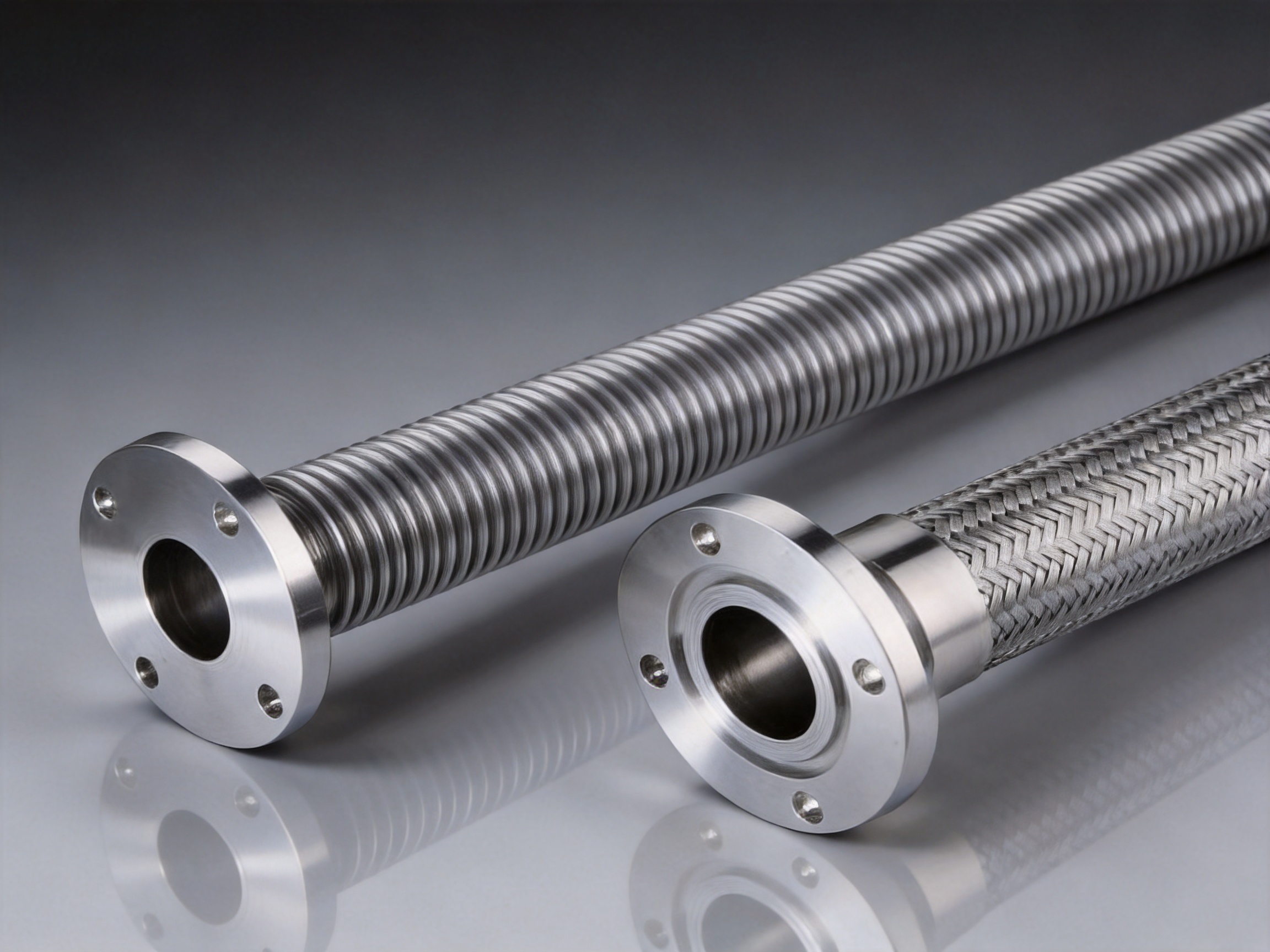
The company operates a factory covering approximately 40 acres, with a factory building of about 30,000 square meters. It has 30 welding and forming production lines, as well as two uninterrupted solid melting hydrogen furnace production lines.
Welding and forming capacity is directly relevant to stainless steel hose production. The flexible body must be formed consistently, while the flange and end connections must be joined with suitable control of alignment, penetration, heat input, and surface condition. A larger production infrastructure can support repeatability, scheduling flexibility, and separate processing requirements for different product families.
Furnace capability is also significant for metal manufacturing. Controlled thermal processes can support material preparation and production stability. The exact process applied to an individual product should be confirmed with the manufacturer, but the existence of dedicated melting and furnace resources demonstrates a broader investment in metal-processing capability.
6.3 Material Analysis
The company uses direct-reading spectrometers for metal material analysis. Material verification is an important part of stainless steel component production because the expected performance depends on the correct alloy being used for the hose, flange, and mesh sleeve.
Material analysis can help identify alloy composition and reduce the risk of mix-ups between SUS304, SUS316L, and other grades. For customers operating in regulated or safety-sensitive environments, material traceability and inspection documentation may be important purchasing requirements.
6.4 Leak and Tightness Testing
The company also has flow tightness testing equipment. This capability supports the evaluation of hose assemblies where sealing performance is important. For vacuum and gas service, leak testing is more meaningful than visual inspection alone because a component may appear correctly welded while still containing a microscopic leakage path.
Testing should be performed according to an established procedure and suitable acceptance criteria. Customers requiring specific test methods, pressure-hold conditions, helium testing, documentation, or batch records should identify those requirements during the quotation and engineering stages.
6.5 Quality Management and Certification Background
The company states that it implements the ISO9000:2008 quality management system and holds a Special Equipment Manufacturing License for pressure pipelines in the People’s Republic of China. It also has EU CE certification testing reports and is a member of the China Urban Gas Association.
These qualifications and industry affiliations indicate experience with quality systems, pressure-related products, gas infrastructure, and international market requirements. Certification relevance should always be verified for the exact product, configuration, destination market, and current regulatory edition. Nevertheless, a documented quality framework provides a stronger foundation than informal or purely workshop-based production.
7. Manufacturing Process for a High-Quality Flanged Metal Hose
Although individual production methods may vary according to the final design, a professional manufacturing process generally includes several controlled stages.
7.1 Engineering Review
The process begins with confirmation of the bore, flange designation, length, material, pressure, movement, bending radius, and service medium. The customer’s equipment drawings should be reviewed to verify bolt-hole spacing, flange dimensions, sealing surfaces, and available installation space.
For special applications, the review should also include temperature, cycle frequency, vibration amplitude, axial movement, lateral offset, cleaning method, and expected service life. These factors determine whether a non-mesh or mesh hose is appropriate and whether the standard configuration requires modification.
7.2 Material Preparation
Stainless steel strip, tube, flange blanks, and mesh material are prepared according to the selected grade. Material identification is important at this stage. The use of direct-reading analysis equipment can support verification of incoming materials and help maintain grade consistency.
7.3 Hose Forming
The metal hose body is formed to create the required flexible profile. Forming must balance flexibility with structural strength. Excessive deformation can weaken the material, while insufficient forming may restrict movement and reduce the hose’s ability to absorb vibration.
Dimensional consistency is important because the hose must fit correctly inside the mesh sleeve, align with the flange assembly, and meet the intended bore and length. Forming equipment and operator control both contribute to repeatable results.
7.4 Welding and End Connection
Welding connects the hose body to the end fittings or flange assembly. Stainless steel welding requires attention to cleanliness, shielding, heat control, joint design, and post-weld inspection. Poor welding can create leakage, distortion, contamination, or premature fatigue.
A controlled welding process helps maintain the integrity of the pressure boundary. The flange must remain correctly aligned so that the finished hose can be installed without imposing unnecessary stress on the connected equipment.
7.5 Mesh Installation
For mesh-reinforced versions, the stainless steel sleeve is installed over the hose and secured appropriately at the ends. The mesh should support the hose without restricting the intended movement or creating localized stress. The end termination must be strong enough to transfer loads without damaging the corrugated body.
7.6 Inspection and Testing
Finished assemblies may be inspected for dimensional accuracy, visual quality, flange alignment, weld appearance, material identity, and tightness. The testing method should match the application. Vacuum products may require a leak-rate evaluation, while pressure-service assemblies may require a pressure or flow tightness test.
Inspection records can help customers manage quality control and traceability. For repeat orders, consistent documentation also makes it easier to compare production batches and investigate any service issue.
8. Correct Installation Practices
Even a well-manufactured hose can fail if it is installed incorrectly. Proper installation protects the hose from excessive stress and ensures that the specified performance can be achieved.
8.1 Confirm Flange Compatibility
Before installation, verify the flange type, nominal size, bolt-hole pattern, sealing surface, gasket requirement, and bolt specification. The VG and VF designations should match the mating component. Do not force mismatched flanges together or use bolts to compensate for incorrect alignment.
8.2 Avoid Twisting
Flanged hoses should be aligned before bolts are tightened. Rotating one flange relative to the other can twist the hose and create stress in the corrugations, welds, or mesh sleeve. If the bolt holes do not align naturally, correct the pipework or equipment position rather than twisting the assembly into place.
8.3 Respect the Bending Radius
The hose should be routed with a smooth radius that is greater than the listed minimum. Use the static radius when the hose will remain fixed and the dynamic radius when it will flex during service. If the installation includes repeated movement, use the dynamic value as the controlling requirement.
8.4 Provide Independent Pipe Supports
The hose should not carry the weight of valves, long pipe runs, pumps, or other heavy components. Pipe supports should be placed so that the hose only performs its intended flexible connection function. Excessive external loading can reduce service life and compromise the flange or welded end.
8.5 Prevent Abrasion and Contact Damage
Keep the hose away from sharp edges, moving machine parts, hot surfaces, and abrasive structures. If contact cannot be avoided, protective measures should be considered. The stainless steel mesh improves protection but does not make the assembly immune to severe rubbing or impact.
8.6 Use Suitable Sealing Components
Gaskets, seals, and other connection materials must be compatible with the service medium, temperature, and pressure. For vacuum systems, sealing surfaces must be clean and free from scratches, particles, oil, and foreign matter. Bolts should be tightened evenly according to an appropriate cross-pattern procedure and specified torque.
9. Inspection, Maintenance, and Service Life
Regular inspection helps identify problems before they become leaks or shutdown events. The frequency should reflect operating pressure, movement, temperature, vibration, and the consequences of failure.
Inspect the hose for dents, deep scratches, unusual deformation, corrosion, broken mesh wires, discoloration, and contact with adjacent structures. Check the flange area for loose bolts, gasket damage, misalignment, and signs of leakage. In vacuum service, monitor pump-down time and ultimate pressure because gradual performance changes can indicate a developing leak.
A hose that has been repeatedly flexed should be examined more carefully than one installed in a fixed position. Pay particular attention to the ends of the flexible section, where movement may be concentrated. If the hose has exceeded its planned cycle life, experienced a pressure surge, or been exposed to an unsuitable chemical, replacement should be considered even when external damage is not obvious.
Cleaning methods should be selected according to the stainless steel grade, contamination type, and system requirements. Abrasive tools and chloride-containing cleaners can damage stainless steel surfaces. In critical applications, cleaning and passivation procedures should be defined by the engineering or quality team.
10. How to Select the Right Configuration
Selection should begin with the operating conditions rather than the nominal pipe size alone.
10.1 Select the Bore and Flange
Choose the bore based on required flow, pressure drop, equipment port size, and flange compatibility. The standard options are 20 mm, 25 mm, 40 mm, and 50 mm, with VG and VF flange configurations. Larger sizes, including DN65 and above, can be manufactured according to the supplied product information.
10.2 Select SUS304 or SUS316L
SUS304 is a practical choice for many general industrial applications. SUS316L should be considered where chloride exposure, chemical attack, higher corrosion resistance, or more demanding cleanliness requirements are present. The selected grade should be compatible with the transported medium and the external environment.
10.3 Select Mesh or Non-Mesh Construction
Choose a non-mesh vacuum hose when the service is primarily vacuum, movement is limited, and the simplest flexible configuration is preferred. Choose a mesh-reinforced hose when the assembly requires additional support, external protection, or pressure capability within the stated limits.
10.4 Select the Length
The length should allow the hose to form a natural curve without being pulled tight or forced into an unnecessary loop. A hose that is too short may create axial and lateral stress, while an excessively long hose may sag, vibrate, or contact nearby structures. Standard lengths range from 200 mm to 5,000 mm, and custom lengths are available.
10.5 Consider Movement
Identify whether the hose will remain static, vibrate continuously, move periodically, or flex through a defined cycle. Dynamic applications require the larger minimum bending radius and may require a specific movement direction and cycle-life evaluation.
11. Frequently Asked Questions
Q1: What materials are available for the JIS Flange Type hose?
The hose, flange, and mesh sleeve can be manufactured from SUS304 or SUS316L stainless steel. The best material depends on corrosion exposure, transported medium, temperature, cleanliness requirements, and welding considerations.
Q2: Is the product suitable for vacuum service?
Yes. The product is specified for vacuum to atmospheric pressure, with an allowable leak rate of 1.33 × 10⁻¹⁰ Pa·m3/sec or below. Proper flange sealing, clean installation, and suitable leak testing are still necessary for the complete system.
Q3: What positive pressure can the hose withstand?
The standard table lists -0.1 to 2.0 MPa for static service and -0.1 to 1.6 MPa for dynamic service. The actual allowable pressure must also consider temperature, movement, cycle frequency, fluid compatibility, and installation conditions.
Q4: What is the difference between a non-mesh and mesh hose?
A non-mesh hose is a simpler flexible vacuum configuration. A mesh hose includes a stainless steel sleeve that provides additional mechanical support and protection. The correct option depends on pressure, movement, environmental exposure, and the required level of reinforcement.
Q5: What standard sizes are available?
Standard bore sizes are 20 mm, 25 mm, 40 mm, and 50 mm. The associated flange designations are VG20/VF20, VG25/VF25, VG40/VF40, and VG50/VF50. Larger sizes, including DN65 and above, can be manufactured according to requirements.
Q6: Can a custom hose length be ordered?
Yes. The standard length range is 200 mm to 5,000 mm, and lengths not shown in the table can be manufactured. Customers should provide the required overall length, flange orientation, movement condition, and connection drawings.
Q7: Can the hose be used in a moving application?
It can be used in suitable dynamic applications, provided that the dynamic minimum bending radius, pressure limit, movement direction, and cycle frequency are respected. The hose should not be twisted or forced to perform movement outside its design conditions.
Q8: How should the hose be installed?
Confirm flange compatibility, align the mating components, avoid twisting, use the correct sealing components, respect the minimum bending radius, and support the adjacent pipework independently. The hose should not carry the weight of valves or long pipe runs.
Q9: What manufacturing capabilities support this product?
The manufacturer has welding and forming production lines, solid melting hydrogen furnace lines, metal material analysis equipment, flow tightness testing equipment, and an established quality management background. These capabilities support material verification, forming, welding, inspection, and customized production.
Q10: What information should be provided for a quotation?
Important information includes bore size, VG or VF flange type, hose material, flange material, mesh requirement, overall length, working pressure, vacuum level, temperature, transported medium, static or dynamic service, minimum installation space, and any required inspection or certification documents.
12. Conclusion
The JIS Flange Type stainless steel hose is a specialized flexible connection for vacuum, gas, industrial machinery, and other demanding piping applications. Its main strengths include SUS304 or SUS316L construction, JIS VG/VF flange compatibility, standard sizes from 20 mm to 50 mm, custom length capability, static and dynamic pressure ratings, optional mesh reinforcement, and a specified low allowable leak rate.
Compared with ordinary rubber hoses, plastic tubing, threaded connectors, and rigid pipe sections, it offers a useful combination of durability, controlled leakage, vibration absorption, installation flexibility, and serviceability. Its benefits are greatest when the application requires a metal pressure boundary and a reliable flanged connection rather than a general-purpose flexible tube.
Zhejiang Zhenlong Energy Equipment Technology Co., Ltd. supports this product category with broad metal-processing experience, dedicated welding and forming lines, furnace resources, material analysis equipment, tightness testing capability, and a documented quality management background. These manufacturing strengths provide a foundation for both standard products and customized hose assemblies.
Correct selection remains essential. Engineers should verify material compatibility, pressure, temperature, vacuum level, flange dimensions, dynamic movement, bending radius, sealing method, and inspection requirements. When the hose is properly specified, manufactured, installed, and maintained, it can provide a dependable connection between rigid piping and the equipment that keeps industrial systems operating safely and efficiently.
References
1. Japanese Industrial Standards, Flanges for Industrial Piping and Vacuum Equipment, applicable flange terminology and dimensional references.
2. ISO 9000 Family, Quality Management Systems, principles and terminology for controlled manufacturing processes.
3. Stainless Steel Materials Reference, SUS304 and SUS316L composition, corrosion resistance, and welding considerations.
4. Industrial Vacuum Engineering Practice, principles of leak-rate evaluation, vacuum connections, and system cleanliness.
5. Metal Hose Installation and Maintenance Guidance, recommendations for bending radius, movement control, pipe support, and inspection.
6. Pressure Piping Engineering Practice, considerations for static pressure, dynamic service, temperature, pressure surges, and flexible connector selection.