 English
 中文简体
中文简体 Español
 عربى
عربى
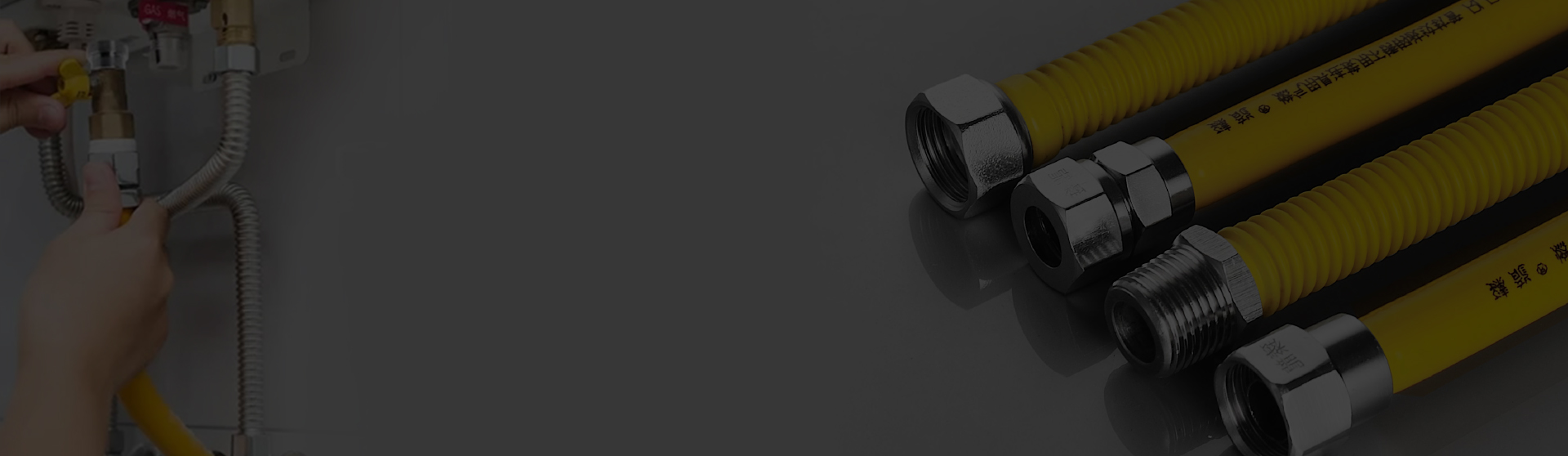


Gas distribution systems depend on small components that perform critical safety functions. Among these components, a swivel plug is used to close an unused outlet, isolate a section of piping, or complete a gas connection where a secure termination is required. Although compact in size, the quality of a plug directly affects system tightness, installation efficiency, maintenance convenience, and long-term operating safety. The Gas Pipe Swivel Plug, identified as model ZLP-013, is designed for these demanding requirements in residential, commercial, and selected industrial gas applications.
Manufactured for stainless steel corrugated hose fitting systems, the Gas Pipe Swivel Plug combines a secure sealing structure with a practical swivel mechanism. Its design helps installers close unused gas pipe outlets without placing unnecessary twisting force on connected hoses or threaded components. The result is a fitting that supports easier installation, reduced connection stress, improved serviceability, and dependable sealing performance.
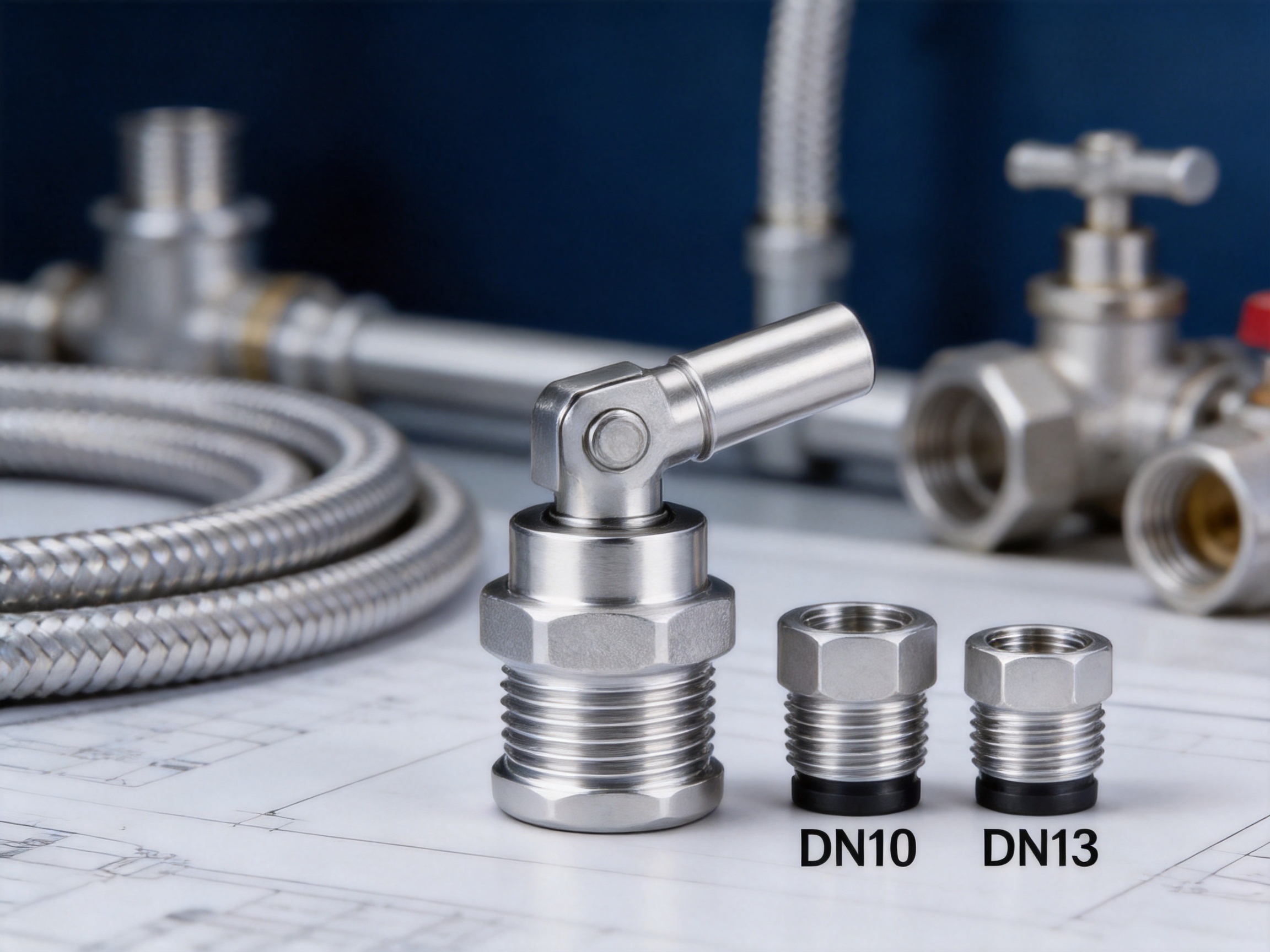
Available in DN10 and DN13 specifications, the product is suitable for many common gas pipeline and flexible hose connection configurations. It is produced by a specialized energy equipment manufacturer with experience in metal hoses, corrugated hoses, natural gas pipelines, plumbing fittings, valves, sanitary ware, and hardware products. The manufacturer’s integrated research, development, production, testing, and customer service capabilities provide an important foundation for consistent product quality and customized supply.
Content
- 1 1. The Role of a Swivel Plug in Gas Pipeline Systems
- 2 2. Product Overview
- 3 3. Key Advantages of the Gas Pipe Swivel Plug
- 4 4. Advantages Compared with Conventional Fixed Plugs
- 5 5. Manufacturing Strengths Behind the Product
- 6 6. Engineering and Process Control
- 7 7. Quality Management and Certifications
- 8 8. Applications of the Gas Pipe Swivel Plug
- 9 9. Installation Considerations
- 10 10. Selection Guide for Buyers and Project Engineers
- 11 11. OEM, ODM, and Supply Chain Support
- 12 12. Why Manufacturing Scale Matters to Product Buyers
- 13 13. Maintenance and Service Life
- 14 14. Sustainability and Efficient Product Use
- 15 15. Frequently Asked Questions
- 15.1 Q1: What is the main purpose of the Gas Pipe Swivel Plug?
- 15.2 Q2: What sizes are available for model ZLP-013?
- 15.3 Q3: What is the advantage of the swivel mechanism?
- 15.4 Q4: Can the product be used as a permanent closure?
- 15.5 Q5: Is the swivel plug suitable for outdoor use?
- 15.6 Q6: Can it be installed by a homeowner?
- 15.7 Q7: How does this product compare with a conventional fixed plug?
- 15.8 Q8: What materials are used?
- 15.9 Q9: What testing is available?
- 15.10 Q10: Does the manufacturer provide OEM or ODM services?
- 15.11 Q11: How should the plug be checked after installation?
- 15.12 Q12: What information should be included in an inquiry?
- 16 16. Ordering and Technical Communication
- 17 17. Conclusion
- 18 References
- 19 Product: Gas pipe Swivel plug
1. The Role of a Swivel Plug in Gas Pipeline Systems
A gas pipe swivel plug is a termination fitting designed to seal an open or unused gas outlet. In a typical installation, a pipeline may include an outlet reserved for a future appliance, a branch that is temporarily inactive, or a connection point that must be closed during system modification. Leaving such an outlet open is unacceptable because it can permit gas to escape and can expose the system to contamination. A properly selected plug provides a controlled and secure closure.
Traditional fixed plugs can perform the basic sealing function, but installation may require the entire fitting, pipe, or hose to be rotated. This can be inconvenient when the connection is located in a restricted space. It may also introduce torsional stress into a flexible corrugated hose or place excessive force on adjacent fittings. A swivel plug addresses this challenge by allowing the sealing body and connection interface to move more conveniently during installation.
The swivel mechanism is particularly useful in gas systems that contain flexible metal hoses. Corrugated hoses are designed to provide flexibility, but they should not be subjected to unnecessary twisting during assembly. By allowing rotational movement at the plug connection, a swivel design can help installers align the fitting more naturally and reduce the risk of transferring torque to the hose or pipeline.
The plug may be used for temporary closure during construction, equipment replacement, system expansion, or maintenance. It may also be used as a permanent termination when an outlet is no longer needed. In either application, the fitting must be installed according to the applicable gas installation requirements, connection standards, pressure conditions, and inspection procedures.
2. Product Overview
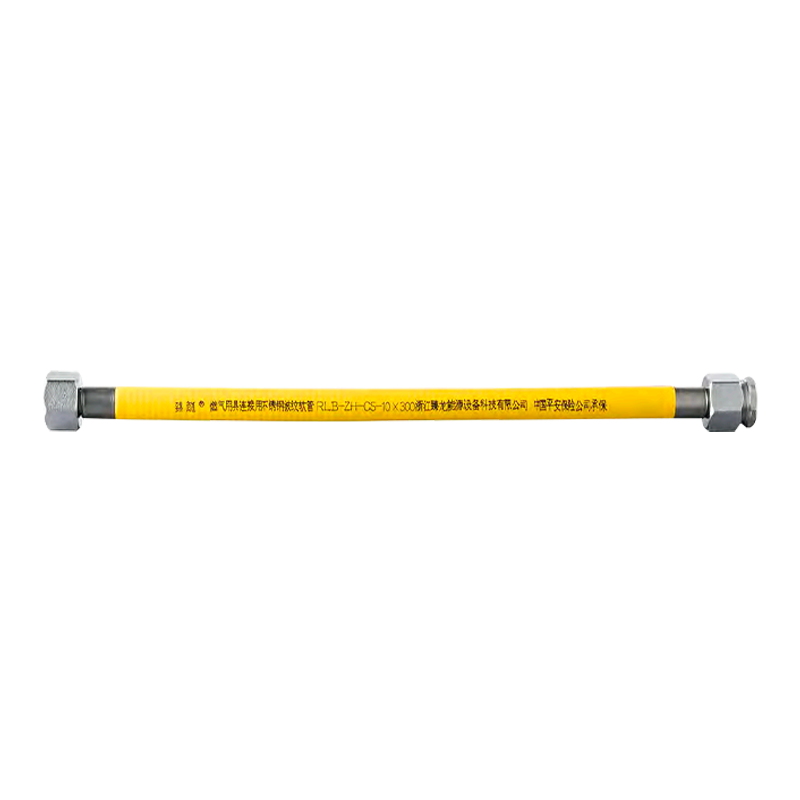
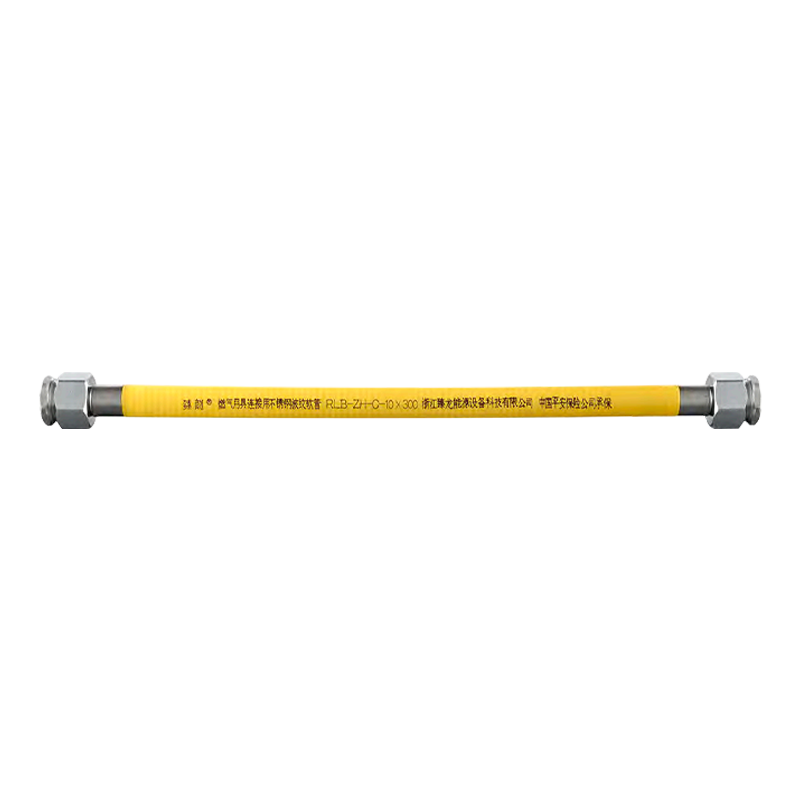
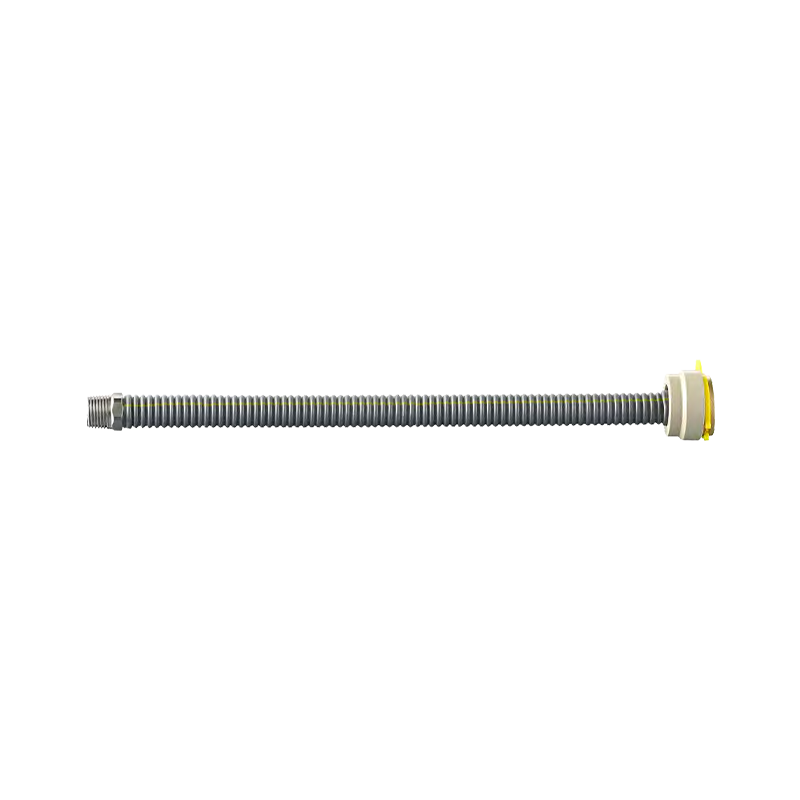
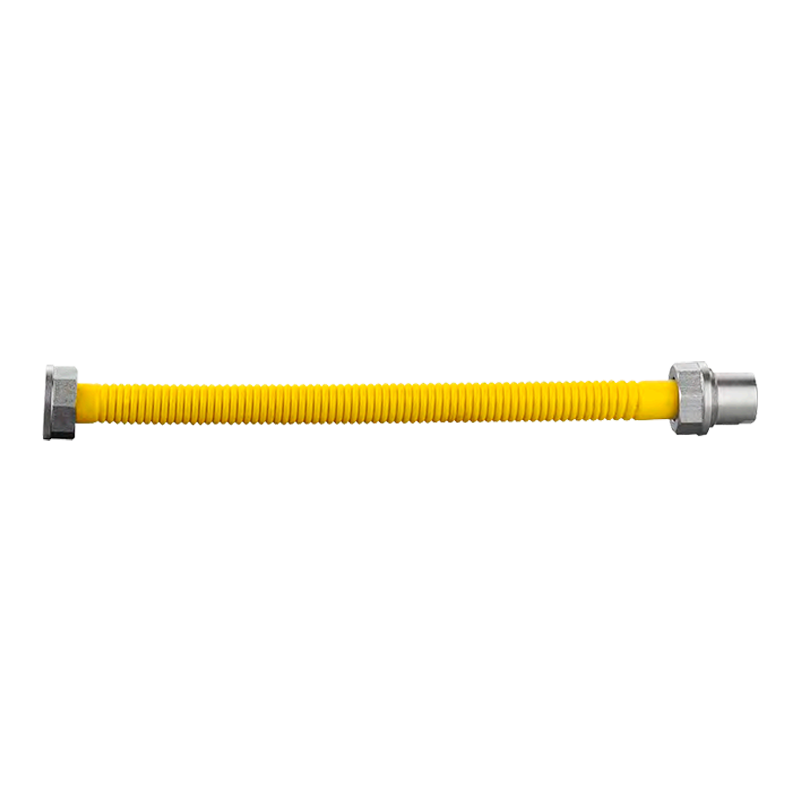
The ZLP-013 Gas Pipe Swivel Plug is a compact sealing component for stainless steel corrugated hose fittings used in gas transmission. It is manufactured from high-strength, corrosion-resistant materials selected for durability in gas pipeline environments. Its primary purpose is to provide a leak-resistant closure while maintaining a practical installation and removal process.
| Product Attribute | Specification | Practical Significance |
| Product name | Swivel plug | Provides a closure for unused or isolated gas outlets |
| Model | ZLP-013 | Supports product identification and order management |
| Nominal sizes | DN10 and DN13 | Suitable for corresponding gas hose and pipe connection configurations |
| Product category | Stainless steel corrugated hose fittings for gas transmission | Designed for use with flexible metal gas connection systems |
| Primary function | Sealing and termination | Helps prevent gas leakage from an unused outlet |
| Operating feature | Swivel mechanism | Assists alignment and reduces twisting during installation |
| Typical applications | Residential, commercial, and selected industrial gas systems | Supports a broad range of pipeline closure requirements |
The product’s compact structure is intended to make it practical for installation in areas where space is limited. A well-designed plug should not merely seal the opening; it should also fit into the overall geometry of the gas system without making future service unnecessarily difficult. The swivel structure contributes to this objective by giving installers greater flexibility when positioning the fitting.
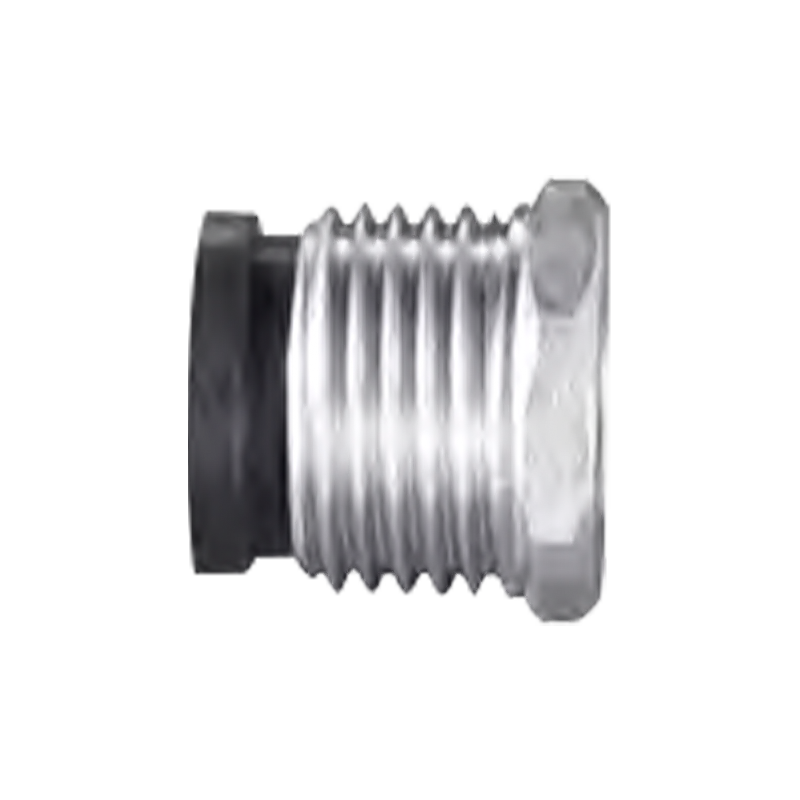
Gas pipe Swivel plug
3. Key Advantages of the Gas Pipe Swivel Plug
3.1 Secure and Stable Sealing
The primary advantage of the Gas Pipe Swivel Plug is its ability to provide a stable closure for a gas pipeline outlet. Gas systems require careful control of every connection point, including outlets that are not currently connected to an appliance. A high-quality plug helps prevent leakage by maintaining a close, mechanically secure interface when correctly installed.
The fitting is designed with sealing performance as a central priority. Its structure supports a tight connection between the plug and the corresponding gas pipe or hose fitting. The high-strength material helps the component retain its mechanical integrity during normal service, while corrosion resistance supports long-term performance in environments where moisture, temperature variation, and atmospheric exposure may be present.
Sealing performance depends on more than the plug alone. The pipe, hose, thread, gasket where applicable, installation torque, alignment, and inspection process must all be suitable for the application. Nevertheless, the quality of the plug is an essential part of the complete sealing system. The ZLP-013 is designed to contribute to a dependable connection rather than functioning as a basic generic cap with limited installation flexibility.
3.2 Reduced Installation Stress
A fixed plug may force an installer to rotate a hose, pipe, or connected fitting in order to complete the connection. When the surrounding components cannot move freely, this process may create twisting stress. In flexible metal hose assemblies, excessive torsion can affect the hose orientation and may reduce the quality of the installation.
The swivel mechanism of the ZLP-013 allows the connection to be assembled with less need to rotate the complete hose or pipeline. This is useful in appliance connections, cabinet installations, wall-mounted gas outlets, and other areas where access is restricted. The installer can position the fitting more efficiently while maintaining better control over the direction of the hose and the location of the sealed outlet.
Reduced installation stress also helps protect adjacent components. A connection should be tightened without transferring avoidable force to valves, regulators, meters, brackets, or appliance inlets. The swivel plug supports a more controlled installation method, which can improve the consistency of finished systems when used by trained personnel.
3.3 Easier Removal and Maintenance
Gas systems often require modification. An unused branch may later be connected to a new appliance, a pipe section may need to be inspected, or a fitting may need to be replaced. A plug that is easy to access and remove can reduce maintenance time and simplify system changes.
The swivel structure provides a practical advantage during removal because it can help prevent the entire hose assembly from turning as the plug is released. This is especially valuable where the hose is connected to equipment that should not be disturbed. Maintenance personnel can work more selectively, reducing the possibility of loosening nearby connections or changing the orientation of the pipe assembly.
For temporary closures, this serviceability is particularly important. Construction projects frequently require sections of a gas system to remain closed until final equipment installation. A reusable, clearly identified plug can support staged installation and help protect the system while work is in progress.
3.4 Corrosion Resistance and Service Durability
Gas pipeline fittings may be exposed to humidity, condensation, cleaning agents, temperature changes, and occasional contact with different metals. Corrosion can weaken a fitting, affect threads, compromise sealing surfaces, and make future removal difficult. The Gas Pipe Swivel Plug is made from corrosion-resistant material to support reliable service in normal gas installation environments.
Material selection is not only related to appearance. The material must retain sufficient strength at the connection area, resist deterioration under expected environmental conditions, and maintain dimensional stability during assembly. A durable material can also help preserve the quality of the threads and sealing surfaces over the useful life of the installation.
Environmental suitability should always be evaluated according to the actual application. Outdoor exposure, coastal air, chemical contact, underground installation, elevated temperature, and unusual gas composition may require additional material or coating considerations. The manufacturer can provide application guidance and product information for projects with special requirements.
3.5 Compact Design for Restricted Spaces
Gas fittings are frequently installed behind appliances, inside cabinets, near walls, below counters, or within service compartments. These locations may not provide enough room for large tools or extensive rotational movement. A compact swivel plug can make the closure process more manageable without requiring a major change to the surrounding pipe layout.
The product is designed to function as part of a fitting system rather than as an oversized independent component. This helps it serve its sealing purpose while keeping the installation relatively orderly. A neat installation can improve accessibility for future inspection and reduce the chance that the fitting will be struck or damaged during nearby maintenance work.
4. Advantages Compared with Conventional Fixed Plugs
Competitor products may include simple fixed plugs, low-cost caps, and fittings made for general plumbing rather than gas transmission. These alternatives may appear similar, but their practical performance can differ considerably. A product designed specifically for gas pipeline use must address connection security, material compatibility, installation stress, and long-term service requirements.
| Comparison Point | Gas Pipe Swivel Plug | Basic Fixed Plug | Practical Benefit |
| Connection movement | Swivel mechanism supports rotational adjustment | Rigid body generally requires full fitting rotation | Improves alignment in restricted spaces |
| Effect on flexible hoses | Helps reduce unnecessary torsion during installation | May transfer more twisting force to the hose | Supports better hose positioning |
| Removal and servicing | Designed for practical installation and removal | May disturb nearby connections during removal | Can simplify maintenance work |
| Application focus | Developed for gas transmission fitting systems | May be intended for general-purpose use | Improves application suitability |
| Material performance | High-strength, corrosion-resistant construction | Material quality varies by supplier | Supports durability and connection integrity |
| Size availability | DN10 and DN13 specifications | May not match the required gas hose system | Facilitates correct component selection |
The most important difference is not necessarily the external appearance of the fitting. It is the way the fitting behaves during installation and service. A basic fixed plug may close an opening, but a swivel plug can offer greater control over alignment and lower mechanical stress. These advantages can be especially meaningful in professional installations where reliability, repeatability, and maintenance access are important.
Cost should also be assessed over the complete service life rather than by purchase price alone. A low-cost fitting that is difficult to install, prone to damage during removal, or poorly matched to the hose system may create additional labor and replacement costs. A properly selected swivel plug can help reduce installation complications and support a more efficient project workflow.
Compared with unsuitable general-purpose plumbing caps, a gas-specific swivel plug offers a clearer relationship between product design and application requirements. Gas connections require careful attention to sealing, material compatibility, and inspection. The ZLP-013 is positioned as a purpose-oriented component for gas transmission fittings rather than a universal cap for unrelated piping applications.
5. Manufacturing Strengths Behind the Product
Product performance depends heavily on the manufacturing system used to produce it. The manufacturer of the Gas Pipe Swivel Plug integrates research, development, manufacturing, processing, and trading activities. This integrated structure allows product design and production experience to inform one another. It also supports communication with customers who require standard products, private-label supply, OEM production, ODM development, or customized specifications.
The company operates in Yuyao, Zhejiang, a manufacturing region with an established industrial supply chain. Its facility covers approximately 40 acres and includes a factory building of about 30,000 square meters. This scale provides space for production lines, material handling, assembly, quality inspection, product storage, engineering activities, and order coordination.
Approximately 30 welding and forming production lines support the company’s manufacturing activities. Welding and forming are important processes in the production of metal hoses, corrugated components, and related fittings. Consistent forming helps control the dimensions and geometry of components, while controlled welding supports the strength and continuity of metal assemblies.
The company also operates two uninterrupted solid melting hydrogen furnace production lines. Furnace capability supports material processing and contributes to the company’s ability to manage important stages of metal production. Stable thermal processing can help maintain consistency in material condition and manufacturing output when controlled according to appropriate procedures.
A broad manufacturing base is particularly valuable for fittings because product quality involves many connected variables. Material composition, forming accuracy, thread quality, surface condition, welding quality, cleaning, assembly, and final inspection must work together. A company that understands the complete production chain is better positioned to identify process causes when a quality issue occurs and to implement improvements across multiple stages.
6. Engineering and Process Control
6.1 Research and Development
The manufacturer maintains a research, development, design, and production team for energy equipment and pipeline products. Research and development activities may include product structure optimization, material evaluation, connection design, production process improvement, and adaptation to customer requirements.
For a swivel plug, engineering decisions include the relationship between the fixed and rotating sections, the dimensions of the connection, the location of sealing surfaces, the strength of the body, and the ease of assembly. These details influence how the product performs in actual installation conditions. A fitting must be sufficiently robust while remaining practical for use in confined spaces.
Design development can also address the requirements of different markets. Gas pipeline practices, connection standards, packaging expectations, inspection documentation, and labeling requirements can vary between regions. An experienced OEM and ODM supplier can work with customers to evaluate these requirements and develop a supply solution that is appropriate for the intended market.
6.2 Forming and Welding Capability
Metal forming is used to create the intended shape and dimensional profile of a component. Accurate forming supports proper fit between mating parts and helps maintain consistent sealing geometry. Variations in shape can affect assembly effort, alignment, and the final contact between sealing surfaces.
Welding capability is equally important in metal hose and fitting production. Welding operations must be managed to achieve suitable joint strength and appearance while limiting defects that could affect pressure integrity or corrosion resistance. Production line organization, operator skill, equipment condition, and inspection procedures all contribute to the reliability of welded components.
The manufacturer’s multiple welding and forming lines provide capacity for different product categories and production volumes. This can help support both repeat orders and customized projects. It also enables the company to organize manufacturing according to product family, process requirements, or customer delivery schedules.
6.3 Thermal Processing and Material Management
Metal products can be affected by the way raw materials are melted, heated, formed, and cooled. Thermal processing influences material structure, mechanical properties, surface condition, and dimensional stability. The company’s solid melting hydrogen furnace lines demonstrate a manufacturing capability that extends beyond simple assembly and trading.
Material management begins with selecting appropriate grades and verifying incoming materials. It continues through storage, production identification, process control, and final traceability. When a fitting is used in a gas system, the customer benefits from a supply chain that treats material control as an important part of product safety rather than as an administrative task.
The company’s material analysis equipment includes direct-reading spectrometers. Such equipment can be used to analyze metal composition and help verify that materials correspond to the required specification. Accurate composition analysis supports better control over strength, corrosion behavior, weldability, and consistency between production batches.
6.4 Tightness and Flow-Related Testing
The manufacturer also has flow tightness testers and other testing equipment. Tightness testing is directly relevant to gas fittings because the principal function of a plug is to prevent unwanted leakage. Testing can help identify defects in sealing surfaces, assembly, material integrity, or manufacturing consistency.
Testing methods and acceptance criteria should be established according to the product design, intended pressure range, applicable standards, and customer requirements. A responsible supplier should be able to explain the inspection process, the relevant test conditions, and the documentation available for a specific order.
Testing does not replace proper installation. Even a correctly manufactured plug can leak if the wrong size is selected, the connection is cross-threaded, the sealing element is damaged, or the fitting is installed outside its intended application. The best results come from combining controlled manufacturing with qualified installation and system-level inspection.
7. Quality Management and Certifications
The company states that it strictly implements an ISO9000:2008 quality management system. A documented quality management approach can help organize purchasing, production, inspection, nonconformance control, corrective action, employee responsibilities, and customer feedback. For industrial fittings, consistency is as important as the quality of an individual sample.
The company also holds a Special Equipment Manufacturing License of the People’s Republic of China for pressure pipelines and has EU CE certification testing reports. These qualifications and reports reflect the company’s participation in regulated equipment manufacturing and its attention to market compliance. Customers should request the current, product-specific certificates and test documents relevant to their order, because the applicability of any certification depends on product model, configuration, market, and intended use.
Membership in the China Urban Gas Association further connects the company with the professional gas equipment sector. Industry participation can help a manufacturer remain informed about application needs, technical developments, and market expectations. It also indicates that the company is engaged with the broader gas infrastructure community rather than serving only unrelated hardware markets.
Quality management should be visible throughout the product life cycle. It begins with product design and continues through material purchasing, forming, welding, machining, assembly, inspection, packaging, shipment, and after-sales service. When these stages are coordinated, customers can receive more stable products and more reliable technical support.
8. Applications of the Gas Pipe Swivel Plug
8.1 Residential Gas Installations
In residential gas systems, a swivel plug may be used to close an unused appliance outlet, a temporary branch, or a service connection. Homes often have limited space around cookers, water heaters, cabinets, and wall outlets. The compact design and swivel function can make installation more convenient in these confined areas.
Residential applications require particular attention to safety and workmanship. The plug should be selected to match the pipe or hose connection, installed by qualified personnel, and checked for leakage after installation. It should not be treated as a casual household repair item when the work involves an active gas line.
8.2 Commercial Kitchens and Buildings
Commercial kitchens, restaurants, offices, and public buildings may have multiple gas outlets and appliances. Equipment layouts can change over time, making temporary closures and future connection points common. A swivel plug can help isolate unused outlets while preserving a tidy and serviceable installation.
In commercial environments, maintenance teams may need to work quickly without disturbing nearby appliances or pipeline sections. A fitting that supports easier removal and replacement can contribute to more efficient maintenance planning. The plug also helps maintain system organization when an outlet is not immediately required.
8.3 Gas Equipment and Flexible Hose Assemblies
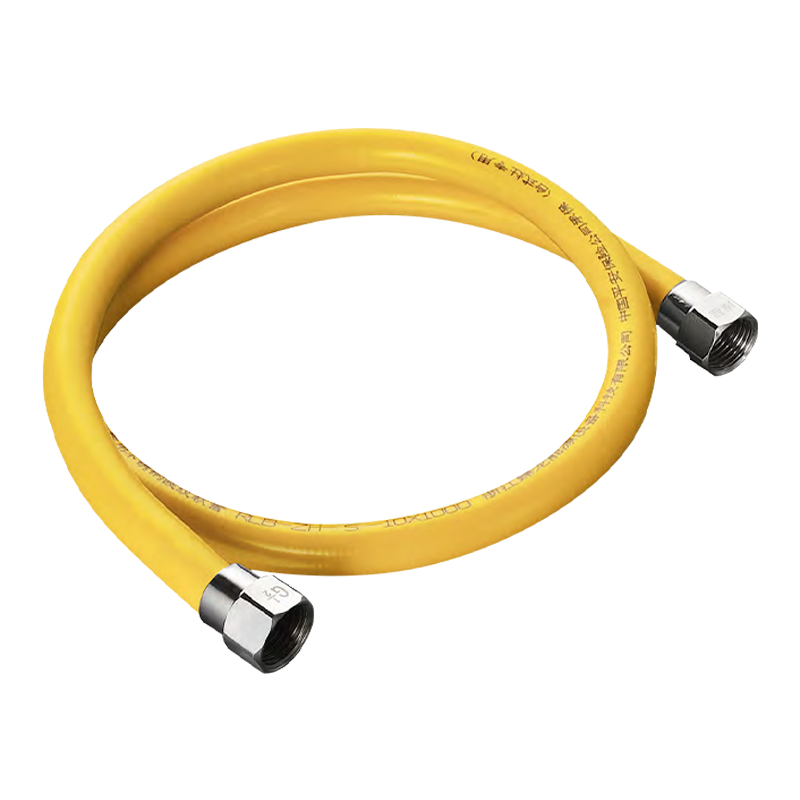
The product is categorized as a stainless steel corrugated hose fitting for gas transmission. It can therefore be considered for systems that use flexible metal hose assemblies and related connection components. The swivel feature is useful where hose orientation and connection alignment are important design considerations.
Flexible hose systems should always be installed without sharp bending, excessive stretching, crushing, or torsion. The swivel plug does not eliminate the need for correct hose routing, but it can help reduce one source of installation stress at the termination point.
8.4 Industrial and Utility Applications
Selected industrial and utility systems may require a secure closure for a low-pressure or controlled gas branch. The suitability of the ZLP-013 for a particular industrial application depends on pressure, temperature, gas composition, connection standard, environmental exposure, and regulatory requirements. Customers should provide complete operating information when requesting technical confirmation.
For industrial use, the plug can be integrated into a broader maintenance and isolation plan. It may be used during equipment replacement, line extension, plant reconfiguration, or staged commissioning. Its value is greatest when it forms part of a documented system design rather than being selected solely by nominal size.

9. Installation Considerations
Before installation, verify the product model, nominal size, connection configuration, material requirements, and intended gas service. DN10 and DN13 are not interchangeable simply because their dimensions may appear close. The fitting must match the mating component accurately to avoid thread damage, poor engagement, or an unreliable seal.
Inspect the plug and the mating connection before assembly. Threads should be clean and free from metal chips, dirt, old sealant, or damage. Sealing surfaces should not show scratches, dents, deformation, or contamination. If a gasket or sealing element is specified for the configuration, it should be in good condition and suitable for gas service.
Align the plug carefully with the mating connection. Do not force a cross-threaded fitting or use excessive torque to compensate for incorrect alignment. The swivel function should be used to assist positioning, not as a substitute for correct preparation. Tighten the connection according to the applicable installation instructions and project requirements.
After installation, perform an appropriate leakage test using an approved method. Never use an open flame to check a gas connection. The completed system should be inspected by qualified personnel, and any required pressure, tightness, or functional tests should be documented according to local regulations and project procedures.
When removing the plug, first isolate the gas supply and confirm that the line has been safely depressurized. The work area should be adequately ventilated, and ignition sources should be controlled. After removal, the new connection or replacement closure must be inspected and tested before the system is returned to service.
10. Selection Guide for Buyers and Project Engineers
Buyers should begin by identifying the exact application. Is the plug intended for a residential appliance connection, a commercial kitchen, a flexible hose assembly, a temporary construction closure, or an industrial gas branch? The answer will determine the required material, pressure rating, connection type, certification documentation, and packaging requirements.
The next step is confirming the nominal size. The ZLP-013 is listed in DN10 and DN13 specifications. Customers should compare these sizes with the actual hose or pipe fitting dimensions and should not rely only on visual estimation. If a project uses a nonstandard thread, regional connection, or special sealing arrangement, the supplier should be consulted before ordering.
Environmental conditions should also be considered. Indoor residential service may present different demands from outdoor utility service, coastal installation, high-humidity environments, or industrial areas with chemical exposure. A complete inquiry should include temperature, pressure, gas medium, installation location, expected service life, and maintenance conditions.
For large projects, customers may request samples, technical drawings, material information, inspection records, batch identification, packaging specifications, and production schedules. An experienced manufacturer can help coordinate these requirements and can identify potential compatibility issues before mass production begins.
11. OEM, ODM, and Supply Chain Support
The manufacturer’s integrated industry-and-trade model supports more than standard product sales. Customers may require private labeling, customized packaging, modified dimensions, product family development, or coordinated sourcing of related metal hose and pipe fitting products. OEM and ODM capability can reduce the need to manage multiple suppliers for interconnected components.
Customization should be approached through a clear technical process. The customer should provide drawings, connection standards, operating conditions, quality expectations, target markets, packaging requirements, and expected order volumes. The manufacturer can then evaluate tooling, materials, process feasibility, test requirements, sample development, and production timing.
A coordinated supplier can also help maintain compatibility between a swivel plug and other fittings in the same product range. Consistent dimensions, materials, branding, and packaging are valuable for distributors, wholesalers, gas equipment manufacturers, and engineering contractors. This consistency can simplify inventory control and reduce uncertainty during installation.
Because the company produces metal hoses, natural gas pipelines, plumbing fittings, sanitary ware, valves, plastic products, and hardware, it may be able to support broader product programs. Customers should nevertheless confirm product-specific capability, test reports, minimum order requirements, and delivery terms for each requested item.
12. Why Manufacturing Scale Matters to Product Buyers
Manufacturing scale is valuable when it is supported by process control. A large facility alone does not guarantee quality, but adequate space and equipment can improve production organization, capacity planning, material handling, and inspection coverage. The manufacturer’s factory area and multiple production lines provide a foundation for handling regular supply and project-based orders.
Capacity can also support continuity. If demand increases, a supplier with established forming, welding, thermal processing, testing, and assembly resources may be better prepared to maintain delivery schedules. This is important for distributors and contractors who need to avoid interruptions in their own projects.
Integrated production can reduce dependence on outside processors. When more stages are managed within one organization, communication between engineering, production, inspection, and customer service may become more direct. This can make it easier to investigate a dimensional concern, material question, or packaging requirement.
For a product as important as a gas fitting, manufacturing scale should always be considered together with technical discipline. The combination of equipment, skilled personnel, documented procedures, testing capability, and customer support is what creates meaningful supplier strength.
13. Maintenance and Service Life
A properly installed Gas Pipe Swivel Plug is intended to provide long-term closure under suitable operating conditions. Routine maintenance should include visual inspection of accessible connections, checking for signs of corrosion or mechanical damage, and confirming that the fitting remains protected from impact or unauthorized modification.
Inspection frequency depends on the application. Residential systems may be checked during normal appliance or pipeline servicing. Commercial and industrial systems may require scheduled inspections under a formal maintenance program. Any smell of gas, unexplained pressure loss, visible damage, or suspected leakage requires immediate action by qualified personnel.
Do not paint over, weld onto, drill, or modify the plug after installation. Unauthorized changes can affect the sealing structure and may invalidate the product’s intended performance. If the plug must be removed, the gas supply should be isolated and the connection should be handled by trained technicians.
Service life is influenced by gas composition, pressure, temperature, vibration, installation quality, environmental exposure, and maintenance practices. The supplier should be consulted when the fitting will be used outside common indoor gas applications or in conditions involving unusual chemicals, high temperatures, cyclic pressure, or severe vibration.
14. Sustainability and Efficient Product Use
Durable fittings can support more efficient use of materials by reducing premature replacement. A corrosion-resistant swivel plug that remains serviceable over a long period may help limit maintenance waste and reduce the frequency of component disposal. Efficient installation can also reduce labor time and the consumption of replacement parts caused by damaged threads or overstressed hoses.
Responsible product use includes selecting the correct size, avoiding unnecessary modifications, storing fittings properly, and installing only the quantity required for the project. Packaging should protect the sealing surfaces and threads from impact and contamination during transportation and storage.
Manufacturers can contribute further by improving process efficiency, reducing material waste, maintaining equipment, and controlling production defects. The company’s ability to manage forming, welding, thermal processing, inspection, and assembly within an organized facility provides opportunities for continuous process improvement.
15. Frequently Asked Questions
Q1: What is the main purpose of the Gas Pipe Swivel Plug?
The main purpose is to securely seal an unused, temporary, or isolated gas pipe outlet. It is designed for stainless steel corrugated hose fitting systems used in gas transmission and can help prevent gas leakage when correctly selected and installed.
Q2: What sizes are available for model ZLP-013?
The listed specifications are DN10 and DN13. The correct size must be selected according to the actual mating pipe, hose, thread, and connection standard. Customers should confirm dimensions before ordering.
Q3: What is the advantage of the swivel mechanism?
The swivel mechanism allows rotational adjustment during installation and removal. It can reduce the need to rotate the entire hose or connected pipeline, helping minimize torsional stress and making alignment easier in restricted spaces.
Q4: Can the product be used as a permanent closure?
It may be used as a temporary or permanent closure when the product is suitable for the application and installed according to applicable requirements. The decision should consider pressure, temperature, gas medium, local regulations, and the instructions provided for the specific configuration.
Q5: Is the swivel plug suitable for outdoor use?
Its corrosion-resistant construction supports durability, but outdoor suitability depends on the actual environment. Coastal air, severe humidity, chemical exposure, freezing conditions, and direct weather exposure may require additional evaluation. Buyers should provide environmental information to the manufacturer.
Q6: Can it be installed by a homeowner?
Gas pipeline work should be performed by qualified personnel familiar with local regulations and safe gas installation practices. The fitting should not be installed or removed while the line is pressurized, and all required leakage and pressure tests must be completed before service.
Q7: How does this product compare with a conventional fixed plug?
A conventional fixed plug may provide a basic closure, but it generally requires the complete fitting or hose to rotate during assembly. The swivel plug offers greater installation flexibility, can reduce connection stress, and may simplify future removal in confined locations.
Q8: What materials are used?
The product is described as being made from high-strength, corrosion-resistant materials. The exact material grade should be confirmed with the supplier according to the order specification, intended gas service, environmental conditions, and required certifications.
Q9: What testing is available?
The manufacturer has testing equipment including direct-reading spectrometers for metal material analysis and flow tightness testers. Product-specific inspection records, test methods, and acceptance criteria should be confirmed for each order.
Q10: Does the manufacturer provide OEM or ODM services?
The company integrates research, development, manufacturing, processing, and trade, and provides custom production for metal hoses, corrugated hoses, pipe fittings, and related products. Customers should submit technical drawings, specifications, quantities, branding, and packaging requirements for evaluation.
Q11: How should the plug be checked after installation?
The connection should be visually inspected and tested for leakage using an approved method. Open flames must never be used for leak detection. The appropriate test procedure depends on the system design, local regulations, and the requirements of the responsible gas professional.
Q12: What information should be included in an inquiry?
An inquiry should include the required DN size, connection type, gas medium, operating pressure and temperature, installation environment, quantity, certification needs, packaging requirements, and destination market. Drawings or photographs of the mating connection can also help the supplier confirm compatibility.
16. Ordering and Technical Communication
Clear communication is essential when purchasing gas pipe fittings. The product name, model number, nominal size, quantity, required delivery schedule, and destination should be stated in the initial inquiry. If the project involves multiple fitting types, a product list with drawings and application notes can help avoid misunderstandings.
Customers should also request confirmation of the material, connection standard, sealing method, inspection requirements, and available documentation. For regulated markets, it is important to identify whether certificates or test reports must be issued for the exact model and configuration being supplied.
Sample approval can be useful for OEM and ODM projects. A sample allows the customer to review dimensions, operation of the swivel mechanism, surface finish, packaging, labeling, and compatibility with the hose or pipe assembly. Once the sample is approved, the agreed specifications should be documented for mass production.
For repeat orders, batch identification and quality records can support traceability. A professional supplier should be prepared to discuss production scheduling, inspection arrangements, packaging protection, shipping preparation, and after-sales support.
17. Conclusion
The Gas Pipe Swivel Plug is a small but important component for secure gas pipeline termination. Model ZLP-013 is available in DN10 and DN13 specifications and is designed for stainless steel corrugated hose fittings used in gas transmission. Its high-strength, corrosion-resistant construction supports durability, while its swivel mechanism improves installation flexibility and helps reduce unnecessary twisting of connected hoses and fittings.
Compared with a basic fixed plug, the product offers practical advantages in alignment, service access, and installation stress control. These advantages are particularly relevant in residential appliance connections, commercial kitchens, flexible metal hose assemblies, maintenance work, and selected industrial gas applications.
The product is supported by a manufacturer with a substantial production facility, multiple welding and forming lines, uninterrupted hydrogen furnace lines, metal material analysis equipment, flow tightness testing capability, quality management procedures, and experience in energy equipment and pipeline products. Its integrated research, development, manufacturing, processing, and trading structure also supports OEM, ODM, and customized supply programs.
Correct application remains essential. The fitting must match the connection, be installed by qualified personnel, and be tested according to applicable gas safety requirements. When properly specified and installed, the Gas Pipe Swivel Plug provides a reliable and serviceable solution for closing unused gas outlets and supporting the safety and maintainability of modern gas pipeline systems.
References
1. Manufacturer Product Information: ZLP-013 Gas Pipe Swivel Plug, DN10/DN13 specification.
2. Manufacturer Corporate Profile: Metal hoses, corrugated hoses, natural gas pipelines, plumbing fittings, valves, sanitary ware, and hardware manufacturing capabilities.
3. Manufacturer Quality and Testing Information: ISO9000:2008 quality management implementation, material analysis, and flow tightness testing capabilities.
4. General Principles of Gas Pipeline Installation and Leakage Prevention.
5. General Practices for Stainless Steel Corrugated Hose and Gas Fitting Selection.
6. General Industrial Guidance on Pressure Pipeline Component Inspection and Maintenance.
7. General Safety Practices for Gas Appliance Connections, Isolation, and Commissioning.