 English
 中文简体
中文简体 Español
 عربى
عربى
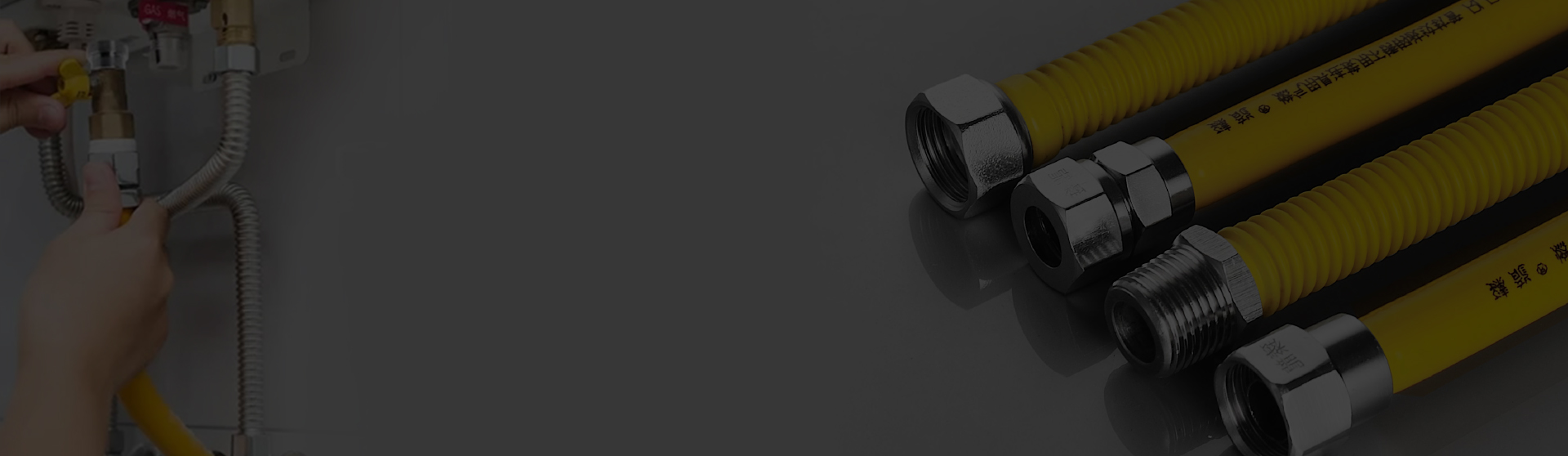

Gas appliance connections require more than a simple pipe and fitting. They must accommodate movement, installation limitations, vibration, temperature variation, and the need for a dependable seal over an extended service period. A connection that is too rigid may place stress on appliance inlets, valves, or fixed pipework. A connection with inadequate protection may be vulnerable to impact, abrasion, corrosion, or accidental bending. For these reasons, flexible metal hoses have become an important component in residential, commercial, and light industrial gas systems.
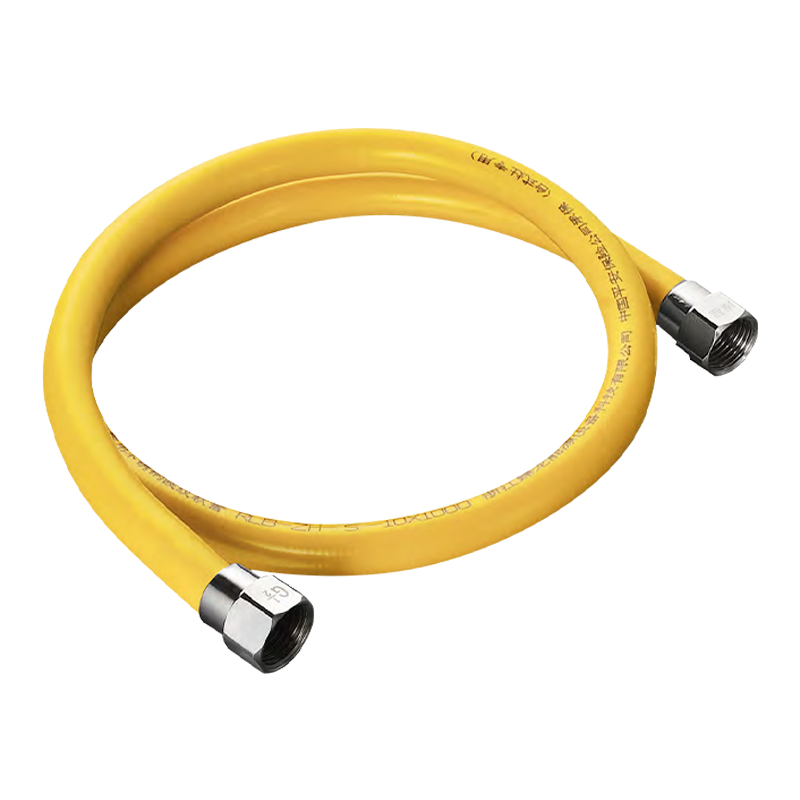
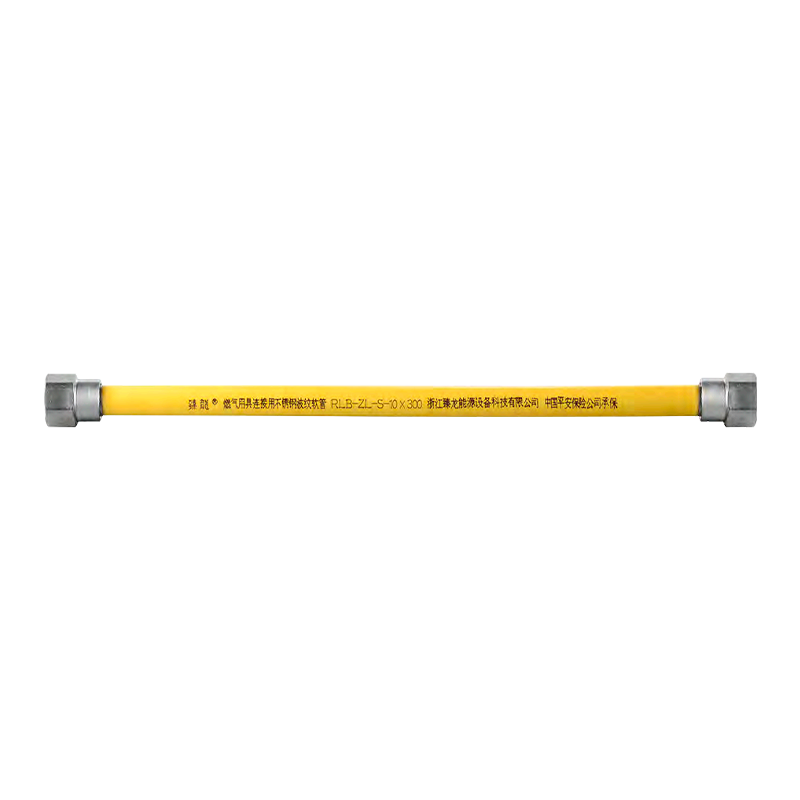
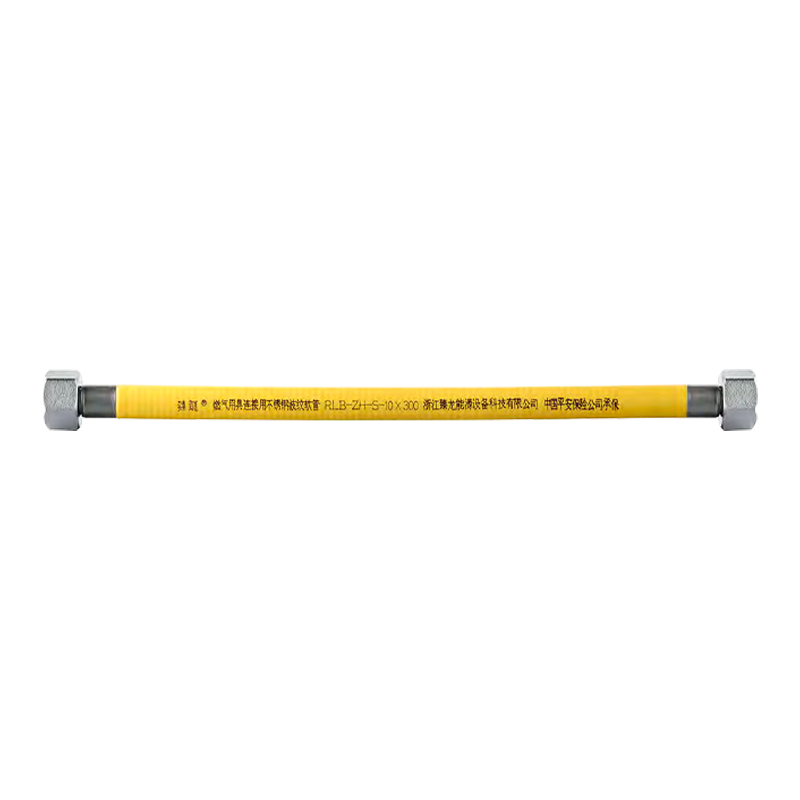
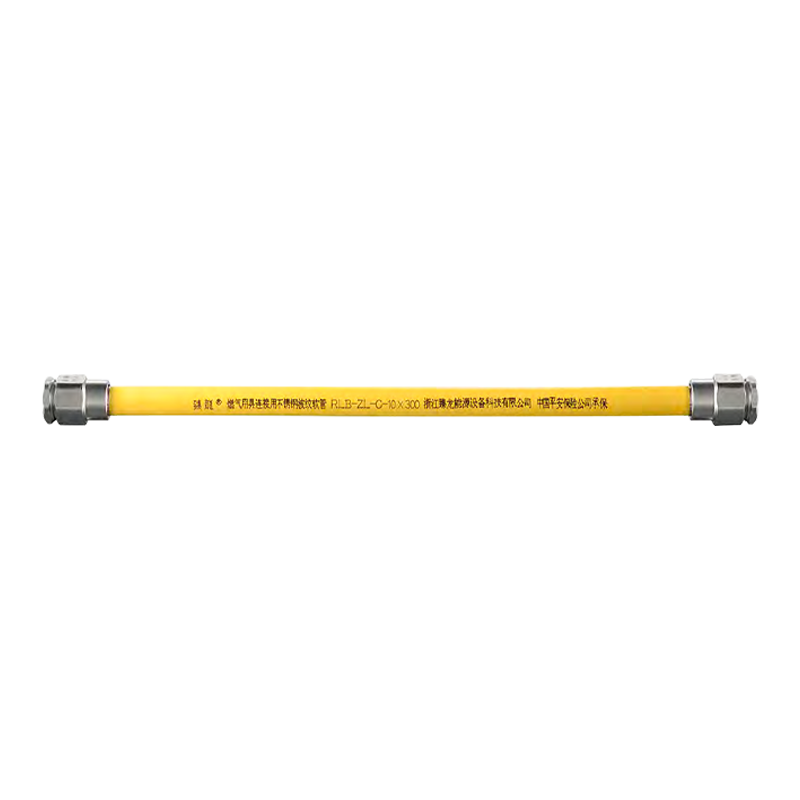
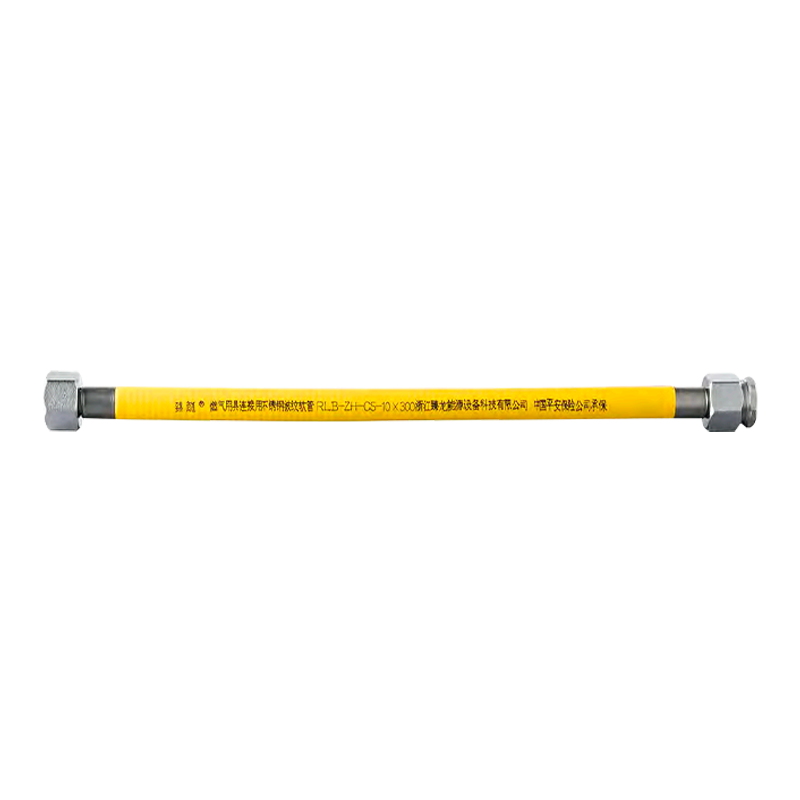
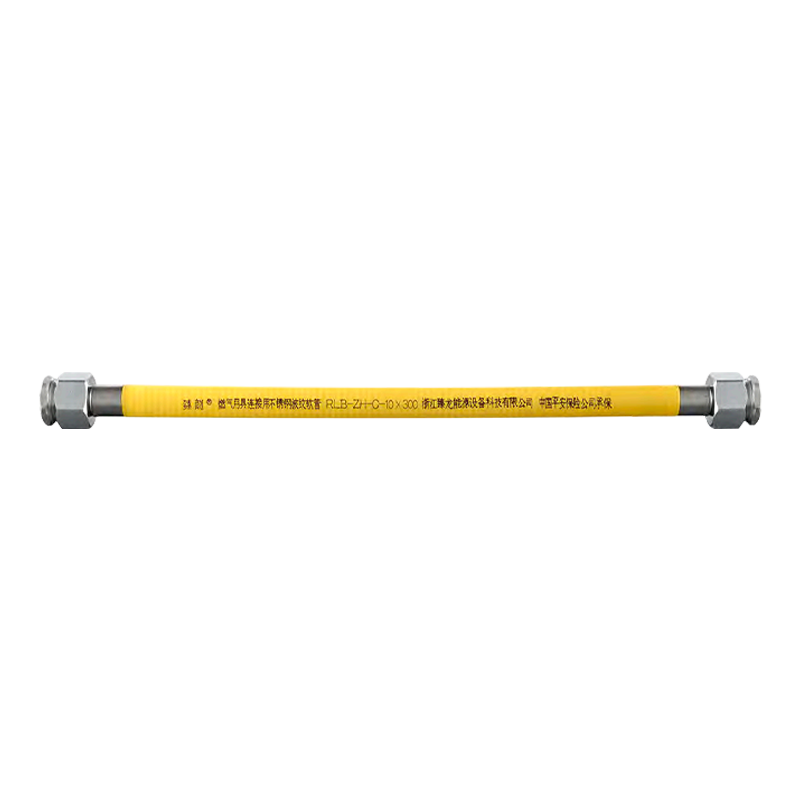
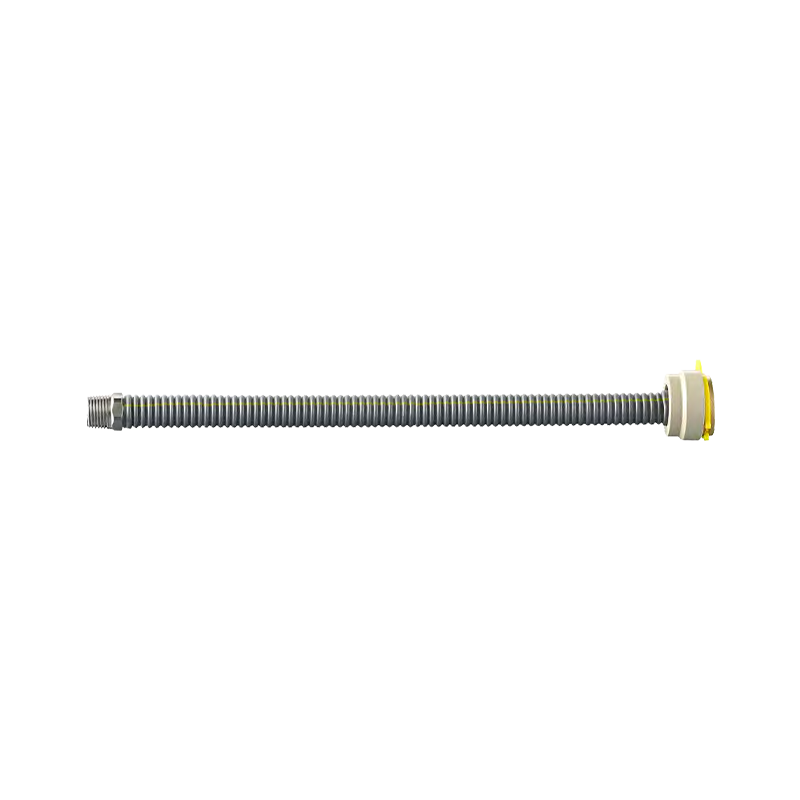
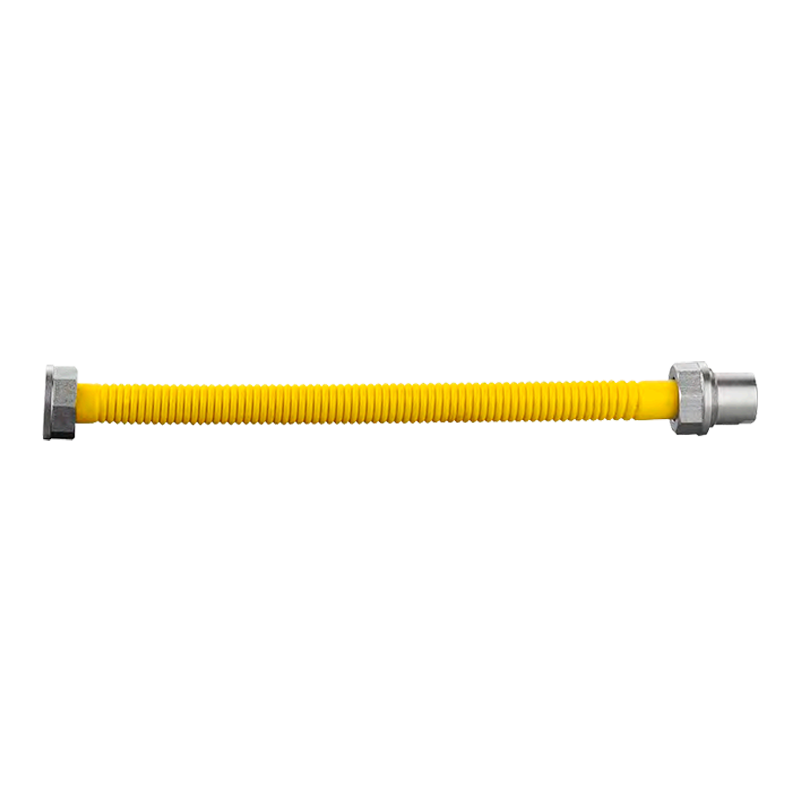
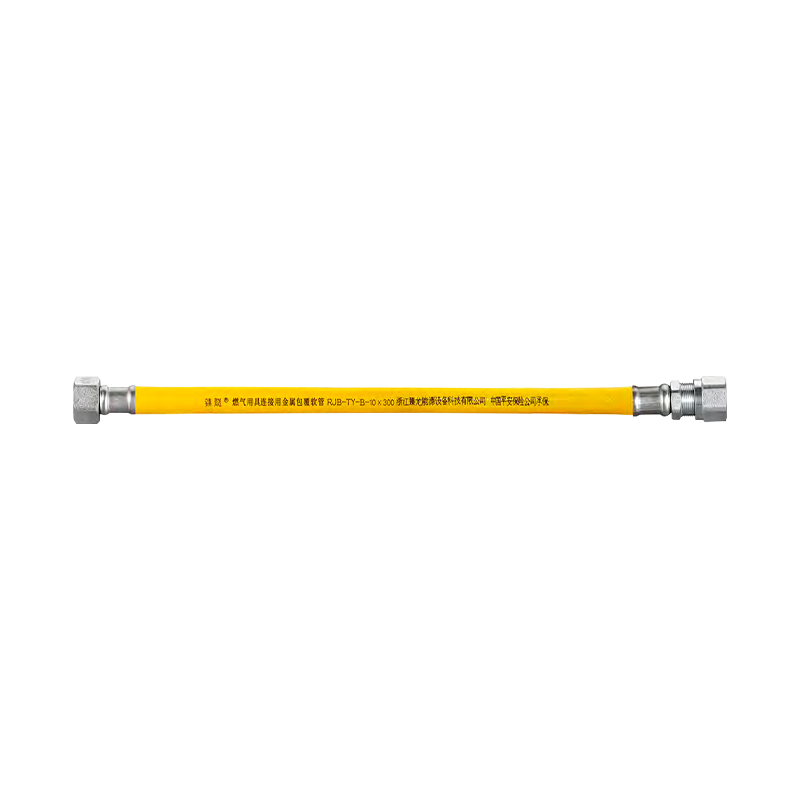
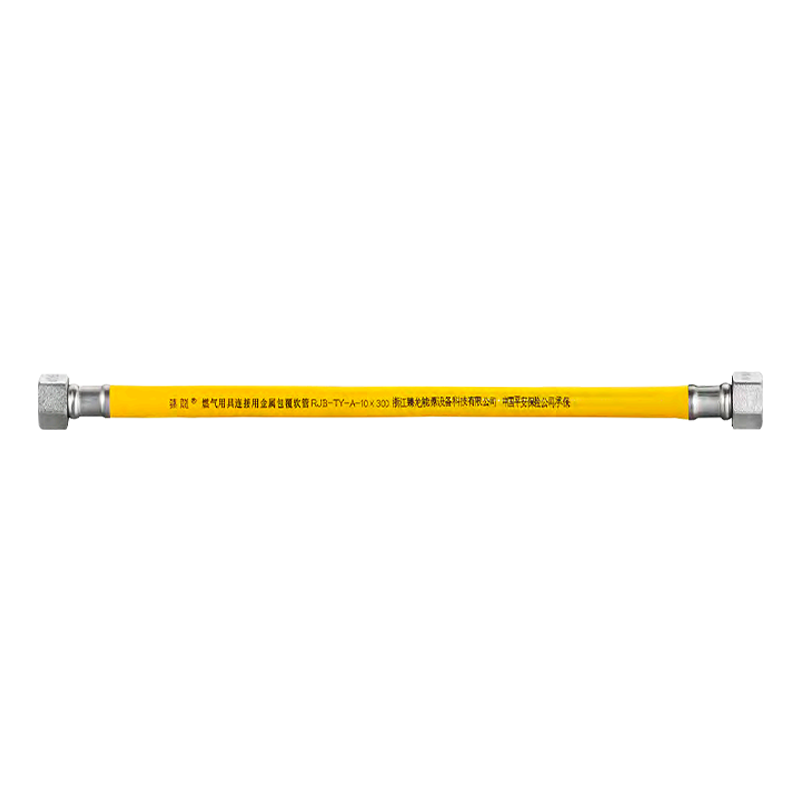
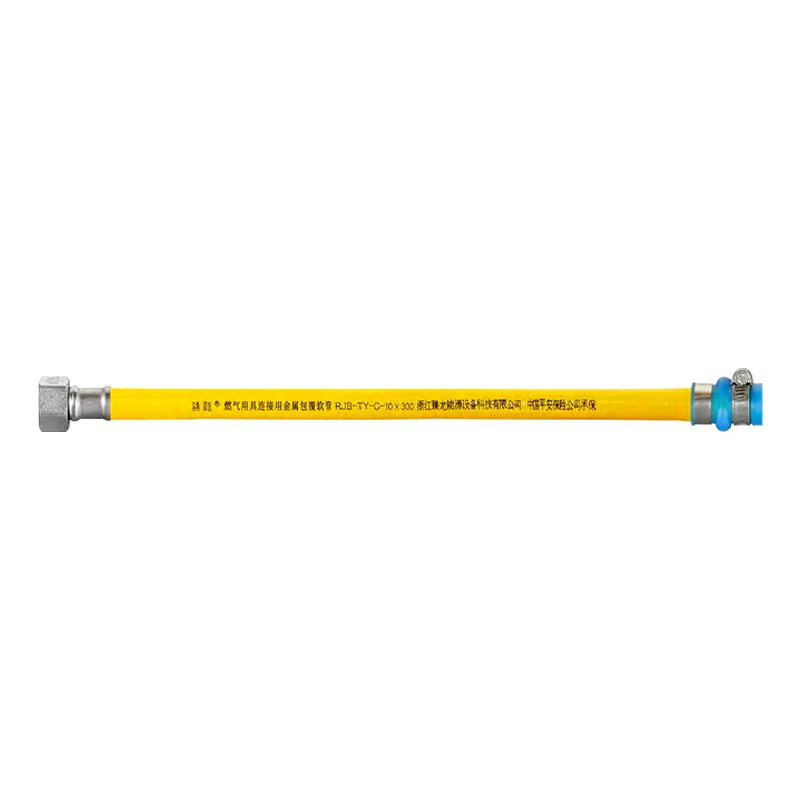
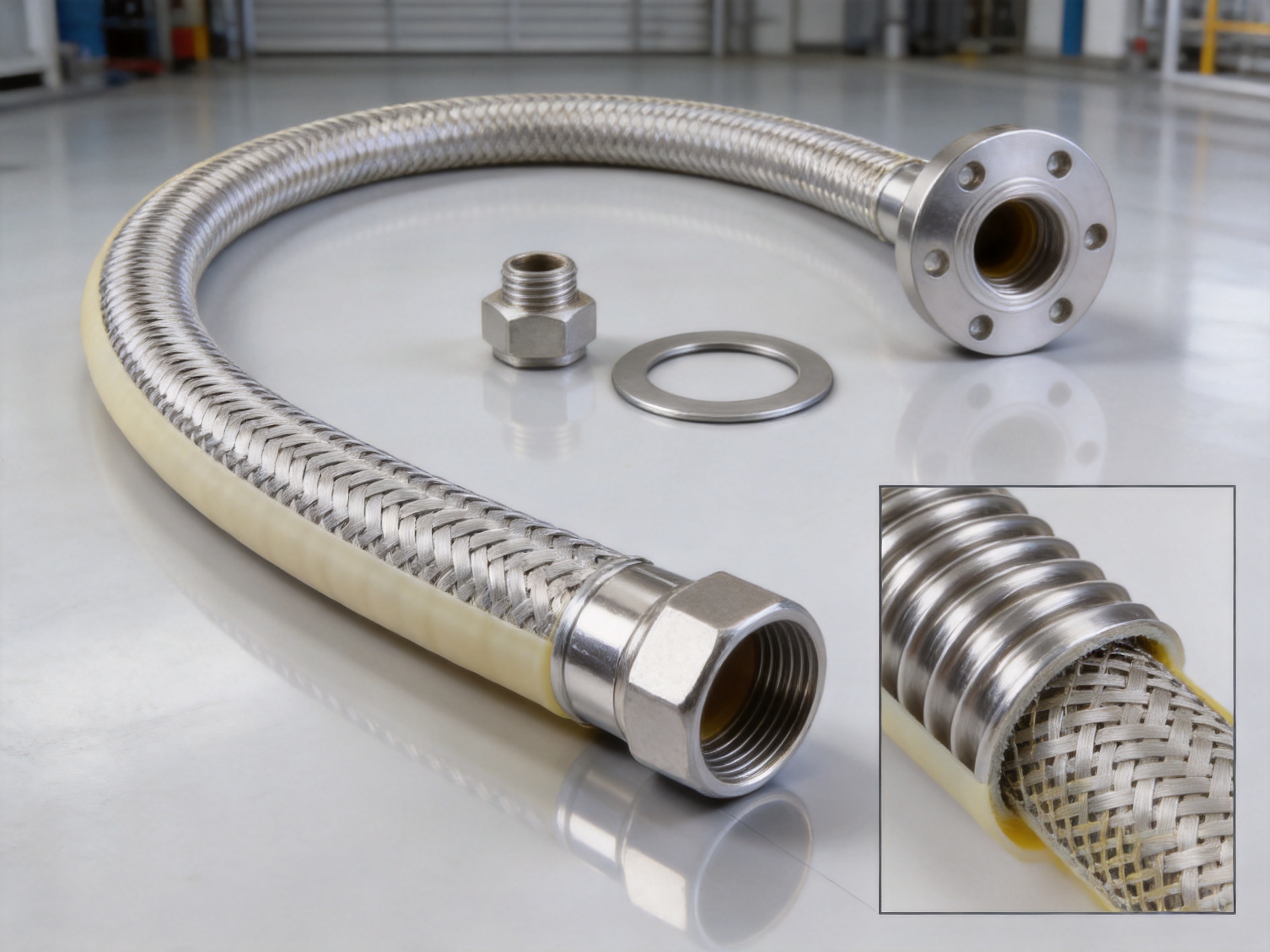
The Metal-Wrapped Stainless Steel Corrugated Gas Hose ZLR-14 is designed to address these practical requirements through a combination of stainless steel corrugated tubing, stainless steel braided mesh, protective materials, and engineered connection components. Its corrugated construction provides flexibility, while the external metal wrap contributes structural reinforcement and resistance to external forces. The assembly also includes a flange connector, G1/2 nut, flat gasket, stainless steel sleeve, PVC coating, stainless steel mesh, and stainless steel bellows.
With a DN10 specification, a listed outside diameter of 16 mm, and available lengths from 30 cm to 200 cm, the ZLR-14 is suitable for gas appliance connection layouts in which dependable routing and manageable installation are essential. The product is intended for applications requiring a balance of flexibility, mechanical protection, connection stability, and clean installation. Its configuration makes it especially useful where the distance between a gas supply point and an appliance is not perfectly straight or where limited space makes rigid pipework inconvenient.
This article examines the construction, performance characteristics, manufacturing considerations, installation value, quality controls, and application advantages of the ZLR-14. It also explains how the product reflects the production capabilities of Zhejiang Zhenlong Energy Equipment Technology Co., Ltd., a manufacturer engaged in metal hoses, corrugated hoses, gas pipelines, plumbing fittings, valves, sanitary ware, plastic products, and hardware.
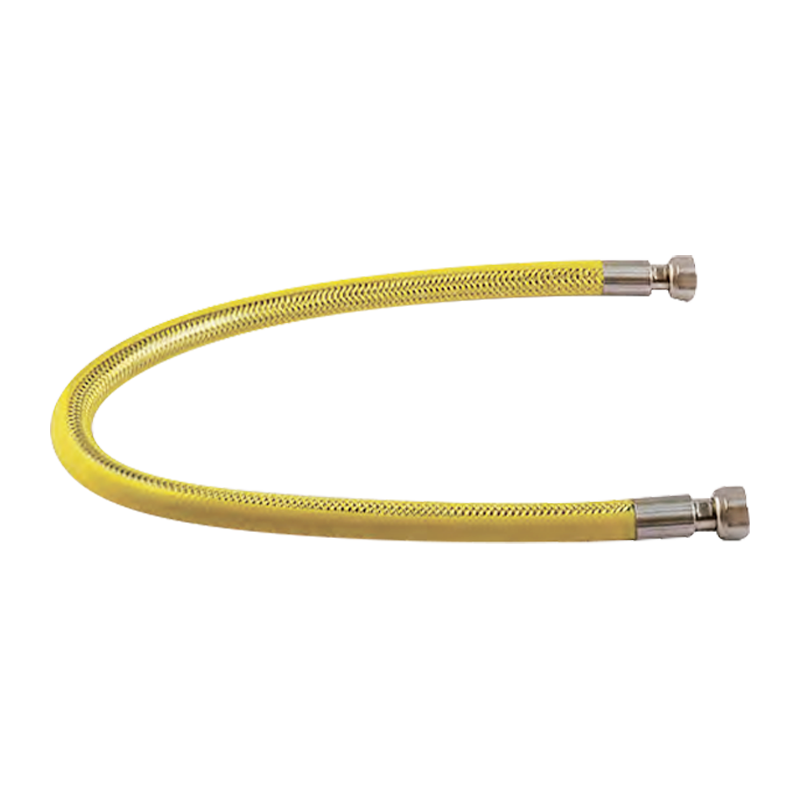
Metal-wrapped stainless steel corrugated gas hose ZLR-14
Content
- 1 1. The Role of Flexible Gas Hoses in Modern Installations
- 2 2. Product Construction of the ZLR-14
- 3 3. Main Technical Specification
- 4 4. Flexibility for Difficult Installation Layouts
- 5 5. Mechanical Protection and Resistance to External Forces
- 6 6. Corrosion Resistance and Service Durability
- 7 7. Leak-Resistant Connection Design
- 8 8. Advantages Compared with Basic Flexible and Rigid Alternatives
- 9 9. Manufacturing Strengths Behind the Product
- 10 10. Testing and Quality Management
- 11 11. Product Development and Custom Manufacturing Capability
- 12 12. Installation Guidance and Handling Principles
- 13 13. Inspection, Maintenance, and Replacement
- 14 14. Applications for the ZLR-14
- 15 15. Purchasing and Specification Considerations
- 16 16. Why an Integrated Supplier Can Add Value
- 17 17. Safety and Compliance Perspective
- 18 18. Frequently Asked Questions
- 18.1 Q1: What is the ZLR-14 gas hose made of?
- 18.2 Q2: What is the nominal size of the ZLR-14?
- 18.3 Q3: What lengths are available?
- 18.4 Q4: Does the hose use a G1/2 connection?
- 18.5 Q5: What is the purpose of the stainless steel mesh?
- 18.6 Q6: Why is the hose corrugated?
- 18.7 Q7: Can the ZLR-14 replace fixed gas piping?
- 18.8 Q8: Can the hose be installed outdoors?
- 18.9 Q9: Can the hose be bent sharply during installation?
- 18.10 Q10: How should a possible leak be handled?
- 18.11 Q11: What testing does the manufacturer report having?
- 18.12 Q12: Is customized production available?
- 18.13 Q13: What should be checked before ordering?
- 19 19. Overall Evaluation
- 20 References
- 21 Product: Metal-wrapped stainless steel corrugated gas hose ZLR-14
1. The Role of Flexible Gas Hoses in Modern Installations
A gas appliance connection is often located in an area where alignment is difficult to achieve with rigid pipe alone. Appliances may be positioned close to walls, inside cabinets, beneath counters, beside heating equipment, or in service areas containing other pipes and electrical components. Even when the pipe connection points are correctly designed, small differences in height, angle, or distance can complicate final assembly.
A flexible gas hose helps bridge this installation gap. Instead of forcing the appliance or the fixed pipework into exact alignment, the hose can be routed along a controlled curve. This reduces the need for excessive fitting changes and can shorten installation time. It may also make future inspection, cleaning, replacement, or appliance servicing easier, provided that the hose is installed according to applicable regulations and is not subjected to prohibited conditions.
Flexibility is particularly valuable in locations where appliances experience minor movement or vibration. A rigid connection can transfer mechanical loads directly to threaded joints and appliance inlets. A properly selected corrugated hose absorbs part of this movement through its formed profile. The hose should not be treated as a general-purpose moving part, but its flexible structure can provide a more forgiving connection than an entirely rigid assembly.
Gas hoses must also withstand external conditions. They may be exposed to accidental contact, cabinet movement, nearby equipment, cleaning activities, and general installation pressure. A metal-wrapped design offers an additional layer of protection compared with an unreinforced flexible tube. In the ZLR-14, the stainless steel mesh surrounds the corrugated section and helps improve resistance to external pressure, abrasion, and deformation.
The effectiveness of a gas hose depends on the entire assembly rather than on the tube alone. The connector, sealing gasket, nut, sleeve, welds, forming quality, surface finish, and dimensional consistency all influence the result. The ZLR-14 is therefore designed as a complete connection assembly that combines the flexible hose body with connection and protective components.
2. Product Construction of the ZLR-14
2.1 Stainless Steel Corrugated Bellows
The central flexible component of the ZLR-14 is the stainless steel corrugated pipe, also described as stainless steel bellows. Its wave-like profile allows the pipe to bend more readily than a smooth-wall rigid tube. The corrugations create controlled flexibility while maintaining a continuous metallic gas passage.
Corrugated geometry is important because it distributes bending over a series of formed waves. When the hose is routed through a curve, the movement is not concentrated at one sharp hinge point. This helps reduce localized stress compared with forcing a rigid pipe into a small-radius bend. Correct installation remains essential, because repeated over-bending, twisting, crushing, or sharp kinking can damage any flexible metallic hose.
Stainless steel is selected for the bellows because it provides a combination of strength, corrosion resistance, formability, and service durability. The material can be shaped into regular corrugations while retaining the mechanical properties necessary for a pressurized connection. Its metallic structure also provides a stable barrier for the transported gas when the hose is manufactured and assembled correctly.
2.2 Stainless Steel Braided Mesh
The stainless steel mesh forms a protective and reinforcing layer around the corrugated hose. The braided structure helps restrain the bellows against expansion and contributes to resistance against external pressure. It can also protect the underlying corrugations from direct contact with surrounding objects.
One advantage of a braided metal layer is that it combines coverage with a degree of flexibility. Unlike a solid rigid cover, the braid can follow the movement of the corrugated body while maintaining a protective envelope. The mesh may also function as a shielding layer in the assembly, helping reduce the exposure of the inner hose to mechanical contact and environmental influence.
The performance of the braid depends on wire material, wire diameter, braid pattern, coverage, termination method, and assembly tension. Consistent production is therefore important. If the braid is uneven, excessively loose, or poorly secured at the ends, its protective contribution may be reduced. Manufacturing control over braiding and end assembly supports reliable product consistency.
2.3 Stainless Steel Sleeve
The stainless steel sleeve is one of the visible structural parts identified in the product specification. It helps organize and protect the hose end near the connection area. This region is important because the end of the hose experiences concentrated loads during handling, routing, and connection.
A properly formed sleeve can help transition from the flexible hose body to the connection hardware. It may also reduce the likelihood of direct abrasion at the end of the braid and support a neat, professional appearance. The sleeve must be dimensionally compatible with the bellows, braid, connector, and assembly process. Accurate fitting at this point contributes to long-term mechanical stability.
2.4 PVC Protective Coating
The ZLR-14 specification includes a PVC coating as part of the assembly. A protective polymer coating can help shield the metal components from incidental contact, surface abrasion, and contamination. It can also make the hose easier to handle during installation and provide a visually uniform outer surface.
The coating does not replace the stainless steel mesh or bellows. Instead, it complements the metal structure by adding an external protective layer. The suitability of the coating depends on the intended environment, temperature conditions, exposure to chemicals, and local installation requirements. Installers should verify that the hose is appropriate for the specific appliance and surrounding conditions before use.
2.5 Flange Connector, Nut, and Gasket
The connection assembly includes a flange connector, a G1/2 nut, and a flat gasket. These components are responsible for creating a secure interface between the hose and the connected gas appliance, valve, pipe, or other compatible component.
The flat gasket provides the sealing interface between prepared mating surfaces. Its purpose is to fill minor surface irregularities and create a controlled barrier when the connection is tightened correctly. A gasket should be clean, correctly positioned, and suitable for the service conditions. Reusing a compressed or damaged gasket may compromise the connection.
The G1/2 nut provides the mechanical clamping action required to hold the connection together. Thread quality, dimensional accuracy, and correct tightening are important. Excessive force can damage threads, distort sealing surfaces, or compress the gasket improperly. Insufficient force can permit leakage or movement. Installation should always follow the instructions supplied with the product and the requirements of the applicable gas code.
The flange connector creates a defined connection point and can help support compatibility with the relevant appliance-side or pipe-side interface. Because the connector is part of the complete assembly, its dimensions and machining quality must be coordinated with the hose body and sealing components.
3. Main Technical Specification
The available product information identifies the ZLR-14 as a DN10 metal-wrapped stainless steel corrugated gas hose. Its listed model reference is RLB-ZH-S-10X300, with a nominal outside diameter of 16 mm and a length range from 30 cm to 200 cm.
| Item | Specification |
| Product model | ZLR-14 |
| Model reference | RLB-ZH-S-10X300 |
| Nominal size | DN10 |
| Listed outside diameter | 16 mm |
| Available length | 30 cm to 200 cm |
| Connection component | Flange connector with G1/2 nut |
| Sealing component | Flat gasket |
| Protective components | Stainless steel sleeve, PVC coating, stainless steel mesh |
| Flexible element | Stainless steel corrugated bellows |
| Primary application category | Metal-wrapped hoses for gas appliance connections |
The listed dimensions provide a starting point for product selection, but they do not replace a complete engineering assessment. Gas type, operating pressure, operating temperature, connection standard, appliance requirements, installation orientation, minimum bend radius, and local certification rules must all be considered. A buyer or installer should confirm the full technical datasheet and applicable approvals before placing the hose into service.
4. Flexibility for Difficult Installation Layouts
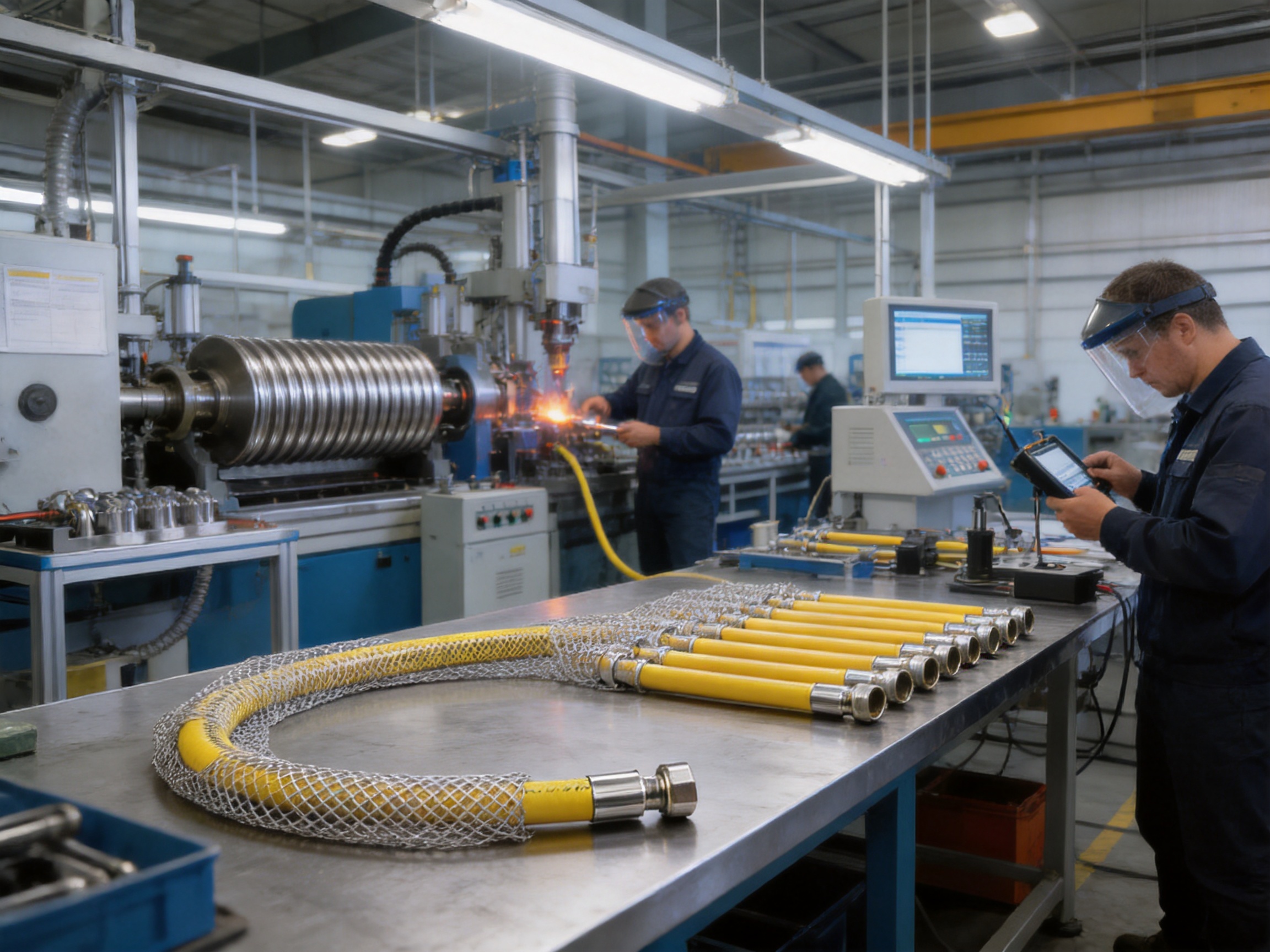
The primary practical advantage of a corrugated hose is its ability to accommodate non-linear routing. In a compact kitchen, utility room, heating area, or equipment enclosure, the gas connection may need to pass around a cabinet edge or align with a connection positioned at a different angle from the supply pipe. The ZLR-14 can be routed through a controlled curve rather than requiring multiple rigid elbows.
This flexibility can help reduce the number of separate fittings in an installation. Fewer joints may simplify assembly and make the finished connection easier to inspect. It may also reduce the amount of wall or cabinet modification needed to achieve alignment. However, a flexible hose should never be used to compensate for poor system design or to create a bend tighter than the manufacturer permits.
The length range of 30 cm to 200 cm gives users several options for different appliance layouts. A shorter hose may be suitable where the appliance and supply connection are close together. A longer version can provide additional routing freedom where the connection points are separated or offset. Selecting the shortest practical length is generally preferable because unnecessary hose length can create loops, contact points, or avoidable movement.
Flexibility also assists maintenance. If the appliance must be moved temporarily for cleaning or inspection, the hose may provide limited movement without immediately transferring the full load to the rigid pipework. The connection must still remain within its intended operating position, and the hose should not be pulled, stretched, twisted, or used as a lifting handle.
5. Mechanical Protection and Resistance to External Forces
Basic flexible tubes may be vulnerable to crushing, cuts, abrasion, and accidental impact. The ZLR-14 addresses these risks through a layered construction. The corrugated stainless steel tube provides the pressure-containing passage, while the stainless steel mesh and sleeve add mechanical reinforcement. The PVC coating offers a further protective barrier at the outside of the assembly.
The braided mesh helps distribute external contact across a wider area. If the hose touches a cabinet edge or another nearby surface, the load may be shared by multiple braided wires instead of being concentrated on the thin wall of the corrugated tube. This does not make the hose indestructible, but it improves its resistance to ordinary installation contact compared with a bare, unsupported tube.
The metal wrap can also help preserve the shape of the hose during routing. A flexible hose must bend, but it must not collapse. The braid supports the corrugated body and helps maintain the intended passage when the assembly is exposed to moderate external forces. Proper selection and installation are still necessary where the hose may be exposed to heavy equipment, sharp edges, hot surfaces, or repeated impact.
The protective coating can reduce contact between the metal braid and surrounding materials. It may help prevent superficial scratching and make the hose easier to wipe clean. The coating should be inspected after installation. Any cut, burn, severe abrasion, or other damage should be evaluated before the appliance is operated.
6. Corrosion Resistance and Service Durability
Gas appliance connections can be exposed to humidity, condensation, cleaning products, airborne contaminants, and changes in temperature. Stainless steel is widely used in demanding pipe and hose applications because it offers strong resistance to many common forms of corrosion. In the ZLR-14, stainless steel is used for the corrugated bellows, mesh, and sleeve, creating a coherent metal protection system.
Corrosion resistance is influenced by the grade of stainless steel, surface condition, welding quality, environmental exposure, and contact with dissimilar metals. Stainless steel components should be kept clean and should not be contaminated with carbon steel particles during manufacturing or installation. Harsh chemicals, salt-rich atmospheres, and persistent moisture may require additional material evaluation.
The PVC coating can further reduce direct exposure of the metallic layers to the surrounding environment. It may also provide a separation layer between the hose and nearby materials. Nevertheless, no coating or metal is suitable for every environment. The installation site should be checked for high temperatures, chemical vapors, ultraviolet exposure, water accumulation, and other conditions that may affect the hose.
Durability is not determined by material selection alone. Correct forming, stable welds, uniform braiding, secure end termination, accurate threads, and effective sealing are equally important. The manufacturer's integrated production capabilities are valuable because they allow several of these processes to be coordinated within one supply chain.
7. Leak-Resistant Connection Design
A gas connection must maintain a reliable seal under the expected operating conditions. The ZLR-14 uses a flat gasket and mechanically secured connection components to create a defined sealing arrangement. The gasket is compressed between suitable mating surfaces, while the nut and connector maintain the necessary clamping force.
A leak-resistant design begins with accurate machining and forming. The flange face must be sufficiently uniform, the threaded components must engage correctly, and the gasket must sit squarely. The hose must also be free from contamination that could create a leakage path. These requirements explain why quality inspection of both components and finished assemblies is important.
During installation, the connector should be aligned before tightening. Forcing misaligned threads together can damage the connection and create uneven gasket compression. The hose should be supported and routed naturally so that it does not exert a side load on the connector. After assembly, the connection should be tested using an approved leak-detection method and in accordance with local regulations.
Mechanical tightening alone should not be considered proof of gas tightness. A connection can feel tight and still leak if the gasket is misplaced, the mating face is damaged, or the threads are cross-connected. Inspection and testing are essential parts of installation. Where required, a qualified gas professional should complete the work.
8. Advantages Compared with Basic Flexible and Rigid Alternatives
8.1 Compared with Unreinforced Flexible Tubing
Compared with a basic unreinforced flexible tube, the ZLR-14 offers a more substantial protective structure. The stainless steel mesh helps resist external pressure and abrasion, while the corrugated stainless steel bellows provide a metal gas passage. The sleeve and PVC coating further protect the assembly around the hose body and end transition.
This layered structure can be advantageous in installations where the hose may contact cabinetry, equipment housings, or other nearby surfaces. It also provides a more robust appearance and may offer greater resistance to accidental handling damage. The exact performance depends on the materials and certification of each product, so comparison should always be based on verified technical data rather than appearance alone.
8.2 Compared with Completely Rigid Pipework
Rigid pipework can provide excellent stability when installed in a straight, accessible, and well-supported route. However, it may require more elbows, unions, and precise measurement when connecting an appliance. It can also transfer movement and vibration directly to the appliance connection if no flexible section is provided.
The ZLR-14 offers routing flexibility that rigid pipe cannot provide without additional fittings. Its corrugated structure can accommodate changes in direction and small installation offsets. This may simplify the final connection and reduce the need for complicated adjustment. The hose is not intended to replace all fixed pipework; rather, it serves as a flexible connection component within a properly designed system.
8.3 Compared with Light-Duty Metal Hoses
Some metal hoses have limited reinforcement or minimal external protection. The ZLR-14 combines corrugation with a stainless steel braided mesh, a sleeve, and a PVC coating. This multi-layer arrangement can offer a useful balance between flexibility and protection.
The product's complete assembly approach is another advantage. Instead of sourcing a corrugated tube, connector, gasket, and protective cover separately, users receive an integrated hose configuration. This can simplify purchasing, reduce component-matching errors, and support more consistent installation results.
9. Manufacturing Strengths Behind the Product
The quality of a corrugated gas hose depends heavily on manufacturing discipline. Forming a consistent bellows profile, welding or joining stainless steel components, applying a stable braid, installing the end hardware, and inspecting the finished product all require controlled processes. Zhejiang Zhenlong Energy Equipment Technology Co., Ltd. has developed its business around the research, development, manufacturing, and processing of energy equipment and related piping products.
The company operates a factory covering approximately 40 acres, with a reported 30,000-square-meter factory building. Its production resources include 30 welding and forming production lines. This scale supports the manufacture of metal hoses, gas pipelines, plumbing fittings, valves, sanitary ware, plastic products, and hardware. The range of related products can help the company understand the requirements of complete piping systems rather than focusing on one isolated component.
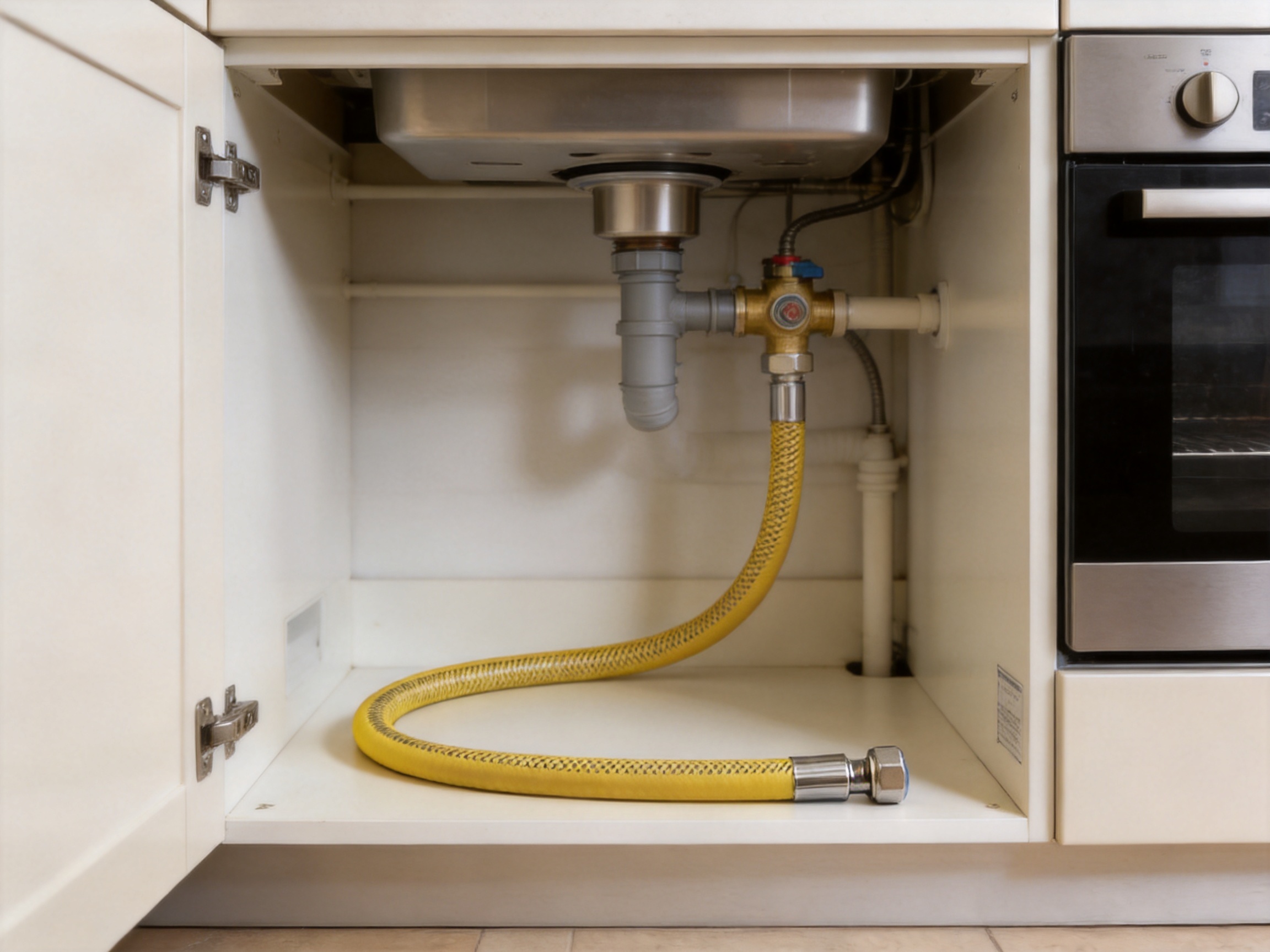
Welding and forming are particularly relevant to the ZLR-14. The corrugated bellows must be formed into a regular wave pattern without excessive thinning, cracking, or dimensional distortion. Connection areas must be joined with appropriate process control. The stainless steel sleeve and flange components must be fitted securely, and the braid must be assembled so that it provides consistent coverage and support.
The company also reports two uninterrupted solid melting hydrogen furnace production lines. Furnace capability is relevant to material processing and can support controlled production of metallic components and related materials. Stable thermal processing helps manufacturers maintain repeatable material quality, although the suitability of a particular material still depends on grade selection, process parameters, and inspection records.
By combining forming, welding, material processing, assembly, and testing resources, the manufacturer can coordinate production stages more effectively. This may help reduce variation between batches and improve traceability. It also allows technical staff to identify relationships between material behavior, forming performance, welding quality, and finished hose durability.
10. Testing and Quality Management
Gas products must be produced with a strong focus on dimensional accuracy and leak prevention. The company identifies testing equipment including metal material analysis direct-reading spectrometers and flow tightness testers. These resources support two important areas of quality assurance: verifying material composition and checking the sealing performance of finished components or assemblies.
A direct-reading spectrometer can be used to analyze metallic materials and help confirm whether incoming or production materials correspond to specified compositions. Material verification is valuable because stainless steel performance depends on the selected alloy. Confirming material identity supports better control over corrosion resistance, formability, weldability, and mechanical performance.
Flow tightness testing is directly relevant to gas hose assemblies. It can help identify leakage paths caused by defective welds, damaged bellows, incorrectly installed gaskets, poor connector assembly, or other production faults. Testing finished products provides a stronger quality barrier than relying only on visual inspection.
The company states that it strictly implements the ISO9000:2008 quality management system. A quality management system provides a framework for documented procedures, process responsibilities, inspection records, corrective action, and continual improvement. For a product such as the ZLR-14, this type of system can support consistency from material purchasing through forming, assembly, testing, packaging, and customer service.
The company also reports holding a Special Equipment Manufacturing License for pressure pipelines in the People’s Republic of China, along with EU CE certification testing reports. It is identified as a member of the China Urban Gas Association. These qualifications and memberships reflect the company's participation in the energy equipment and urban gas sectors. Buyers should confirm the exact scope, validity, and applicability of any certification for the intended market, gas type, pressure, and installation.
11. Product Development and Custom Manufacturing Capability
Gas connection requirements vary between markets and appliance manufacturers. Differences may involve nominal size, connection thread, flange arrangement, hose length, protective coating, labeling, packaging, and certification. A manufacturer with research, design, and production capabilities can respond more effectively to these requirements than a supplier that only resells standard components.
Zhejiang Zhenlong Energy Equipment Technology Co., Ltd. describes itself as having a strong research, development, design, and production team. This combination is useful for OEM and ODM projects. Customers may require customized lengths, connector configurations, markings, packaging, or product families derived from a common hose platform.
Custom production should begin with a clear technical specification. The customer and manufacturer should define the gas medium, working pressure, temperature range, nominal size, outside diameter, connection dimensions, minimum bend radius, hose length, installation environment, required testing, and applicable standards. The design should then be reviewed before tooling, sample production, and batch manufacture.
The ZLR-14 provides a practical reference configuration for this type of development. Its DN10 size, 16 mm listed outside diameter, G1/2 nut, flange connector, flat gasket, stainless steel mesh, PVC coating, and 30 cm to 200 cm length range establish a clear product basis. Depending on technical requirements, related versions may be developed with different lengths or connection arrangements, subject to engineering evaluation and certification.
An integrated manufacturer can also provide coordinated after-sales support. If a customer encounters an installation or quality issue, technical personnel familiar with the bellows, braid, connector, and testing process can investigate the complete assembly. This is often more efficient than managing separate suppliers for each component.
12. Installation Guidance and Handling Principles
The ZLR-14 should be installed only by personnel who understand gas connection requirements and applicable local regulations. Product selection must be confirmed before installation. The installer should verify the hose length, connection type, gasket, appliance compatibility, gas medium, operating pressure, and environmental conditions.
The hose should be inspected before use. Check the corrugated body, stainless steel braid, PVC coating, sleeve, connector, threads, gasket, and flange surfaces for visible damage or contamination. Do not install a hose that has been crushed, sharply kinked, cut, burned, heavily abraded, or otherwise compromised.
Before tightening the connection, align the hose naturally with the appliance and supply connection. Avoid twisting the hose around its axis. Torsion can place stress on the corrugations, braid, connector, and gasket. The hose should follow a smooth curve and should not be bent at the connector or forced into a radius smaller than the permitted minimum.
Do not use the hose to support the weight of an appliance, valve, or pipe. It should not be installed under tension, stretched between connection points, or routed where it may be pinched by a cabinet door or appliance panel. Keep it away from sharp edges, open flames, excessive heat, moving mechanisms, and locations where it may be repeatedly stepped on or struck.
When connecting the G1/2 nut and flange assembly, ensure that the gasket is correctly positioned and that the mating surfaces are clean. Start the thread by hand to avoid cross-threading. Tighten using the appropriate method and torque guidance supplied for the product or connection standard. Do not rely on excessive force to compensate for misalignment or a damaged sealing surface.
After installation, conduct a leak test using an approved procedure. Never use a flame to search for a gas leak. If a leak is detected, shut off the gas supply, ventilate the area as appropriate, and have the connection corrected by a qualified professional. The hose and connection should also be accessible for future inspection rather than concealed in a way that prevents maintenance.
13. Inspection, Maintenance, and Replacement
Flexible gas hoses should be inspected periodically, especially in installations exposed to movement, heat, humidity, cleaning chemicals, or mechanical contact. Look for corrosion, discoloration, cuts, cracking, flattened corrugations, damaged braid, loose sleeves, coating deterioration, or signs of movement at the connections.
A hose that has been subjected to an unusual event should receive special attention. Examples include an appliance being dragged, a cabinet being modified, flooding, fire exposure, impact, or a suspected gas leak. Even if damage is not immediately visible, the assembly may require professional evaluation or replacement.
The hose should not be repaired with tape, clamps, adhesives, or non-approved replacement parts. The bellows, braid, gasket, sleeve, and connectors form a coordinated assembly. Altering one part can affect pressure containment, flexibility, sealing, or certification. If replacement is necessary, use a suitable complete assembly or parts specifically approved by the manufacturer and relevant authority.
Cleaning should be gentle and compatible with the PVC coating and stainless steel surfaces. Avoid abrasive tools and aggressive chemicals unless their suitability has been confirmed. Persistent moisture should be removed where practical, particularly around connection points and areas where the hose rests against another surface.
Replacement intervals depend on local regulations, appliance instructions, environmental exposure, inspection findings, and manufacturer recommendations. A hose should be replaced immediately if it shows serious damage, leakage, severe corrosion, or deformation.
14. Applications for the ZLR-14
The ZLR-14 is categorized as a metal-wrapped hose for gas appliance connections. Its construction and size make it suitable for applications where a flexible, reinforced connection is required between a gas appliance and a compatible fixed connection.
Potential application environments include domestic kitchens, commercial food-service areas, utility rooms, heating equipment spaces, equipment cabinets, and other approved gas appliance installations. The precise application depends on certification, pressure rating, temperature rating, gas compatibility, connection dimensions, and local code requirements.
In a residential kitchen, the hose may help connect a cooking appliance where the gas inlet and supply outlet are offset. In a commercial setting, the metal wrap can provide additional protection in a busier environment, although the hose must still be protected from excessive movement and impact. In equipment rooms, the corrugated structure can simplify routing around adjacent pipework and components.
For OEM appliance manufacturers, the available length range may support different appliance configurations. A standard hose platform can be paired with different approved lengths or connector layouts to support multiple product models. Consistent dimensions and documented testing are important when the hose is incorporated into a packaged appliance solution.
15. Purchasing and Specification Considerations
Purchasers should evaluate more than nominal size and overall appearance. The following points should be confirmed before ordering the ZLR-14 or a customized version:
First, verify the gas medium and operating pressure. A hose designed for one service condition may not be suitable for another. Confirm the appliance type and connection interface, including whether the G1/2 nut and flange connector match the intended equipment.
Second, select a suitable length. The hose should be long enough to connect without tension but not so long that it forms unnecessary loops. The routing path, connection orientation, and access for inspection should be considered together.
Third, confirm environmental conditions. High temperature, outdoor exposure, chemical contact, high humidity, salt spray, and frequent movement may influence the choice of materials and protective coating. Ask for the relevant temperature, pressure, material, and certification information.
Fourth, review quality documentation. Depending on the project, this may include material certificates, dimensional inspection records, pressure or tightness test records, batch identification, conformity documents, and packaging specifications. A professional manufacturer should be able to explain the available documentation.
Fifth, clarify customization requirements. OEM and ODM buyers should provide drawings or connection samples, annual volume expectations, labeling requirements, packaging instructions, and acceptance criteria. Early technical communication helps prevent mismatches during mass production.
16. Why an Integrated Supplier Can Add Value
An integrated manufacturer offers advantages in coordination. Because Zhejiang Zhenlong Energy Equipment Technology Co., Ltd. produces several categories of energy and plumbing products, it can approach the ZLR-14 as part of a broader piping and equipment system. This perspective may be useful for customers purchasing metal hoses, corrugated hoses, pipe fittings, natural gas pipelines, valves, or related hardware together.
Integrated production may also simplify quality communication. When forming, welding, material analysis, assembly, and tightness testing are managed within a coordinated organization, responsibility for the finished product is more clearly defined. This can support faster feedback when a customer requests a design adjustment or reports an installation concern.
The company's reported factory size and production-line capacity indicate an ability to support both standard products and larger-volume orders. Production capacity alone does not guarantee quality, but it becomes valuable when supported by process control, testing, trained personnel, traceability, and continuous improvement.
The company also emphasizes comprehensive pre-sales and after-sales services. For technical products, these services may include product selection assistance, drawing confirmation, sample review, installation guidance, documentation support, and response to quality questions. Such support is particularly important for overseas buyers who must coordinate product specifications with local codes and appliance requirements.
17. Safety and Compliance Perspective
Gas hoses are safety-related components. Their use must be consistent with the laws, standards, codes, and approval requirements of the installation location. Product descriptions and general technical information cannot replace a formal conformity assessment or professional installation review.
The reported Chinese pressure-pipeline manufacturing license and EU CE certification testing reports are relevant indicators of the company's participation in regulated manufacturing. Nevertheless, buyers should request current documentation and confirm whether the documents cover the exact ZLR-14 configuration, connection arrangement, pressure range, gas service, and destination market.
Compliance may involve more than the hose itself. The appliance, shut-off valve, fixed pipe, installation method, ventilation, accessibility, and leak-testing procedure may all be regulated. A compliant hose can still be installed incorrectly. For that reason, product quality and installation quality must be treated as connected responsibilities.
Manufacturers, distributors, installers, and end users each have a role in maintaining safety. Manufacturers must control design and production. Distributors must provide correct product information. Installers must select and fit the hose correctly. End users should avoid unauthorized modifications and report signs of damage or leakage immediately.
18. Frequently Asked Questions
Q1: What is the ZLR-14 gas hose made of?
The assembly includes a stainless steel corrugated bellows, stainless steel mesh, stainless steel sleeve, PVC coating, flange connector, G1/2 nut, and flat gasket. These elements work together to provide flexibility, reinforcement, protection, and a sealed connection interface.
Q2: What is the nominal size of the ZLR-14?
The listed nominal size is DN10. The product information also lists an outside diameter of 16 mm. Buyers should confirm all dimensional details against the current technical drawing before ordering.
Q3: What lengths are available?
The listed length range is 30 cm to 200 cm. The correct length should be selected according to the actual distance and routing path between the fixed gas connection and the appliance. Avoid choosing excessive length or installing the hose under tension.
Q4: Does the hose use a G1/2 connection?
The specification identifies a G1/2 nut as one of the connection components. Compatibility with a particular appliance or valve should be verified by checking the complete connection arrangement, thread form, sealing method, and relevant technical documentation.
Q5: What is the purpose of the stainless steel mesh?
The stainless steel mesh provides reinforcement and external protection. It helps improve resistance to external pressure, vibration, abrasion, and incidental contact while allowing the hose to retain useful flexibility.
Q6: Why is the hose corrugated?
The wave-like corrugated structure allows the stainless steel tube to bend more easily than a rigid smooth-wall pipe. It distributes bending along the formed waves and helps the hose accommodate installation offsets and restricted routing spaces.
Q7: Can the ZLR-14 replace fixed gas piping?
The ZLR-14 is a flexible gas appliance connection hose, not a universal replacement for fixed gas piping. Its use must follow the applicable installation design, product approvals, appliance instructions, and local regulations.
Q8: Can the hose be installed outdoors?
Outdoor use depends on the specific product approval, coating, temperature range, ultraviolet exposure, humidity, and local requirements. The product should not be installed outdoors unless the manufacturer and applicable regulations confirm that the environment is suitable.
Q9: Can the hose be bent sharply during installation?
No. The hose should be routed in a smooth curve and should not be kinked, crushed, twisted, or bent beyond the manufacturer's permitted limits. A sharp bend can damage the bellows, braid, coating, or connection.
Q10: How should a possible leak be handled?
Shut off the gas supply if it is safe to do so, ventilate the area as appropriate, avoid flames and electrical actions that could create ignition, and contact a qualified gas professional or emergency service according to local procedures. Never use a flame to test for leakage.
Q11: What testing does the manufacturer report having?
The company reports testing equipment including direct-reading spectrometers for metal material analysis and flow tightness testers. These resources support material verification and leakage-performance checks during quality control.
Q12: Is customized production available?
The company describes capabilities in research, development, design, manufacturing, and processing and presents itself as an OEM/ODM supplier. Custom requirements should be discussed in advance, including length, connectors, materials, coating, markings, packaging, standards, and testing.
Q13: What should be checked before ordering?
Confirm the gas type, operating pressure, temperature, hose length, nominal size, outside diameter, connector dimensions, installation environment, certification requirements, and intended appliance. Request current drawings and technical documents for final confirmation.
19. Overall Evaluation
The Metal-Wrapped Stainless Steel Corrugated Gas Hose ZLR-14 is built around a practical combination of flexibility and protection. Its stainless steel corrugated bellows allow controlled bending, while the stainless steel braid reinforces the hose and improves resistance to external forces. The stainless steel sleeve, PVC coating, flange connector, G1/2 nut, and flat gasket complete the assembly and support a stable connection to compatible gas appliances and pipework.
Compared with simple unreinforced tubing, the ZLR-14 offers a more substantial protective structure. Compared with fully rigid pipework, it provides easier routing in compact or offset installations. Compared with less comprehensively assembled metal hoses, its combination of multiple protective and connection components can simplify sourcing and installation planning.
The product is also supported by the capabilities of a manufacturer with experience in energy equipment, metal hoses, corrugated hoses, gas pipelines, fittings, valves, and related hardware. Reported production resources include a large factory site, 30 welding and forming lines, uninterrupted solid melting hydrogen furnace lines, material analysis equipment, flow tightness testing equipment, a quality management system, and industry-related licenses and reports.
For distributors, appliance manufacturers, contractors, and industrial buyers, the ZLR-14 can serve as a flexible connection solution when its dimensions, pressure capability, gas compatibility, and certifications match the project. Proper installation remains essential. The hose should be selected according to verified technical requirements, routed without twisting or sharp bending, protected from excessive heat and damage, and checked for leakage after installation.
With responsible selection, controlled manufacturing, and professional installation, the ZLR-14 provides a strong foundation for gas appliance connection systems that require flexibility, mechanical reinforcement, corrosion resistance, and dependable sealing performance.
References
1. Product specification information for Metal-Wrapped Stainless Steel Corrugated Gas Hose ZLR-14, including model reference RLB-ZH-S-10X300, DN10 size, 16 mm listed outside diameter, component description, and 30 cm to 200 cm length range.
2. Manufacturer-provided company information for Zhejiang Zhenlong Energy Equipment Technology Co., Ltd., including manufacturing facilities, production lines, testing equipment, quality management practices, certifications, and product categories.
3. General principles of metallic corrugated hose design, including bellows forming, braid reinforcement, bending behavior, and mechanical protection.
4. General gas appliance connection and flexible hose installation practices, including alignment, gasket installation, leak testing, inspection, and maintenance.
5. Applicable national and regional gas installation codes, pressure equipment requirements, appliance connection standards, and conformity assessment procedures for the destination market.