 English
 中文简体
中文简体 Español
 عربى
عربى

Gas distribution systems depend on more than pipes and hoses alone. Every complete installation also requires dependable valves that can isolate, regulate, and maintain the flow of gas safely. The Gas Pipeline Triangle Valve for Wall Box is designed for this purpose. With its compact DN15 configuration, wall-box-oriented structure, and durable construction, it provides a practical solution for household and commercial gas pipeline applications.
This valve belongs to the field of stainless steel corrugated hose fittings for gas transmission and is intended to work as an important control point within a gas supply system. Its triangular structure supports space-efficient installation in wall-mounted gas boxes, where available room is often limited and easy access is essential. By combining compact geometry, reliable sealing, convenient operation, and compatibility with organized gas pipeline layouts, the valve helps improve both installation efficiency and system maintenance.
The product is identified as ZLP-004 and is specified as DN15. It is suitable for gas pipeline systems that require a dedicated shut-off or flow-control component in a wall box. Its application may include household gas supply assemblies, residential gas distribution points, commercial utility installations, and other systems where the gas line must be controlled from a compact and accessible position.
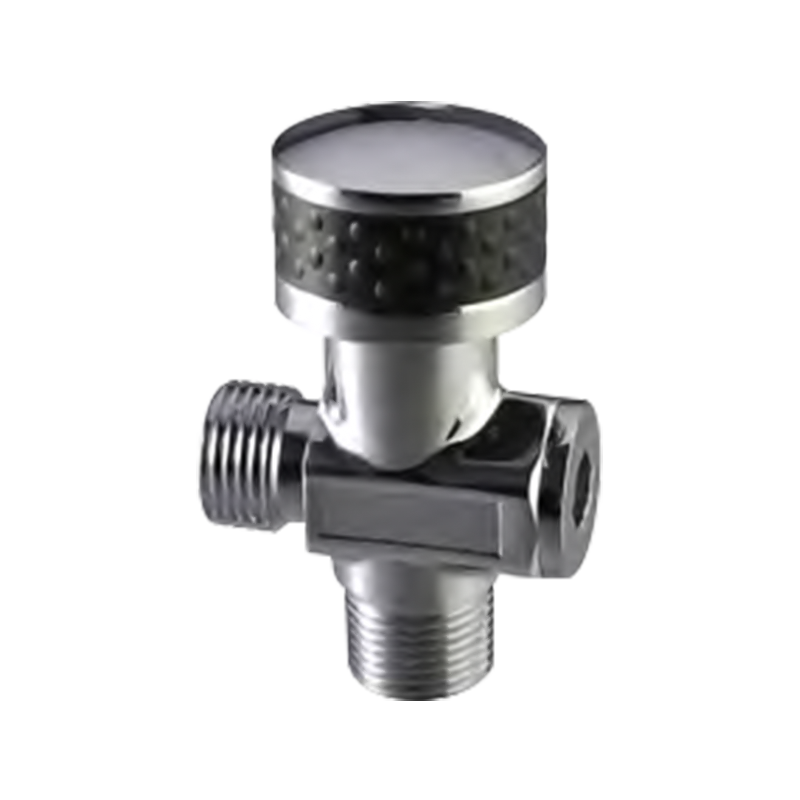
Gas pipeline triangle valve (for wall box)
Content
- 1 Understanding the Role of a Wall-Box Triangle Valve
- 2 Product Specification and Basic Configuration
- 3 Compact Design for Restricted Installation Spaces
- 4 Reliable Control of Gas Flow
- 5 Durability and Material Quality
- 6 Manufacturing Capabilities and Production Strength
- 7 Advanced Inspection and Quality Management
- 8 Advantages Over General-Purpose Valve Alternatives
- 9 Applications in Residential Gas Systems
- 10 Applications in Commercial and Utility Installations
- 11 Installation Considerations
- 12 Maintenance and Service Recommendations
- 13 OEM and ODM Supply Potential
- 14 Why Manufacturing Integration Matters to Buyers
- 15 Safety-Centered Product Selection
- 16 Frequently Asked Questions
- 16.1 What is the Gas Pipeline Triangle Valve used for?
- 16.2 What does DN15 mean?
- 16.3 Why is the valve designed in a triangular shape?
- 16.4 Can the valve be used in high-pressure gas systems?
- 16.5 Is the product suitable for residential use?
- 16.6 Can the valve be installed with corrugated metal hose?
- 16.7 What quality equipment does the manufacturer use?
- 16.8 Does the manufacturer support OEM and ODM orders?
- 16.9 What certifications or qualifications are associated with the manufacturer?
- 16.10 How should the valve be maintained?
- 16.11 What should be checked before ordering?
- 16.12 Can the valve replace every other gas shut-off valve?
- 17 Conclusion
- 18 References
- 19 Product: Gas pipeline triangle valve (for wall box)
Understanding the Role of a Wall-Box Triangle Valve
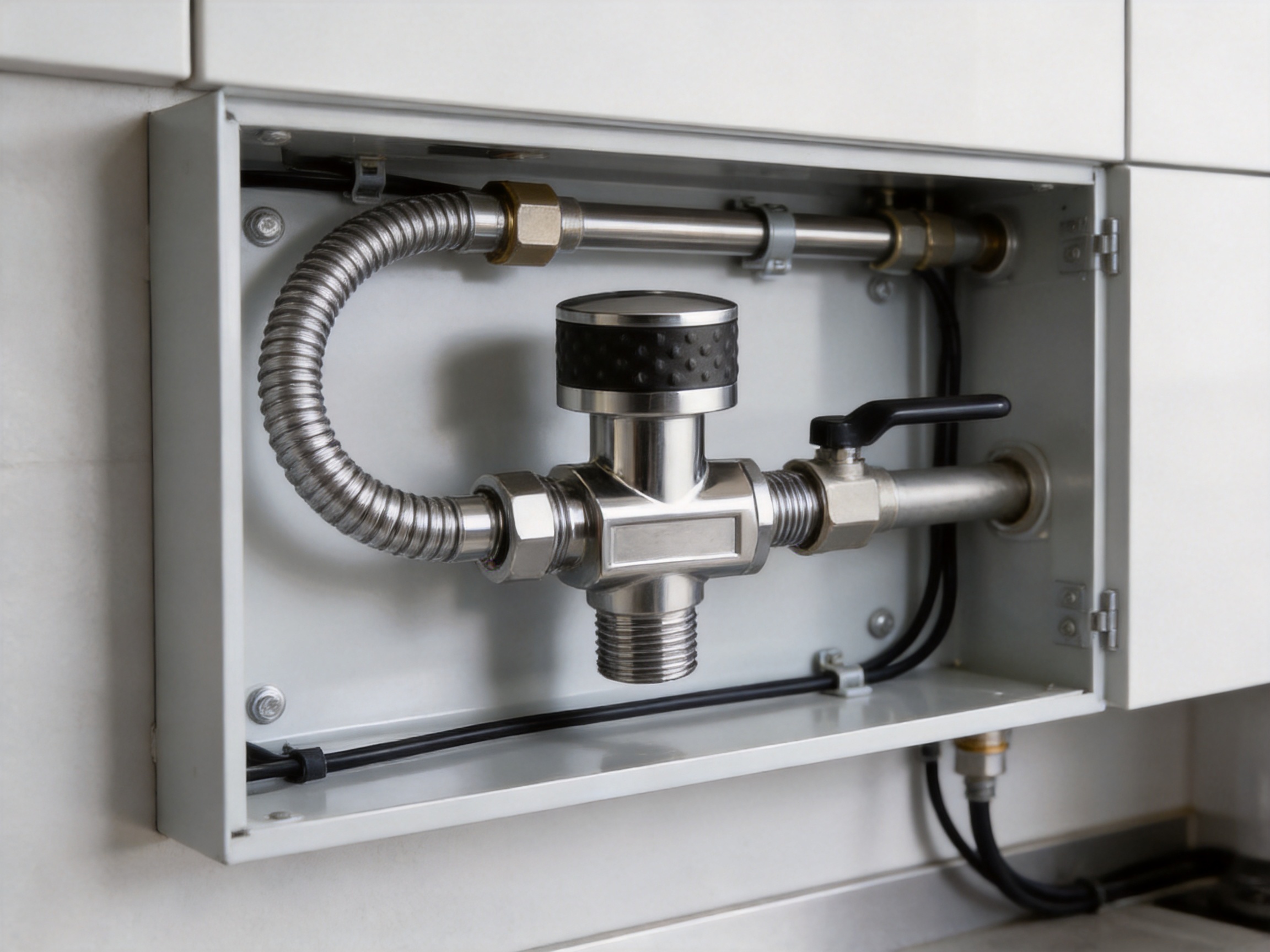
A wall box is commonly used to organize and protect gas pipeline connections at a convenient location. It can provide an orderly installation point for a gas inlet, valve, hose connection, meter-related assembly, or other components. Since the internal space of a wall box is restricted, a standard valve with a large or inconvenient body may cause installation difficulties. The geometry of the valve must allow the pipe, fitting, and operating section to coexist without unnecessary bending or interference.
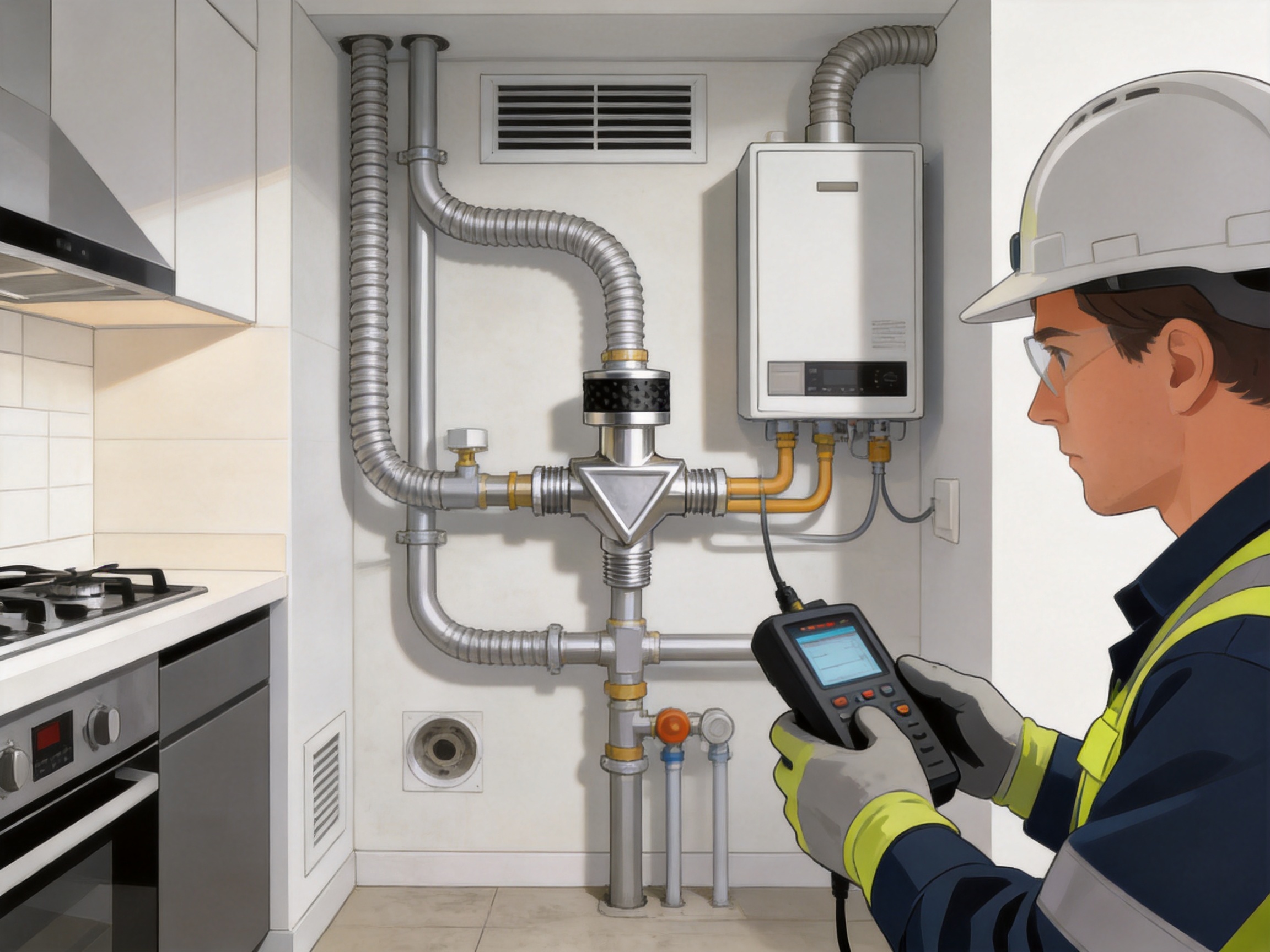
The Gas Pipeline Triangle Valve is designed with this practical requirement in mind. Its triangular form supports a relatively compact arrangement while maintaining an accessible operating position. When installed correctly, the valve can be used to open or isolate a gas supply without requiring access to a distant part of the pipeline. This is especially valuable during equipment replacement, maintenance, inspection, emergency shut-off, or renovation work.
In a household gas system, a clearly positioned shut-off valve can simplify routine operation. Users or authorized technicians can identify the control point more easily, while service personnel can isolate the relevant section before carrying out work. In a commercial environment, an organized valve layout can help support planned maintenance procedures and reduce the time required to locate the correct gas control point.
The valve does not operate independently of the rest of the pipeline. It should be selected, installed, inspected, and maintained as part of a complete gas system. Pipe dimensions, connection standards, pressure requirements, sealing materials, local regulations, and installation conditions must all be considered before use. Nevertheless, the valve’s design provides a focused solution for one of the most important functions in gas distribution: dependable control of gas flow.
Product Specification and Basic Configuration
| Item | Specification |
| Product name | Gas Pipeline Triangle Valve for Wall Box |
| Product number | ZLP-004 |
| Product category | Stainless steel corrugated hose fittings for gas transmission |
| Nominal size | DN15 |
| Primary application | Gas pipeline wall boxes and compact gas distribution assemblies |
| Core function | Gas flow shut-off and control |
| Typical application areas | Residential and commercial gas systems |
DN15 is a commonly used nominal size for compact gas supply applications, although the suitability of the valve must always be confirmed against the actual pipeline design and connection requirements. Nominal size alone does not determine whether a valve is appropriate. The installer should verify the operating pressure, gas type, connection arrangement, installation orientation, temperature range, and applicable approval requirements for the intended project.
The product is intended to work with gas pipeline assemblies that may include corrugated metal hose, rigid pipe, connection fittings, and wall-box components. The valve’s purpose is to create a controlled point in the system. It is not a substitute for correct pipe sizing, appropriate pressure regulation, leak testing, ventilation, or professional installation.
Compact Design for Restricted Installation Spaces
One of the main advantages of the Gas Pipeline Triangle Valve is its suitability for wall-box installation. Wall-mounted gas systems often require careful planning because the enclosure must accommodate multiple components while preserving access for inspection and operation. A compact valve can help reduce congestion inside the box and support a cleaner overall arrangement.
The triangular structure provides a distinctive alternative to a conventional linear valve body. It can help position the inlet, outlet, and operating area in a more practical relationship. This may reduce the need for excessive pipe offsets or sharp routing changes, depending on the specific installation. A more organized layout can make the pipeline easier to understand and may also support more efficient maintenance.
Compact design also has value beyond saving physical space. When a valve is positioned in a logical and accessible location, an authorized operator can identify the control point more quickly. This can be useful during scheduled servicing and may be particularly important when the gas supply must be isolated without delay. A valve that is hidden behind poorly arranged pipework can be difficult to use even if its internal mechanism is technically sound.
In comparison with larger or less specialized valve arrangements, a wall-box triangle valve can provide a more focused solution for compact domestic gas assemblies. The advantage is not simply a smaller overall footprint. It is the combination of shape, placement, access, and integration with the wall-box concept. These features help the valve support a neat and serviceable installation rather than functioning as an isolated component.
Space efficiency can also benefit system presentation. Gas installations in homes, apartments, kitchens, utility rooms, and commercial premises are often expected to be orderly and unobtrusive. A valve designed for an enclosure can help keep the control point protected and visually organized while retaining access for authorized personnel.
Reliable Control of Gas Flow
A gas valve must perform its basic function consistently: it must allow the system to be opened or isolated as intended and must maintain a dependable seal when closed. The Gas Pipeline Triangle Valve is designed to provide secure control of gas flow in household and commercial pipeline systems. Its sealing capability is an important part of the product’s value because a control valve must remain reliable throughout normal operation and maintenance activities.
Reliable flow control begins with suitable materials and accurate manufacturing. The valve body, internal components, sealing elements, and connection areas must be produced and assembled with attention to dimensional accuracy. If mating surfaces are inconsistent or internal components are improperly fitted, even a well-designed valve may fail to provide stable performance. For this reason, the manufacturing process is as important as the visible shape of the finished product.
The product is intended for high-pressure gas system applications, subject to the specific pressure rating and technical conditions established for the supplied model. The phrase “high-pressure” should not be interpreted as permission to use the valve outside its documented limits. Every project requires confirmation that the valve’s rated pressure, temperature, gas compatibility, and installation method are suitable for the actual service conditions.
When correctly selected and installed, the valve can help divide a larger gas system into manageable sections. A technician may be able to isolate a downstream appliance or branch without shutting down an entire building system, depending on the pipeline arrangement. This improves maintenance planning and can reduce disruption to other connected equipment.
Precise control also supports safer commissioning. During installation, authorized personnel can inspect connections and conduct required leak tests with the valve in the appropriate position. During service, the valve can provide a clear isolation point. These functions contribute to a more manageable gas system, although they must always be supported by professional procedures and local safety requirements.
Durability and Material Quality
Gas pipeline components are exposed to demanding service conditions. They may experience pressure changes, vibration, handling during installation, temperature variation, and long periods of continuous service. A valve used in this environment must be capable of maintaining its structural integrity and sealing performance over time. The Gas Pipeline Triangle Valve is constructed from high-quality materials to support secure operation and long-lasting durability.
The company’s broader manufacturing activities include metal hoses, natural gas pipelines, plumbing fittings, sanitary ware, valves, plastic products, and hardware. This product range provides experience across several related areas of energy equipment and pipeline manufacturing. Knowledge of metal forming, welding, fitting production, sealing, and inspection can support the development of valves that integrate effectively with other gas system components.
Material quality affects more than corrosion resistance. It also influences mechanical strength, dimensional stability, thread or connection accuracy, resistance to deformation, and the ability of internal parts to maintain a seal. A well-selected material must be compatible with the intended gas service and with the manufacturing processes used to create the component.
For stainless steel corrugated hose fittings and related gas pipeline products, manufacturing consistency is especially important. Corrugated components depend on controlled forming, while fittings and valves depend on accurate machining, forming, welding, assembly, and inspection. When these processes are managed within an integrated production environment, the manufacturer can coordinate the performance requirements of connected products more effectively.
Durability should also be understood as a combination of product design and production discipline. A strong body alone is not sufficient if the operating mechanism is poorly assembled or if the sealing areas are not inspected. The value of the valve lies in the complete product: its material selection, geometry, component quality, assembly accuracy, testing, packaging, and technical support.
Manufacturing Capabilities and Production Strength
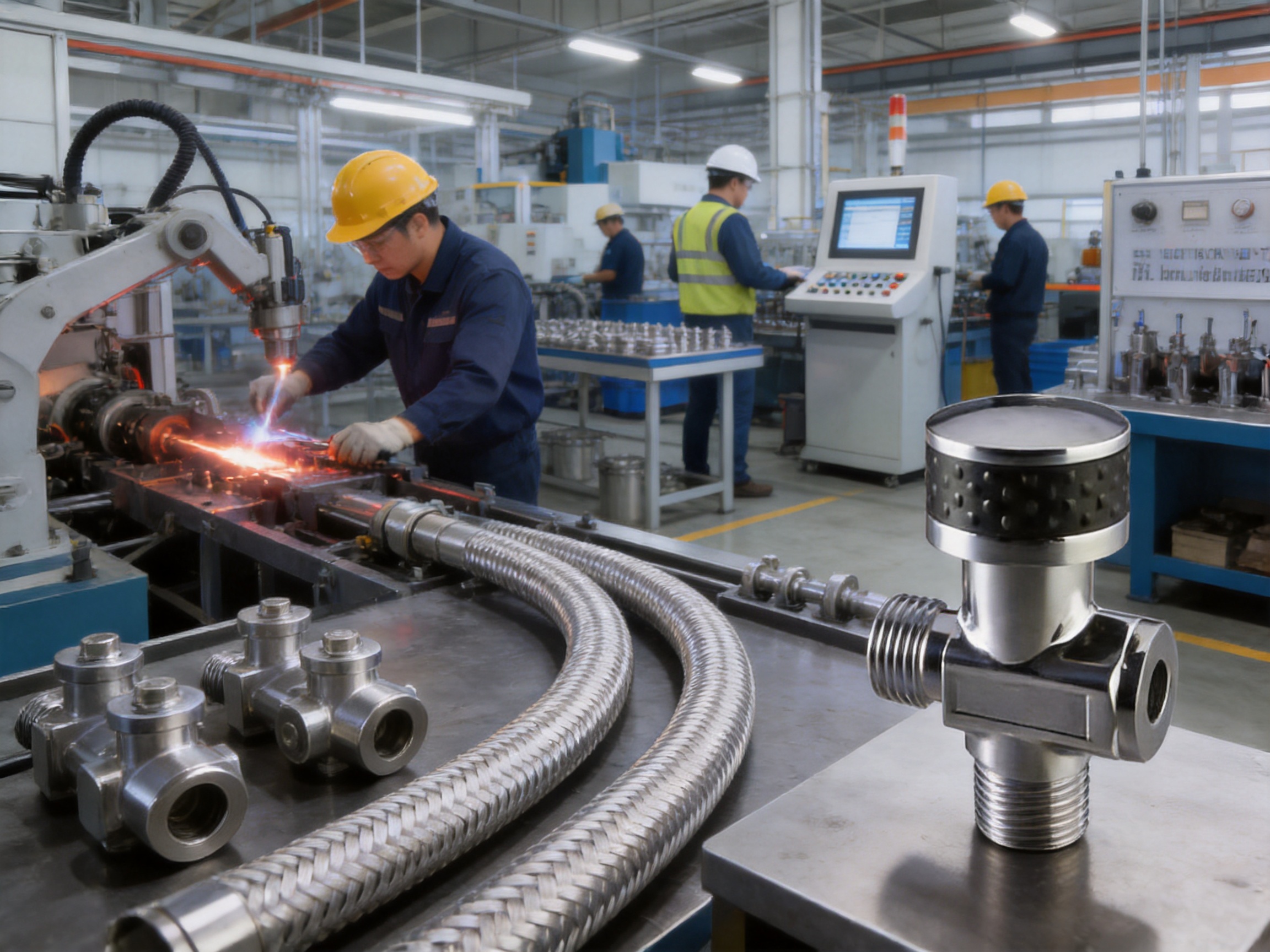
The manufacturer operates an energy equipment production facility in Yuyao, Ningbo, Zhejiang. The company covers approximately 40 acres and has a factory building of about 30,000 square meters. This scale provides space for multiple manufacturing departments, production lines, raw-material handling, assembly operations, quality inspection, warehousing, and product development.
The facility includes 30 welding and forming production lines. Welding and forming are important processes for metal hose and pipeline products because they influence the shape, strength, connection quality, and repeatability of the finished component. A substantial number of dedicated lines can support production flexibility and help the manufacturer respond to different product specifications and order volumes.
The company also operates two uninterrupted solid melting hydrogen furnace production lines. These furnace lines form part of the company’s metal-processing capability and demonstrate investment in controlled industrial production. Furnace processing can influence the quality and consistency of metal materials used in energy equipment, although the specific treatment applied to any individual valve should be confirmed through the relevant technical documentation and inspection records.
In-house or closely coordinated production capabilities can provide several advantages over fragmented sourcing. The manufacturer can develop a closer relationship between design requirements and production methods. It may also be able to control more stages of the manufacturing process, shorten communication paths, improve customization coordination, and respond more efficiently when customers require special specifications or packaging arrangements.
Integrated production is particularly useful for OEM and ODM customers. A buyer may require a specific body configuration, marking method, packaging format, connection arrangement, or product combination. A manufacturer with experience in valves, metal hoses, corrugated pipelines, and fittings can evaluate the entire assembly rather than considering one component in isolation.
Manufacturing scale also supports production planning. Different projects may have different delivery schedules, quantities, and inspection requirements. Multiple production lines can help the factory arrange orders according to process type and capacity. This does not eliminate the need for quality control, but it can strengthen the manufacturer’s ability to deliver consistent products for recurring customers.
Advanced Inspection and Quality Management
Gas pipeline products require dependable testing because a small defect may affect the safety or performance of the entire installation. The company uses testing equipment that includes metal material analysis direct-reading spectrometers and flow tightness testers. These instruments support important stages of quality assurance.
A direct-reading spectrometer can be used to analyze the composition of metal materials. Material analysis helps confirm whether the supplied metal corresponds to the required grade or composition range. This is valuable because material chemistry can influence strength, corrosion behavior, weldability, forming performance, and compatibility with the intended service environment.
Flow tightness testing is directly relevant to valves and gas pipeline components. The purpose of such testing is to identify leakage through the valve body, connections, seals, or operating mechanism under defined test conditions. A reliable test program can help separate conforming products from products that require adjustment, repair, or rejection before shipment.
Testing should be considered part of a complete quality system rather than a final visual check. Quality assurance may include incoming material inspection, dimensional checks, process monitoring, weld inspection, component verification, assembly control, pressure or tightness testing, appearance inspection, marking verification, and final documentation. Each step addresses a different potential source of failure.
The company strictly implements the ISO9000:2008 quality management system according to the provided company information. A quality management system establishes controlled procedures for production, inspection, documentation, corrective action, and continuous improvement. Its effectiveness depends on practical implementation, employee training, recordkeeping, and management review.
For customers purchasing gas valves, a controlled quality system offers confidence that the product is manufactured through repeatable processes rather than relying only on individual operator experience. It can also make communication easier when customers request inspection reports, production records, samples, or corrective action related to a specific order.
In addition to its quality management practices, the company holds a People’s Republic of China Special Equipment Manufacturing License for pressure pipelines and has EU CE certification testing reports, according to the supplied information. Customers should review the exact scope, validity, product coverage, and applicable standards of any certificate or license before using it as part of a project approval process.
Advantages Over General-Purpose Valve Alternatives
The Gas Pipeline Triangle Valve is not designed to compete only on the basis of being a valve. Its value comes from its specific application focus. A general-purpose valve may provide basic flow isolation, but it may not be optimized for installation inside a wall box. The triangular configuration is intended to address the space, access, and organization requirements of compact gas pipeline assemblies.
The first advantage is installation efficiency. A valve developed for a wall-box environment may reduce the need for improvised positioning or excessive pipe routing. In a restricted enclosure, even a small improvement in component arrangement can simplify assembly and help leave room for inspection and operation.
The second advantage is accessibility. The valve is designed to provide an identifiable control point within a wall-mounted gas system. This can be more convenient than placing a conventional valve in a difficult-to-reach area or behind unrelated pipework. Better access can reduce maintenance time and support clearer operating procedures.
The third advantage is system integration. Because the manufacturer produces a broad range of metal hoses, natural gas pipelines, fittings, valves, and hardware, customers can discuss related components with a supplier familiar with the wider application. This may simplify product matching, especially when a project requires a coordinated gas pipeline assembly rather than a single replacement part.
The fourth advantage is manufacturing depth. The company’s welding and forming lines, furnace production lines, material analysis equipment, and tightness-testing equipment indicate a production environment capable of supporting both metal processing and quality verification. These capabilities can be important to OEM and ODM buyers seeking repeatable supply rather than opportunistic sourcing.
The fifth advantage is serviceability. A compact and logically positioned valve can help technicians isolate a system section, inspect connected components, and restore service after maintenance. While serviceability depends on the complete installation, the wall-box-oriented design provides a practical foundation for a more organized gas control layout.
Finally, the product combines a compact form with the core requirements of gas pipeline control: secure sealing, durable construction, precise operation, and suitability for high-pressure gas applications within its specified limits. This combination makes it a focused option for projects where space efficiency and reliable control are equally important.
Applications in Residential Gas Systems
Residential gas systems often require compact components because valves and connections may be installed in kitchens, utility rooms, apartment service areas, or dedicated wall boxes. The Gas Pipeline Triangle Valve can serve as a control component in these systems when the DN15 size and other technical requirements match the project.
In a household installation, the valve may be positioned at a gas supply point associated with a wall box. It can provide an accessible means of isolating the gas line serving an appliance or branch circuit. This may be useful during appliance replacement, pipeline inspection, routine service, or emergency response by authorized personnel.
The compact design can support a clean installation in residential environments where appearance and space management matter. A wall box can protect the assembly and help organize the gas connection, while the valve provides a dedicated operating point. The final arrangement should maintain adequate ventilation, access, labeling, and clearance according to local rules.
Residential users should not independently disassemble, modify, or repair the valve. Gas equipment should be handled by qualified professionals, and the gas supply should be isolated using approved procedures. After installation or maintenance, the system should receive the required leak and functional checks before being returned to service.
Applications in Commercial and Utility Installations
Commercial premises may have more complex gas distribution networks than individual homes. Restaurants, food-service areas, workshops, institutional kitchens, and utility rooms can contain multiple gas-consuming appliances or branches. A clearly arranged wall-box valve can help divide the system into controllable sections, depending on the project design.
In these environments, maintenance efficiency is especially important. A business may need to service one appliance without interrupting gas service to every other area. Local isolation points can support this objective when they are correctly placed and labeled. The triangle valve can contribute to this type of arrangement by providing a compact control solution for a branch or connection point.
Commercial systems may also have higher usage frequency, more frequent maintenance, and greater demands on documentation. Buyers should therefore evaluate the valve’s pressure rating, material compatibility, operating cycle expectations, connection standard, and certification requirements before approval. The manufacturer can support technical evaluation by providing product information and discussing application conditions.
For contractors and distributors, the product may be useful as part of a broader range of gas pipeline components. The manufacturer’s related products include metal hoses, natural gas pipelines, plumbing fittings, sanitary ware, valves, plastic products, and hardware. A broad product portfolio can help distributors build a more complete offering for gas and water installation markets.
Installation Considerations
Correct installation is essential to achieving the intended performance of any gas valve. Before installation, the technician should confirm the product designation, DN15 size, connection type, flow direction if applicable, pressure requirements, gas compatibility, and available space inside the wall box. The valve should not be forced into a position that creates stress on the body or connected pipework.
Pipe alignment should be checked before tightening. Excessive misalignment can place mechanical loads on the valve and may damage threads, seals, or fittings. The connected pipe or hose should be supported independently where necessary so that the valve does not carry the weight of the surrounding assembly.
Suitable sealing materials and installation tools should be selected according to the connection design and applicable gas installation standards. Over-tightening can damage threaded parts or deform sealing surfaces, while insufficient tightening can lead to leakage. The installer should follow the relevant technical instructions rather than relying on force or visual judgment alone.
The valve should remain accessible after the wall box is closed or covered. Its operating position should not be blocked by insulation, furniture, appliances, decorative panels, or unrelated components. Clear access supports maintenance and allows authorized personnel to identify and operate the valve when required.
After installation, the system must be tested according to applicable regulations and professional procedures. This may include a pressure test, flow tightness test, connection inspection, and operational verification. No gas pipeline should be placed into service until the responsible qualified technician confirms that it is safe and compliant.
Maintenance and Service Recommendations
Although the valve is designed for durability, periodic inspection remains important. Maintenance personnel should check for visible corrosion, mechanical damage, unusual movement, deterioration of surrounding seals, signs of leakage, and obstruction of the operating area. Any abnormal condition should be assessed by a qualified gas technician.
The valve should be operated only in the manner intended by its design. Excessive force, impact tools, unauthorized extensions, or repeated rough operation may damage the mechanism. If the valve becomes difficult to turn or does not reach its expected position, it should not be forced. The gas supply should be managed using the applicable emergency and maintenance procedures.
The surrounding pipeline should also be inspected. A reliable valve cannot compensate for a damaged hose, poorly supported pipe, corroded fitting, or defective appliance connection. Maintenance should therefore consider the valve as part of the complete gas delivery system.
Where the installation serves a commercial or institutional facility, maintenance records should identify the valve location, service date, inspection result, and any corrective action. Clear records can help facility managers plan future work and demonstrate that the gas system is being maintained responsibly.
OEM and ODM Supply Potential
Customers in the gas equipment, plumbing, construction, and distribution industries may require more than a standard product. They may need specific packaging, private labeling, product markings, color identification, documentation, or coordinated component supply. The manufacturer’s industry-and-trade model and broad energy equipment portfolio can support discussions regarding OEM and ODM production.
OEM cooperation generally requires accurate technical communication. Buyers should provide the intended gas type, nominal size, pressure range, temperature conditions, connection requirements, installation environment, expected quantity, packaging needs, and inspection expectations. The manufacturer can then evaluate whether the requested design is suitable for existing production processes or requires engineering development.
ODM cooperation may involve the development of a customized valve or a complete gas pipeline assembly. The company’s research, development, manufacturing, and processing capabilities provide a foundation for this type of work. Its experience with metal hoses, gas pipelines, fittings, valves, and hardware may help customers coordinate compatible components within a single project.
Customization should never compromise safety-critical performance. Any change to body geometry, material, sealing structure, connection type, or operating mechanism must be evaluated through appropriate design review and testing. A custom product should have clear technical documentation and traceable approval before entering regular production.
For overseas buyers, communication regarding certification is especially important. A CE testing report, national license, or quality management certificate may support a project, but the buyer must confirm whether the document applies to the exact product, market, model, and intended use. Local authorities, gas utilities, and project engineers may impose additional requirements.
Why Manufacturing Integration Matters to Buyers
Purchasing a valve from an integrated manufacturer can provide advantages in coordination and accountability. If a buyer sources the valve, hose, fitting, and related accessories from unrelated suppliers, differences in materials, dimensions, sealing methods, and documentation may create additional technical work. A manufacturer with experience across these product categories can help reduce some of these coordination challenges.
Integrated manufacturing may also improve feedback between production and engineering. When a recurring issue is identified in an assembly, the supplier can examine the relationship between components rather than treating each item as an isolated product. This can support continuous improvement in design, manufacturing, and packaging.
Another advantage is supply-chain efficiency. A customer may be able to consolidate orders, inspections, and shipping arrangements through one experienced supplier. This can simplify purchasing administration and may improve consistency across repeated projects. The actual benefit depends on order quantity, product scope, delivery requirements, and commercial terms.
For distributors, a broad product range can make it easier to offer complementary items. A distributor handling gas installation products may be able to source valves, corrugated hoses, pipeline fittings, and related hardware through the same manufacturing relationship. This may help build a more coherent catalog for contractors and project customers.
Manufacturing integration does not remove the buyer’s responsibility to verify specifications. Professional purchasers should still review drawings, samples, test reports, material information, packaging, marking, and inspection procedures before placing volume orders. Strong supplier cooperation works best when both parties maintain clear technical and quality expectations.
Safety-Centered Product Selection
Gas equipment should be selected according to application requirements rather than appearance alone. Before choosing the Gas Pipeline Triangle Valve, the buyer should identify the gas medium, operating pressure, temperature range, nominal pipe size, connection method, installation location, expected operating frequency, and required certifications.
The DN15 designation indicates the nominal size, but it does not by itself confirm every dimension or connection detail. Buyers should request the relevant drawing or specification sheet and compare it with the project’s pipework. The wall-box dimensions should also be checked to ensure that the valve can be installed without bending stress or restricted operation.
The valve should be purchased through an authorized or reliable supply channel so that the product number, manufacturing information, inspection records, and packaging can be verified. Counterfeit or incorrectly substituted components may not have the same material quality, dimensional accuracy, or testing history.
Safety also includes communication. Product documentation should explain the intended application, installation limitations, operating method, inspection expectations, and storage conditions. For commercial projects, the supplier and installer should agree on the required documents before production and shipment.
A safety-centered approach recognizes that the valve is one part of a complete system. Proper pipe design, ventilation, pressure control, appliance compatibility, installation workmanship, commissioning, and regular inspection are equally important. The triangle valve contributes to system safety through reliable isolation and control, but it must be used within a professionally designed and maintained installation.
Frequently Asked Questions
What is the Gas Pipeline Triangle Valve used for?
The valve is used to control or isolate gas flow in a pipeline system, particularly where the gas connection is arranged inside a wall box. It provides an accessible control point for residential and commercial gas installations.
What does DN15 mean?
DN15 is the nominal size designation of the valve. It is commonly associated with compact gas pipeline applications, but the actual connection dimensions and compatibility should be confirmed through the product drawing and project specifications.
Why is the valve designed in a triangular shape?
The triangular design is intended to support compact and space-efficient installation in wall-mounted gas boxes. It can help organize the inlet, outlet, and operating area within a restricted enclosure while maintaining practical access.
Can the valve be used in high-pressure gas systems?
The valve is designed to effectively handle high-pressure gas applications within its specified technical limits. The exact pressure rating must be verified before use, and the valve must not be operated beyond the pressure, temperature, or gas compatibility requirements stated in the applicable documentation.
Is the product suitable for residential use?
Yes. The product is intended for household gas pipeline systems as well as commercial applications. Residential installation must be performed and tested by qualified personnel in accordance with local gas safety regulations.
Can the valve be installed with corrugated metal hose?
The product is categorized among stainless steel corrugated hose fittings for gas transmission and may be used in a compatible gas pipeline assembly. The exact hose, fitting, connection, and sealing arrangement must be confirmed before installation.
What quality equipment does the manufacturer use?
The company has metal material analysis direct-reading spectrometers and flow tightness testers, in addition to welding and forming production lines. These capabilities support material verification, production control, and leakage-related quality inspection.
Does the manufacturer support OEM and ODM orders?
The company describes itself as a China OEM/ODM manufacturer of metal hoses, corrugated hoses, pipe fittings, and related products. Customers can discuss customized product specifications, markings, packaging, and coordinated component supply with the technical and sales teams.
What certifications or qualifications are associated with the manufacturer?
According to the provided information, the company implements the ISO9000:2008 quality management system, holds a People’s Republic of China Special Equipment Manufacturing License for pressure pipelines, and has EU CE certification testing reports. Buyers should verify the scope and validity of each document for the exact product and market.
How should the valve be maintained?
Qualified personnel should periodically inspect the valve and surrounding pipeline for leakage, corrosion, damage, restricted access, and abnormal operation. The valve should not be forced, modified, or disassembled by untrained users.
What should be checked before ordering?
Buyers should confirm the DN15 size, connection type, operating pressure, gas medium, temperature range, wall-box dimensions, certification needs, quantity, packaging, and inspection documentation. A product drawing or sample may be requested before volume production.
Can the valve replace every other gas shut-off valve?
No. It is designed for a specific wall-box-oriented application and must be selected according to the complete system design. A qualified engineer or installer should confirm whether it is suitable for the intended pipeline, pressure, connection, and regulatory requirements.
Conclusion
The Gas Pipeline Triangle Valve for Wall Box is a focused gas pipeline component designed to provide reliable flow control in compact wall-mounted installations. Its ZLP-004 product designation and DN15 specification make it suitable for a range of residential and commercial gas pipeline assemblies when the technical requirements are correctly matched.
Its key advantages include a space-efficient triangular structure, practical wall-box integration, accessible operation, dependable sealing, durable construction, and suitability for gas flow isolation and control. Compared with general-purpose valve arrangements, it is designed with the realities of restricted installation spaces and organized gas distribution points in mind.
The product is supported by a manufacturer with broad experience in energy equipment, metal hoses, natural gas pipelines, plumbing fittings, valves, and hardware. The company’s large production facility, 30 welding and forming lines, two uninterrupted solid melting hydrogen furnace production lines, material analysis equipment, flow tightness testers, quality management system, and stated licensing and certification capabilities demonstrate a substantial manufacturing foundation.
For contractors, distributors, project developers, and OEM or ODM customers, the valve offers an opportunity to combine compact design with coordinated manufacturing support. The correct product selection, professional installation, appropriate testing, and regular maintenance remain essential. When these conditions are followed, the Gas Pipeline Triangle Valve can serve as a dependable control element in safe, orderly, and serviceable gas pipeline systems.
References
1. Product information for Gas Pipeline Triangle Valve for Wall Box, Product No. ZLP-004, DN15.
2. Manufacturer-provided company profile and production capability information.
3. General principles of gas pipeline valve selection, installation, inspection, and maintenance.
4. ISO 9000 family quality management principles and process-control practices.
5. General technical guidance for pressure pipeline components, gas tightness testing, and material verification.
6. Manufacturer-provided information regarding pressure pipeline manufacturing licensing and EU CE certification testing reports.