 English
 中文简体
 Español
 عربى


Reliable pipe support is an essential part of every safe and durable gas distribution system. Although clamps are relatively small components compared with pipes, valves, regulators, and hose assemblies, their performance directly influences the stability, service life, and safety of the complete installation. A pipe that is inadequately supported may move under pressure fluctuations, vibration, thermal expansion, accidental impact, or changing environmental conditions. Over time, this movement can place stress on joints and fittings, contribute to misalignment, and increase the possibility of leaks or disconnections.
The Plastic Pipe Clamp is designed to provide stable, practical, and corrosion-resistant support for pipes used in gas pipeline systems. It holds the pipe securely while offering a lightweight alternative to conventional metal clamps. The clamp is suitable for applications in residential, commercial, and industrial gas distribution environments where reliable positioning and protection are required.
Manufactured for efficient installation and long-term use, this clamp combines a durable plastic construction with a tight-gripping design. Its resistance to corrosion and weather exposure makes it particularly useful in areas where moisture, outdoor conditions, or chemically active environments could affect ordinary metal support products. When selected and installed correctly, it helps maintain pipe alignment, reduces unwanted movement, and supports the overall integrity of a gas pipeline system.
This article explains the construction, operating advantages, installation considerations, application range, quality controls, and manufacturing strengths associated with the Plastic Pipe Clamp. It also examines why a purpose-designed plastic support can be a valuable choice compared with less specialized alternatives.
Content
- 1 Product Overview
- 2 Why Pipe Support Matters in Gas Systems
- 3 Key Advantages of the Plastic Pipe Clamp
- 4 Advantages Compared with Conventional Metal Clamps
- 5 Application Areas
- 6 Manufacturing Strengths Behind the Product
- 7 OEM and ODM Production Capabilities
- 8 Installation Guidance
- 9 Selection Considerations for Buyers and Engineers
- 10 Maintenance and Service Life
- 11 Quality, Safety, and Supply Reliability
- 12 How the Product Supports a More Efficient Pipeline Design
- 13 Frequently Asked Questions
- 13.1 What is the primary purpose of the Plastic Pipe Clamp?
- 13.2 Can the clamp be used outdoors?
- 13.3 Is the clamp suitable for all pipe diameters?
- 13.4 Can it support a flexible gas hose?
- 13.5 Does a plastic clamp prevent gas leaks?
- 13.6 Is plastic better than metal for every installation?
- 13.7 What should be checked before ordering?
- 13.8 Can the manufacturer provide customized products?
- 13.9 What manufacturing capabilities support this product?
- 13.10 What quality information should international customers request?
- 14 Why Choose This Manufacturing Partner
- 15 Conclusion
- 16 References
- 17 Product: Plastic Pipe Clamp
Product Overview
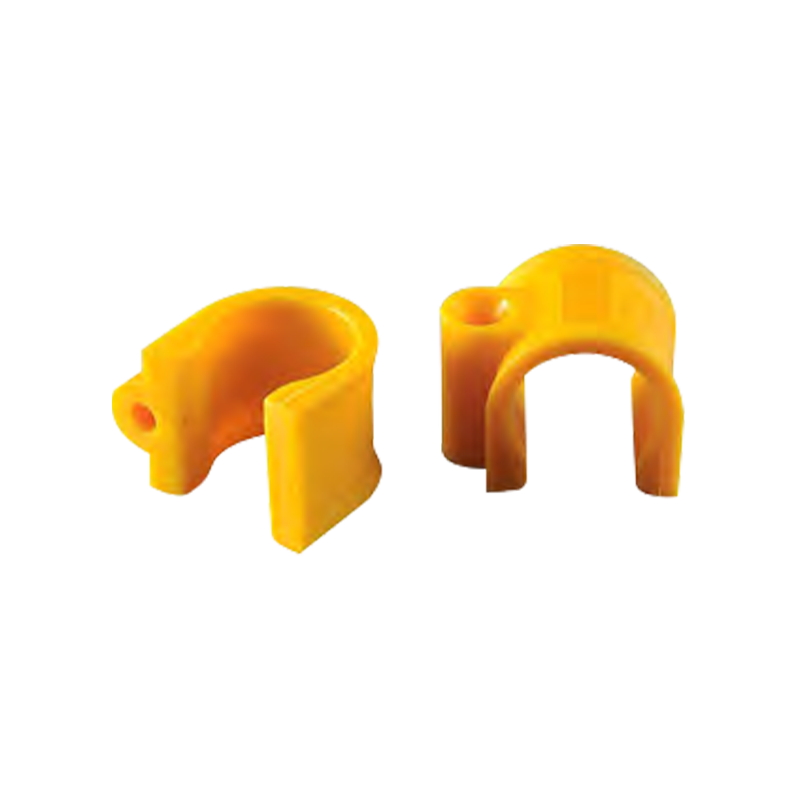
The Plastic Pipe Clamp is a pipe-support accessory intended to fasten and stabilize pipes in gas transportation and distribution installations. Its primary function is mechanical rather than fluid-control related: it does not regulate gas flow or create the pressure boundary of the pipeline. Instead, it maintains the position of the pipe and helps protect the connected system from unnecessary mechanical stress.
The clamp is manufactured from durable plastic materials selected for practical service in demanding environments. Unlike ordinary unprotected steel supports, plastic does not rust when exposed to water, condensation, or humid air. This property is important for outdoor pipework, utility rooms, plant areas, service corridors, and other locations where support hardware may be exposed to moisture over extended periods.
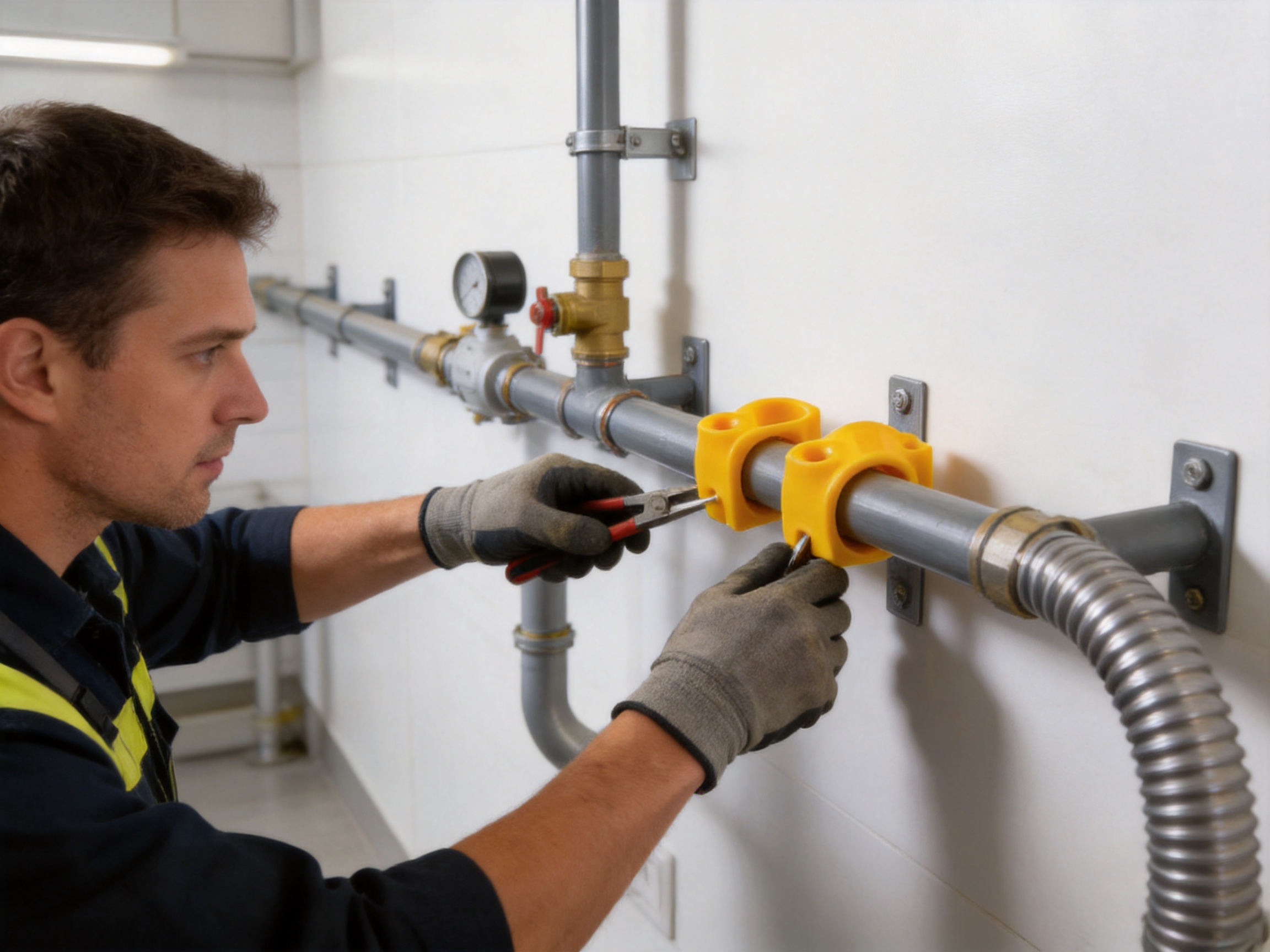
The component is designed for easy placement around the pipe. Once the pipe is positioned, the clamp can be fastened to a suitable structural surface or support point. The gripping action helps prevent lateral movement while maintaining a compact installation profile. This design is useful where numerous supports must be installed quickly during pipeline construction, maintenance, or system expansion.
The available product information identifies the clamp as model ZLP-021, with the product specification listed as “4-6 points.” Because this designation may relate to a particular mounting or fixing configuration, installers should confirm the precise interpretation with the project specification, supplier documentation, or technical drawing before ordering large quantities. Correct identification of pipe diameter, mounting method, load requirement, and installation environment remains essential for safe use.
| Item | Information |
| Product name | Plastic Pipe Clamp |
| Model | ZLP-021 |
| Listed specification | 4-6 points |
| Primary function | Pipe positioning, restraint, and support |
| Typical application | Gas pipeline and utility pipe systems |
| Construction | Durable plastic material |
| Main performance benefits | Corrosion resistance, weather resistance, light weight, and easy installation |
Plastic Pipe Clamp
Why Pipe Support Matters in Gas Systems
Gas pipelines are designed to transport gas safely under controlled pressure. However, the pipe itself is only one part of the complete system. Every connection, fitting, valve, hose, bracket, clamp, and support contributes to the reliability of the installation. When a pipe is not adequately secured, external forces can be transferred to threaded connections, compression fittings, flanges, flexible hoses, and appliance connectors.
Pressure changes are one source of movement. A gas system may experience changes when equipment starts or stops, when demand changes throughout the day, or when regulators adjust downstream pressure. These changes can create small but repeated mechanical reactions in the pipe. Even when each movement is minor, repeated displacement may loosen connections or accelerate wear if the pipe is not properly supported.
Temperature is another important consideration. Pipe materials expand when heated and contract when cooled. Outdoor gas lines may be exposed to significant daily and seasonal temperature variation. Indoor systems can also experience temperature changes near boilers, process equipment, kitchens, plant rooms, and utility areas. A correctly arranged support system restrains unwanted movement while allowing the pipeline design to accommodate legitimate thermal expansion.
Vibration may result from compressors, pumps, fans, burners, machinery, vehicle movement, or nearby industrial equipment. Flexible metal hoses and corrugated hose assemblies are often used to manage vibration or compensate for movement, but these assemblies still need appropriate support and alignment. A stable clamp installed in the correct location can reduce unnecessary vibration transfer and help keep the complete system in its intended position.
External impacts and accidental contact are also possible. Pipes installed in service areas, workshops, garages, or commercial kitchens may be touched, struck, or used unintentionally as handholds. A secure clamp helps reduce the chance that a small external force will displace the pipe or damage a connection.
For these reasons, pipe clamps should not be viewed as simple accessories with an insignificant role. They are part of the mechanical support strategy that protects the pipeline and helps preserve the performance of the fittings connected to it.
Key Advantages of the Plastic Pipe Clamp
Corrosion Resistance
One of the most important advantages of a plastic clamp is its natural resistance to rust and corrosion. Metal clamps can deteriorate when protective coatings are damaged or when they are continuously exposed to moisture, salts, condensation, cleaning chemicals, or polluted air. Corrosion may reduce the strength of the support, create sharp edges, stain nearby surfaces, and complicate future maintenance.
The Plastic Pipe Clamp avoids the rusting mechanism associated with ordinary carbon steel. This makes it a practical option for damp service areas, exterior pipe routes, coastal locations, utility rooms, and installations where regular maintenance access is limited. Corrosion resistance also contributes to a cleaner appearance over the operating life of the installation.
Protection of Pipe Surfaces
A properly designed plastic contact surface can reduce the risk of scratching, denting, or abrading the exterior of the pipe. This is particularly valuable when the pipe has a protective coating, a smooth polymer surface, or a finish that should remain intact. A rough or corroded metal clamp may gradually damage a pipe through repeated vibration or thermal movement. A durable plastic support can provide a more forgiving interface.
The clamp should nevertheless be installed without excessive tightening. A support must hold the pipe firmly, but it should not deform the pipe or create a concentrated load. The correct installation method depends on the pipe material, diameter, wall thickness, operating temperature, and system design.
Lightweight Handling
Plastic components are generally lighter than equivalent metal supports. This simplifies transportation, storage, and handling at the installation site. Workers can position a large number of clamps efficiently, especially when pipe routes extend across ceilings, walls, equipment rooms, or industrial structures.
Lower component weight can also reduce the dead load added to secondary support structures. While the pipe, gas, insulation, and other equipment still need to be included in structural calculations, the lightweight nature of the clamp can support more efficient installation planning.
Fast Installation
The Plastic Pipe Clamp is intended for convenient installation. A straightforward design reduces the time required to position the component and secure the pipe. Faster installation can be valuable during new construction, emergency repairs, facility upgrades, and projects where access time is restricted.
Easy installation does not mean that technical requirements can be ignored. The installer must still verify the fixing surface, fastener suitability, pipe spacing, support intervals, clearance from heat sources, and compatibility with local gas installation regulations. Convenience is most valuable when it is combined with disciplined installation practice.
Weather Resistance
Outdoor pipe systems face ultraviolet exposure, rain, humidity, temperature cycling, dust, and wind-driven contaminants. The product is described as weather resistant, making it suitable for many external support applications. This characteristic helps maintain practical service performance in environments where a conventional indoor-only support might deteriorate more quickly.
Outdoor suitability should always be evaluated together with the specific plastic formulation and the actual climate. Extremely high temperatures, severe ultraviolet exposure, chemical contact, or unusually heavy mechanical loads may require additional technical confirmation. Even so, the weather-resistant design provides an important advantage for ordinary external gas pipeline support.
Stable Grip and Reduced Movement
The main purpose of the clamp is to keep the pipe in place. By limiting unwanted movement, it helps preserve the alignment of the pipeline and reduces stress on connected components. Stable positioning is especially important near changes in direction, valves, regulators, appliance connections, flexible hoses, and transitions between different pipe materials.
A secure grip also supports a more orderly installation. Properly supported pipes are less likely to sag, rub against adjacent structures, or shift away from their designed route. This improves accessibility for inspection and maintenance while contributing to a professional finished appearance.
Electrical Isolation Potential
Plastic is generally nonconductive compared with common metallic support materials. Depending on the specific system design, this may help reduce direct electrical contact between the pipe and the support. Such isolation can be beneficial where dissimilar metals, stray currents, or galvanic corrosion need to be considered.
However, electrical bonding and earthing requirements are system-specific. A plastic clamp must not be used to replace a required bonding conductor or an approved earthing arrangement. Engineers and installers should follow the applicable electrical and gas safety standards for the project.
Advantages Compared with Conventional Metal Clamps
Metal clamps remain useful in many heavy-duty applications, but they are not automatically the best option for every pipeline. The Plastic Pipe Clamp offers several practical advantages over basic uncoated or poorly protected metal supports.
| Performance consideration | Plastic Pipe Clamp | Basic metal clamp |
| Resistance to rust | Does not rust like carbon steel | May corrode when coating or plating is damaged |
| Weight | Lightweight and easy to handle | Usually heavier |
| Pipe contact | Can provide a non-abrasive plastic interface | May scratch or abrade pipe surfaces if rough or corroded |
| Moisture exposure | Suitable for many damp environments | Requires appropriate material or protective coating |
| Installation efficiency | Designed for quick placement and fastening | May require additional liners, coatings, or corrosion protection |
| Appearance over time | Maintains a clean, non-rusting surface | May show rust, staining, or coating deterioration |
| Electrical behavior | Generally nonconductive | Conductive and may require consideration of galvanic contact |
The comparison is not intended to suggest that plastic supports should replace every metal support. Metal may be required for high-temperature systems, very large pipes, severe structural loads, or installations governed by specific fire and mechanical requirements. The strength of the Plastic Pipe Clamp lies in providing a corrosion-resistant, lightweight, easy-to-install solution for appropriate gas pipe support applications.
Compared with low-quality plastic products, a purpose-designed clamp also offers a more dependable form and fit. Generic plastic clips may become brittle, loosen under vibration, or lack the dimensional consistency required for professional pipework. Product quality depends on material selection, mold accuracy, process control, inspection, and the manufacturer’s understanding of energy equipment applications.
Application Areas
Residential Gas Pipelines
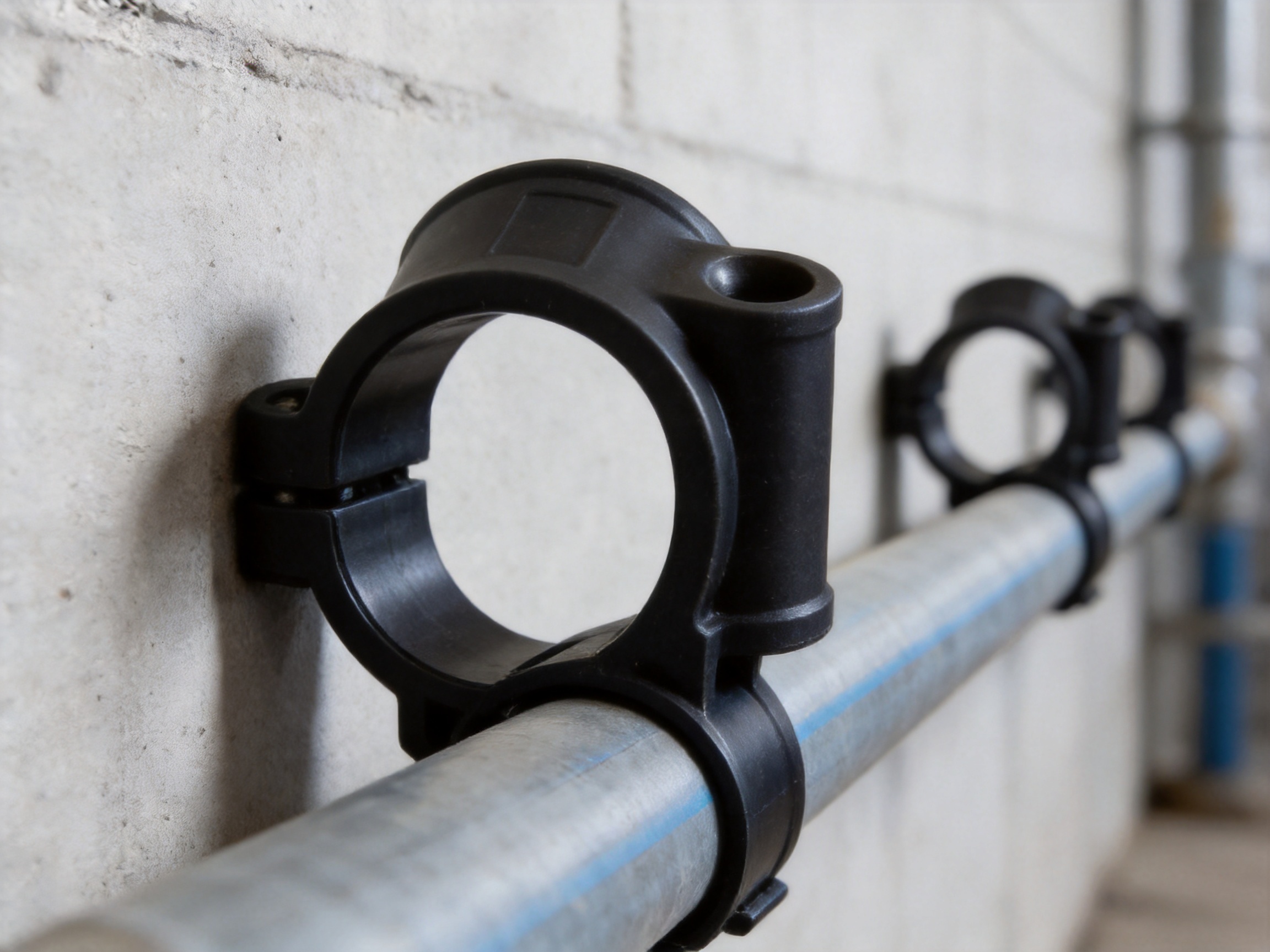
Residential gas systems require neat, stable, and durable pipe routing. Clamps can be used to support pipes along walls, service spaces, utility rooms, and other approved locations. Their corrosion resistance is useful in kitchens, laundry areas, garages, and outdoor meter connections where humidity or cleaning products may be present.
Residential installations often benefit from a compact support that does not create unnecessary visual bulk. The lightweight design can also simplify work in existing buildings, where installers must route pipework around walls, cabinets, appliances, and structural elements.
Commercial Buildings
Restaurants, hotels, shopping facilities, hospitals, schools, and office buildings may contain extensive gas networks serving kitchens, heating equipment, laboratories, or maintenance areas. These systems require orderly routing and regular access for inspection. Plastic clamps can support sections of pipe while helping maintain a clean installation in locations where corrosion control and appearance are important.
Commercial projects frequently involve tight construction schedules. A clamp that can be placed and fastened efficiently may help reduce installation labor while supporting consistent workmanship across a large number of pipe runs.
Industrial Gas Distribution
Industrial facilities use gas for heating, process operations, metalworking, food production, laboratory work, and other applications. Gas pipe routes may pass through production areas, utility corridors, exterior racks, and equipment zones. The clamp can be considered for suitable sections of these systems where the environmental conditions, pipe loads, and temperature remain within the product’s design limits.
Industrial users should evaluate chemical exposure carefully. Solvents, oils, acids, alkalis, cleaning agents, and process vapors can affect certain plastics. A technical review should confirm that the material is appropriate for the actual operating environment.
Outdoor Service Lines
Outdoor gas pipes are exposed to weather and temperature changes. A weather-resistant plastic support can help maintain pipe position without introducing a rust source. This is useful for service lines, external building routes, utility installations, and equipment connections located in open or semi-open areas.
External installations should include suitable protection against impact, unauthorized interference, excessive sunlight where necessary, and water accumulation. The clamp is one part of the support system and should be combined with an appropriate pipe layout and approved fastening method.
Systems Using Corrugated Metal Hoses
Gas installations may include corrugated metal hoses or flexible metal hose assemblies near appliances, equipment, regulators, and movement-sensitive connections. The Plastic Pipe Clamp is not a substitute for a hose fitting or a pressure-carrying hose. Instead, it may support the rigid pipe sections connected to or positioned near such assemblies.
Flexible hoses must be installed according to their own requirements. They should not be twisted, sharply bent, stretched, or used as a structural support. Properly placed clamps can help keep adjacent rigid pipework stable, allowing the flexible section to perform its intended function without carrying unnecessary mechanical loads.
Manufacturing Strengths Behind the Product
The quality of a pipe clamp depends on much more than the appearance of the finished piece. Consistent dimensions, material stability, controlled forming, reliable finishing, and inspection are all important. A clamp that varies in size or develops defects during production may not provide uniform grip or installation performance.
Zhejiang Zhenlong Energy Equipment Technology Co., Ltd. operates as an energy equipment manufacturer integrating research and development, manufacturing, processing, and trade. Its product portfolio includes metal hoses, natural gas pipelines, plumbing fittings, sanitary ware, valves, plastic products, and hardware. This broad product scope is relevant because pipe support components are used within larger fluid and energy systems rather than as isolated consumer items.
The company’s experience across metal and plastic products supports a more complete understanding of pipeline requirements. A manufacturer that produces hoses, fittings, valves, and pipe-related accessories can evaluate how individual components interact in a real installation. This system-oriented perspective can help improve product selection, compatibility, packaging, and technical communication.
Integrated Research and Development
Research and development contribute to the design of practical clamps that balance strength, flexibility, dimensional accuracy, and ease of installation. The design must hold the pipe securely without creating excessive stress. It must also accommodate the realities of production, assembly, transportation, and field use.
An integrated development process can include product structure review, material assessment, mold design, trial production, dimensional inspection, installation testing, and feedback from customers or installers. These activities help transform a basic concept into a repeatable industrial product.
For plastic components, mold design is especially important. The mold determines the consistency of the clamp’s shape, contact surfaces, fastening features, and wall thickness. A well-controlled mold can reduce warpage, uneven filling, sharp edges, and dimensional variation. Stable molding conditions further improve batch-to-batch consistency.
Large-Scale Production Facilities
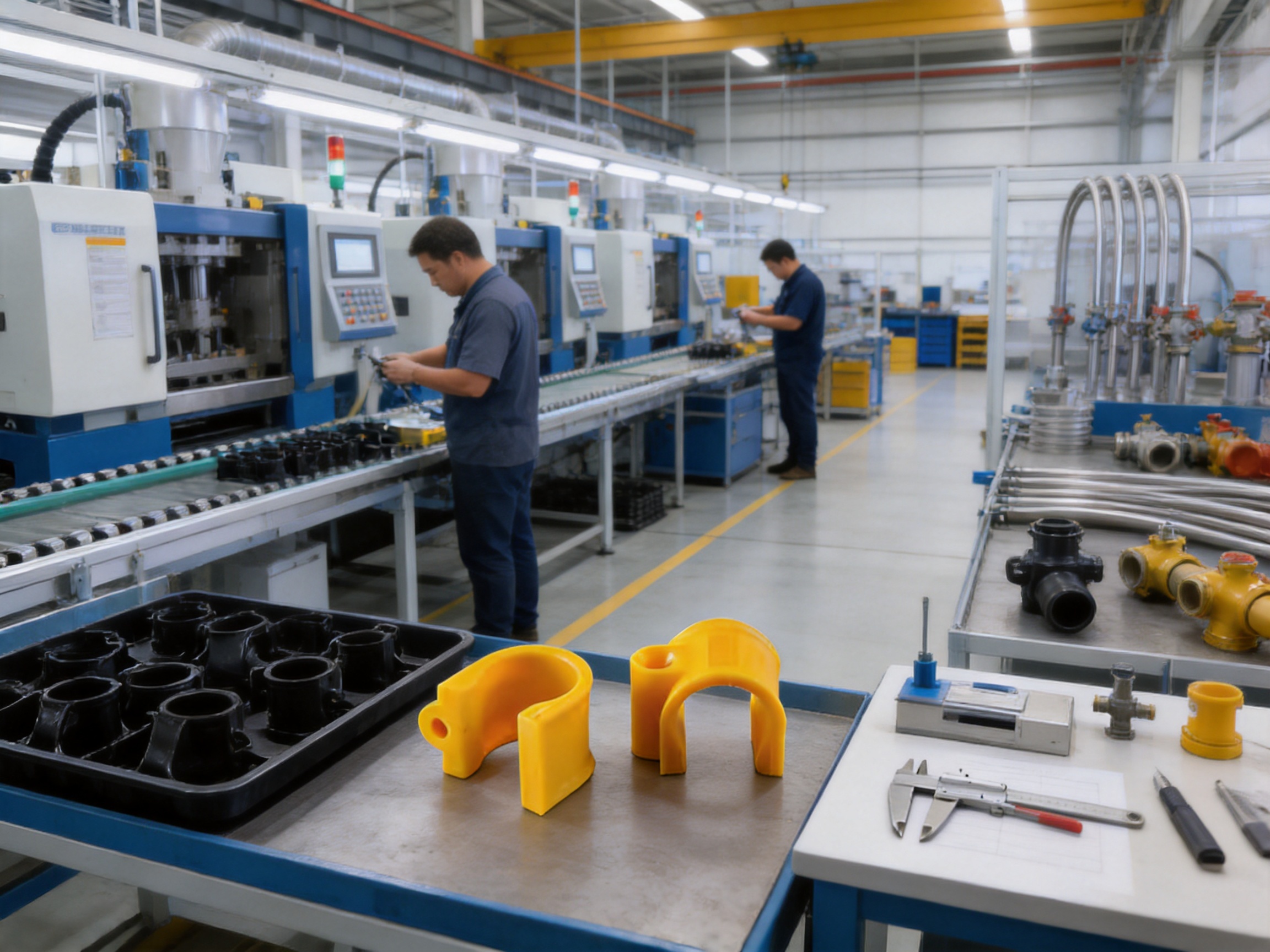
The company is located in Yuyao, Ningbo, Zhejiang, and operates a factory building covering approximately 30,000 square meters on a site of about 40 acres. The facility includes 30 welding and forming production lines, together with two uninterrupted solid melting hydrogen furnace production lines.
Although the Plastic Pipe Clamp is a plastic product, the broader manufacturing infrastructure demonstrates the company’s capacity to manage multiple energy equipment product categories. Metal forming, welding, heat-related processes, plastic production, assembly, and inspection require different technical disciplines. Coordinating these capabilities can support efficient sourcing and production for customers purchasing several types of pipe-related products.
A sizable manufacturing base also provides advantages in production planning. It can support dedicated scheduling, raw-material management, process separation, quality inspection, and order coordination. For OEM and ODM customers, these capabilities may be valuable when products must be manufactured to specified drawings, packaging requirements, labeling instructions, or project schedules.
Material and Process Control
Plastic pipe clamps must be produced from materials suitable for the expected environment. Important considerations may include impact resistance, temperature behavior, weathering, dimensional stability, chemical resistance, and long-term aging. The exact material grade should be confirmed through the manufacturer’s technical documentation and the requirements of the intended application.
Process control helps ensure that each clamp has a consistent shape and a reliable fastening interface. Key checks may include visual inspection, dimensional verification, surface condition, closure or engagement performance, and resistance to handling damage. Where required by a customer or project, additional testing can be arranged according to agreed specifications.
Manufacturing discipline is particularly important for products used in gas-related applications. The clamp itself may not be part of the gas pressure boundary, but its failure could allow pipe movement and place stress on pressure-containing components. For this reason, quality management should consider both the product’s direct function and its role within the complete installation.
Testing and Inspection Equipment
The company maintains testing equipment that includes direct-reading spectrometers for metal material analysis and flow tightness testers. These resources are especially relevant to the company’s metal hose, fitting, valve, and pipeline product lines. They demonstrate a manufacturing culture in which material verification and functional testing are treated as important parts of production rather than optional final checks.
For the Plastic Pipe Clamp, appropriate inspection may focus on material identity, dimensions, appearance, fastening behavior, and resistance to the expected service conditions. The testing plan should reflect the product’s actual function. A plastic support does not require the same test program as a pressure-containing metal fitting, but it still requires controlled inspection to ensure reliable support performance.
Quality Management and Certification Experience
The company states that it implements the ISO9000:2008 quality management system and holds a Special Equipment Manufacturing License for pressure pipelines in the People’s Republic of China. It also has EU CE certification testing reports and membership in the China Urban Gas Association.
These credentials and industry affiliations indicate experience with regulated energy equipment and gas-related products. Customers should review the specific scope, validity, and applicability of any certificate or report to the product and market being considered. Certification is most meaningful when it is connected to a defined product scope, documented manufacturing process, traceability system, and continuing quality control.
For international buyers, the company’s experience with CE-related testing and OEM/ODM production can simplify communication about technical files, product documentation, labeling, packaging, and market requirements. The final compliance responsibility remains dependent on the product configuration, destination market, intended use, and applicable regulations.
OEM and ODM Production Capabilities
Different customers may require different clamp dimensions, mounting arrangements, colors, packaging formats, or identification marks. A standardized model can satisfy many applications, but OEM and ODM support becomes valuable when a project has specific requirements.
OEM production may involve manufacturing according to a customer’s existing design, drawing, brand specification, or purchasing standard. ODM development may involve adapting an existing structure or creating a new solution based on the customer’s performance requirements. In both cases, the manufacturer must manage technical clarification, sample approval, mold or tooling considerations, production scheduling, inspection, and delivery.
For the Plastic Pipe Clamp, potential customization topics may include pipe diameter range, number and arrangement of fixing points, mounting base design, material color, surface marking, packaging quantity, and installation accessories. Each change should be evaluated for mechanical performance and manufacturability before mass production.
A professional development process typically begins with a requirement review. The customer should provide the pipe material, outside diameter, expected support spacing, operating temperature, environment, mounting surface, anticipated vibration, and applicable standards. The manufacturer can then recommend whether the existing ZLP-021 configuration is suitable or whether a modified design is needed.
Sample production and approval are important before a large order. Samples allow the customer to check fit, closure, grip, installation time, appearance, and interaction with the selected fasteners. They also help identify issues that may not be visible in a drawing, such as interference with nearby insulation or insufficient clearance for tools.
Installation Guidance
Before Installation
Inspect the clamps before use. They should be free from cracks, severe deformation, sharp defects, contamination, or other damage that could affect installation. Confirm that the model and quantity match the project requirements. Check the pipe outside diameter and compare it with the approved clamp size.
Review the pipeline layout and identify points where support is required. Supports are commonly needed near changes in direction, valves, regulators, branch connections, equipment interfaces, and transitions between rigid and flexible sections. Support spacing should be determined by the applicable design standard and engineering calculation rather than by a general assumption.
Examine the fixing surface. Concrete, masonry, steelwork, timber, and equipment frames require different fasteners and installation methods. The fixing hardware must be appropriate for the substrate and capable of carrying the combined load of the pipe, gas, insulation, fittings, and expected external forces.
Positioning the Clamp
Place the clamp so that it supports the pipe without forcing the pipe into an unnatural position. The pipe should be aligned before the clamp is fully tightened. Avoid placing the clamp where it interferes with a welded joint, threaded connection, flare, compression fitting, valve body, or hose end unless the design specifically permits that arrangement.
When a pipe is connected to a flexible hose, the rigid pipe should be supported independently. The hose should not be used to compensate for poor pipe support. This arrangement reduces the possibility that the hose fitting will experience bending or pulling forces.
Fastening and Tightening
Use compatible fasteners and tighten the clamp sufficiently to prevent movement without crushing or deforming the pipe. Excessive tightening can create localized stress, particularly on thin-wall pipes or polymeric pipe materials. Insufficient tightening may allow vibration, sliding, or rattling.
After fastening, check that the clamp is seated evenly and that the pipe is not being forced sideways. If the installation includes insulation, protective sleeves, or a coating, confirm that the clamp remains capable of providing stable support. The clamp should not cut into insulation or create a condition that traps water against a vulnerable surface.
Post-Installation Inspection
Inspect the completed support arrangement visually. Confirm that the pipe route is stable, the fasteners are secure, the clamp is not cracked, and no sharp edge contacts the pipe or nearby equipment. Check that valves and fittings remain accessible for operation and maintenance.
Where the pipeline is commissioned or pressure tested, observe the supported sections for movement. A pressure test should be performed according to the applicable code and project procedure. The clamp is not a substitute for leak testing, and the presence of a secure support does not by itself confirm the integrity of the gas system.
Selection Considerations for Buyers and Engineers
Choosing the correct clamp requires more than selecting a product based on appearance or price. The pipe diameter is the first basic consideration, but other factors can significantly affect performance.
Pipe Material and Surface
Steel, stainless steel, copper, multilayer pipe, and polymeric pipe may respond differently to clamping pressure and thermal movement. The contact surface should be compatible with the pipe’s exterior and protective coating. If a pipe has special insulation or a corrosion-protection layer, the clamp arrangement should avoid damaging it.
Operating Temperature
Plastic materials have temperature limits. The selected clamp must remain sufficiently stable at the minimum and maximum temperatures expected during normal operation, temporary events, storage, and installation. Clamps located near burners, boilers, exhaust systems, hot process equipment, or steam lines require additional review.
Environmental Exposure
Consider sunlight, rain, humidity, salt spray, dust, chemicals, cleaning fluids, oils, and industrial vapors. A weather-resistant product is suitable for many outdoor environments, but unusually aggressive conditions may require a specific material grade or additional shielding.
Mechanical Loads
Estimate the weight of the supported pipe and contents, along with insulation, valves, fittings, and possible external forces. Vibration and movement should also be considered. The Plastic Pipe Clamp is intended for appropriate pipe support applications, but heavy or highly dynamic systems may require engineered metal supports or specialized vibration-control components.
Regulatory Requirements
Gas installations are subject to local regulations, building codes, fire requirements, and utility standards. The clamp must be acceptable for the intended application and installed as part of a compliant support system. Buyers should request technical documentation, material information, drawings, and relevant test or compliance records where necessary.
Maintenance and Service Life
A properly selected and installed plastic clamp requires relatively little maintenance. Periodic visual inspection should still be included in the maintenance plan, especially for outdoor and industrial systems. Inspect for cracks, discoloration, deformation, loosening, impact damage, or signs that the pipe has shifted.
Pay particular attention to areas exposed to direct sunlight, repeated vibration, chemicals, or unusual heat. A clamp that appears loose or brittle should be replaced rather than repaired with improvised materials. Replacement should use a product with compatible dimensions and suitable environmental performance.
During maintenance, avoid hanging tools, cables, or other equipment from the pipe or clamp. Do not use the supported pipe as a ladder support or handrail. Unplanned loads may exceed the design capacity and transfer force to fittings or valves.
Keeping the pipe route clean also supports inspection. Dust and oil deposits can conceal cracks or damage. In outdoor areas, vegetation, standing water, and accumulated debris should be removed where they interfere with inspection or create additional mechanical loads.
Quality, Safety, and Supply Reliability
For distributors, contractors, and original equipment manufacturers, supply reliability is as important as individual product performance. A clamp may be used in large quantities across multiple projects, so consistent dimensions and stable availability can reduce installation interruptions and inventory complexity.
The manufacturer’s integrated industry-and-trade model supports communication across product categories. Customers seeking metal hoses, corrugated hoses, pipe fittings, valves, plastic products, or related hardware can discuss coordinated requirements with one supplier. This may simplify purchasing, technical alignment, packaging, and after-sales service.
The company’s research, design, production, and service team provides support before and after delivery. Useful pre-sales services may include product selection, drawing review, sample confirmation, application discussion, and quotation preparation. After-sales support may include installation guidance, replacement coordination, documentation, and technical communication regarding product use.
For project procurement, buyers should clearly define the expected quantity, delivery schedule, packaging method, inspection requirements, labeling, destination market, and documentation. Early confirmation of these details helps avoid delays and ensures that the delivered product matches the installation plan.
How the Product Supports a More Efficient Pipeline Design
A well-organized pipe support system can improve the efficiency of both installation and future maintenance. By keeping pipe routes aligned, clamps help installers maintain predictable spacing and avoid repeated adjustment. This can reduce labor time during construction.
Stable support also simplifies inspection. When pipes remain in their intended position, technicians can more easily identify valves, fittings, joints, and connection points. Organized routing improves access and reduces the likelihood that a pipe will become hidden behind unrelated equipment or shift into an inaccessible area.
Corrosion-resistant supports can reduce replacement work in damp or outdoor locations. Although every installation must be inspected, a support that does not rust can maintain a cleaner condition and reduce the risk of corrosion-related sharp edges or staining.
Plastic clamps can also contribute to material optimization. Their low weight may reduce transportation effort and make site handling easier. When used in suitable applications, they provide practical support without adding unnecessary mass to the system.
Frequently Asked Questions
What is the primary purpose of the Plastic Pipe Clamp?
Its primary purpose is to secure and support a pipe, maintain alignment, reduce unwanted movement, and help protect connected fittings from mechanical stress. It is a support component and is not intended to control gas flow or replace a pressure-containing fitting.
Can the clamp be used outdoors?
Yes, the product is described as weather resistant and suitable for many outdoor applications. The exact suitability depends on sunlight intensity, temperature, chemical exposure, mechanical loads, and local requirements. For severe environments, buyers should confirm the material and service limits with the manufacturer.
Is the clamp suitable for all pipe diameters?
No. The correct clamp must match the outside diameter and design requirements of the pipe. The available information lists model ZLP-021 with a specification of 4-6 points, but the precise dimensional meaning should be confirmed before purchase. A technical drawing or product datasheet should be used for final selection.
Can it support a flexible gas hose?
The clamp may support adjacent rigid pipework, but a flexible gas hose should not be treated as a structural support member. Flexible hoses must be installed according to their own bending, routing, connection, and support requirements. The hose should not be twisted, stretched, or subjected to unnecessary load.
Does a plastic clamp prevent gas leaks?
The clamp does not seal the gas pathway and cannot independently prevent leaks. Its role is to stabilize the pipe and reduce movement that could stress connections. Leak prevention also depends on suitable pipes, fittings, installation workmanship, pressure testing, inspection, and compliance with applicable gas safety requirements.
Is plastic better than metal for every installation?
No. Plastic is advantageous where corrosion resistance, light weight, weather resistance, and easy installation are important. Metal may be more appropriate for high-temperature service, severe mechanical loading, fire-rated applications, large-diameter pipework, or systems requiring a specially engineered support structure. Selection should be based on the complete operating environment.
What should be checked before ordering?
Buyers should check the pipe outside diameter, pipe material, operating temperature, installation environment, support spacing, fixing substrate, expected load, vibration level, regulatory requirements, packaging, and documentation. If the project requires customization, the buyer should provide drawings or dimensional requirements for review.
Can the manufacturer provide customized products?
The company provides OEM and ODM production services for its product range. Potential customization may include dimensions, mounting features, material specifications, color, packaging, labeling, and production according to customer drawings. Custom designs should be reviewed, sampled, and approved before mass production.
What manufacturing capabilities support this product?
The company combines research and development, manufacturing, processing, and trade. It operates a large factory in Zhejiang with multiple welding and forming production lines, specialized furnace lines, testing equipment, and experience producing metal hoses, gas pipelines, fittings, valves, plastic products, and hardware. These capabilities support coordinated production and quality management across energy equipment categories.
What quality information should international customers request?
International customers may request product drawings, material information, dimensional tolerances, installation instructions, inspection records, packaging details, and relevant certification or testing documentation. They should confirm that any document applies to the specific product, configuration, and destination market.
Why Choose This Manufacturing Partner
The value of the Plastic Pipe Clamp is supported by both its practical product design and the manufacturing experience behind it. The clamp addresses common pipeline support needs: secure positioning, corrosion resistance, weather exposure, lightweight handling, and installation efficiency. These benefits are especially useful in gas distribution systems where the stability of every pipe section contributes to overall reliability.
Zhejiang Zhenlong Energy Equipment Technology Co., Ltd. brings a broad energy equipment background to the product. Its manufacturing portfolio covers metal hoses, corrugated hoses, natural gas pipelines, plumbing fittings, sanitary ware, valves, plastic products, and hardware. This range allows the company to understand the relationship between supports, fittings, flexible connections, and pressure pipeline components.
The company’s production scale, R&D resources, inspection equipment, quality system, and OEM/ODM capabilities provide a foundation for serving distributors, contractors, equipment manufacturers, and project buyers. Customers can seek a standard Plastic Pipe Clamp or discuss a customized support solution based on application-specific requirements.
For buyers comparing competing products, the most important evaluation should combine material quality, dimensional consistency, installation performance, corrosion resistance, technical support, documentation, and supply capability. A low initial purchase price is not necessarily the lowest total cost if the product causes installation delays, premature replacement, or inconsistent fit. A well-manufactured clamp can contribute to more efficient construction and more dependable long-term maintenance.
Conclusion
The Plastic Pipe Clamp is a compact but important component for stable gas pipeline construction. Its durable plastic design offers corrosion resistance, weather resistance, low weight, pipe-surface protection, and efficient installation. By holding pipework securely and reducing unwanted movement, it helps protect joints, fittings, valves, and flexible connections from unnecessary mechanical stress.
Its strongest advantages appear in residential, commercial, industrial, and outdoor applications where moisture, appearance, easy handling, and long-term support performance are important. The product is also suitable for use around systems containing corrugated metal hoses, provided that the rigid pipework is supported independently and the hose is not used as a structural member.
Correct product selection remains essential. Pipe diameter, temperature, environment, load, vibration, mounting surface, regulations, and support spacing must all be reviewed. The listed ZLP-021 model and “4-6 points” specification should be verified against technical documentation before final procurement.
Backed by integrated research, manufacturing, testing, quality management, and OEM/ODM capabilities, the product provides a practical support option for professional pipe installation. When combined with proper engineering and installation practice, the Plastic Pipe Clamp can help create safer, cleaner, more stable, and more maintainable gas distribution systems.
References
1. Product information supplied for the Plastic Pipe Clamp, model ZLP-021.
2. Company information supplied for Zhejiang Zhenlong Energy Equipment Technology Co., Ltd.
3. General principles of pipe support design for gas distribution and industrial utility systems.
4. General installation and inspection practices for rigid pipes, flexible metal hoses, and pipeline fittings.
5. ISO 9000 family principles relating to quality management systems and controlled manufacturing processes.
6. General engineering guidance on corrosion resistance, thermal movement, vibration control, and mechanical support of pipelines.