 English
 中文简体
中文简体 Español
 عربى
عربى
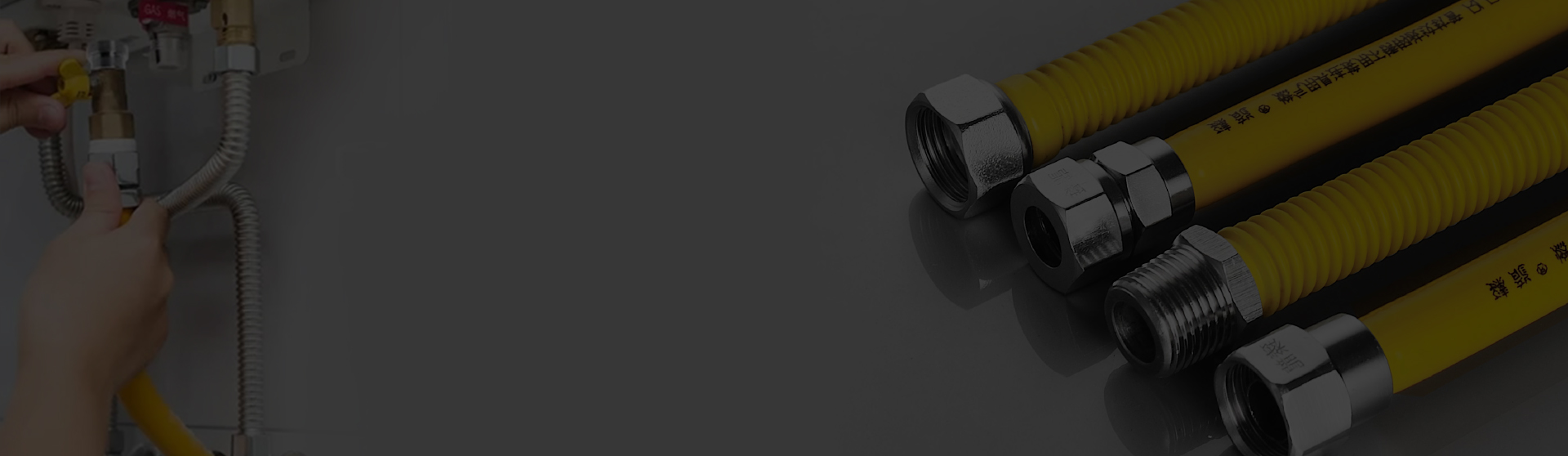

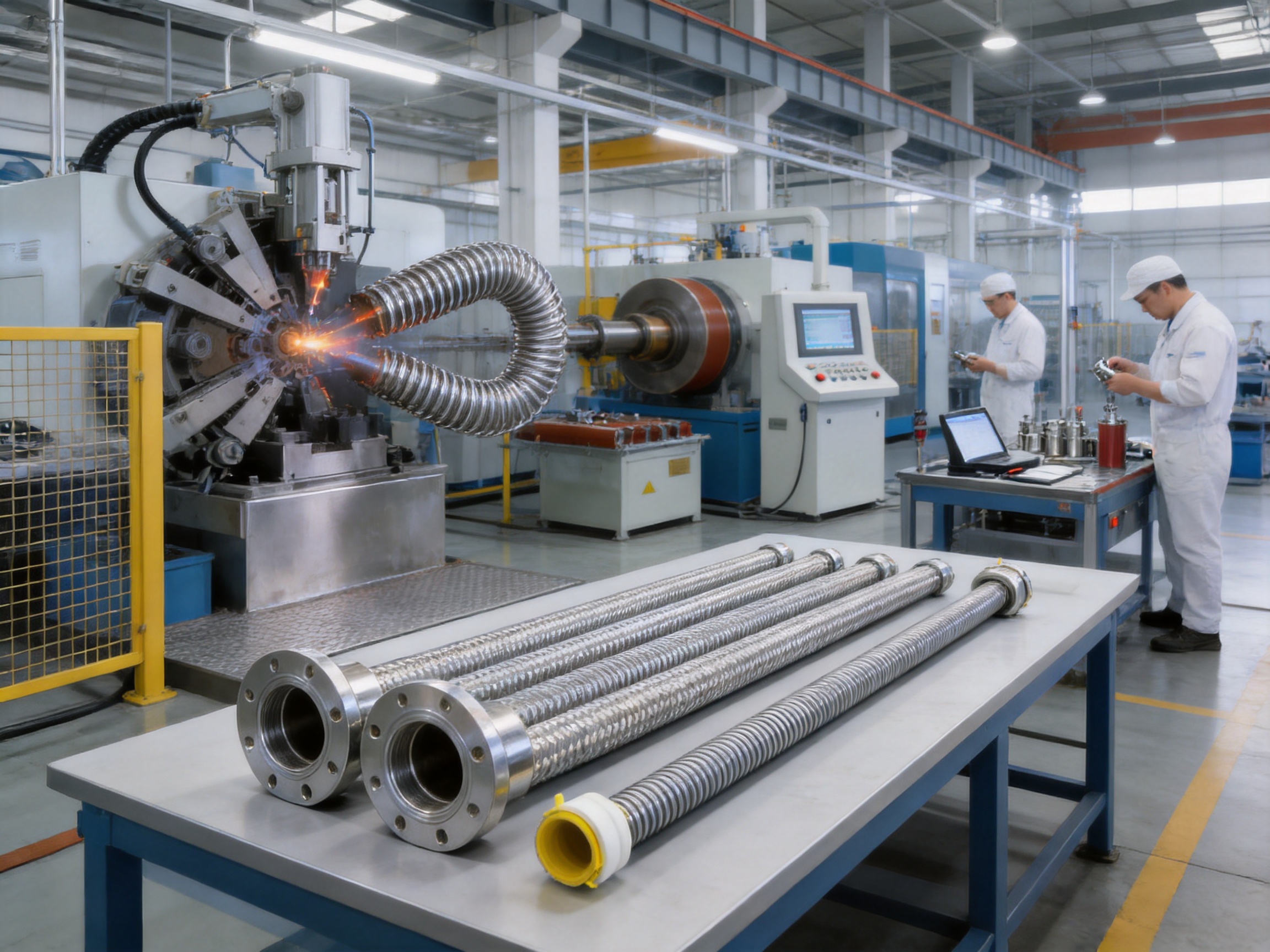
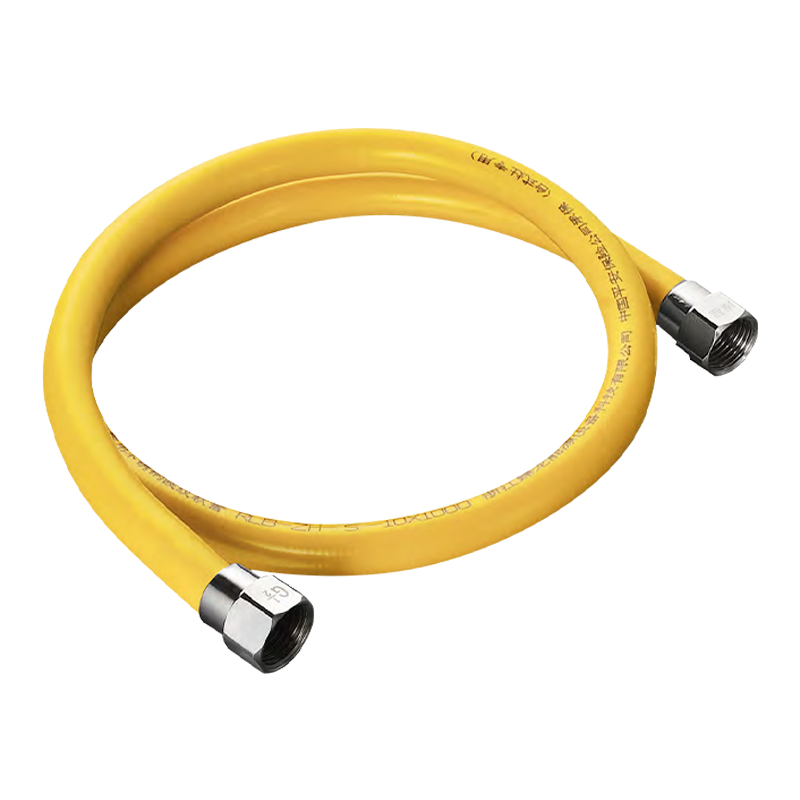
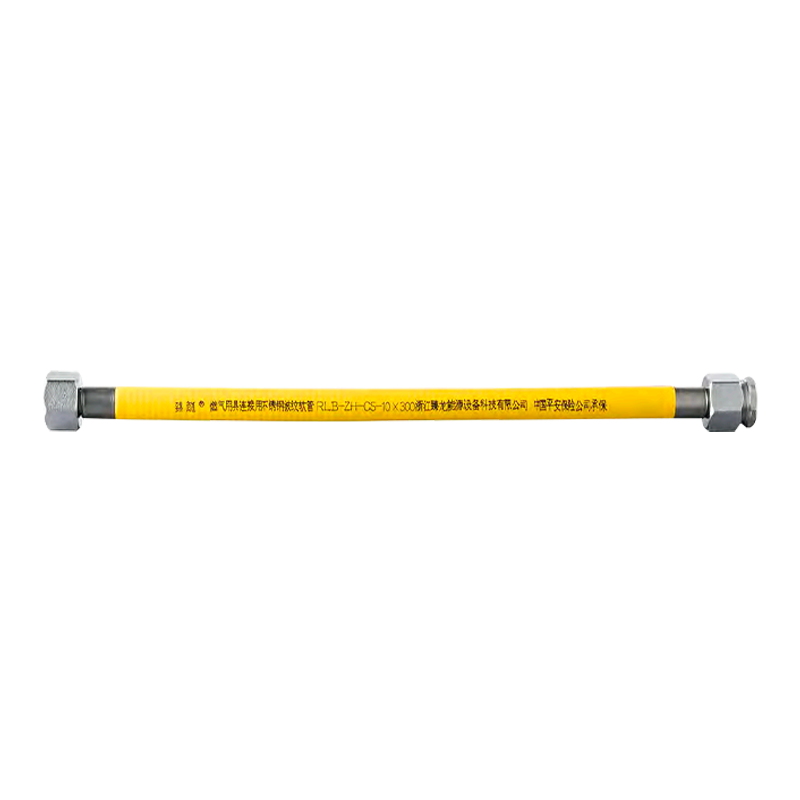
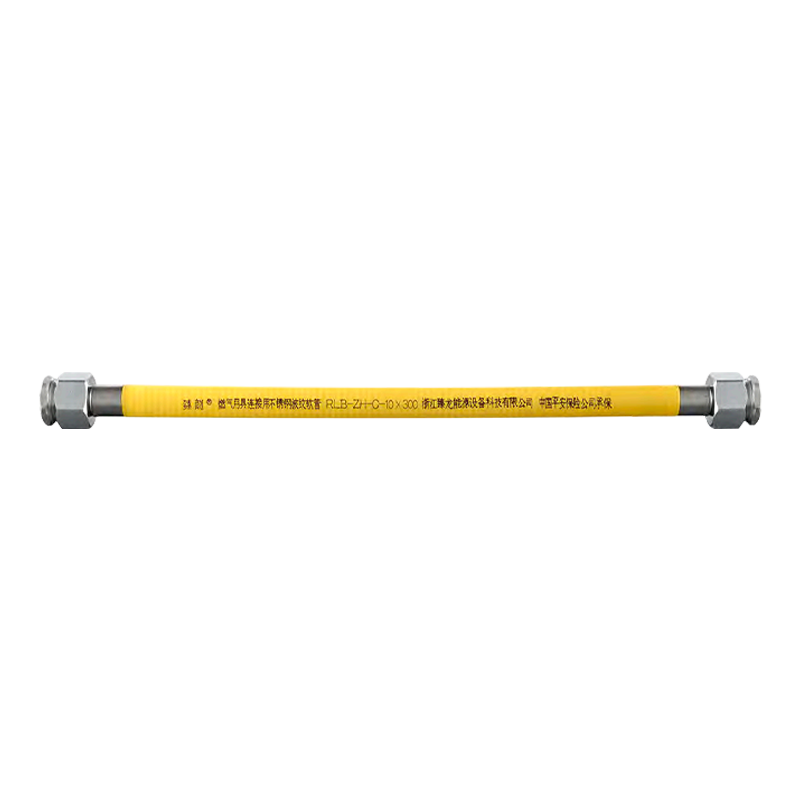
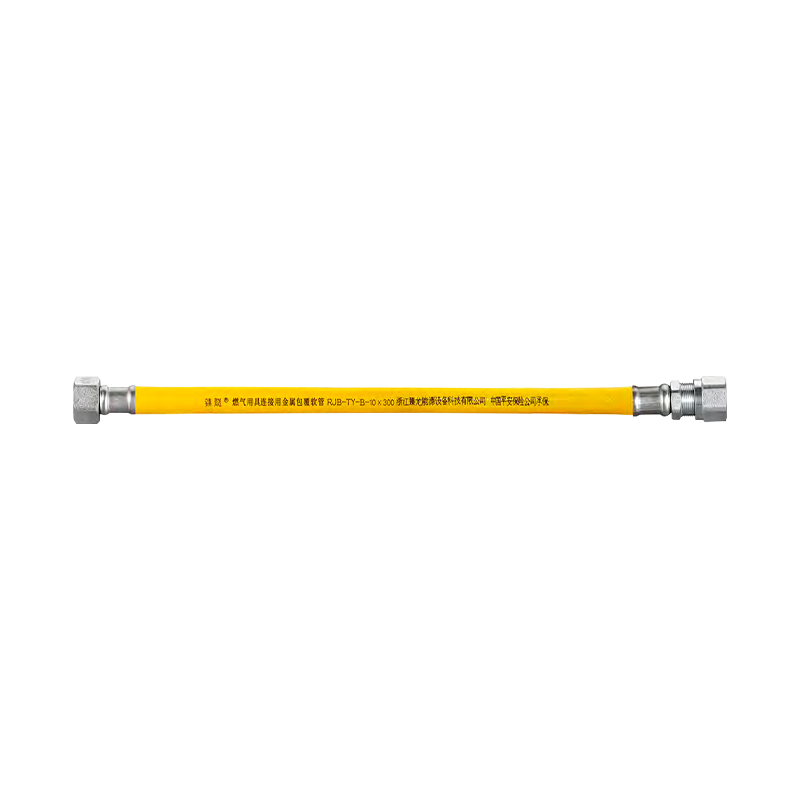
Gas appliances require connection components that combine flexibility, mechanical strength, corrosion resistance, and dependable sealing. A hose may appear to be a small part of a gas installation, but its performance directly affects the stability, safety, and service life of the complete system. The Stainless Steel Corrugated Gas Hose with Metal Flange ZLR-15 is designed for this purpose. It provides a flexible connection between gas piping and appliances while incorporating stainless steel corrugated tubing, protective polyethylene coating, metal connectors, and quick-release connection features.
The ZLR-15 belongs to the category of stainless steel corrugated tubes for connecting gas appliances. Its construction is intended for applications in which a rigid pipe connection would be inconvenient or vulnerable to vibration, movement, or installation limitations. The corrugated structure allows controlled flexibility, while the metal flange and threaded connector arrangement support a secure connection with compatible gas system components.
This article examines the product’s construction, operating advantages, manufacturing considerations, installation value, maintenance requirements, and application suitability. It also explains how the product compares with less specialized connection solutions and how the manufacturer’s production capabilities support consistent quality in metal hoses, gas pipelines, pipe fittings, valves, sanitary products, and related energy equipment.
Content
- 1 Product Overview
- 2 Key Construction Features
- 3 Operating Advantages of the ZLR-15
- 4 Comparison with Alternative Connection Solutions
- 5 Specification and Configuration
- 6 Manufacturing Process and Quality Considerations
- 7 Manufacturer Capabilities
- 8 Applications
- 9 Installation Guidance
- 10 Maintenance and Service Life
- 11 Why Manufacturing Strength Matters to Buyers
- 12 Procurement Checklist
- 13 Quality, Compliance, and Documentation
- 14 Environmental and Practical Benefits
- 15 Application Boundaries
- 16 Business Value for OEM and ODM Customers
- 17 Frequently Asked Questions
- 17.1 What is the main purpose of the ZLR-15?
- 17.2 What material is used for the corrugated tube?
- 17.3 What protection does the PE coating provide?
- 17.4 What size is the ZLR-15?
- 17.5 Can the hose be used with any gas appliance?
- 17.6 Does the hose eliminate the need for leak testing?
- 17.7 Can the hose be bent sharply to fit a small space?
- 17.8 Can the hose support the weight of an appliance?
- 17.9 What are the advantages of the metal fittings?
- 17.10 What is the role of the quick-release clip?
- 17.11 Is the ZLR-15 suitable for industrial applications?
- 17.12 What manufacturing strengths support this product?
- 17.13 Can customized versions be produced?
- 17.14 How should the hose be stored?
- 18 Conclusion
- 19 References
- 20 Product: Stainless steel corrugated gas hose with metal flange ZLR-15
Product Overview
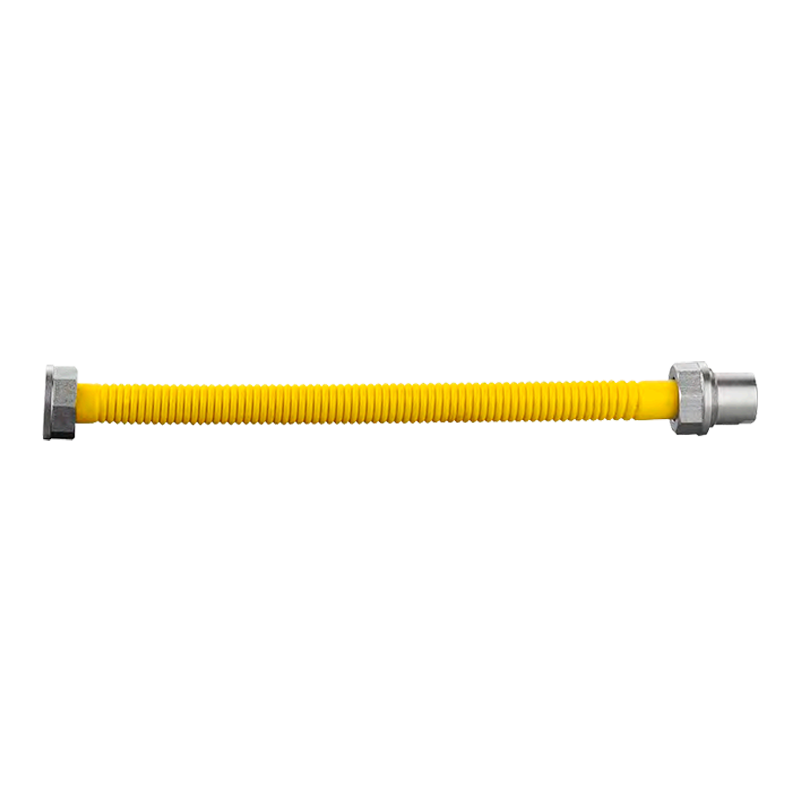
The Stainless Steel Corrugated Gas Hose with Metal Flange ZLR-15 is a flexible gas connection hose manufactured around a stainless steel spiral corrugated bellows structure. The available specification identifies a DN15 nominal size, with an outside diameter of approximately 20 mm and an inside diameter of approximately 18 mm. The standard length range is listed as 30 cm to 60 cm, allowing the hose to accommodate common appliance connection distances without requiring extensive pipe modification.
The product description identifies SS304 stainless steel as the bellows material. SS304 is widely used in piping and hose applications because it offers a balanced combination of formability, strength, corrosion resistance, and availability. It is suitable for many indoor and sheltered outdoor environments when used within the relevant operating conditions and installation requirements.
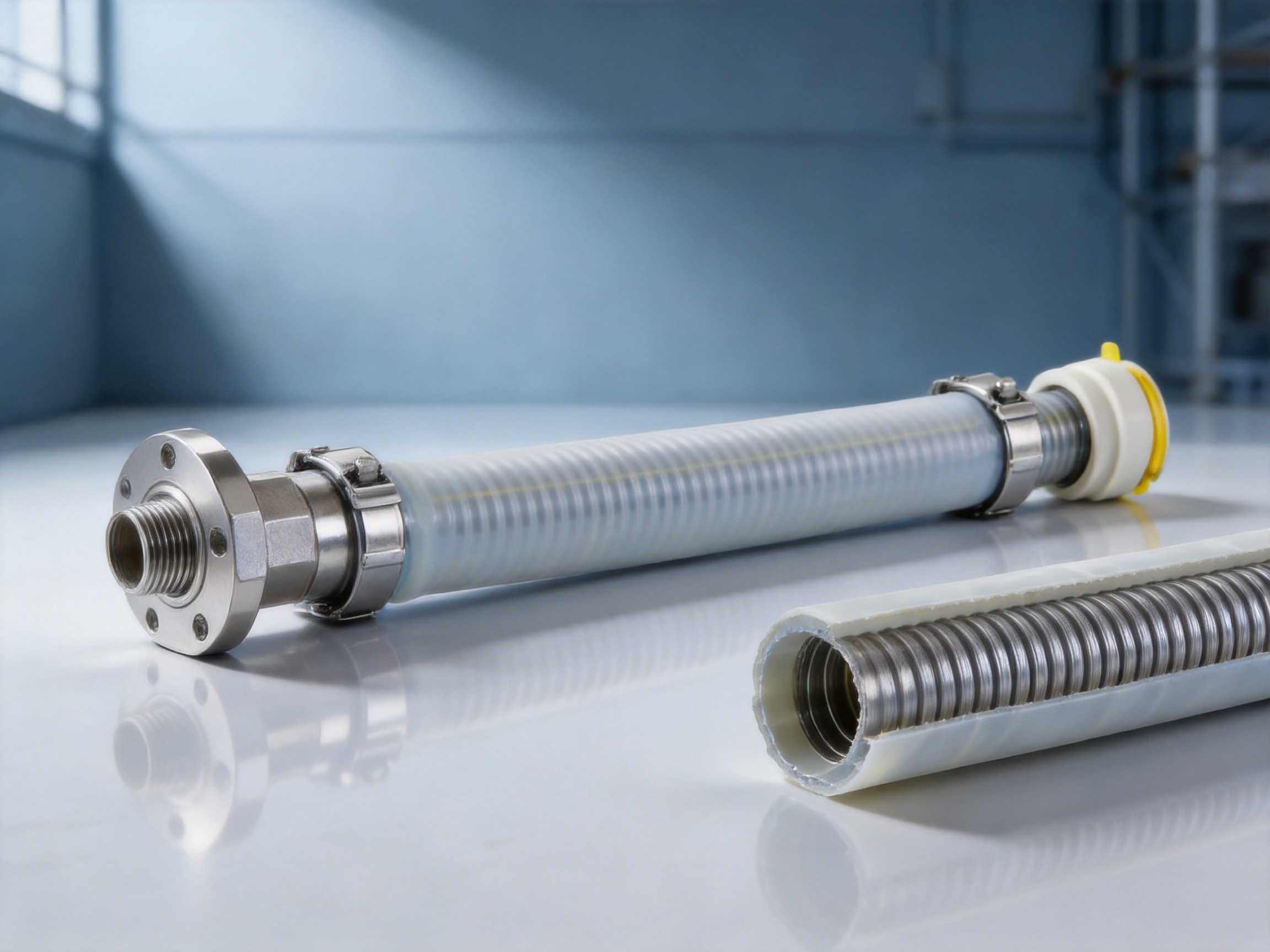
A polyethylene outer coating is applied as an additional protective layer. This coating helps shield the metal hose from moisture, surface abrasion, dirt, and contact with surrounding materials. It also provides a visual barrier that can help installers identify and handle the hose during installation. The coating should not be regarded as a substitute for correct system design, compatible gas service, or compliance with local regulations, but it adds an important layer of environmental protection.
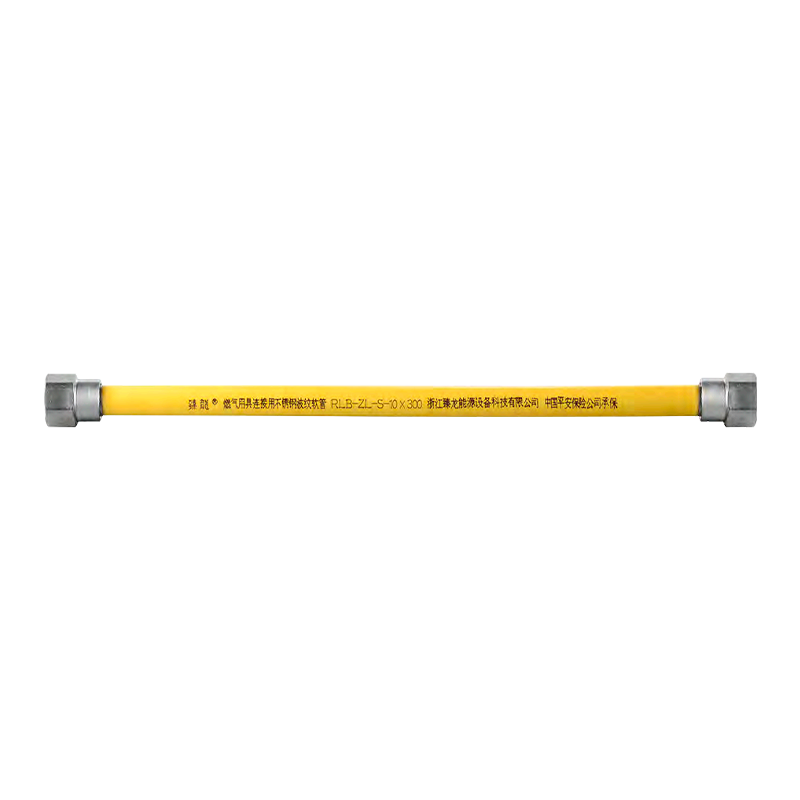
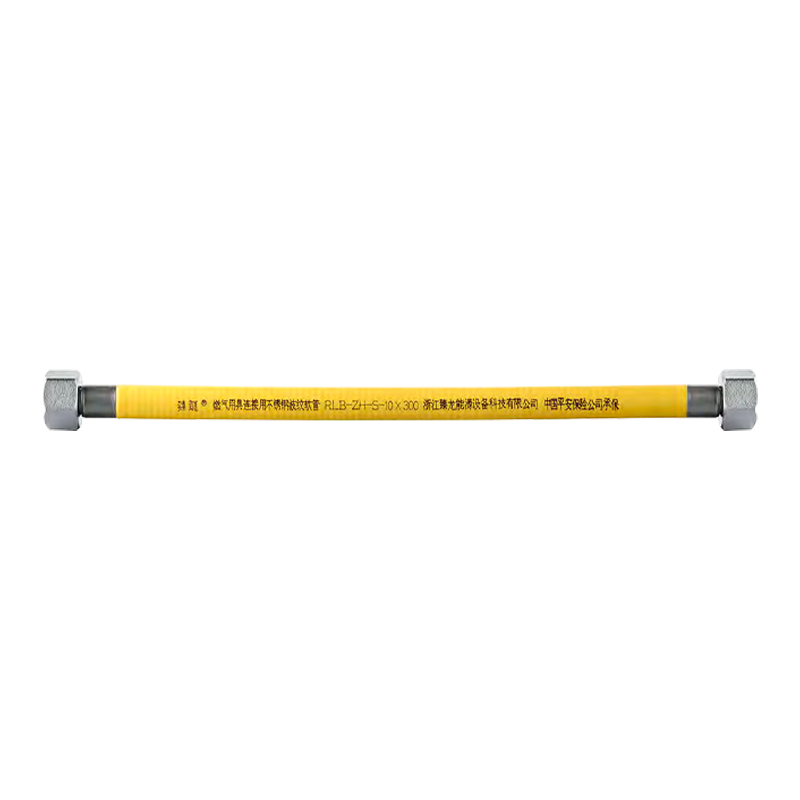
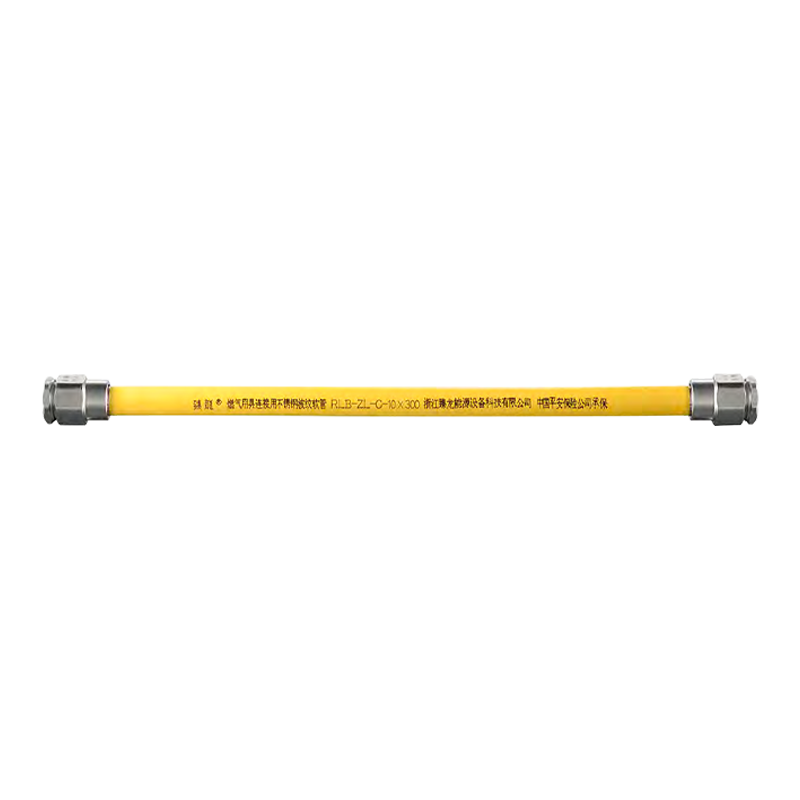
The ends of the hose use metal connection components. The listed configuration includes a G 1/2 meter-pipe outer-wire connector and an M30x2 meter-pipe anti-theft inner-wire connector with an M buckle. These connection elements are intended to support integration with compatible gas piping and appliance interfaces. Because thread forms and connection standards vary by market, installers must verify the exact mating dimensions before installation.
Quick-release clips are incorporated into the design to support fast connection and disconnection where the corresponding system configuration permits their use. Tool-free or reduced-tool connection features can shorten installation time and make inspection or replacement more convenient. Nevertheless, all gas connections must be assembled, checked, and commissioned in accordance with applicable safety procedures.
Key Construction Features
SS304 Stainless Steel Corrugated Bellows
The central pressure-bearing component is the stainless steel spiral corrugated tube. Unlike a smooth rigid tube, a corrugated bellows contains formed ridges that allow the tube to bend over a controlled radius. This construction gives the hose flexibility while retaining the basic pressure containment function of a metallic tube.
The use of stainless steel offers several advantages over ordinary carbon steel or unprotected low-cost metal tubing. Stainless steel naturally forms a passive oxide layer that helps resist corrosion. It also maintains useful mechanical properties across a broad range of normal gas appliance environments. The material is suitable for forming operations, enabling the production of deep and consistent corrugations without sacrificing the continuity of the tube wall.
The corrugated profile also helps absorb small movements between an appliance and the fixed gas supply line. Appliances may shift slightly during cleaning, servicing, transportation, or floor movement. A correctly installed flexible hose can accommodate these minor movements more effectively than a rigid pipe assembly, reducing the possibility that repeated movement will be transferred directly to a threaded joint or appliance inlet.
Polyethylene Protective Coating
The PE outer coating protects the stainless steel bellows against environmental contact. In practical installations, a hose may be exposed to condensation, cleaning fluids, dust, accidental rubbing, or contact with adjacent cabinet surfaces. A continuous protective coating can reduce the effect of these conditions and help preserve the external surface.
The coating also reduces the likelihood of direct metal-to-metal contact between the hose and nearby components. This is useful in compact appliance installations where the connection may pass through a cabinet opening or near brackets. However, the hose should still be routed carefully. It should not be forced into a sharp bend, trapped beneath an appliance, exposed to unauthorized heat sources, or placed where repeated abrasion can damage the coating.
Metal Flanges and Threaded Connectors
Metal end fittings provide a strong transition between the flexible bellows and the gas piping or appliance connection. The fitting geometry is important because it determines how load is transferred, how the sealing method is applied, and how the hose can be aligned during installation.
The listed G 1/2 connector is a common nominal connection size in gas and plumbing applications, but a nominal size alone does not identify every detail of a connection. Thread gender, pitch, sealing face, taper, and regional standard must all be confirmed. The M30x2 connector described in the specification provides another defined mechanical interface for a compatible meter-pipe or gas system component.
Metal flanges and threaded connectors offer greater structural stability than improvised hose-end arrangements. They are designed to maintain the shape of the connection area and provide a predictable interface. When combined with appropriate seals and correctly applied tightening procedures, they support a reliable, leak-resistant assembly.
Quick-Release Connection Features
Quick-release clips can improve installation efficiency, particularly in systems designed for repeated access or service. A qualified installer can connect or disconnect the hose rapidly without spending unnecessary time on complex assembly procedures. This may be valuable in residential appliance replacement, commercial maintenance, and modular gas equipment installations.
The convenience of a quick-release feature does not eliminate the need for inspection. The clip, fitting, seal, and receiving connector must be compatible and fully engaged. A connection that appears assembled but is not locked correctly can compromise system safety. For this reason, visual confirmation, physical checks, and leak testing remain essential after installation or reconnection.
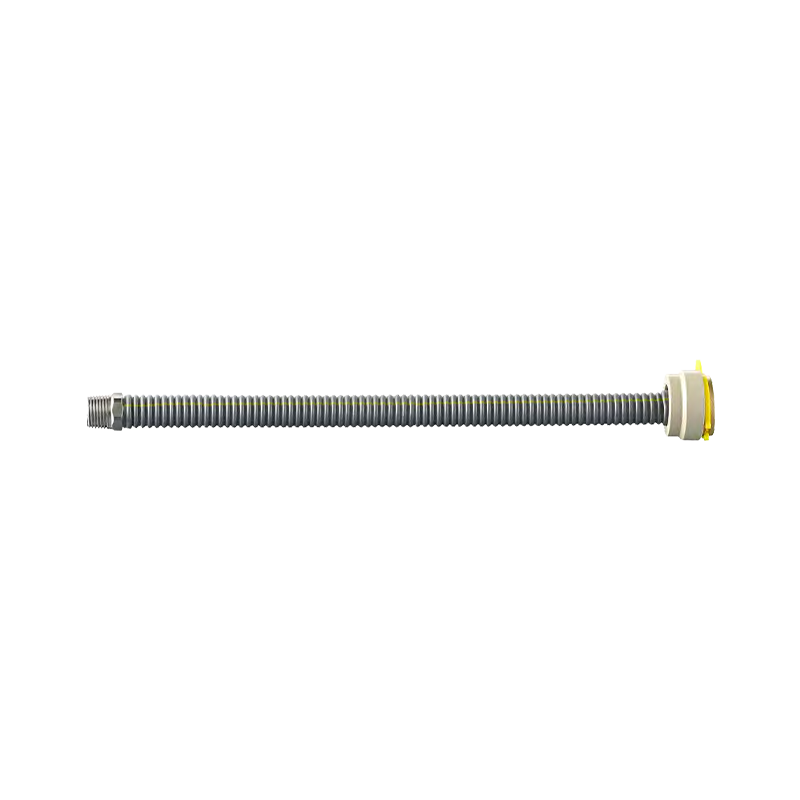
Stainless steel corrugated gas hose with metal flange ZLR-15
Operating Advantages of the ZLR-15
Flexibility in Restricted Installation Spaces
One of the primary advantages of the ZLR-15 is its ability to connect equipment in locations where a rigid pipe would be difficult to align. Kitchen cabinets, wall-mounted appliances, gas meters, heating equipment, and industrial units may not share a perfectly straight connection path. A flexible corrugated hose can compensate for modest differences in position and orientation.
The 30 cm to 60 cm length range offers practical options for short connection distances. Choosing a hose that is long enough for natural routing but not excessively long helps maintain a tidy installation. Excess length should not be coiled tightly or folded into sharp angles. The hose should be arranged with smooth bends and enough clearance for inspection.
Resistance to Vibration and Minor Movement
Gas appliances may generate vibration through burners, fans, pumps, motors, or thermal expansion. Nearby equipment can also transmit movement through floors, brackets, or pipe supports. The corrugated structure provides a degree of flexibility that helps isolate the connection from small, repeated movements.
This advantage is especially important when connecting a movable appliance to a fixed gas supply. A rigid assembly may place bending stress on the appliance inlet or pipeline fitting whenever the appliance is shifted. The ZLR-15 is designed to provide a more accommodating connection, provided that the hose is not used as a structural support or subjected to movement beyond its intended function.
Corrosion Resistance
Stainless steel construction helps the hose resist rust and surface deterioration in normal service environments. This can be a significant advantage compared with untreated steel tubing, especially in kitchens, utility rooms, humid areas, and industrial spaces where moisture may be present.
The PE coating adds another protective barrier. Together, the stainless steel substrate and external coating provide a dual approach to environmental resistance. This construction can help reduce maintenance requirements and extend service life when the hose is correctly selected, installed, and protected from aggressive chemicals or excessive heat.
High-Temperature Durability
Metal bellows are generally more tolerant of temperature variation than many ordinary polymer-only hoses. The stainless steel tube can withstand the heat conditions commonly associated with gas appliance connections when the product is used within its specified limits. Its metallic structure also provides dimensional stability under normal thermal cycling.
Temperature suitability must always be evaluated as a complete assembly. The PE coating, seals, clips, and end fittings may have different temperature limits from the stainless steel bellows. The hose must therefore be installed at a safe distance from open flames, hot exhaust surfaces, unshielded burners, and other direct heat sources. Product documentation and local requirements should determine the acceptable operating range.
Secure Mechanical Connection
Metal flanges and threaded connection components provide a more robust interface than basic push-on connections that depend solely on friction. The defined connector arrangement supports secure assembly with compatible fittings, while the bellows remains flexible between the ends.
A secure mechanical connection is particularly important in a gas system because a leak can create a serious hazard. The ZLR-15’s construction is intended to reduce the likelihood of connection instability, but no hose can compensate for incorrect thread matching, damaged sealing surfaces, cross-threading, over-tightening, or poor installation practice.
Efficient Installation and Servicing
The quick-release design can reduce installation time and simplify access during equipment maintenance. A service technician may be able to isolate the appliance, disconnect the hose, carry out the necessary work, and reconnect the assembly more efficiently than with a fully rigid pipe arrangement.
Reduced installation time can also lower labor costs in projects involving a large number of gas appliances. In commercial kitchens, residential developments, equipment replacement programs, and modular installations, the ability to use a consistent hose design can simplify inventory control and installation planning.
Comparison with Alternative Connection Solutions
Compared with Rigid Metal Pipe
Rigid metal pipe offers excellent structural stability and is appropriate for permanent distribution lines. However, it requires accurate cutting, threading, bending, and alignment. It may also transfer vibration directly to connected equipment. Installation can be more time-consuming where the appliance position is difficult to predict or where access is limited.
The ZLR-15 does not replace rigid pipe for every section of a gas system. Instead, it is most valuable as an appliance connection component or short flexible transition. It combines the durability of a metal tube with the routing convenience of a flexible hose, reducing the need for complex final connection geometry.
Compared with Ordinary Rubber or Polymer Hose
Rubber and polymer hoses can be flexible and economical, but their performance depends heavily on material formulation, reinforcement, temperature exposure, aging, chemical contact, and ultraviolet conditions. Some polymer hoses may harden, soften, crack, or lose flexibility over time if they are exposed to unsuitable conditions.
The stainless steel corrugated structure of the ZLR-15 provides higher resistance to crushing and mechanical damage than many unreinforced flexible hoses. The PE coating further improves environmental protection. The result is a connection designed for applications where greater mechanical robustness and long-term dimensional stability are important.
Compared with Uncoated Corrugated Metal Hose
An uncoated metal hose may provide flexibility and corrosion resistance, but its exposed corrugations can be more vulnerable to scratches, contamination, and contact damage. The protective PE layer on the ZLR-15 helps shield the outer surface and can make the product easier to handle in confined spaces.
The coating also creates a smoother external profile. This may reduce snagging during installation and help prevent the hose from rubbing directly against cabinet panels or nearby metal parts. The coating should still be inspected for cuts or severe abrasion, as damage may expose the underlying metal to harsher conditions.
Compared with Improvised Fitting Assemblies
Improvised assemblies made from multiple adapters, short rigid sections, and generic hoses can introduce additional joints and potential leak points. They may also be difficult to inspect and may place undesirable loads on the appliance connection.
A purpose-designed product such as the ZLR-15 integrates the corrugated tube, protective coating, and metal end connections into one engineered assembly. Fewer unnecessary transitions can simplify installation and help create a cleaner, more predictable connection. Compatibility must still be verified before use, especially when connecting equipment manufactured to different regional standards.
| Feature | ZLR-15 Stainless Steel Corrugated Gas Hose | Rigid Metal Pipe | Basic Polymer Hose |
| Flexibility | High flexibility through formed corrugations | Low after installation; requires fittings or bending | Generally high, depending on material |
| Vibration accommodation | Suitable for minor movement and vibration | Limited unless special loops or supports are used | Generally good, but may vary with aging |
| Corrosion protection | SS304 stainless steel with PE outer coating | Depends on pipe material and surface treatment | Depends on polymer formulation and exposure |
| Connection method | Metal connectors, flange arrangement, and quick-release features | Threaded, flanged, welded, or compression fittings | Often clamps, barbed fittings, or threaded adapters |
| Installation convenience | High for short appliance connections | More labor-intensive in confined spaces | Convenient, but connection quality is highly variable |
| Mechanical protection | Strong metallic bellows with protective coating | Strong, but not flexible | May be more vulnerable to cuts, crushing, or aging |
Specification and Configuration
The available product information identifies the ZLR-15 as a DN15 connection hose. The stated outside diameter is 20 mm and the inside diameter is 18 mm. The standard length range is 30 cm to 60 cm. These dimensions are useful for preliminary selection, but the final choice should be based on the actual appliance interface, gas type, pressure, required flow, bending radius, and local installation rules.
| Item | Specification |
| Product model | ZLR-15 |
| Nominal size | DN15 |
| Approximate outside diameter | 20 mm |
| Approximate inside diameter | 18 mm |
| Bellows material | SS304 stainless steel |
| Outer protection | Polyethylene coating |
| Connection description | G 1/2 meter-pipe outer-wire connector and M30x2 meter-pipe anti-theft inner-wire connector with M buckle |
| Connection features | Metal end fittings, flange arrangement, and quick-release clips |
| Typical listed length | 30 cm to 60 cm |
| Intended category | Stainless steel corrugated tube for connecting gas appliances |
The specification also includes remarks referencing DN32, DN40, and DN50. These may relate to associated product ranges, system connections, or alternative sizes rather than the basic DN15 hose configuration. Purchasers should request a confirmed technical drawing or order specification when selecting a size outside the listed ZLR-15 configuration.
Flow performance should not be estimated from inside diameter alone. Gas flow depends on gas type, inlet pressure, hose length, pressure loss, fitting geometry, appliance demand, and applicable design standards. The hose should be selected for the appliance’s rated input and the requirements of the complete gas installation.
Manufacturing Process and Quality Considerations
Material Preparation and Forming
Manufacturing a reliable corrugated gas hose begins with controlled stainless steel material preparation. The strip or tube stock must meet the required chemical and mechanical characteristics before forming. Material analysis helps confirm that the selected stainless steel grade is appropriate for the product design and intended environment.
The metal is then formed into a spiral or corrugated bellows structure. The forming process must control corrugation depth, pitch, wall integrity, and dimensional consistency. Excessive deformation can weaken the tube, while insufficient forming may reduce flexibility. Consistent tooling and process monitoring are therefore essential to produce a hose that bends predictably throughout its length.
Welding and Joint Integrity
Where welded construction is used, welding quality has a direct effect on pressure integrity and fatigue resistance. Weld parameters, joint preparation, shielding conditions, and post-weld inspection must be controlled. Poorly formed welds may contain defects that become more significant when the hose is repeatedly flexed or exposed to pressure cycles.
The manufacturer reports operating numerous welding and forming production lines. A production base with dedicated lines can support repeatable manufacturing, improve throughput, and allow different product configurations to be managed efficiently. It also creates an opportunity to standardize work instructions and inspection points across product families.
Heat Treatment and Material Processing
The company’s facilities include uninterrupted solid melting hydrogen furnace production lines. Furnace equipment of this type can support controlled thermal processing and material treatment. In stainless steel component manufacturing, careful temperature control can help maintain the intended material structure and support stable forming and performance.
Thermal processing must be coordinated with the rest of the manufacturing route. The final product depends not only on furnace conditions, but also on material composition, forming history, welding practice, cleaning, coating, fitting assembly, and final inspection.
Coating Application
The PE coating must be applied with sufficient coverage and adhesion to protect the corrugated tube without interfering with flexibility or end-fitting assembly. Coating thickness, surface cleanliness, curing or cooling conditions, and end termination are important control points.
A quality coating should remain continuous across the usable length of the hose and should not contain significant bubbles, cracks, exposed metal, or loose sections. The ends must be finished in a way that protects the bellows while allowing the metal fittings to be assembled correctly.
Fitting Assembly
End fittings are assembled after the bellows and coating processes or at the appropriate stage of the production sequence. The fitting must be aligned with the hose axis, securely attached, and free from damage to the thread or sealing surface. The assembly process must avoid excessive torsion being transferred into the corrugated tube.
Correct fitting assembly is one of the areas where automated equipment, dedicated fixtures, and trained operators can provide a significant advantage. Consistent positioning helps control overall length and reduces variation between batches. It also supports reliable installation because the connector orientation is predictable.
Leak and Tightness Testing
Gas hose production requires more than a visual inspection. Pressure or flow tightness testing is necessary to identify leaks that may not be visible. The manufacturer identifies flow tightness testers among its testing equipment, demonstrating the importance of leak-control verification in its production system.
Testing may include checks of the bellows, welded areas, fitting joints, and connection interfaces. Test methods and acceptance criteria should be established according to the product specification, applicable standards, and intended market. A documented testing process helps provide traceability and supports consistent quality assurance.
Material Analysis
The company reports the use of direct-reading spectrometers for metal material analysis. This type of equipment can help verify the composition of incoming metal and support material identification during production. Confirming the material grade is important because stainless steel families have different alloy compositions and performance characteristics.
Material analysis, dimensional inspection, pressure testing, and visual examination work together. No single inspection method can fully assess a flexible gas hose. A robust quality program combines incoming material control, process control, assembly verification, and finished-product testing.
Manufacturer Capabilities
Zhejiang Zhenlong Energy Equipment Technology Co., Ltd. operates as an integrated industrial and trading enterprise focused on energy equipment and related products. Its product scope includes metal hoses, natural gas pipelines, plumbing fittings, sanitary ware, valves, plastic products, and hardware. This broad range gives the company experience across several connected areas of fluid and gas infrastructure.
The company is located in Yuyao, Ningbo, Zhejiang, and reports a site covering approximately 40 acres with a factory building of about 30,000 square meters. The scale of the facility supports organized production, warehousing, equipment maintenance, quality control, and product development activities.
Thirty welding and forming production lines provide manufacturing capacity for metal hose and pipe-related products. Multiple production lines can offer several practical benefits: improved scheduling flexibility, the ability to separate product families, greater order capacity, and reduced dependence on a single production route. These advantages are valuable for original equipment manufacturing, private-label projects, and customized orders.
The company also reports a strong research, development, design, and production team. Engineering capability is important because gas connection products often require more than a standard catalog item. Customers may need a particular length, thread arrangement, fitting orientation, coating specification, packaging format, or application-specific configuration.
The reported ISO9000:2008 quality management system implementation indicates that the company has established a structured approach to process and quality management. It also reports holding a Special Equipment Manufacturing License for pressure pipelines in the People’s Republic of China and EU CE certification testing reports. Buyers should request current certificates, applicable test reports, and scope details for the specific product and destination market before placing regulated orders.
Membership in the China Urban Gas Association further connects the company with the gas equipment sector. Industry participation can help manufacturers follow market developments, understand application requirements, and improve communication with distributors, installers, and engineering customers.
Applications
Residential Gas Appliances
The ZLR-15 is suitable for consideration in residential gas appliance connections where the product dimensions and connection interfaces match the installation. Potential applications may include gas cooking equipment, household water heaters, heating appliances, and other approved gas-consuming devices.
Residential installations often have limited space and frequent access requirements. The hose’s flexibility can make it easier to position an appliance without placing excessive stress on the fixed supply line. Its protective coating can also help protect the hose in cabinet or utility-room environments.
Commercial Kitchens
Commercial kitchens commonly contain multiple appliances arranged in compact spaces. Maintenance access, cleaning operations, vibration, and equipment replacement are recurring considerations. A flexible stainless steel connection can simplify the final connection between the branch gas line and the appliance, provided that the installation meets commercial gas safety rules.
In such environments, hose routing deserves particular attention. The connection should not pass through areas where it can be cut by sharp cabinet edges, exposed to aggressive cleaning chemicals, or subjected to frequent impact. The hose should remain accessible for inspection and should not be concealed behind permanent structures without an approved inspection method.
Industrial and Utility Equipment
Industrial gas equipment may require flexible connections to accommodate vibration, thermal movement, or equipment access. The ZLR-15 can be evaluated for these uses when pressure, temperature, gas compatibility, flow, and connector requirements are within the product’s approved range.
Industrial users should conduct a detailed engineering review before installation. The hose should not be selected solely because it is flexible or made of stainless steel. System designers must consider dynamic movement, cycle frequency, support arrangement, bending radius, external hazards, and emergency isolation requirements.
Equipment Replacement and Maintenance
When an existing appliance is replaced, the original rigid pipe route may no longer align with the new inlet position. A correctly specified flexible hose can reduce the need to modify the permanent gas line. The quick-release feature may also simplify removal during service, although the gas supply must be isolated and the connection must be tested after reassembly.
Installation Guidance
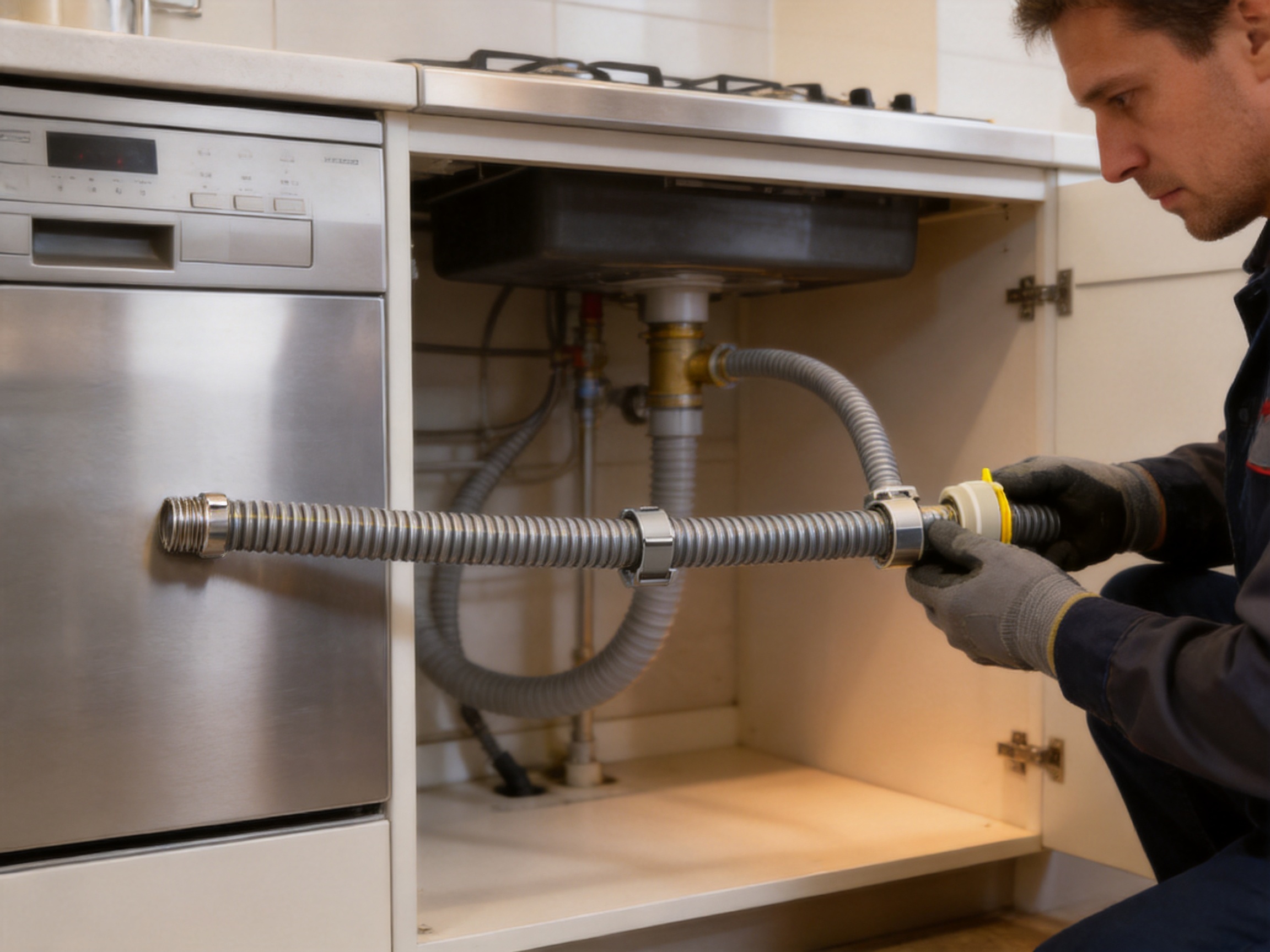
Only qualified personnel familiar with gas installation practices should install or replace a gas hose. Local laws and technical standards take priority over general product information. Before installation, confirm the gas type, operating pressure, required flow, connection sizes, thread standards, length, temperature exposure, and product approval requirements.
Inspect the hose before use. Check the stainless steel bellows, PE coating, metal fittings, threaded areas, clips, and sealing components. Do not install a hose with cuts, deep scratches, crushed corrugations, loose fittings, damaged threads, missing seals, or signs of deformation.
Select a length that permits a natural route between the fixed pipe and appliance. The hose should not be stretched tight, folded, sharply bent, twisted, kinked, or looped into a small radius. Corrugated metal hoses are flexible, but flexibility does not mean they can tolerate unlimited deformation.
Align the fittings before tightening. Cross-threading can damage the connector and prevent proper sealing. Use the correct seal or sealing method for the specific connection design. Thread sealants should not be applied automatically to every connection because some fittings seal through a gasket, washer, cone, or defined mating face rather than through the threads.
Do not use the hose as a support for the appliance. The appliance should be independently supported, and the hose should only perform its intended connection function. Avoid placing the hose under a heavy appliance or routing it where doors, drawers, wheels, or moving panels can crush it.
After installation, carry out a suitable leak test using an approved method. Never use an open flame to search for gas leaks. Check the connection while the system is pressurized according to the applicable procedure, and inspect the hose again after the appliance has been moved into its final position.
Where quick-release clips are provided, confirm that each clip is fully engaged and locked. Check that the connector is seated correctly and that the assembly has not been pulled out of alignment. If the connection is difficult to engage, stop and investigate rather than forcing the components together.
Maintenance and Service Life
Routine inspection helps identify problems before they become serious. The hose should be checked for coating damage, corrosion, unusual discoloration, crushed corrugations, exposed metal, fitting movement, thread damage, and signs of leakage. Inspection frequency should reflect the installation environment and the requirements of local regulations.
Cleaning should be performed with methods and products compatible with polyethylene and stainless steel. Harsh solvents, abrasive tools, strong acids, and aggressive alkaline cleaners may damage the coating or affect the metal surface. The hose should not be painted unless the manufacturer and relevant authority approve the coating system.
If an appliance is moved, the hose should be inspected before and after movement. Repeated repositioning can place stress on the fittings and corrugations. The hose must never be rotated by twisting the appliance or used to pull the appliance into position.
There is no universal service life for every installation. Actual durability depends on gas composition, pressure, temperature, movement, humidity, chemical exposure, installation quality, and inspection practice. Replacement should be considered whenever damage is found or when required by local rules, appliance instructions, or the system owner’s maintenance program.
Why Manufacturing Strength Matters to Buyers
For distributors and equipment manufacturers, product quality is closely linked to production capability. A hose can have an attractive specification yet perform inconsistently if the manufacturing process is poorly controlled. Dimensional variation may cause fitting mismatch, while inconsistent forming may affect flexibility and fatigue behavior.
A manufacturer with dedicated welding, forming, coating, assembly, and testing resources can control more stages internally. This may reduce dependence on multiple external suppliers and improve communication between engineering, production, and quality teams. It also makes it easier to investigate nonconforming products and implement corrective action.
Integrated production is particularly useful for OEM and ODM customers. The company can potentially support customized hose lengths, connection arrangements, packaging requirements, labeling, and product family development. Customization should be confirmed through technical review because changes to length, fittings, coating, or bellows geometry may affect pressure loss, bending behavior, and certification requirements.
Testing resources also strengthen buyer confidence. Material analysis helps confirm raw material identity. Dimensional checks verify the physical configuration. Leak or tightness testing checks pressure integrity. Visual and assembly inspections identify surface and fitting defects. Together, these controls create a more reliable basis for product acceptance than appearance alone.
Procurement Checklist
Buyers should define the application before requesting a quotation. Important information includes the gas type, operating pressure, appliance input, connection dimensions, required length, ambient temperature, installation location, movement conditions, and required approvals.
| Procurement question | Why it matters |
| What gas will be used? | Material compatibility and approval requirements may vary by gas service. |
| What is the operating pressure? | The hose must be suitable for the pressure of the complete installation. |
| What are the connector dimensions and thread standards? | Nominal size alone may not guarantee compatibility. |
| What length is required? | A correct length prevents stretching, tight bending, or excessive loops. |
| Will the hose experience vibration or movement? | Dynamic conditions influence routing, support, and inspection requirements. |
| Will it be exposed to heat, moisture, chemicals, or abrasion? | Environmental conditions affect coating and service-life expectations. |
| What approvals are required? | Destination markets and gas authorities may require specific certifications. |
| Are customized fittings or packaging needed? | Early confirmation helps align design, tooling, production, and documentation. |
For larger orders, buyers should request samples, dimensional drawings, material information, test reports, inspection procedures, packaging details, and traceability arrangements. A sample should be evaluated not only for appearance but also for fitting compatibility, bending behavior, coating quality, and installation practicality.
Quality, Compliance, and Documentation
Gas connection products are safety-related components. Technical documentation should identify the product model, dimensions, materials, connector configuration, pressure and temperature limits, applicable gas types, installation requirements, and inspection procedures. Documentation should be consistent with the product actually supplied.
The manufacturer reports quality system implementation, pressure pipeline manufacturing licensing in China, and CE certification testing reports for the European market. These statements provide useful background, but certification is always scope-specific. Customers should verify whether a particular certificate applies to the exact ZLR-15 configuration, destination country, gas service, and intended application.
Importers and distributors should also check labeling and packaging requirements. Product identification should remain legible through storage and transportation. Packaging should protect the fittings and coated hose from impact, contamination, moisture, and deformation. Batch or production records can help support later investigation if a field issue arises.
Environmental and Practical Benefits
The use of a durable stainless steel structure can support longer use compared with connection products that deteriorate rapidly in ordinary service. A longer-lasting component may reduce replacement frequency, material consumption, and maintenance interruption. These benefits depend on correct application and do not justify extending service beyond regulatory or safety requirements.
The hose’s flexibility can also reduce installation material usage. A rigid connection may require several elbows, nipples, adapters, and supports to achieve the same final route. A purpose-designed flexible connection can simplify the assembly and reduce the number of joints. Fewer components may mean less installation time and fewer opportunities for assembly error.
At the end of its service life, the stainless steel component and metal fittings may be suitable for metal recycling where local recycling systems accept them. The PE coating and other non-metallic materials may require separate handling. Recycling decisions should follow local waste management procedures.
Application Boundaries
The ZLR-15 is intended for gas appliance connection applications, not as an unrestricted substitute for all gas piping. It should not be buried, embedded in concrete, used as a permanent structural support, exposed to direct flame, or installed in a manner that prevents inspection unless the design and relevant authority specifically permit such use.
It should not be connected to incompatible threads or forced to compensate for major misalignment. A flexible hose can accommodate limited positioning differences, but significant misalignment should be corrected through proper system design. Likewise, the hose should not be used where its pressure, temperature, chemical resistance, or flow capacity is unknown.
Before adopting the product for a large industrial project, the engineering team should confirm all operating parameters and conduct any required qualification testing. This is especially important where the hose will experience frequent cyclic movement, high temperatures, outdoor exposure, corrosive atmospheres, or unusual gas mixtures.
Business Value for OEM and ODM Customers
OEM and ODM customers often require more than a standard product. They may need private labeling, special connector combinations, fixed packaging quantities, customized lengths, or integration into a complete appliance kit. A manufacturer with in-house development, forming, welding, coating, and testing capability can be better positioned to coordinate these requirements.
The company’s product portfolio covers related components such as natural gas pipelines, plumbing fittings, valves, plastic products, and hardware. This breadth may help customers consolidate sourcing for complementary products. A coordinated supply arrangement can simplify purchasing, technical communication, and quality management.
Customization should be handled through a documented engineering process. The customer and manufacturer should confirm drawings, tolerances, materials, connection standards, inspection criteria, labeling, and approval requirements before mass production. Prototype approval and first-article inspection are recommended for new configurations.
Frequently Asked Questions
What is the main purpose of the ZLR-15?
The ZLR-15 is designed to provide a flexible connection between gas appliances and compatible gas piping systems. Its stainless steel corrugated bellows accommodates limited movement and vibration while its metal end fittings provide a defined connection interface.
What material is used for the corrugated tube?
The listed product configuration uses SS304 stainless steel for the spiral corrugated bellows. SS304 is valued for its strength, formability, and corrosion resistance in many gas appliance environments.
What protection does the PE coating provide?
The polyethylene outer coating helps protect the stainless steel tube from moisture, abrasion, dirt, and environmental wear. It should still be protected from sharp objects, direct flame, excessive heat, and aggressive chemicals.
What size is the ZLR-15?
The listed configuration is DN15, with an approximate outside diameter of 20 mm and inside diameter of 18 mm. The standard length range is listed as 30 cm to 60 cm. Connection compatibility must be checked using the complete thread and sealing specifications.
Can the hose be used with any gas appliance?
No. The appliance connection, gas type, pressure, flow requirement, temperature, installation location, and local approval requirements must all be compatible. A qualified installer should confirm suitability before installation.
Does the hose eliminate the need for leak testing?
No. Every gas connection must be checked after installation, reconnection, or service. Leak testing should use an approved method, and an open flame must never be used to locate a leak.
Can the hose be bent sharply to fit a small space?
No. The hose should be routed with smooth bends and within the manufacturer’s specified minimum bending radius. Sharp bends, kinks, crushing, and twisting can damage the bellows or fittings.
Can the hose support the weight of an appliance?
No. The appliance must be independently supported. The hose is intended only to connect the appliance to the gas piping system and should not be used as a bracket, support, handle, or restraint.
What are the advantages of the metal fittings?
Metal fittings provide a strong transition from the corrugated tube to the gas system. They offer defined threaded or flanged interfaces and can support a secure assembly when the correct seals, tools, torque practices, and compatible components are used.
What is the role of the quick-release clip?
The quick-release clip is intended to make compatible connections faster to assemble and disconnect. It must be fully engaged and checked after installation. Its use does not replace isolation, inspection, or leak testing.
Is the ZLR-15 suitable for industrial applications?
It may be suitable for selected industrial gas appliance or equipment connections when all pressure, temperature, flow, movement, material, and certification requirements are satisfied. Industrial users should complete an engineering review before adoption.
What manufacturing strengths support this product?
The manufacturer reports multiple welding and forming production lines, hydrogen furnace production lines, metal material analysis equipment, flow tightness testers, and an integrated research, design, manufacturing, and trading operation. These resources support material verification, forming consistency, assembly control, and leak testing.
Can customized versions be produced?
The company provides OEM and ODM manufacturing services and produces a range of metal hoses and pipe-related products. Customized lengths, fittings, packaging, and configurations should be confirmed through technical drawings and formal product approval before production.
How should the hose be stored?
Store the hose in a clean, dry location away from direct sunlight, excessive heat, sharp objects, corrosive chemicals, and heavy loads. Avoid tight coils, crushing, and bending during storage and transportation.
Conclusion
The Stainless Steel Corrugated Gas Hose with Metal Flange ZLR-15 is engineered as a practical flexible connection for gas appliances. Its principal advantages come from the combination of SS304 stainless steel corrugated tubing, PE external protection, metal flange and threaded connectors, and quick-release connection features. Together, these elements provide flexibility, corrosion resistance, vibration accommodation, mechanical protection, and installation convenience.
Compared with rigid pipe, the ZLR-15 can simplify final appliance connections and accommodate limited movement. Compared with basic polymer hoses, its metallic bellows offers greater structural durability and dimensional stability. Compared with uncoated corrugated metal hose, the PE layer provides additional protection against environmental wear and contact damage.
The product’s value is also supported by the manufacturer’s reported industrial infrastructure. Multiple welding and forming lines, controlled thermal processing, material analysis equipment, flow tightness testing, quality management practices, and an experienced research and production team provide a foundation for consistent manufacturing. The company’s broader product portfolio and OEM/ODM capabilities further support customers seeking coordinated sourcing and customized pipe connection solutions.
Successful performance depends on correct selection and installation. The hose must match the gas service, pressure, flow, thread standards, temperature, length, and applicable regulations. It must be routed without twisting or sharp bending, protected from damage, independently supported from the appliance, and leak-tested after installation. When these requirements are followed, the ZLR-15 can provide a durable and efficient connection solution for residential, commercial, and selected industrial gas systems.
References
1. Product specification and technical description for the Stainless Steel Corrugated Gas Hose with Metal Flange ZLR-15.
2. Manufacturer-provided information on SS304 stainless steel spiral bellows, polyethylene coating, metal connectors, quick-release clips, and listed dimensions.
3. Manufacturer-provided company profile covering welding and forming production lines, furnace equipment, material analysis, flow tightness testing, and quality management practices.
4. General principles of stainless steel material selection for flexible metallic hose and appliance connection applications.
5. General gas installation practice for flexible appliance connectors, threaded fittings, leak testing, routing, inspection, and maintenance.
6. General quality control principles for welded, formed, coated, and pressure-tested metallic hose assemblies.