 English
 中文简体
中文简体 Español
 عربى
عربى
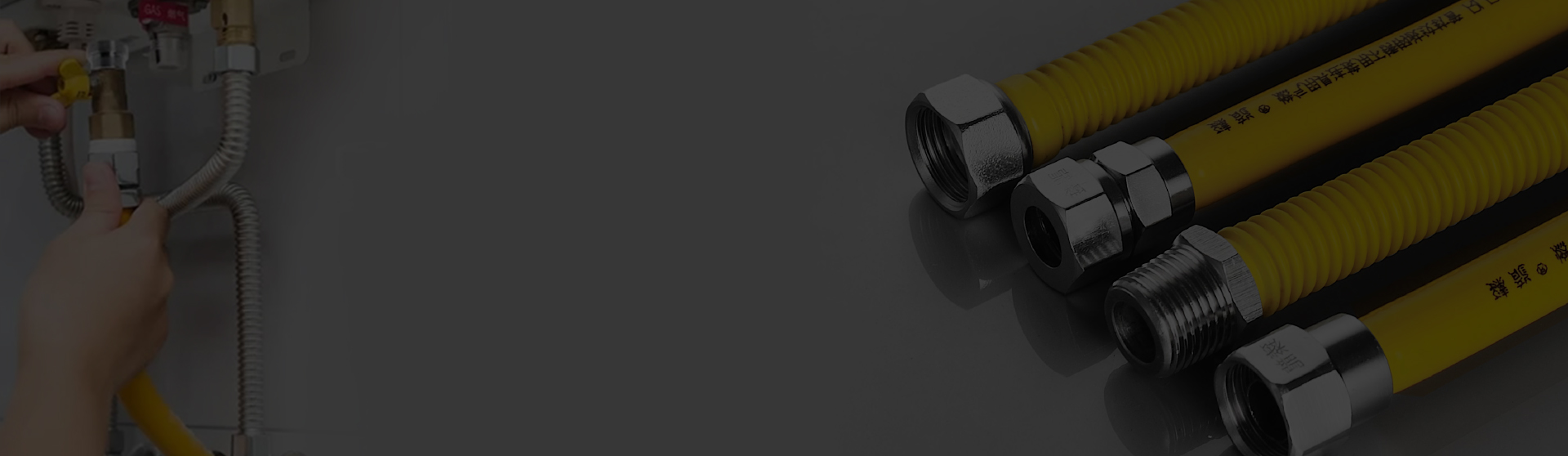

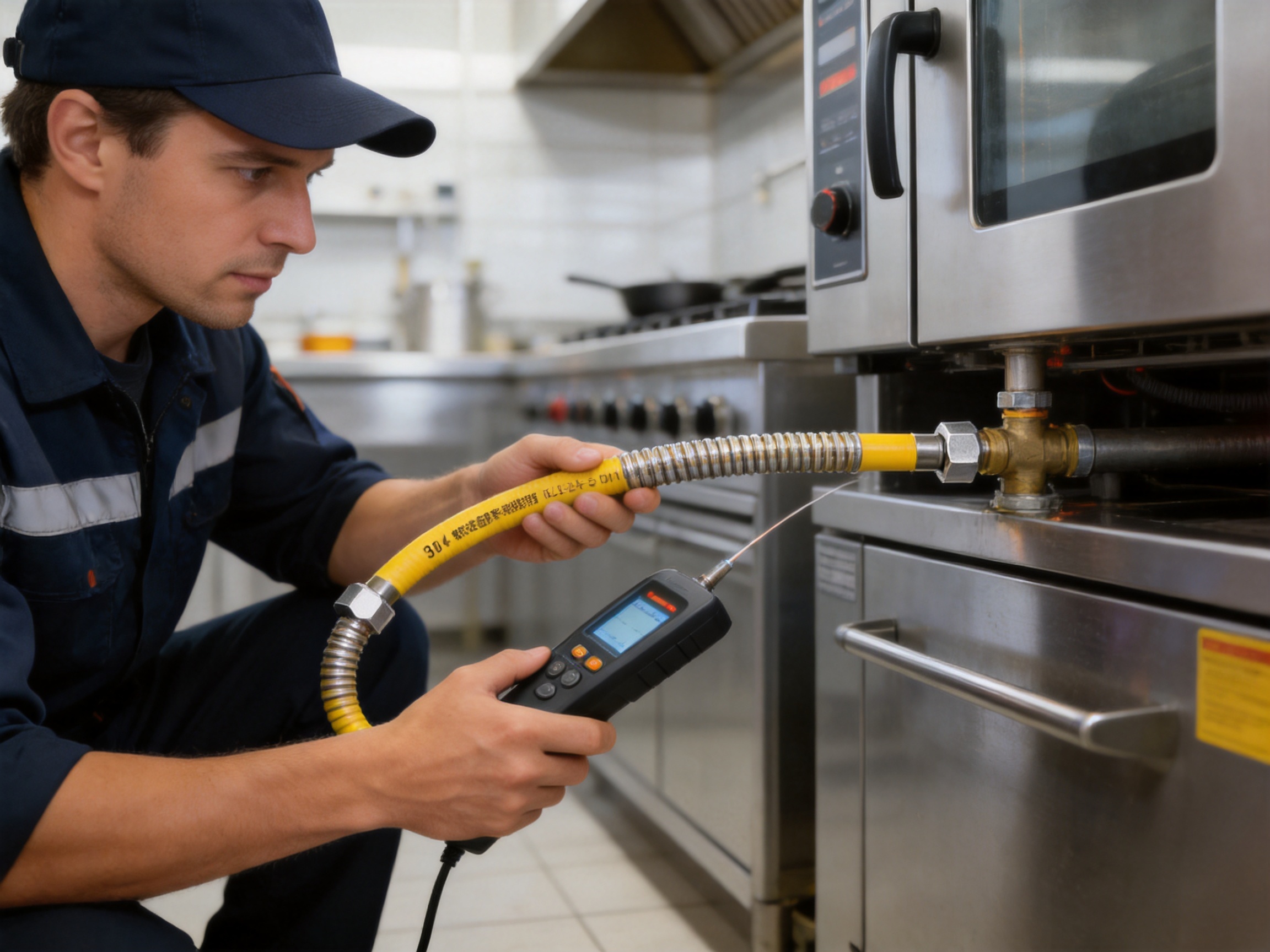
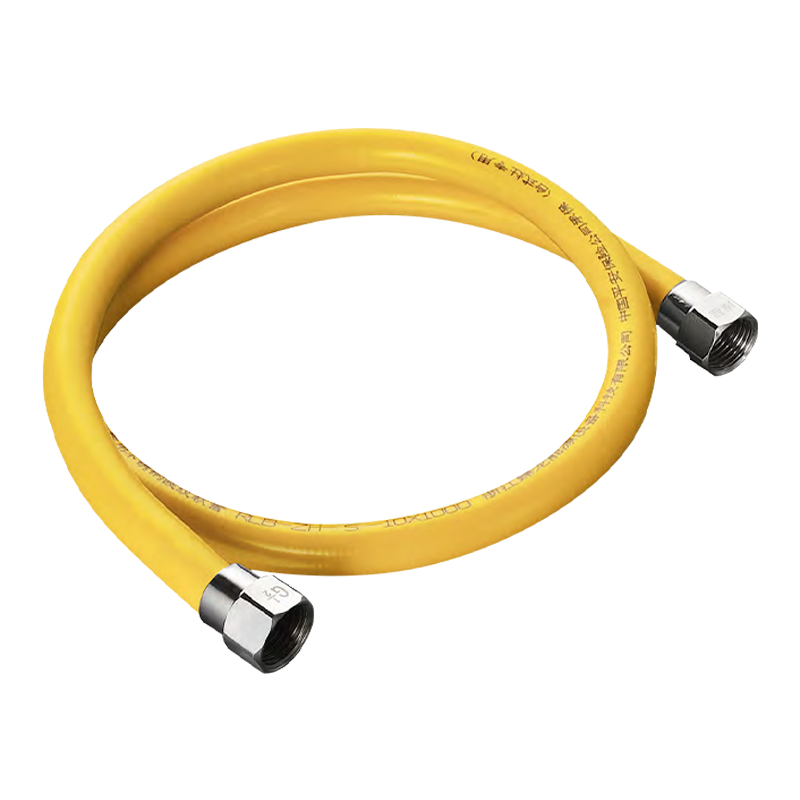
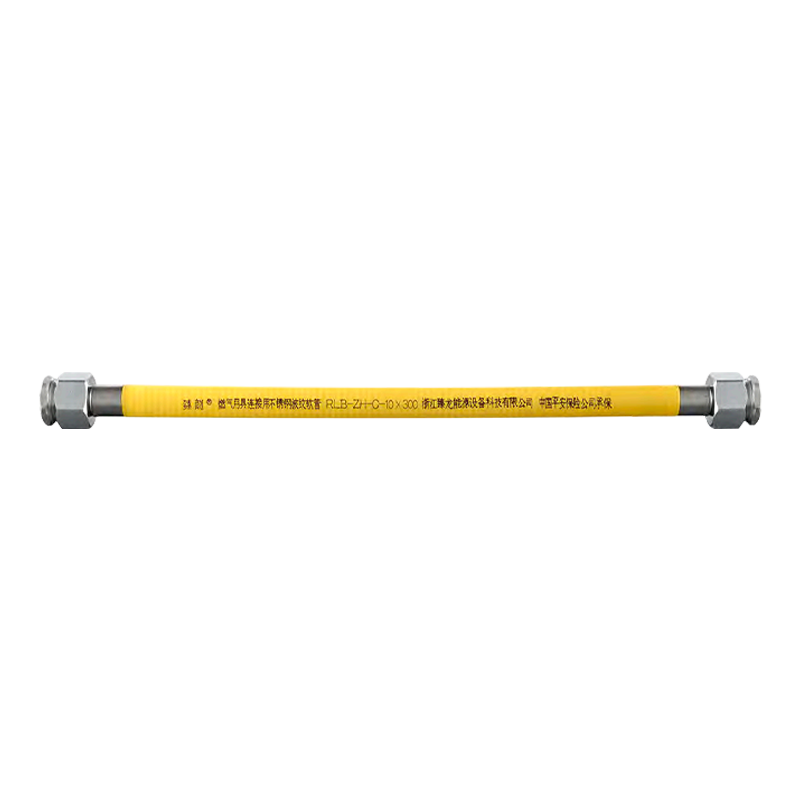
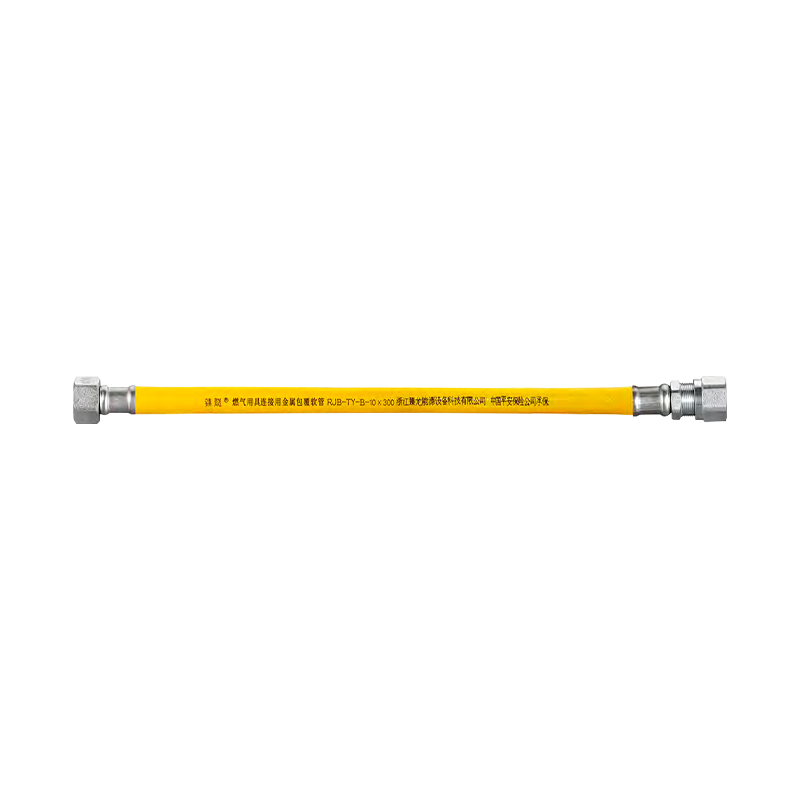
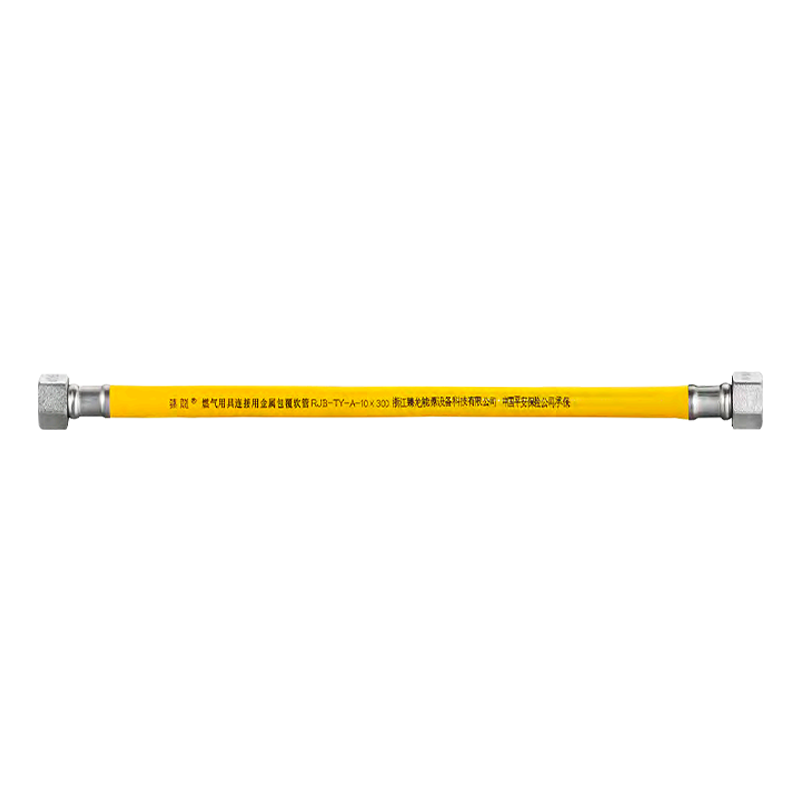
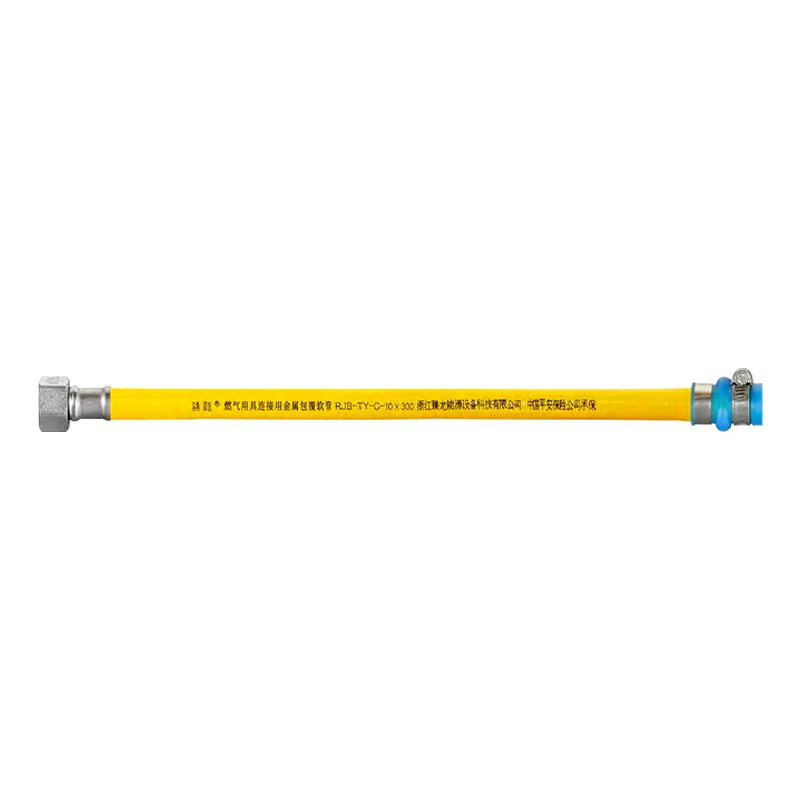
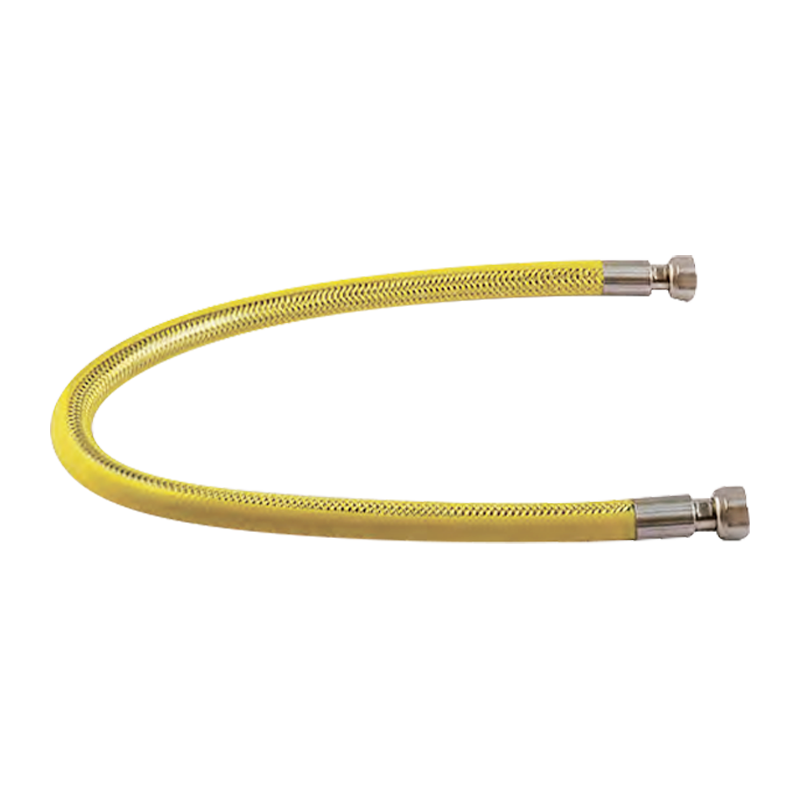
Gas appliance connections demand more than a simple flexible tube. They require a component that can accommodate movement, resist corrosion, maintain a dependable seal, and continue operating safely under changing temperature and pressure conditions. The Stainless Steel Corrugated Gas Hose, Precision Machined ZLR-07 is designed for this demanding role. Manufactured with a 304 stainless steel bellows, carefully engineered connection components, and a protective PVC cover, the hose combines flexibility with mechanical strength in a compact and practical assembly.
The ZLR-07 belongs to the category of stainless steel corrugated tubes for connecting gas appliances. It is suitable for applications in which a fixed gas pipe must connect to a movable or vibration-sensitive appliance. Its corrugated metal body allows controlled bending, while the stainless steel construction provides strong resistance to rust, heat, and pressure. The result is a connection hose designed to support long-term service in residential, commercial, and industrial environments where reliability is essential.
Unlike ordinary smooth-wall rubber or low-grade plastic hoses, a precision-machined corrugated stainless steel gas hose can provide a better balance between flexibility and structural stability. The corrugated profile allows the hose to bend without requiring the metal tube to become excessively thin. At the same time, the 304 stainless steel body helps protect the internal passage against environmental deterioration. When paired with stainless steel nuts, flat washers, sleeves, and turn-in fittings, the complete assembly forms a dependable connection system rather than merely a flexible tube.
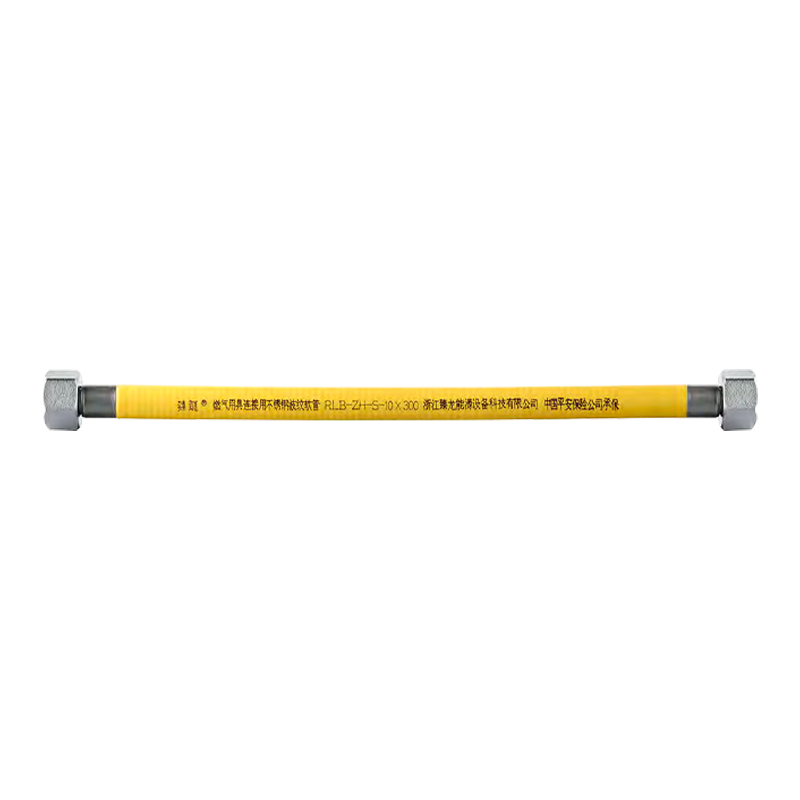
Stainless steel corrugated gas hose, precision machined ZLR-07
Content
- 1 Product Overview
- 2 Why Corrugated Stainless Steel Is Suitable for Gas Connections
- 3 Precision Corrugation and Controlled Flexibility
- 4 304 Stainless Steel Construction
- 5 Connection Components Designed for Sealing
- 6 Protective PVC Cover
- 7 Advantages Compared with Conventional Flexible Hoses
- 8 Advanced Manufacturing Capabilities
- 9 Quality Management and Compliance Orientation
- 10 Application Areas
- 11 Installation Considerations
- 12 Maintenance and Service Life
- 13 Why Choose This Product for OEM and ODM Projects
- 14 Comparison with Common Competitor Designs
- 15 Purchasing and Technical Evaluation Guide
- 16 Company Manufacturing Strengths
- 17 Safety Responsibilities
- 18 Q&A
- 18.1 What is the main purpose of the ZLR-07?
- 18.2 What material is used for the corrugated body?
- 18.3 What is the listed nominal size?
- 18.4 What connection components are included?
- 18.5 What lengths are available?
- 18.6 Why is a flat washer used?
- 18.7 Can the hose be used outdoors?
- 18.8 Can the hose be used for liquids as well as gas?
- 18.9 Is the PVC cover pressure-bearing?
- 18.10 How should the hose be bent?
- 18.11 How can the hose be checked for leakage?
- 18.12 What makes this product different from an ordinary rubber hose?
- 18.13 Can the product be customized?
- 18.14 What manufacturing equipment supports the product?
- 18.15 Does the product have certification support?
- 19 Conclusion
- 20 References
- 21 Product: Stainless steel corrugated gas hose, precision machined ZLR-07
Product Overview
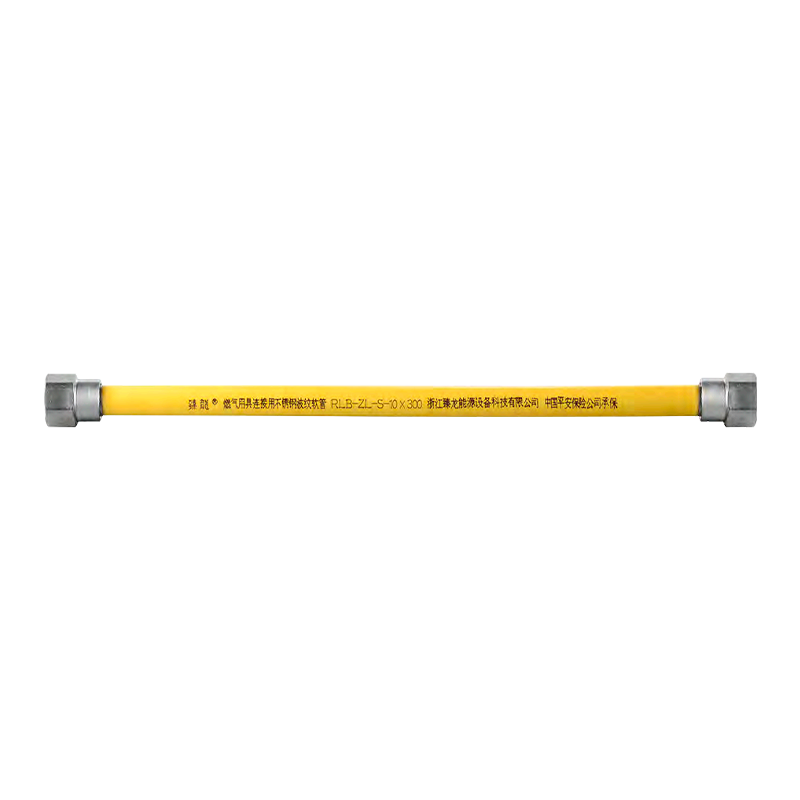
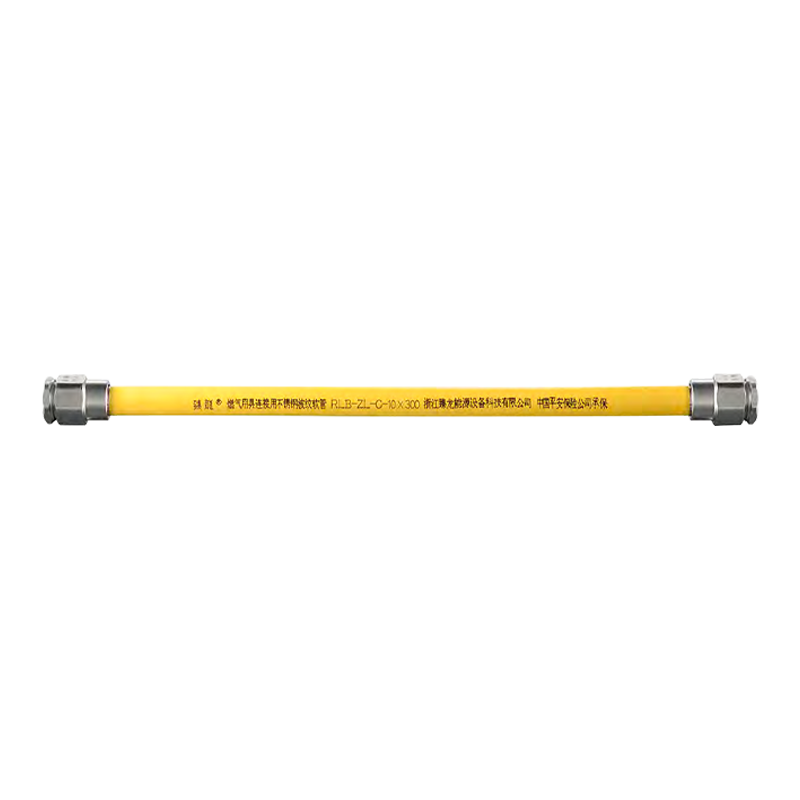
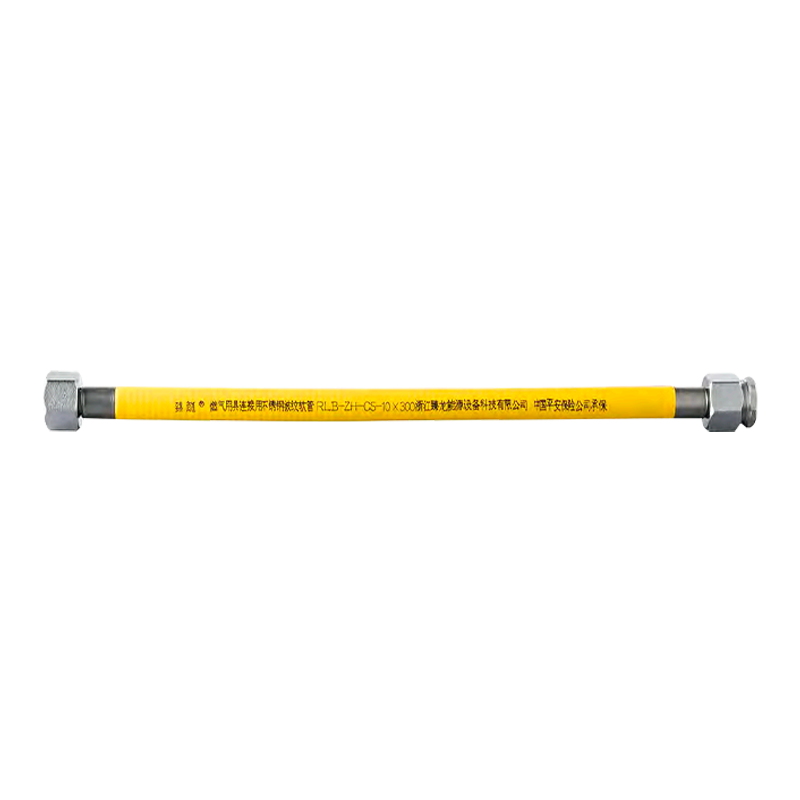
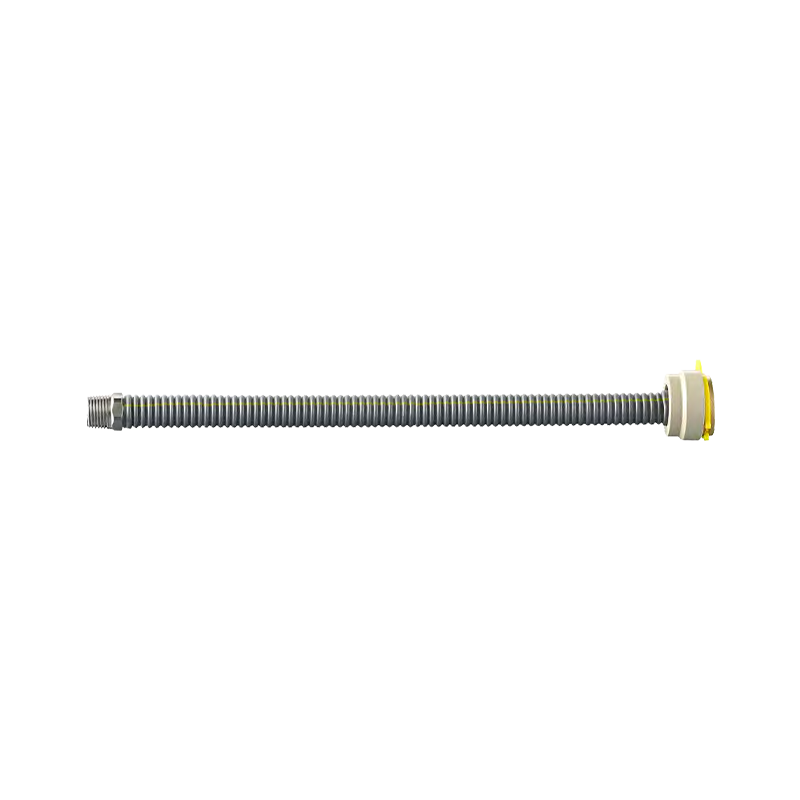
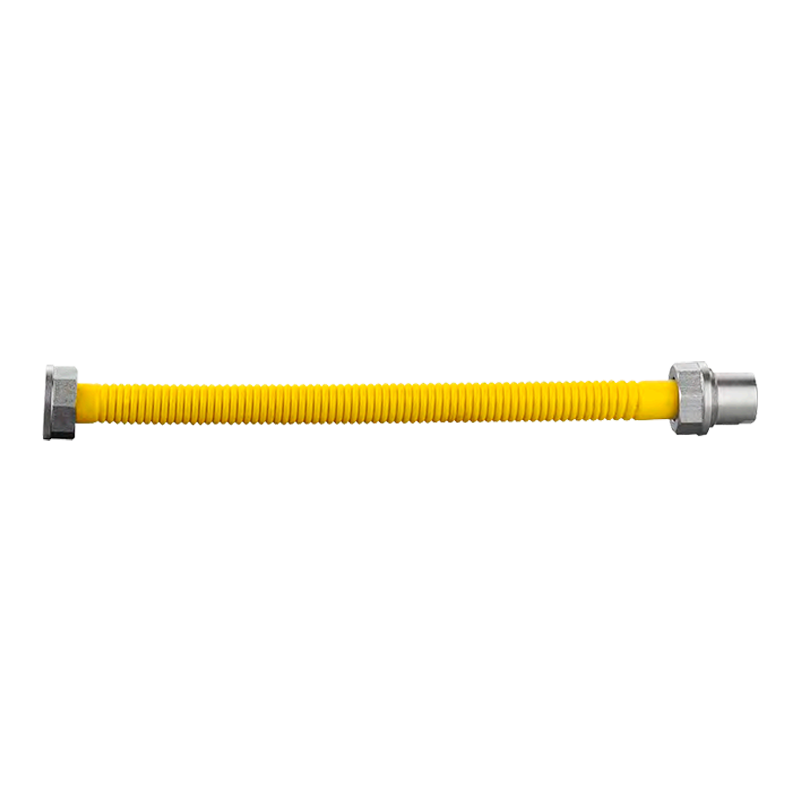
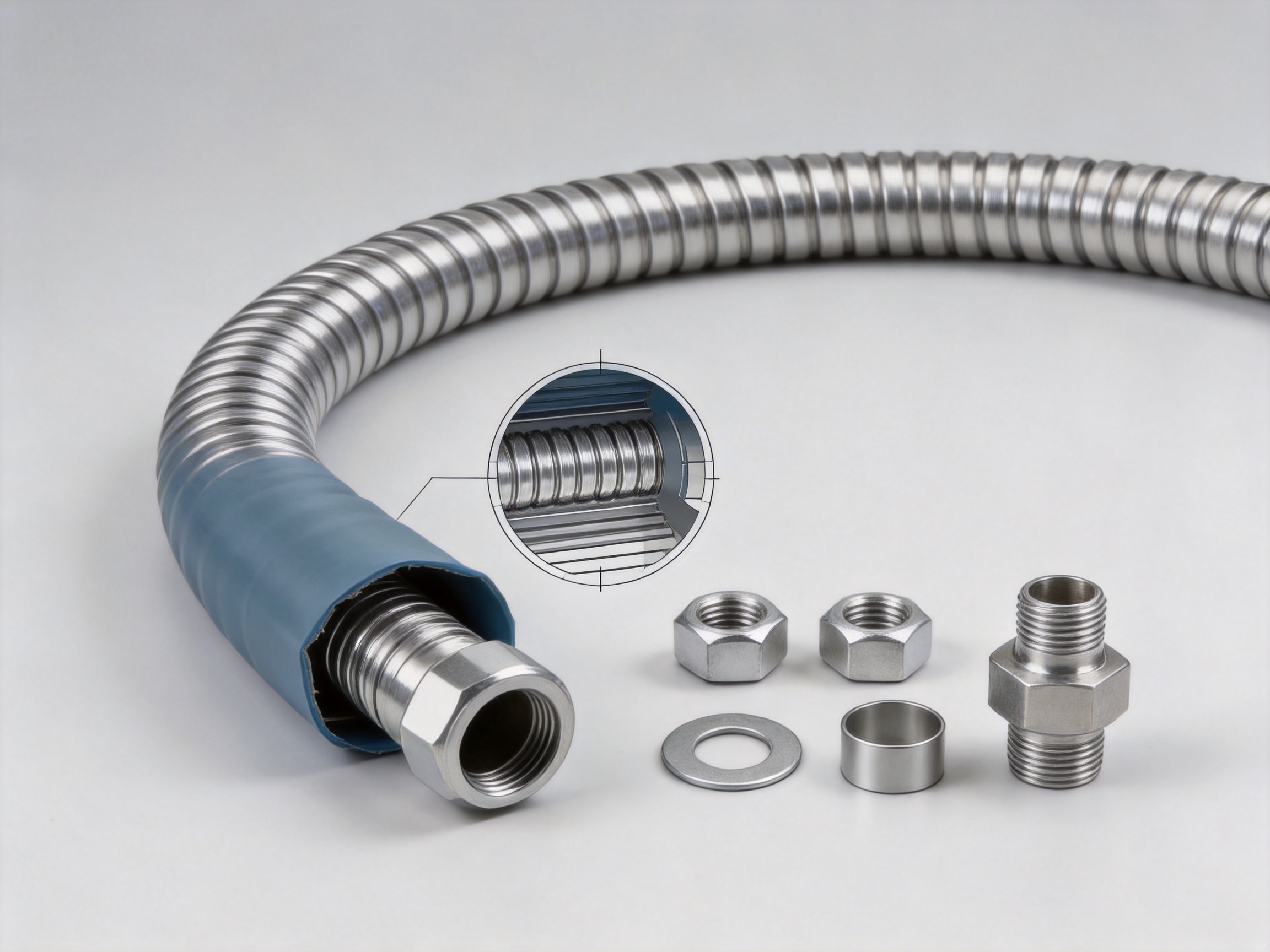
The ZLR-07 is identified by the model specification RLB-ZL-C-10X300 and is configured for a DN10 connection. Its listed outside diameter is 16 millimeters, and standard lengths range from 300 millimeters to 2,000 millimeters. The assembly includes a G1/2 nut, a flat washer, a 304 stainless steel bellows, a PVC cover, a stainless steel sleeve, and a turn-in fitting.
These components are selected to work together. The bellows provides flexibility and pressure containment. The PVC cover adds an external protective layer that helps shield the corrugated metal from accidental contact, surface contamination, and minor abrasion. The stainless steel sleeve supports the end area and helps maintain the mechanical integrity of the connection. The nut and flat washer contribute to sealing and load distribution, while the turn-in fitting enables connection to the related gas appliance or pipe fitting.
The design is particularly useful where an appliance may need to be moved slightly during installation, inspection, cleaning, or maintenance. A rigid connection can transmit excessive force to the appliance inlet, pipe thread, or building pipeline. By contrast, the ZLR-07 offers controlled flexibility, reducing the need to force the pipe into alignment. This can make installation more orderly and can reduce unnecessary stress on adjacent components.
| Item | Specification | Details |
|---|---|---|
| Product model | ZLR-07 | Stainless steel corrugated gas hose |
| Model specification | RLB-ZL-C-10X300 | Configured product designation |
| Nominal size | DN10 | Nominal connection size |
| Outside diameter | 16 mm | Listed external diameter |
| Main bellows material | 304 stainless steel | Corrugated pressure-bearing body |
| Connection nut | G1/2 | Stainless steel nut assembly |
| Sealing component | Flat washer | Helps distribute tightening force |
| Outer protection | PVC cover | Additional protection for the bellows |
| End support | Stainless steel sleeve | Reinforces the connection region |
| Fitting | Turn-in fitting | Connection component for installation |
| Available length | 300–2,000 mm | Length options for different layouts |
Why Corrugated Stainless Steel Is Suitable for Gas Connections
A gas hose must perform under conditions that are more complex than those encountered by many general-purpose flexible tubes. It may be exposed to heat from nearby appliances, humidity, cleaning agents, vibration, repeated minor movement, and installation forces. The hose must also preserve a clear internal passage and a stable connection over time.
Corrugation changes the mechanical behavior of a metal tube. Instead of relying on a straight, rigid wall to absorb all bending, the corrugated profile allows the tube to flex through the movement of its formed ribs. This makes it possible to route the hose around limited obstacles and connect appliances that are not perfectly aligned with the supply pipe. The corrugations also provide a degree of movement absorption, helping the assembly accommodate thermal expansion, vibration, and service adjustments.
304 stainless steel is widely used for components that require a combination of corrosion resistance, formability, strength, and clean appearance. In a gas hose, these properties are valuable because the material must be formed into a regular bellows pattern without losing its structural consistency. It must also tolerate the normal environmental conditions found around kitchens, utility rooms, commercial equipment, and industrial service areas.
The stainless steel body offers an important advantage over many conventional flexible materials: it does not depend solely on a soft polymer wall to retain its shape and resist external damage. Rubber and plastic hoses can be useful in appropriate applications, but their service life may be affected by aging, heat, ultraviolet exposure, oil contact, and mechanical wear. A stainless steel corrugated hose provides a metal pressure-containing structure, while the PVC cover supplies an additional external barrier.
Material selection alone does not determine hose performance. Forming quality, weld quality, end preparation, fitting accuracy, sealing design, and inspection procedures are equally important. The ZLR-07 is intended to benefit from the combination of a suitable stainless steel material and precision manufacturing methods.
Precision Corrugation and Controlled Flexibility
The central feature of the ZLR-07 is its corrugated bellows. A well-formed corrugated tube must have consistent ribs, uniform spacing, and a stable wall profile. Irregular forming can create local stress concentrations, uneven flexibility, or an inconsistent internal passage. Precision machining and controlled forming help create a more predictable component.
Controlled flexibility is different from unrestricted softness. A gas hose should bend within its intended installation radius, but it should not be treated as a rope or repeatedly folded back and forth. The purpose of the corrugations is to provide practical installation movement while preserving the pressure-bearing function of the tube. A properly manufactured hose gives the installer flexibility where it is needed without sacrificing the strength of the assembly.
The corrugated body can also help reduce the transfer of vibration between a fixed pipe and an appliance. Gas appliances may generate small mechanical movements during operation, switching, combustion, or fan operation. A rigid pipe can transmit these movements directly to threaded joints. A flexible corrugated section can help isolate the connection, provided that it is installed correctly and not subjected to excessive movement.
The profile is also beneficial when the appliance position must be adjusted. During installation, an appliance may need to move forward for cleaning or service. A hose with a suitable length can allow limited movement without requiring the supply pipe to be modified. This practical feature can simplify layouts and reduce the number of rigid elbows or adapters required.
304 Stainless Steel Construction
The 304 stainless steel bellows is the primary structural element of the ZLR-07. This grade is recognized for its balanced corrosion resistance and mechanical performance. It is suitable for many indoor and general service environments and provides a durable surface that is easier to maintain than materials susceptible to rapid oxidation.
Resistance to corrosion is especially important near water, steam, cleaning products, and humid air. Gas appliance areas are not always dry or clean. Cooking vapors, condensation, detergents, and accidental splashing can expose a hose to conditions that gradually degrade unprotected metals. The stainless steel construction helps the hose retain its integrity in these environments.
Stainless steel also performs well across a broad range of normal operating temperatures. Although the approved operating temperature and pressure must always be confirmed for the particular installation, the material itself is well suited to areas where a hose may be positioned near a warm appliance. Its high-temperature resistance is a practical advantage over materials that soften or age quickly when exposed to heat.
The metallic body also gives the product a strong level of dimensional stability. It is less likely than a soft hose to collapse under ordinary external contact or lose its shape during installation. This does not make the hose immune to crushing, sharp bending, or impact. Instead, it means that the construction is designed to offer a stronger mechanical foundation for a flexible connection.
Another advantage is long-term appearance. A stainless steel surface can remain clean and presentable when maintained correctly. In visible appliance installations, this contributes to a professional finish. The PVC cover adds another visual and protective layer, helping to reduce direct exposure of the bellows to everyday contact.
Connection Components Designed for Sealing
A flexible hose is only as reliable as its end connections. Even a strong bellows can fail to provide safe service if the fittings are inaccurate, the threads are damaged, or the sealing surfaces are poorly matched. The ZLR-07 therefore includes a set of connection components designed to work as an integrated assembly.
G1/2 Stainless Steel Nut
The G1/2 nut provides the threaded connection interface indicated in the product specification. Stainless steel offers good mechanical durability and helps resist corrosion at the connection point. The nut must be tightened using an appropriate method and torque according to the installation requirements. Over-tightening can damage sealing surfaces or threads, while insufficient tightening may permit leakage.
Flat Washer
The flat washer helps distribute the tightening force over the sealing area. Rather than concentrating the load on a narrow point, the washer creates a broader contact interface. This can reduce localized stress and support a more stable seal. The washer should be clean, correctly positioned, and compatible with the connection design. It should not be replaced with an unsuitable component merely because it appears similar.
Stainless Steel Sleeve
The stainless steel sleeve reinforces the end region of the hose. Connections are areas where the assembly experiences mechanical loads from bending, tightening, and handling. A sleeve can support the transition between the corrugated body and the fitting, helping the end of the hose maintain its intended geometry.
Turn-In Fitting
The turn-in fitting provides the final connection element for the appliance or related pipe fitting. Precision machining is important because the fitting must align correctly with the mating component. A clean thread, accurate geometry, and smooth contact surface can simplify installation and reduce the likelihood of cross-threading or uneven engagement.
The combination of these components reflects a complete-system approach. Competitor products may offer a flexible tube without the same level of attention to the end assembly, or they may use fittings that are not optimized for the hose body. The ZLR-07 is designed as a coordinated product in which the bellows, protective cover, sleeve, nut, washer, and fitting contribute to overall performance.
Protective PVC Cover
The external PVC cover provides a secondary layer around the stainless steel corrugated body. It helps limit direct contact between the metal bellows and surrounding surfaces. In practical installations, a hose may touch a cabinet panel, pass close to an appliance housing, or be handled during service. The cover can help reduce the effect of minor abrasion and surface contamination.
The cover also provides a visual indication of the hose route and gives the product a smoother external profile than an exposed bellows. This can make cleaning and general inspection more convenient. However, the cover should not be viewed as permission to install the hose against sharp edges, hot surfaces, moving parts, or areas where it may be crushed.
The protective layer is one of the features that differentiates the ZLR-07 from a bare corrugated metal tube. It offers an additional degree of protection while retaining the mechanical benefits of stainless steel underneath. For installers, this combination can simplify the handling of the hose and reduce concern about incidental contact during normal installation.
Advantages Compared with Conventional Flexible Hoses
The ZLR-07 offers several potential advantages over ordinary rubber, plastic, or basic unprotected metal hoses when the application requires a durable appliance connection.
Improved Corrosion Resistance
304 stainless steel is inherently more resistant to corrosion than untreated carbon steel. This is valuable in kitchens, utility spaces, food-service areas, and industrial environments where moisture or cleaning agents may be present. Better corrosion resistance can support a longer useful service life, subject to correct installation and the actual environmental conditions.
Greater Temperature Capability
A metal bellows is well suited to locations where the surrounding temperature may fluctuate or where the connection is positioned near a warm appliance. Compared with some polymer hoses, stainless steel is less prone to softening or losing shape as temperatures rise. The allowable operating temperature must still be confirmed against applicable standards and application requirements.
Strong Pressure-Bearing Structure
The stainless steel bellows provides a robust pressure-containing body. The corrugated construction combines flexibility with a metal wall, giving the hose a stronger structure than many soft-wall alternatives. This can be especially valuable where the hose may experience minor external contact or vibration.
Installation Flexibility
The flexible profile allows the hose to accommodate limited misalignment between the supply line and appliance inlet. It can reduce the need for multiple rigid fittings and make the final connection cleaner. Available lengths from 300 millimeters to 2,000 millimeters provide options for short connections and longer routing requirements.
Reliable Sealing Arrangement
The stainless steel nut, flat washer, sleeve, and precision-machined fitting are designed to support a stable connection. The flat washer distributes force and helps create an effective sealing interface when correctly installed. A coordinated connection design can be more dependable than an improvised combination of unrelated adapters.
Long-Term Mechanical Stability
Metal construction gives the hose a stable foundation that is less dependent on the condition of a soft polymer wall. The cover adds protection, while the bellows maintains the core mechanical function. This combination is beneficial when the hose must remain serviceable over an extended period.
Advanced Manufacturing Capabilities
Zhejiang Zhenlong Energy Equipment Technology Co., Ltd. operates as an energy equipment manufacturer integrating research, development, manufacturing, processing, and trade. Its product scope includes metal hoses, natural gas pipelines, plumbing fittings, sanitary ware, valves, plastic products, and hardware. This broad product experience supports a practical understanding of how flexible hoses interact with fittings, valves, appliance connections, and pipeline systems.
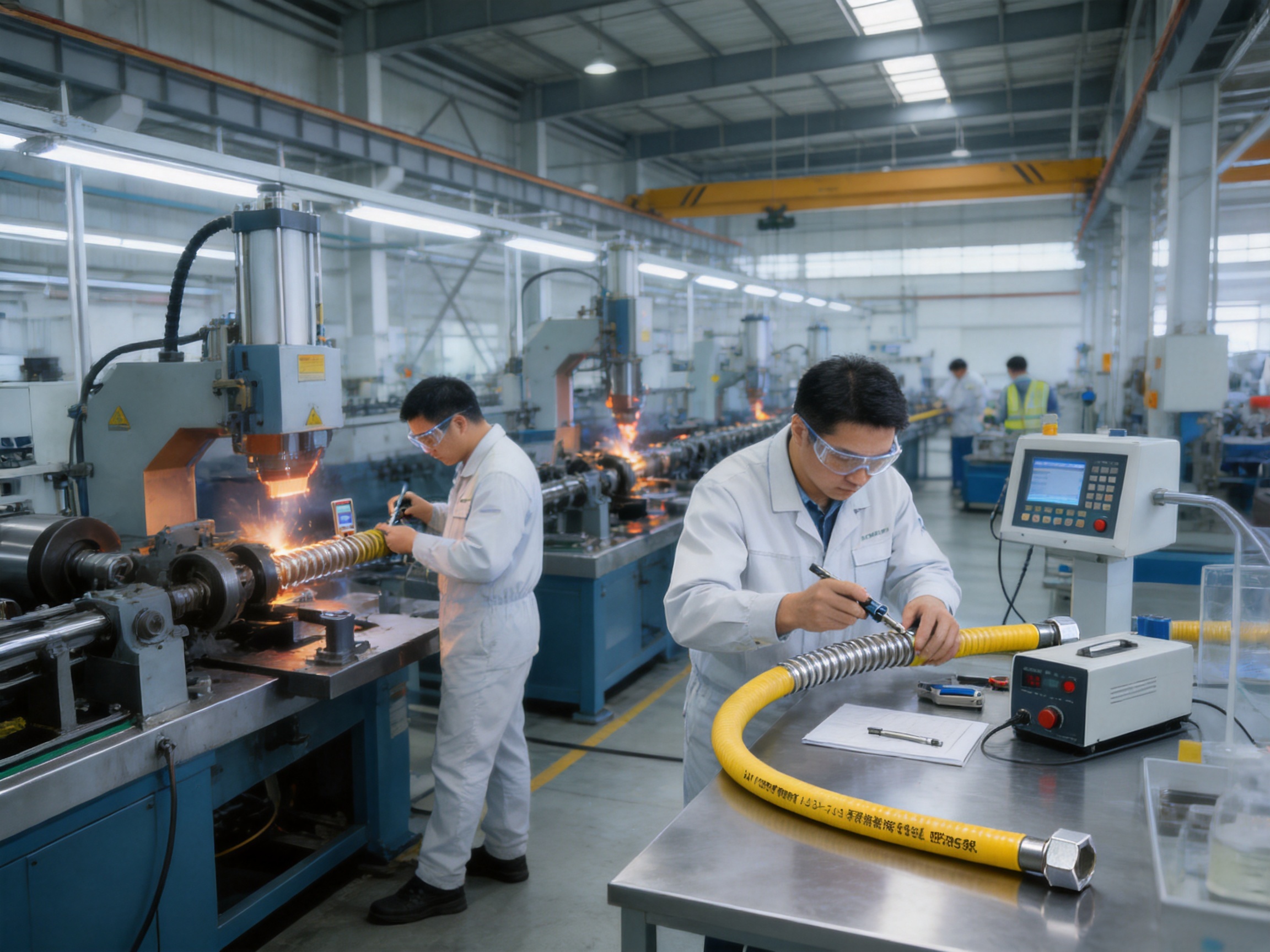
The company operates a factory covering approximately 40 acres, with a factory building of about 30,000 square meters. Its reported manufacturing resources include 30 welding and forming production lines and two uninterrupted solid melting hydrogen furnace production lines. These facilities indicate an industrial production environment capable of supporting metal forming, joining, heat-related processing, and repeated product manufacture.
For a corrugated gas hose, production consistency is essential. The bellows must be formed to a repeatable geometry. Welded areas must be controlled. Fittings must be machined to the required dimensions. Protective covers must be fitted without damaging the metal body. A manufacturer with dedicated production lines can establish repeatable workflows for these stages rather than relying exclusively on small-batch manual assembly.
Material Analysis
The company reports the use of direct-reading spectrometers for metal material analysis. Such equipment can help verify the composition of incoming metal materials and support material traceability. For stainless steel products, material verification is important because the grade affects corrosion resistance, forming behavior, weldability, and long-term performance.
Material analysis is not a substitute for complete product testing, but it is a valuable part of quality control. Confirming that the supplied metal corresponds to the required material specification provides a stronger foundation for subsequent forming and welding processes.
Welding and Forming
Welding and forming are central to the manufacture of corrugated metal hoses. Forming creates the bellows profile, while welding or joining processes establish the continuity and strength of the metal assembly. Production equipment and trained operators help maintain consistent dimensions and minimize variation between batches.
Advanced forming control can contribute to uniform corrugation depth and spacing. This supports predictable flexibility and helps reduce localized deformation. Controlled welding can contribute to stable joint performance and reduce the risk of defects that might otherwise compromise the pressure boundary.
Leak-Tightness Testing
The manufacturer also reports the use of flow tightness testers. Leak-tightness testing is directly relevant to gas hose production because the purpose of the assembly is to convey gas without unintended release. Testing can help identify defects in the bellows, welds, fittings, or sealing interfaces before products are shipped.
Testing procedures should be managed according to the applicable product requirements, operating conditions, and relevant technical standards. A finished hose should be assessed as an assembly, not only as an isolated tube. This means the test process should consider the connected components and the areas most likely to influence sealing performance.
Quality Management and Compliance Orientation
The company states that it implements the ISO9000:2008 quality management system and holds a Special Equipment Manufacturing License for pressure pipelines in the People’s Republic of China. It also reports EU CE certification testing reports and membership in the China Urban Gas Association. These credentials and affiliations demonstrate an orientation toward formal quality management and regulated gas-related manufacturing.
Certification, licenses, and test reports should always be reviewed for the specific product, configuration, market, and date of validity. Buyers should request the technical documents applicable to their intended installation. Product compliance is determined not only by the manufacturer’s general capabilities but also by the exact model, size, material, connection type, pressure rating, and local installation requirements.
A formal quality system can improve manufacturing discipline by defining procedures for purchasing, production, inspection, documentation, corrective action, and customer service. For gas connection products, this systematic approach is important because performance depends on many linked operations. A defect in material identification, forming, machining, assembly, or testing can affect the final result.
The company’s combination of production infrastructure, testing equipment, technical staff, and quality management provides a foundation for OEM and ODM cooperation. Customers requiring custom lengths, packaging, fitting configurations, or product identification can discuss the applicable design and validation requirements with the manufacturer before placing an order.
Application Areas
The ZLR-07 is primarily intended for connecting gas appliances. Typical applications may include household gas appliances, commercial kitchen equipment, heating-related equipment, and selected industrial gas systems, provided that the hose specifications match the service conditions and applicable regulations.
In residential kitchens, the hose can provide a flexible connection between a gas supply point and an appliance. The available length range allows the installer to select a size that avoids excessive slack. The stainless steel structure and protective cover are useful in locations where the hose may be exposed to moisture, cleaning activity, or repeated appliance access.
In commercial kitchens, equipment may need to be moved for cleaning or maintenance. A flexible gas connection can support this operational requirement, although movement must remain within the limits of the hose design. The assembly should be routed so that it is not trapped beneath equipment, stretched during movement, or placed near excessive heat.
In industrial environments, the hose may be used for selected gas transfer or appliance connection duties. Industrial users must evaluate gas type, pressure, temperature, chemical exposure, movement frequency, installation method, and regulatory requirements. The product description identifies suitability for the safe transfer of various liquids and gases, but the precise compatibility must be confirmed before using the hose with any medium other than the intended gas service.
The hose can also be useful in equipment manufacturing. Original equipment manufacturers may integrate a specified length and fitting arrangement into stoves, heaters, burners, cabinets, gas control assemblies, or other equipment. Consistent production and custom processing can help manufacturers standardize their connection systems across product lines.
Installation Considerations
Correct installation is essential to the performance of any gas hose. Before installation, the user should confirm the hose model, nominal size, connection thread, length, gas type, pressure, temperature, and applicable local requirements. The mating components must be compatible with the G1/2 nut and the specified fitting arrangement.
The hose should be routed with smooth bends. It should not be twisted along its length, sharply kinked, crushed, stretched, or bent repeatedly in one location. Corrugated metal hoses are flexible, but their flexibility has a defined purpose and limit. The hose should be long enough for the installation without excessive loops that could snag or rub against nearby components.
Threads should be aligned by hand before tightening. Cross-threading can damage the fitting and prevent a reliable seal. The flat washer should be positioned correctly, and sealing surfaces should be clean. The installer should use suitable tools and avoid holding or twisting the corrugated body when tightening the nut.
The hose should be kept away from open flames, hot exhaust surfaces, sharp cabinet edges, moving mechanisms, and areas where it can be pinched. If the appliance is movable, the hose route should be checked through the full permitted movement range. The hose must not become taut or rub against a hard edge when the appliance is moved.
After installation, the connection should be tested for leakage using an approved method. An open flame must never be used for leak testing. The completed installation should also be inspected visually for correct routing, secure connections, and signs of deformation. Any local code or appliance manufacturer instruction that is more specific should take priority.
Maintenance and Service Life
Regular visual inspection can help identify problems before they become serious. Users should look for corrosion, dents, flattening, cuts in the cover, exposed metal, loose fittings, unusual deformation, or evidence of contact with hot surfaces. The connection should be checked after appliance relocation, renovation, or any work that may have disturbed the hose.
The hose should be cleaned with methods compatible with stainless steel and PVC. Strong chemicals, abrasive tools, and aggressive solvents may damage the external surface or protective cover. A clean, dry cloth and an appropriate mild cleaning solution are generally preferable, subject to the appliance and installation instructions.
A hose should be replaced if it has been crushed, sharply bent, exposed to fire, subjected to excessive heat, or affected by a suspected leak. Replacement intervals may be determined by local regulations, appliance manufacturer instructions, inspection findings, and the actual service environment. The presence of a stainless steel body does not eliminate the need for inspection or replacement when the product has been damaged.
Long service life depends on the entire system. Correct material selection, suitable operating conditions, proper installation, leak testing, and periodic inspection all contribute to performance. The ZLR-07 is designed to provide a durable connection, but no hose should be used outside its rated or approved conditions.
Why Choose This Product for OEM and ODM Projects
OEM and ODM customers often require more than a standard catalog item. They may need specific lengths, packaging, labels, fitting combinations, inspection records, or integration into a larger appliance assembly. The manufacturer’s experience in metal hoses, natural gas pipelines, fittings, valves, and related hardware provides a useful basis for discussing these requirements.
The available length range from 300 millimeters to 2,000 millimeters supports multiple installation layouts. Customers can select a practical length rather than forcing one universal size into every application. This can improve routing, reduce unnecessary loops, and help create a cleaner finished appliance.
The company’s research and development, design, and production teams can also support product refinement. Potential areas for discussion may include connector geometry, external cover requirements, packaging, marking, assembly procedures, and inspection documentation. Any change to the standard configuration should be evaluated through engineering review and appropriate testing.
Manufacturing at scale can provide advantages in repeatability and supply planning. Dedicated production lines and an integrated factory structure may help coordinate material preparation, forming, welding, machining, assembly, inspection, and shipment. For customers managing multiple appliance models, a stable supply partner can simplify procurement and reduce variation between batches.
Comparison with Common Competitor Designs
Product comparisons should be made on technical characteristics rather than appearance alone. A lower-cost hose may use a thinner material, a simpler fitting, a less protective cover, or fewer inspection steps. Such differences may not be visible during a basic visual check but can influence installation quality and service life.
| Evaluation point | ZLR-07 design feature | Potential value to the user |
|---|---|---|
| Pressure-bearing body | 304 stainless steel corrugated bellows | Combines metal strength with controlled flexibility |
| Corrosion resistance | Stainless steel construction | Better suitability for humid and demanding environments |
| External protection | PVC cover | Helps reduce minor abrasion and direct surface contact |
| Connection stability | Stainless steel nut, sleeve, and turn-in fitting | Supports a coordinated and durable end assembly |
| Sealing support | Flat washer | Distributes tightening force across the sealing area |
| Installation flexibility | 300–2,000 mm length range | Supports different appliance and pipeline layouts |
| Quality control resources | Material analysis and leak-tightness testing equipment | Supports process verification and finished-product inspection |
| Customization potential | OEM and ODM manufacturing capability | Allows adaptation for equipment makers and distributors |
The most important competitive advantage is the combination of features. A corrugated stainless steel tube alone does not guarantee a superior product. The ZLR-07 integrates material selection, bellows forming, protective covering, machined connectors, sealing components, and leak-tightness testing. This complete approach can offer greater confidence than choosing a hose based only on nominal size or price.
Purchasing and Technical Evaluation Guide
Before purchasing, buyers should identify the gas medium and confirm compatibility with the hose materials. The required length should be measured along the intended route, including the space needed for smooth bends. The buyer should avoid selecting a length so short that the hose becomes taut or so long that it forms unnecessary loops.
The connection details should be checked carefully. A DN10 hose with a G1/2 nut may not be interchangeable with another product that has a different thread standard, sealing method, or fitting orientation. Technical drawings, samples, and connection measurements should be reviewed when the hose is being integrated into a new appliance.
Buyers should also request information about working pressure, test pressure, operating temperature, gas compatibility, minimum bend requirements, recommended installation method, and applicable certifications. These details are necessary for engineering approval and should not be inferred solely from the material description.
For large orders, incoming inspection can include visual checks, dimensional verification, thread inspection, cover condition, packaging review, and sample leak testing. Batch documentation and traceability may also be important for regulated industries. The manufacturer can discuss inspection standards and documentation according to the customer’s quality requirements.
Company Manufacturing Strengths
Zhejiang Zhenlong Energy Equipment Technology Co., Ltd. is located in Yuyao City, Zhejiang, an important manufacturing region in China. The company’s integrated industry-and-trade structure enables it to combine production with customer communication, product development, sales coordination, and after-sales service.
Its reported 30,000-square-meter factory building provides space for production, equipment, storage, inspection, and organization of manufacturing processes. Thirty welding and forming production lines indicate the ability to support production of metal components in different configurations and volumes. Two uninterrupted solid melting hydrogen furnace production lines further demonstrate investment in specialized thermal and material-processing capabilities.
The company’s testing resources include direct-reading spectrometers for material analysis and flow tightness testers for leak-related inspection. Together with its reported quality system and technical team, these capabilities support a manufacturing process built around verification rather than visual assembly alone.
The company also emphasizes research, development, design, and production. This is significant for customers that require engineered pipe assemblies rather than generic products. Technical support can help address questions about fitting arrangement, length, installation conditions, packaging, and integration with other energy equipment.
Customer service is another part of product reliability. Pre-sales communication can prevent incorrect model selection, while after-sales support can help address installation, inspection, and replacement questions. For distributors and equipment manufacturers, this type of cooperation can reduce technical misunderstandings and improve product consistency in the field.
Safety Responsibilities
Gas-related products must be selected and installed by qualified personnel where required by local regulations. This article provides product information and general engineering considerations, but it does not replace local codes, professional installation instructions, or the appliance manufacturer’s requirements.
The hose should only be used for a compatible medium and within the approved operating range. It should not be modified, cut, welded, extended, or connected with unapproved adapters. If a different fitting arrangement is required, the change should be engineered and validated by the manufacturer or a qualified technical party.
If a gas odor, pressure loss, damaged cover, loose fitting, or visible deformation is detected, the appliance should be shut down safely and inspected by qualified personnel. Do not attempt to conceal damage with tape, clamps, or temporary repair materials. A gas hose is a safety-critical connection component and should be replaced when its integrity is uncertain.
Q&A
What is the main purpose of the ZLR-07?
The ZLR-07 is a stainless steel corrugated hose designed for connecting gas appliances. It provides a flexible connection between a gas supply point and an appliance while combining a 304 stainless steel bellows with protective and sealing components.
What material is used for the corrugated body?
The bellows is made from 304 stainless steel. This material provides corrosion resistance, strength, formability, and suitability for many temperature-variable service environments.
What is the listed nominal size?
The product is listed as DN10, with an outside diameter of 16 millimeters. The stated model specification is RLB-ZL-C-10X300.
What connection components are included?
The listed assembly includes a G1/2 nut, flat washer, 304 stainless steel bellows, PVC cover, stainless steel sleeve, and turn-in fitting.
What lengths are available?
The listed length range is 300 millimeters to 2,000 millimeters. The correct length should be selected according to the installation route and required movement range.
Why is a flat washer used?
The flat washer helps distribute tightening force and supports the sealing interface. It should be installed correctly and should not be replaced with an incompatible washer or sealing component.
Can the hose be used outdoors?
Outdoor use must be evaluated according to the actual climate, ultraviolet exposure, chemicals, temperature, moisture, and applicable product approvals. The stainless steel construction provides corrosion resistance, but outdoor suitability should be confirmed with the manufacturer and local requirements before installation.
Can the hose be used for liquids as well as gas?
The product description indicates suitability for the safe transfer of various liquids and gases, but compatibility depends on the specific medium, pressure, temperature, and regulatory requirements. Users should obtain confirmation for any liquid or gas other than the intended application.
Is the PVC cover pressure-bearing?
No. The 304 stainless steel corrugated bellows is the principal pressure-bearing body. The PVC cover is an external protective layer and should not be treated as a substitute for the metal tube.
How should the hose be bent?
It should be routed with smooth, gradual bends and should not be twisted, sharply kinked, crushed, or repeatedly flexed in one location. The minimum bend requirements should be confirmed from the technical documentation.
How can the hose be checked for leakage?
After installation, leakage should be checked using an approved method and by qualified personnel where required. An open flame must never be used for leak testing.
What makes this product different from an ordinary rubber hose?
The ZLR-07 uses a 304 stainless steel corrugated bellows, a protective PVC cover, stainless steel connection components, and a flat washer. This construction offers a combination of metal strength, corrosion resistance, controlled flexibility, and a coordinated connection design.
Can the product be customized?
The manufacturer provides OEM and ODM manufacturing services. Customers can discuss length, fittings, packaging, labeling, and other technical requirements. Any customized design should be evaluated and tested before production approval.
What manufacturing equipment supports the product?
The company reports 30 welding and forming production lines, two uninterrupted solid melting hydrogen furnace production lines, direct-reading spectrometers for metal analysis, and flow tightness testers. These resources support material verification, forming, joining, and leak-related inspection.
Does the product have certification support?
The company reports a Chinese Special Equipment Manufacturing License for pressure pipelines, EU CE certification testing reports, and implementation of the ISO9000:2008 quality management system. Buyers should request the documents applicable to the exact model and target market.
Conclusion
The Stainless Steel Corrugated Gas Hose, Precision Machined ZLR-07 is designed as a complete gas appliance connection assembly rather than a simple flexible tube. Its 304 stainless steel bellows provides corrosion resistance, high-temperature capability, and a strong pressure-bearing structure. The corrugated profile supplies controlled flexibility, while the PVC cover offers additional external protection.
The stainless steel nut, flat washer, sleeve, and precision-machined turn-in fitting support secure connection and sealing. Available lengths from 300 millimeters to 2,000 millimeters allow the product to serve different appliance layouts. These features make the hose suitable for selected residential, commercial, equipment manufacturing, and industrial applications when the service conditions are properly verified.
The product’s competitive value also comes from the manufacturer’s production capabilities. A factory with welding and forming lines, material analysis equipment, leak-tightness testers, technical personnel, and quality management procedures can support more consistent manufacturing and stronger OEM cooperation. For buyers seeking a durable, flexible, and precision-produced gas connection, the ZLR-07 offers a practical combination of stainless steel performance, installation convenience, and engineered connection reliability.
References
1. Product specification for Stainless Steel Corrugated Gas Hose, Precision Machined ZLR-07, including model RLB-ZL-C-10X300, DN10 size, 16 mm outside diameter, and 300–2,000 mm length range.
2. Manufacturer technical information concerning 304 stainless steel bellows, PVC protective covers, stainless steel sleeves, G1/2 nuts, flat washers, and turn-in fittings.
3. General engineering principles for flexible metallic hose routing, sealing, pressure containment, vibration accommodation, and installation inspection.
4. General guidance on stainless steel material selection, corrosion resistance, forming, welding, and component quality control.
5. Manufacturer information concerning factory facilities, welding and forming production lines, material analysis equipment, flow tightness testers, quality management, and OEM/ODM services.
6. Applicable local gas installation codes, appliance manufacturer instructions, pressure-pipeline requirements, and product-specific certification documents.