 English
 中文简体
中文简体 Español
 عربى
عربى

Content
- 1 Introduction
- 2 Product Overview
- 3 Key Technical Specifications
- 4 Construction and Component Function
- 5 Performance Advantages Compared with Conventional Alternatives
- 6 Safety and Leak-Prevention Features
- 7 Manufacturing Process and Quality Control
- 8 Company Manufacturing Strengths
- 9 Applications
- 10 Installation Guidance
- 11 Maintenance and Service Life Considerations
- 12 Why Choose This Product for Gas Connection Projects?
- 13 Purchasing and Technical Selection Checklist
- 14 Quality, Compliance, and Documentation
- 15 OEM and ODM Cooperation
- 16 Frequently Asked Questions
- 16.1 What is the ZLR-10 used for?
- 16.2 What material is used for the bellows?
- 16.3 Does the product have an outer protective layer?
- 16.4 What is the nominal size and outside diameter?
- 16.5 What lengths are available?
- 16.6 What connection does the product use?
- 16.7 Can the pipe be bent during installation?
- 16.8 Can the hose support the weight of a gas appliance?
- 16.9 Is the product suitable for every gas system?
- 16.10 How should the connection be checked after installation?
- 16.11 What should be done if the PVC cover is damaged?
- 16.12 Can the flat gasket be reused?
- 16.13 What manufacturing equipment does the supplier have?
- 16.14 Can the product be customized?
- 16.15 What information should be supplied for a quotation?
- 17 Conclusion
- 18 References
- 19 Product: Seamless stainless steel corrugated gas pipe ZLR-10
Introduction
Gas connection systems must deliver more than basic fluid transfer. They must remain flexible during installation, withstand pressure and movement, resist corrosion, maintain a dependable seal, and protect users from leakage throughout their service life. The Seamless Stainless Steel Corrugated Gas Pipe ZLR-10 is engineered to address these requirements in a compact and practical connection assembly for gas appliances and related pipeline applications.
Designed with a 304 stainless steel bellows, stainless steel support components, precision-engineered transition fittings, flat gaskets, and a protective PVC cover, the ZLR-10 combines flexibility with mechanical durability. Its corrugated structure allows the pipe to accommodate changes in direction and installation alignment more easily than rigid pipe sections, while its stainless steel construction provides a strong barrier against corrosion and environmental deterioration.
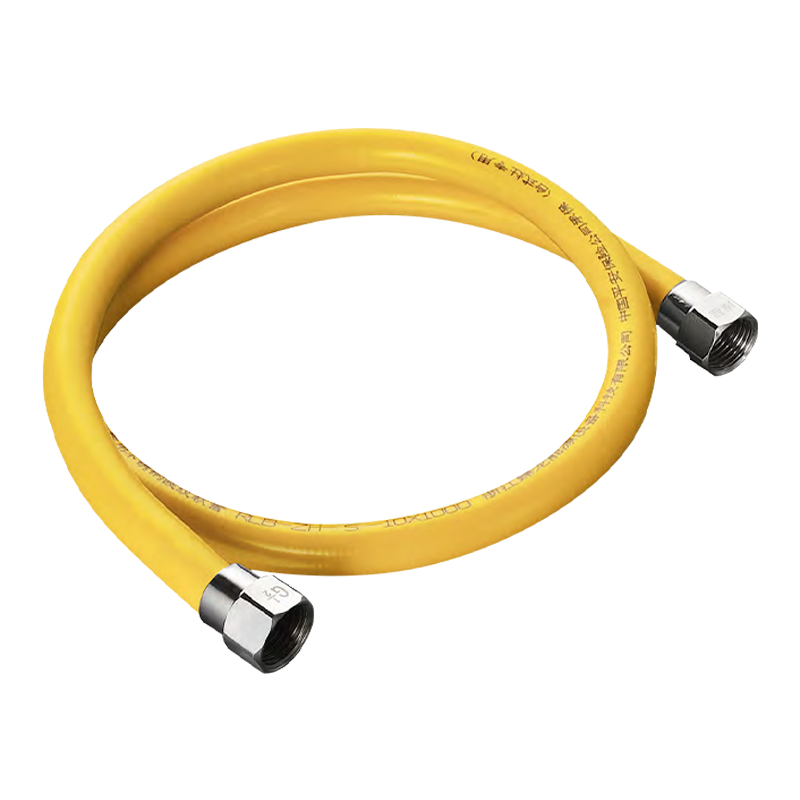
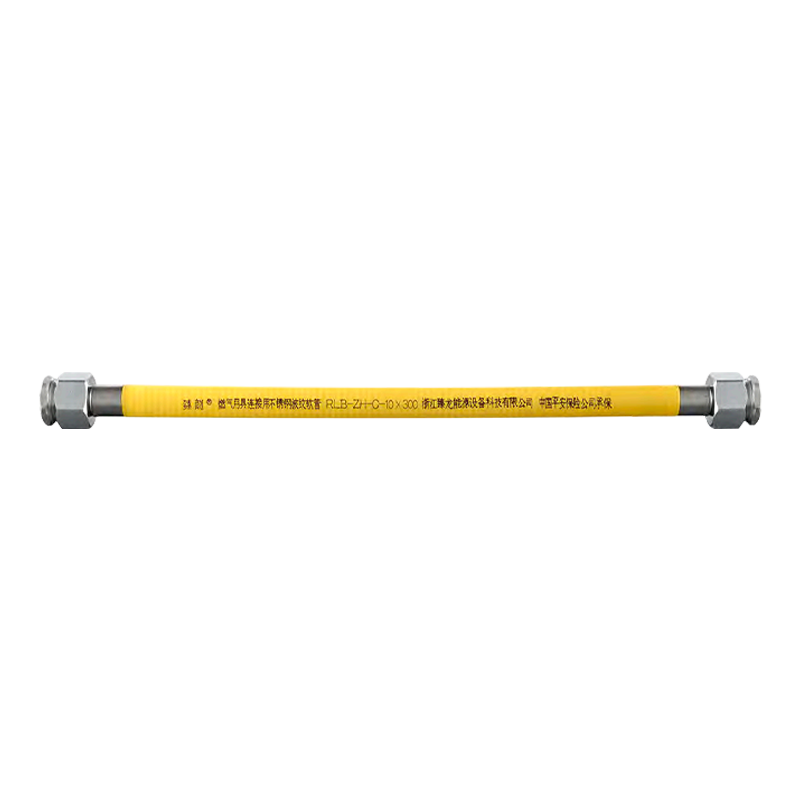
The product is categorized as a stainless steel corrugated tube for connecting gas appliances. It is available in DN10 configuration, with an outside diameter of 16 mm and standard lengths from 300 mm to 2,000 mm. This range allows installers and equipment manufacturers to select an appropriate connection length for different appliance layouts and site conditions.
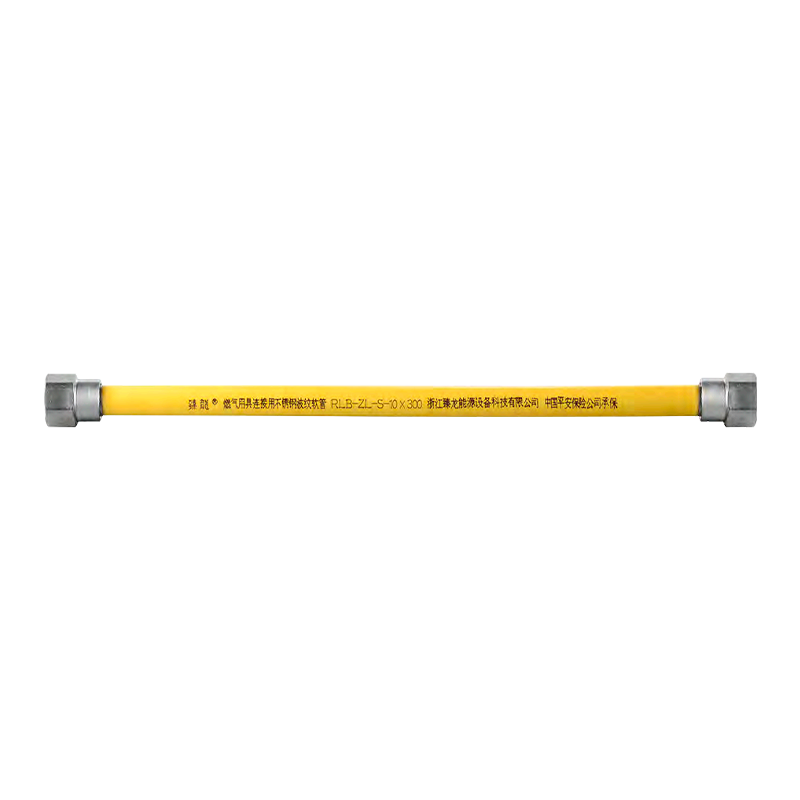
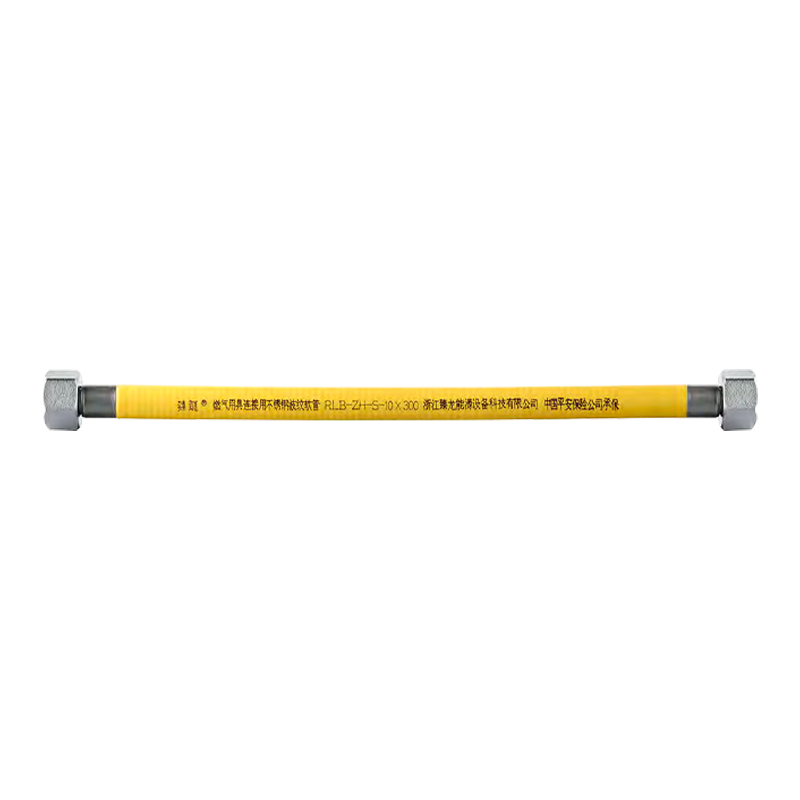
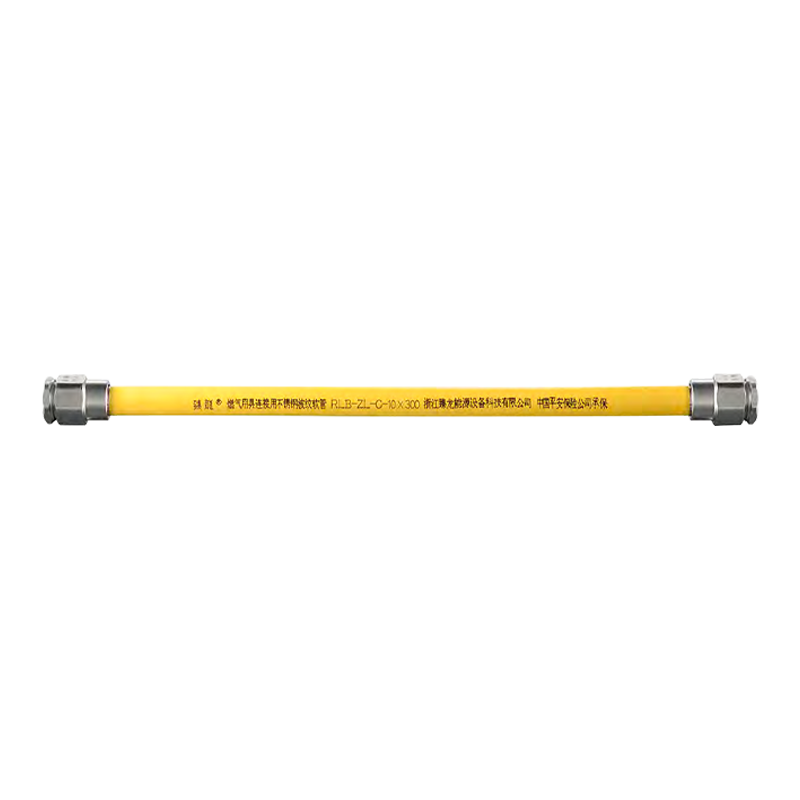
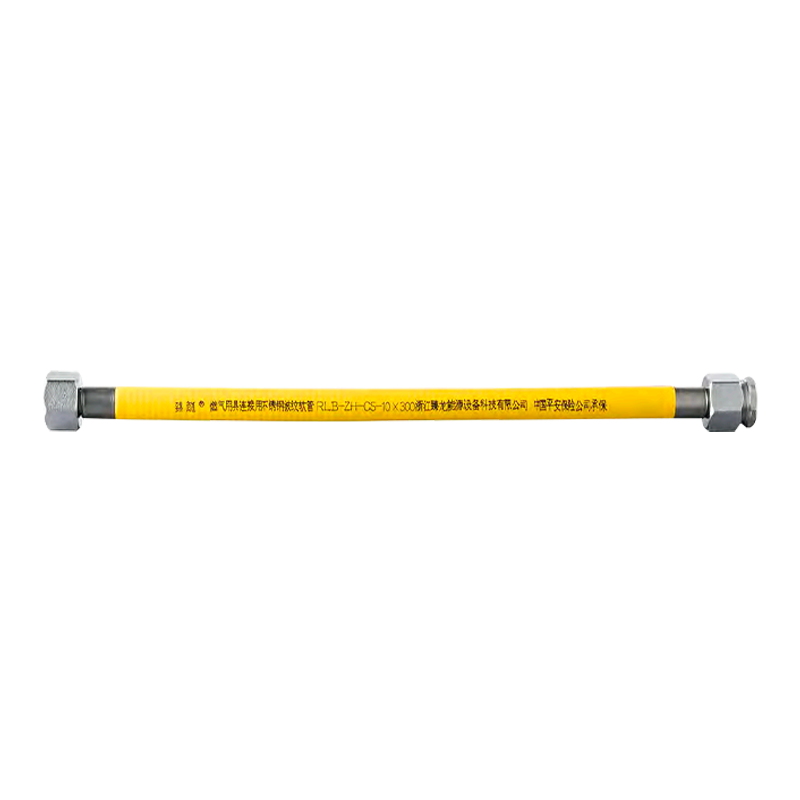
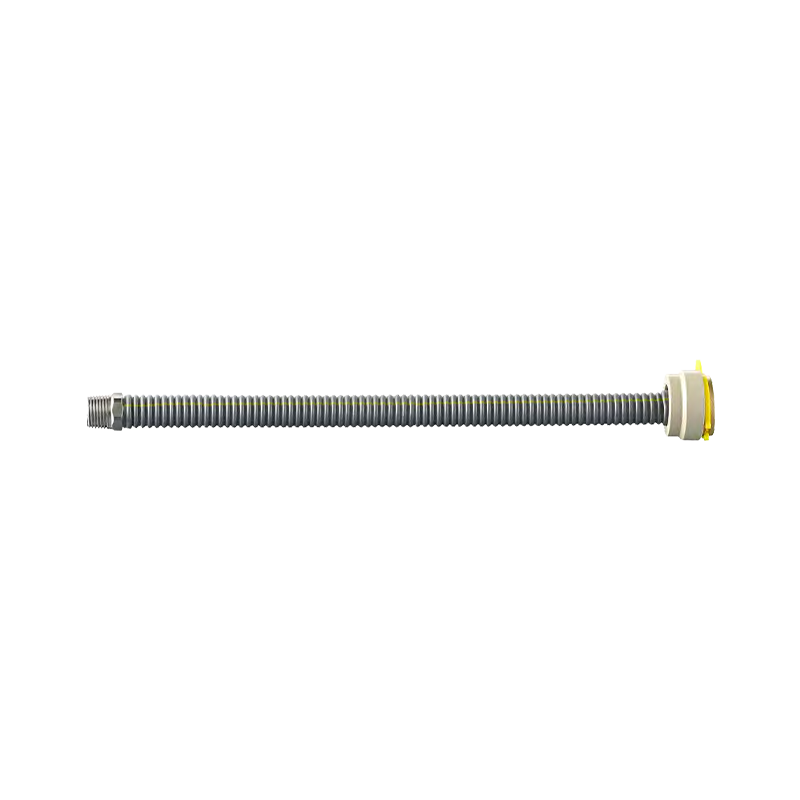
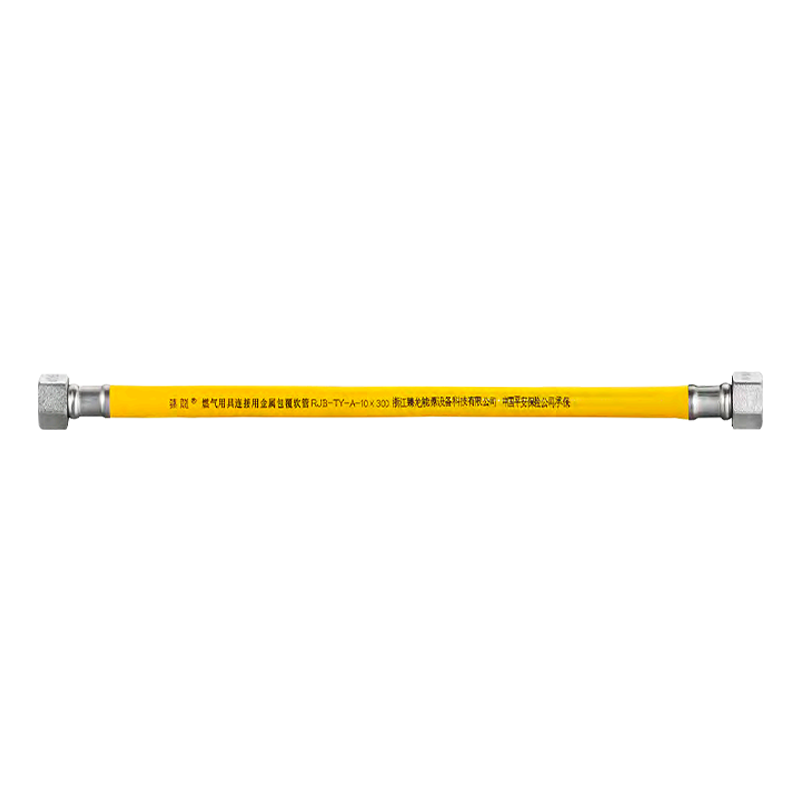
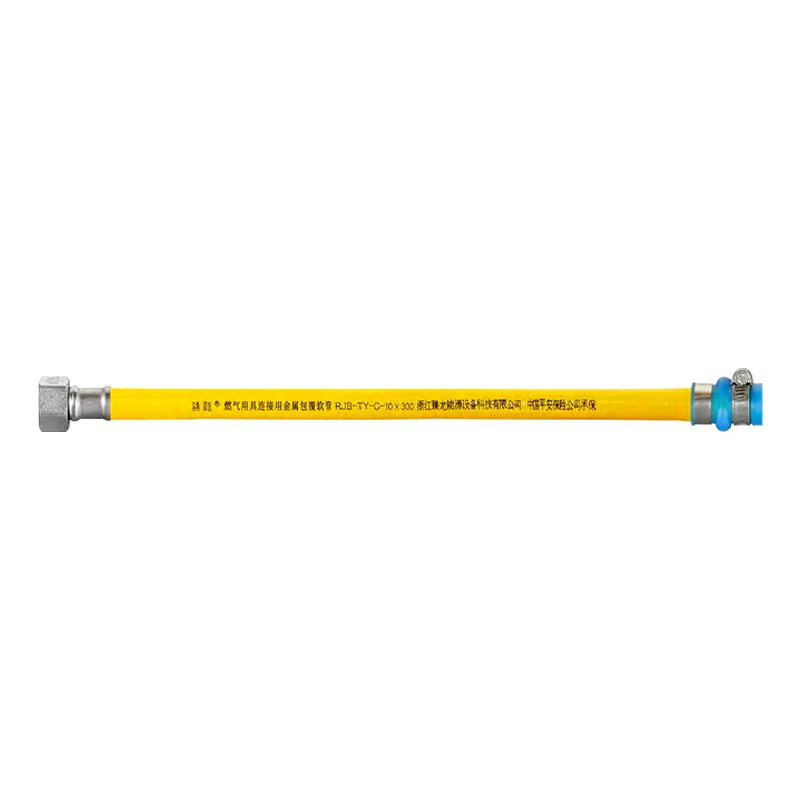
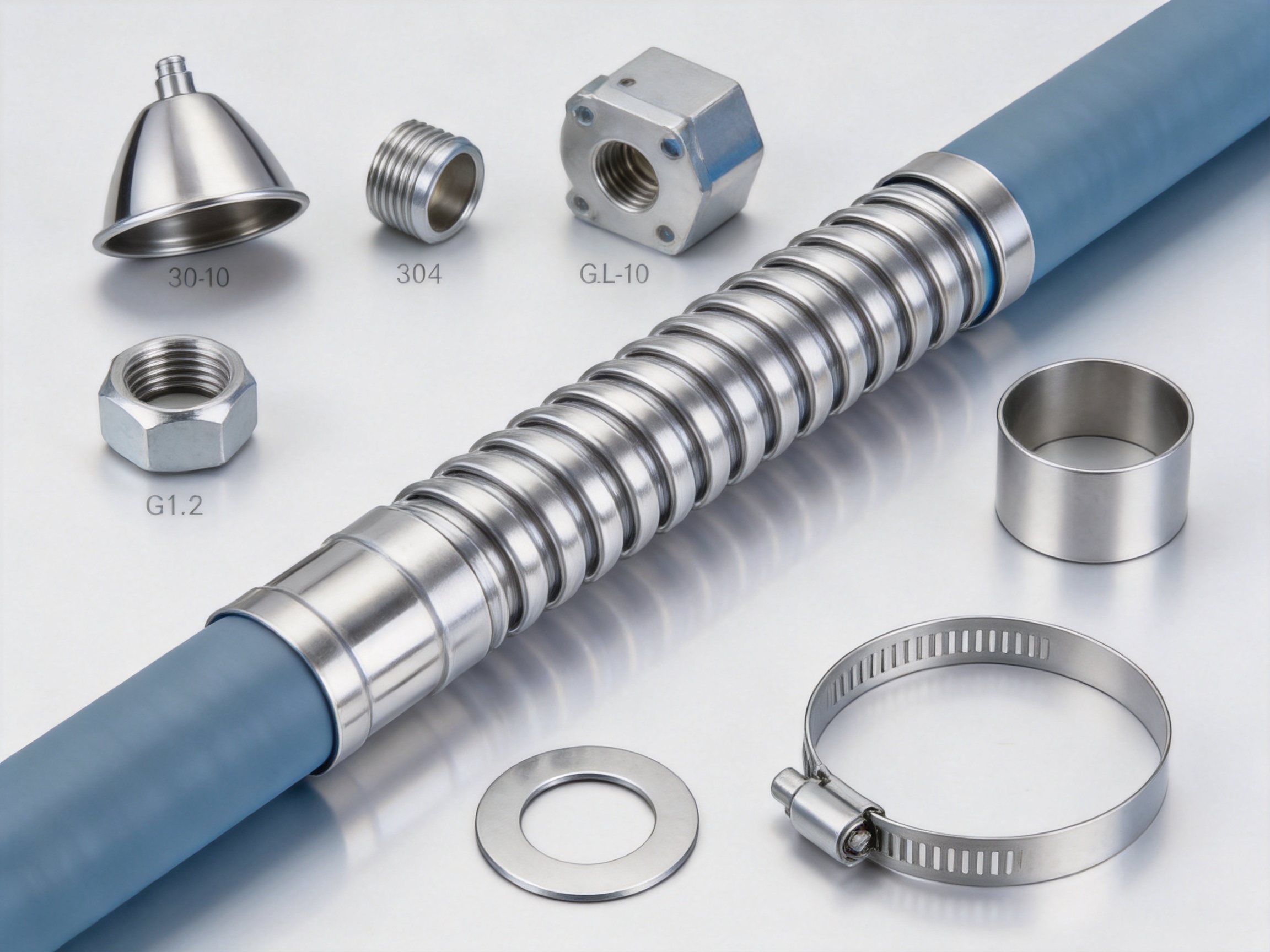
Unlike a simple unprotected metal tube, the ZLR-10 is a complete connection solution. Its structure includes a G1/2 nut, flat gasket, welding flange, stainless steel sleeve, 304 stainless steel bellows, PVC cover, and adapter fitting. Each component contributes to safe installation, stable sealing, or long-term protection. Together, these features create a hose assembly intended for dependable gas transmission in residential, commercial, and equipment connection environments.
Seamless stainless steel corrugated gas pipe ZLR-10
Product Overview
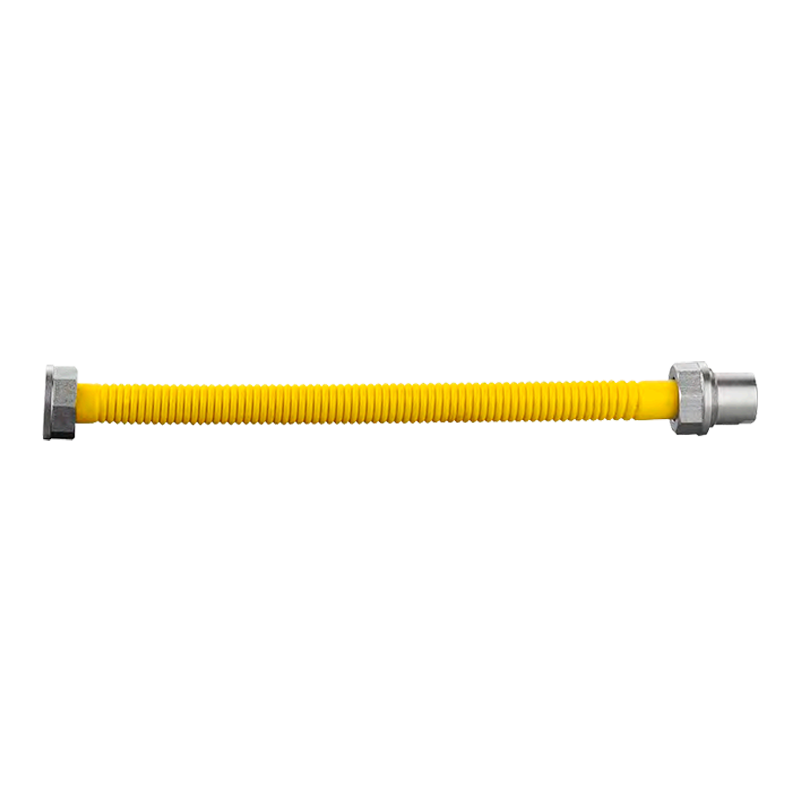
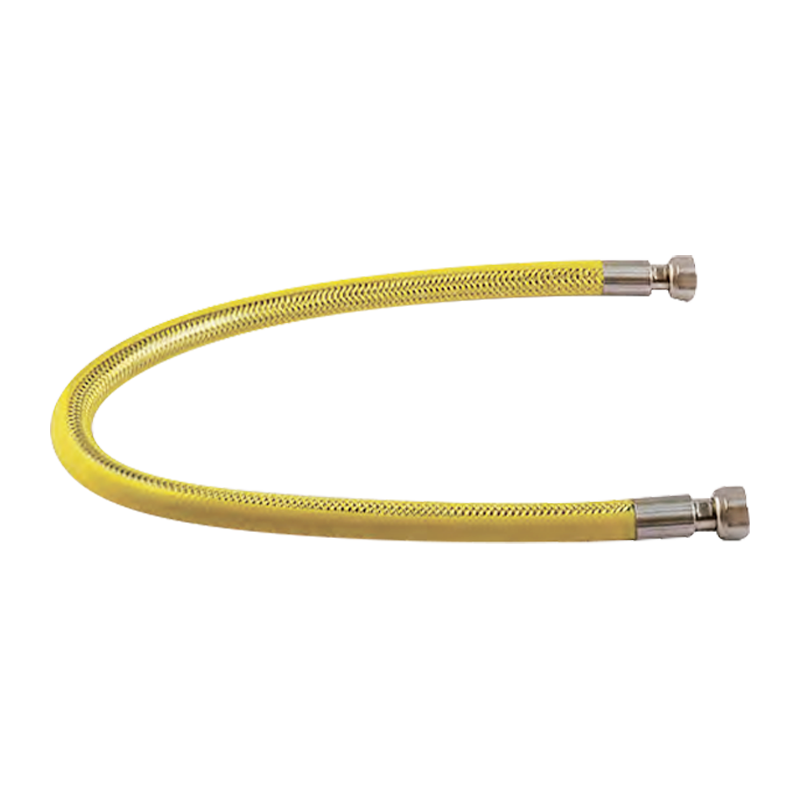
The ZLR-10 is a seamless stainless steel corrugated gas pipe developed for connecting gas appliances to gas supply systems. The product uses a corrugated bellows design rather than a straight, rigid tube. This design increases the pipe’s ability to bend within an appropriate installation radius, helping installers work around appliance connections, cabinets, walls, and other obstacles.
The central fluid-transfer component is a 304 stainless steel bellows. Stainless steel is widely used in demanding piping applications because it offers a combination of corrosion resistance, strength, formability, and service stability. The corrugated shape adds flexibility while maintaining a continuous metallic flow path. This is especially valuable where a connection must absorb minor alignment differences or avoid excessive bending of a rigid pipe.
The bellows is protected by a PVC outer layer. The cover helps reduce direct exposure to moisture, dust, chemical substances, abrasion, and general external wear. It also provides an additional visual and physical barrier around the metal hose. By protecting the bellows from the surrounding environment, the outer layer supports longer-lasting performance in practical installation conditions.
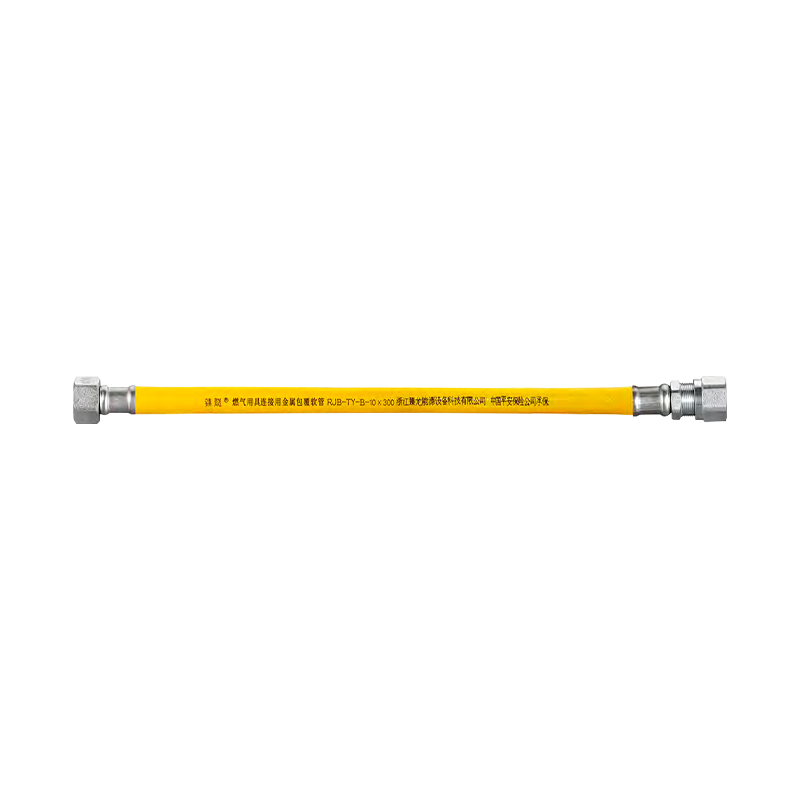
At the ends of the assembly, transition fittings create the connection between the flexible pipe and the gas appliance or fixed pipeline. The ZLR-10 uses precision-engineered fittings and sealing materials to support secure assembly. The G1/2 nut and flat gasket provide a practical threaded connection arrangement, while the adapter fitting and welding flange complete the transition structure.
The product is intended to be installed by qualified personnel who understand the applicable gas-safety requirements, connection procedures, inspection practices, and local regulations. Correct selection, routing, tightening, and leak testing are essential to achieving the designed performance of any gas hose assembly.
Key Technical Specifications
| Item | Specification |
|---|---|
| Product model | ZLR-10 |
| Model designation | RLB-ZH-C-10×300 |
| Product category | Stainless steel corrugated tube for connecting gas appliances |
| Nominal size | DN10 |
| Outside diameter | 16 mm |
| Available length | 300 mm to 2,000 mm |
| Bellows material | 304 stainless steel |
| Outer protection | PVC cover |
| Connection component | G1/2 nut |
| Sealing component | Flat gasket |
The model designation identifies a DN10 product in a 300 mm reference configuration, while the stated product length range extends from 300 mm to 2,000 mm. Buyers should confirm the required length, end configuration, connection details, and application conditions before placing an order.
Construction and Component Function
304 Stainless Steel Bellows
The 304 stainless steel bellows forms the main flexible pressure-transfer section. Its corrugated geometry increases flexibility compared with a straight-wall metal tube, allowing the assembly to accommodate controlled bends and installation offsets. The bellows also provides a metallic inner passage that is suitable for gas transmission when correctly specified and installed.
Stainless steel offers natural resistance to many forms of atmospheric corrosion. This is particularly important for gas connections installed in kitchens, utility rooms, equipment enclosures, commercial service areas, and other locations where moisture, cleaning products, condensation, or airborne contaminants may be present. The use of 304 stainless steel supports a stable material base without relying solely on an external coating for corrosion protection.
The bellows must still be handled correctly. Flexible does not mean indestructible, and the product should not be twisted, crushed, sharply kinked, stretched beyond its intended configuration, or repeatedly bent in the same location. Proper routing preserves the corrugation profile and reduces unnecessary mechanical stress.
Seamless Corrugated Structure
The seamless corrugated concept is an important feature of the ZLR-10. A continuous metallic structure can reduce potential weakness associated with unnecessary longitudinal joining in the flexible flow path. The corrugations are formed to provide movement capability while retaining the integrity of the pipe wall.
A corrugated pipe can be routed through restricted spaces more conveniently than many rigid alternatives. It can help reduce the number of elbows, intermediate joints, and alignment corrections needed during installation. Fewer connection points may simplify the assembly and reduce the number of locations that require inspection, although every end connection must still be checked carefully.
The corrugation profile also contributes to mechanical flexibility. In an appliance connection, this may help accommodate slight movement caused by installation, maintenance access, or equipment positioning. The assembly should not be used as a support for the appliance or subjected to continuous external loading. Its purpose is to provide a flexible gas connection, not to replace structural supports or fixed pipework.
PVC Protective Cover
The PVC outer cover provides a second layer of protection around the metal bellows. It helps shield the stainless steel surface from abrasion and contact with surrounding surfaces. It also offers resistance to moisture and many common environmental contaminants, helping maintain the appearance and condition of the assembly.
External protection is useful in locations where the pipe may pass near cabinets, equipment panels, masonry, flooring, or other surfaces. The cover can reduce direct rubbing and help prevent minor external damage during normal handling. It also makes the product easier to identify and manage during installation.
Although PVC provides useful chemical and environmental resistance, installers should verify compatibility with any specific oils, solvents, high-temperature sources, ultraviolet exposure, or aggressive chemicals present at the installation site. The cover should not be placed in direct contact with flames, hot surfaces, or areas outside the product’s approved operating conditions.
G1/2 Nut and Adapter Fitting
The G1/2 nut and adapter fitting provide the interface between the corrugated hose and the connected appliance or pipeline component. Threaded connections are familiar to installers and can support efficient assembly when the mating components are correctly matched.
The connection must be aligned before tightening. Cross-threading, excessive force, contamination, or incorrect sealing practices can damage the threads or compromise the seal. The nut should be tightened according to the relevant installation instructions and approved procedures rather than being forced beyond the required torque.
The adapter fitting provides a transition between different connection elements in the assembly. Precision manufacturing is important because even small dimensional inconsistencies can affect thread engagement, gasket compression, alignment, and leak performance.
Flat Gasket
The flat gasket is a critical sealing component. It is designed to sit between appropriate mating surfaces and create a controlled sealing interface when compressed. The gasket material must have suitable hardness, toughness, resilience, and dimensional stability for the intended gas connection.
The ZLR-10 uses high-strength flat gaskets described as having excellent hardness and toughness. These characteristics help the gasket resist deformation during assembly and service. A stable gasket can maintain contact pressure more reliably than a material that compresses excessively or loses its shape under load.
Gaskets should be clean, correctly positioned, and free from cuts, contamination, or distortion before assembly. A gasket that has been damaged or improperly compressed should be replaced rather than reused. Sealants, tapes, or supplementary materials should only be used when specifically permitted by the connection design and applicable instructions.
Welding Flange and Stainless Steel Sleeve
The welding flange and stainless steel sleeve contribute to the mechanical transition between the bellows and the end fitting. These parts help distribute assembly forces and support the structural connection between the flexible tube and the fitting components.
The sleeve can help protect or reinforce the end region of the corrugated tube. The welding flange provides a manufactured interface for joining and alignment within the assembly. Consistent welding and forming quality are important because the ends of a flexible metal hose experience concentrated mechanical and sealing loads.
Performance Advantages Compared with Conventional Alternatives
Flexibility for Efficient Routing
One of the clearest advantages of the ZLR-10 is its flexible corrugated construction. Rigid pipe typically requires accurate measurement, multiple elbows, and careful alignment. A flexible corrugated gas pipe can simplify the final connection between the gas source and appliance, particularly where the two connection points are not perfectly aligned.
This flexibility can reduce installation complexity and help installers avoid unnecessary stress on threaded connections. It may also reduce the need for additional fittings in the final appliance connection. However, the pipe should always be routed smoothly, with adequate clearance and without sharp bends or twisting.
Corrosion Resistance
Compared with ordinary carbon steel or unprotected metal tubing, the 304 stainless steel bellows offers stronger resistance to common atmospheric corrosion conditions. The PVC cover adds another protective layer against moisture, chemical splashes, and external abrasion.
Corrosion resistance is important because gas connections may be installed in environments exposed to water vapor, cleaning agents, cooking residues, condensation, or fluctuating temperatures. A corrosion-resistant construction helps preserve the wall condition and appearance of the assembly over time, provided that the pipe is used within its intended service conditions.
Protected Metallic Flow Path
The ZLR-10 combines a metallic corrugated tube with an external polymer cover. This configuration provides the strength and temperature stability associated with a metal flow path while adding external protection from the surrounding environment.
Some flexible connection products rely primarily on polymeric tubing. While polymer products can be lightweight and flexible, a stainless steel bellows offers a different balance of mechanical strength, corrosion resistance, and long-term structural stability. The choice between products should be based on gas type, pressure, temperature, regulatory requirements, installation environment, and equipment compatibility.
Reliable Sealing Arrangement
Leak prevention depends heavily on the quality of the end connections and sealing elements. The ZLR-10 incorporates precision-engineered transition fittings, a G1/2 nut, and high-strength flat gaskets. This arrangement is designed to produce a stable and secure seal when assembled correctly.
The use of a defined gasket interface can make inspection and maintenance more straightforward than connection designs that depend on uncertain or improvised sealing methods. A correctly compressed flat gasket forms a predictable contact area between the mating surfaces. This supports reliable fluid containment without requiring excessive tightening.
Multiple Length Options
The available length range of 300 mm to 2,000 mm provides flexibility for different appliance layouts. Short lengths can support compact installations, while longer configurations can accommodate greater distances between the supply connection and appliance inlet.
Using the correct length is important. An excessively short hose may be stretched or forced into a sharp bend, while an excessively long hose may create unnecessary loops or contact points. Selecting an appropriate length improves routing, reduces mechanical stress, and supports a cleaner installation.
Integrated Connection Solution
The ZLR-10 is supplied as a structured assembly rather than as an unprepared length of corrugated tube. Its components are selected and assembled to work together as a gas appliance connection. This can help reduce the need for installers to source separate sleeves, adapters, gaskets, and protective covers.
An integrated assembly also improves consistency between installations. When components are produced and matched by the same manufacturer, dimensional compatibility and assembly control can be managed within a unified production process. This does not remove the need for installation inspection, but it can reduce variation in the finished connection.
Safety and Leak-Prevention Features
Safety is the primary consideration in any gas connection system. The ZLR-10 incorporates several features intended to support safe service: a corrosion-resistant stainless steel bellows, an external PVC cover, engineered transition fittings, and durable flat gaskets.
The stainless steel bellows provides the main pressure-containing passage. Its mechanical strength supports stable operation when the product is selected for the correct pressure and gas application. The PVC cover helps protect the bellows from external damage that could otherwise affect the assembly.
The end fittings and gaskets are equally important. A strong pipe wall cannot compensate for a poorly assembled connection. The sealing surfaces must be clean and correctly aligned, and the gasket must be seated in its intended position. Installers should use appropriate tools and follow the approved tightening procedure.
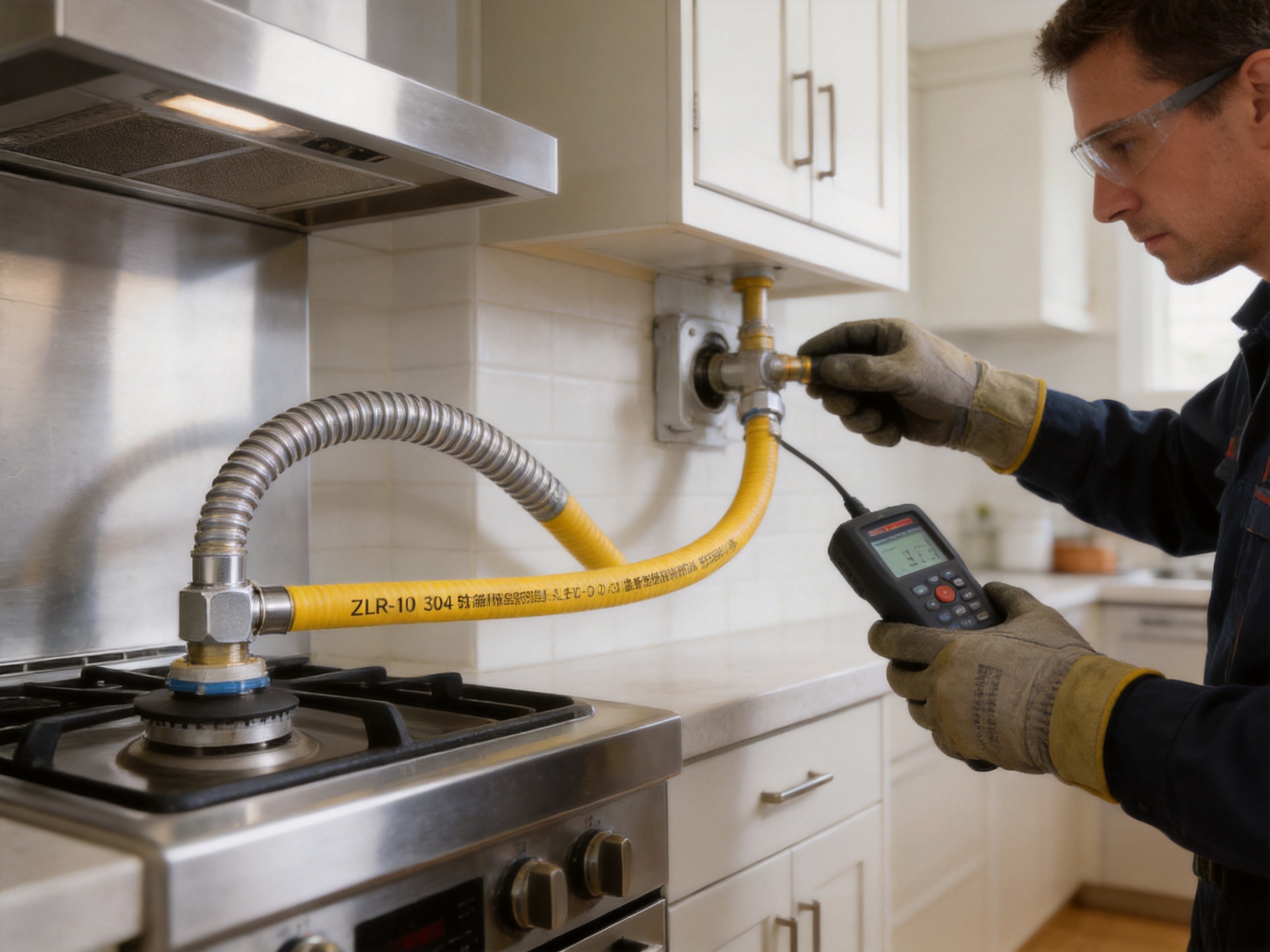
After installation, the connection should be inspected and leak-tested using an approved method. Open flames must never be used for leak detection. The test method should comply with local regulations, project specifications, and the requirements of the gas system operator or equipment manufacturer.
The pipe should be kept away from sharp edges, excessive heat, moving mechanical components, electrical hazards, and locations where it may be crushed or repeatedly flexed. It should not be painted, modified, drilled, welded, or cut after delivery unless an approved procedure specifically permits such work. Any damaged assembly should be removed from service and replaced.
Manufacturing Process and Quality Control
The manufacturer combines research, development, manufacturing, and processing capabilities in the energy equipment field. Its production scope includes metal hoses, natural gas pipelines, plumbing fittings, sanitary ware, valves, plastic products, and hardware. This broad product experience supports an understanding of both flexible metal components and the fittings required to integrate them into complete connection systems.
Material Selection and Preparation
Manufacturing begins with the selection and preparation of stainless steel and other approved materials. Material quality affects forming performance, weldability, corrosion resistance, dimensional stability, and service life. The 304 stainless steel bellows must be produced from material suitable for controlled forming into a consistent corrugated profile.
Material preparation may include cutting, surface preparation, dimensional verification, and identification control. Maintaining traceability and consistent material handling helps reduce variation between production batches. It also supports investigation and quality documentation when required by customers or project specifications.
Corrugation Forming
The bellows-forming process creates the repeated corrugations that give the ZLR-10 its flexibility. Forming must be controlled carefully because the depth, pitch, wall condition, and uniformity of the corrugations influence the hose’s movement capability and mechanical behavior.
Consistent forming helps ensure that the bellows bends in a controlled manner rather than developing isolated stress concentrations. Production equipment must be maintained and adjusted so that each section meets the intended dimensional requirements. Visual inspection and dimensional checks are useful for identifying wrinkles, dents, uneven profiles, or other defects that could affect performance.
Welding and End Assembly
The welding process joins the bellows and transition components into a secure assembly. The welding of stainless steel requires control of heat input, alignment, cleanliness, and joint condition. Excessive heat can affect the material or surrounding components, while insufficient fusion may weaken the connection.
The manufacturer operates numerous welding and forming production lines. This production capacity supports organized manufacturing, repeatable process control, and the ability to address different product configurations. Welding equipment and operator procedures should be managed through documented quality controls, process checks, and inspection routines.
The stainless steel sleeve, welding flange, adapter fitting, and nut are assembled in a defined sequence. Correct positioning is essential because the end geometry affects gasket compression, thread engagement, and the final alignment of the pipe. Assembly fixtures can help maintain repeatable positioning during welding and fitting operations.
Gasket and Fitting Integration
Gasket integration requires attention to seating, surface cleanliness, dimensional matching, and compression. The flat gasket should be installed without twisting, folding, or contamination. Fittings must be checked for burrs, damaged threads, or surface defects before final assembly.
Precision-engineered transition fittings are particularly important in gas applications because the connection must withstand pressure while maintaining a leak-resistant interface. Manufacturing control should include inspection of thread dimensions, mating surfaces, component fit, and assembly torque where applicable.
PVC Cover Application
The PVC cover is applied to protect the metal bellows. The cover should be continuous and correctly positioned, with suitable coverage of the flexible section and adequate clearance around the end connection areas. It should not be cut, split, excessively stretched, or damaged during installation.
Quality checks may examine cover thickness, surface appearance, adhesion or positioning, end finishing, and resistance to common handling conditions. A well-applied cover supports the product’s resistance to moisture, chemical exposure, and external wear.
Testing and Inspection
The manufacturer has testing equipment that includes metal material analysis direct-reading spectrometers and flow tightness testers. Material analysis equipment can support verification of alloy composition, while flow tightness testing helps evaluate whether completed assemblies maintain the required containment performance.
Testing is valuable because visual inspection alone cannot confirm internal tightness. A flow tightness or leak test can identify defects in the bellows, welds, fittings, gasket interfaces, or assembly process. Testing procedures should be based on the relevant product requirements, customer specifications, and applicable regulations.
The company also operates uninterrupted solid melting hydrogen furnace production lines. Such equipment reflects substantial capability in controlled material processing and industrial production. Stable furnace operation can support consistent treatment of suitable metal materials, although the precise process parameters and applicability depend on the specific component and manufacturing stage.
Quality Management
The company states that it implements the ISO9000:2008 quality management system. A documented quality management approach can help organize purchasing, production, inspection, testing, nonconformance handling, recordkeeping, and customer service.
The manufacturer also holds a Special Equipment Manufacturing License for pressure pipelines in the People’s Republic of China and has EU CE certification testing reports. Customers should request current certificates, test reports, scope information, and product-specific documentation when these documents are required for a particular project or market.
Company Manufacturing Strengths
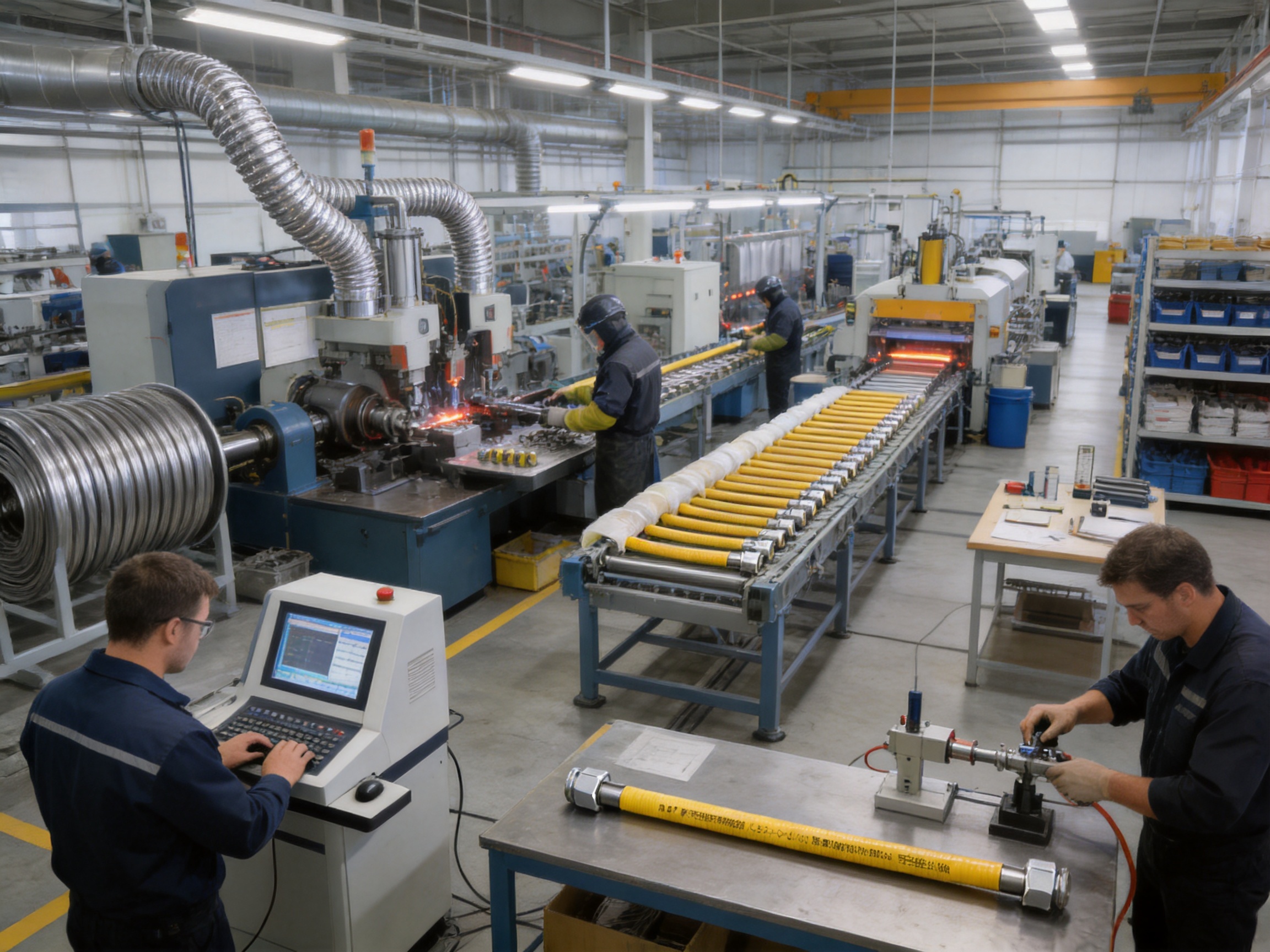
The manufacturer is located in Yuyao, Ningbo, Zhejiang, and operates from a facility covering approximately 40 acres with a factory building of about 30,000 square meters. This physical scale provides space for production lines, material storage, assembly areas, testing facilities, research and development, and logistics operations.
Its production infrastructure includes 30 welding and forming production lines. This is an important strength for customers who need stable supply, repeated batch production, or multiple product configurations. A larger production system can also support specialization between forming, welding, assembly, testing, and packaging processes.
The company’s integration of industry and trade enables it to combine manufacturing with customer-facing service. Customers may benefit from coordinated communication involving product selection, technical confirmation, order processing, production scheduling, quality documentation, and after-sales support.
Research and development capability is another important factor. The company maintains a professional R&D, design, and production team. For gas connection products, engineering support may involve selecting materials, adapting connection configurations, confirming dimensions, optimizing manufacturing processes, and evaluating custom requirements.
The company’s product range includes metal hoses, corrugated hoses, pipe fittings, valves, natural gas pipelines, sanitary ware, plastic products, and hardware. This range gives the manufacturer experience with multiple parts of a fluid connection system rather than only one isolated component. Such experience can be useful when customers require coordinated fittings, custom assemblies, or related pipeline products.
Pre-sales and after-sales services are also identified as part of the company’s capabilities. Technical communication before production is essential for confirming gas type, nominal size, length, connection thread, fitting arrangement, pressure, temperature, environment, packaging, and documentation. After-sales support can assist with installation questions, product identification, quality feedback, and replacement coordination.
Applications
Residential Gas Appliances
The ZLR-10 is suitable for connection applications involving gas appliances where a flexible stainless steel corrugated tube is required. Potential applications may include cooking equipment, domestic heating appliances, water heaters, and other approved gas-consuming devices, subject to local regulations and product compatibility.
In residential installations, the compact DN10 design and available length range can help connect an appliance to a nearby gas outlet while accommodating cabinets and other fixed structures. The PVC cover can provide additional protection in kitchens and utility areas where moisture, cleaning chemicals, and accidental contact may occur.
Commercial Kitchens
Commercial kitchens often contain several appliances in a limited area. Flexible gas connections may simplify routing around cabinets, equipment bases, and service access zones. The stainless steel bellows and protective cover can provide a practical balance of flexibility and mechanical protection.
Commercial installations require careful attention to cleaning chemicals, heat sources, frequent maintenance, and equipment movement. The ZLR-10 should be installed with appropriate clearance from hot surfaces and should not be used to permit uncontrolled movement of equipment. Where appliances are moved for cleaning, the gas system must be designed and operated according to the applicable safety procedure.
Equipment and Energy Systems
The product may also be considered for approved equipment connection systems where a flexible gas link is required between a fixed supply point and a gas appliance or energy device. Its transition fittings support integration with related pipework and equipment components.
Before use in industrial or specialized equipment, engineers should verify pressure, temperature, gas composition, vibration, movement frequency, chemical exposure, and regulatory requirements. The stated product information identifies the ZLR-10 as a gas appliance connection product; it should not automatically be treated as suitable for every industrial gas application without technical confirmation.
Installation Guidance
Before Installation
Confirm that the model, length, nominal size, thread configuration, and fitting arrangement match the equipment and gas supply. Inspect the pipe for dents, cuts, crushed corrugations, damaged PVC cover, deformed fittings, missing gaskets, or damaged threads.
Verify that the installation location does not expose the assembly to direct flame, excessive radiant heat, sharp edges, corrosive chemicals, standing water, or mechanical impact. Plan the route before tightening the connection so that the finished hose follows a smooth path.
Routing the Hose
Route the hose with natural, gradual bends. Avoid sharp kinks, tight loops, torsion, and lateral loading at the fittings. The hose should not be pulled tight between the connection points. It should also not be installed with excessive slack that allows it to rub against surrounding structures.
Do not use the hose to carry the weight of an appliance. Provide independent support for equipment and fixed piping. The hose should be accessible for inspection and should not be permanently concealed in a way that prevents visual examination or maintenance.
Making the Connection
Clean the mating surfaces and check that the flat gasket is correctly positioned. Engage the threads by hand before using a tool. If the nut does not turn smoothly, stop and inspect the alignment and threads. Do not force a cross-threaded connection.
Tighten the connection using the approved method. Excessive tightening can damage the gasket, threads, fitting, or bellows end. Insufficient tightening may allow leakage. The correct installation procedure should take priority over general practices because connection designs can differ.
Inspection and Testing
After installation, inspect the complete assembly for proper routing, clearance, fitting alignment, gasket placement, and cover condition. Conduct a leak test using an approved method before placing the appliance into service. Repeat inspection after the system has been pressurized if required by the installation procedure.
If a leak is found, shut off the gas supply and correct the connection according to the applicable safety procedure. Never attempt to repair a damaged bellows or cover with adhesive, tape, clamps, or unapproved parts. A damaged gas hose should normally be replaced with a suitable approved assembly.
Maintenance and Service Life Considerations
Routine inspection helps identify problems before they become serious. The hose should be checked for corrosion, discoloration, cracks, cuts, abrasion, crushed corrugations, deformation, loose fittings, gasket deterioration, and signs of contact with excessive heat or chemicals.
The PVC cover should remain continuous and properly positioned. If the cover has split or become severely worn, the underlying bellows should be inspected by a qualified professional. Damage to the cover may indicate that the hose has been rubbing against another surface or exposed to an unsuitable environment.
Connections should be checked for movement, visible damage, or signs of leakage. Any unusual odor, hissing sound, or evidence of gas release requires immediate attention and must be handled according to local emergency procedures.
Service life depends on many variables, including gas type, pressure, temperature, installation quality, vibration, frequency of movement, cleaning agents, humidity, ultraviolet exposure, and mechanical contact. The product should be replaced according to the applicable regulations, equipment manufacturer’s recommendations, inspection results, and project requirements.
Flexible gas hoses should not be repeatedly disconnected and reconnected without inspection of the gasket and connection surfaces. A gasket that has lost its resilience, become damaged, or been permanently deformed should be replaced. Replacement components should be compatible with the original assembly and approved for the intended application.
Why Choose This Product for Gas Connection Projects?
The ZLR-10 offers a combination of features that can make it a strong candidate for gas appliance connection projects. Its 304 stainless steel bellows provides a corrosion-resistant metallic flow path. Its corrugated design supports installation flexibility. Its PVC cover improves external protection. Its fittings and flat gasket create an engineered sealing arrangement.
Compared with basic rigid pipe connections, the product can reduce the need for complex final alignment and multiple small fittings. Compared with unprotected flexible metal tubing, the PVC cover offers additional resistance to external wear and environmental exposure. Compared with assemblies built from unrelated components, the integrated design can support more consistent manufacturing and installation.
The manufacturer’s production capacity adds another advantage for purchasing departments and distributors. Thirty welding and forming production lines, dedicated testing equipment, material analysis capability, and documented quality management provide a foundation for repeatable supply. Customers can also communicate directly with a manufacturer that produces related hoses, fittings, valves, and pipeline products.
For OEM and ODM projects, this combination of engineering, production, and trade integration may support customization discussions. Potential areas for confirmation include hose length, end fitting style, thread arrangement, cover color, packaging, labeling, production quantity, inspection documentation, and market-specific compliance requirements.
Purchasing and Technical Selection Checklist
| Selection Point | Questions to Confirm |
|---|---|
| Gas medium | Is the product compatible with the intended gas type and composition? |
| Nominal size | Does DN10 match the appliance inlet and supply connection? |
| Connection thread | Are the G1/2 nut and adapter fitting compatible with the mating components? |
| Length | Will a 300 mm to 2,000 mm length provide smooth routing without tension or excess loops? |
| Pressure and temperature | Are the operating conditions within the approved product limits? |
| Environment | Will the hose be exposed to moisture, chemicals, heat, abrasion, or outdoor conditions? |
| Installation access | Can the completed connection be inspected and maintained? |
| Documentation | Are certificates, test reports, inspection records, and packaging documents required? |
| Quantity | Can the manufacturer support the required order volume and delivery schedule? |
| Customization | Are special fittings, lengths, labeling, or packaging needed? |
Providing complete technical information at the quotation stage helps avoid delays and incorrect supply. Buyers should provide drawings or connection photographs where possible, together with the appliance model, required hose length, gas type, operating conditions, installation environment, target market, and compliance requirements.
Quality, Compliance, and Documentation
Gas connection products may be subject to different requirements depending on the country, application, gas category, pressure range, and installation environment. Compliance documentation should therefore be reviewed for the specific product configuration and destination market.
The manufacturer reports implementation of the ISO9000:2008 quality management system, a Chinese Special Equipment Manufacturing License for pressure pipelines, EU CE certification testing reports, and membership in the China Urban Gas Association. These credentials and affiliations demonstrate an established approach to quality and industry participation, but customers should verify the current validity, scope, product coverage, and applicable version of each document before relying on it for a project.
Useful technical documentation may include product drawings, material information, inspection records, leak-test results, packaging specifications, installation instructions, and certificates of conformity. For OEM or private-label projects, customers may also require barcode information, batch identification, carton markings, multilingual labels, and traceability records.
Documentation is particularly important for distributors and contractors. Clear records help identify the correct product during installation, support stock management, and simplify communication between the manufacturer, installer, inspector, and end user.
OEM and ODM Cooperation
The manufacturer’s integrated production and trade model can support OEM and ODM cooperation for customers seeking more than a standard catalog product. Customization should begin with a technical review rather than a purely visual change. The manufacturer and customer can confirm the pressure requirements, gas medium, connection geometry, length tolerances, material selection, cover requirements, and inspection plan.
Possible customization areas may include alternative hose lengths within the manufacturing capability, different adapter configurations, special packaging, customer labels, product markings, and coordinated fittings. Any modification to the standard ZLR-10 assembly should be evaluated for sealing, mechanical performance, manufacturing feasibility, and regulatory suitability.
For larger projects, customers may request sample approval before mass production. A sample approval process can verify the dimensions, appearance, connection fit, packaging, and documentation. Production batches should then be controlled against the approved sample and agreed technical specification.
Stable supply also depends on planning. Customers should discuss expected annual demand, forecast changes, minimum order quantities, delivery schedules, inspection requirements, and spare-part policies. The manufacturer’s production capacity can be an advantage, but the exact delivery capability should be confirmed for each order.
Frequently Asked Questions
What is the ZLR-10 used for?
The ZLR-10 is a seamless stainless steel corrugated gas pipe designed for connecting gas appliances. It is categorized as a stainless steel corrugated tube for gas appliance connections and is supplied with fittings and sealing components.
What material is used for the bellows?
The bellows is made from 304 stainless steel. This material provides corrosion resistance, mechanical strength, and suitability for forming into a flexible corrugated structure.
Does the product have an outer protective layer?
Yes. The ZLR-10 has a PVC cover around the stainless steel bellows. The cover helps protect the assembly from moisture, chemical exposure, abrasion, and general external wear.
What is the nominal size and outside diameter?
The product is specified as DN10 and has an outside diameter of 16 mm.
What lengths are available?
The stated length range is 300 mm to 2,000 mm. The exact available length and tolerance should be confirmed when ordering.
What connection does the product use?
The listed assembly includes a G1/2 nut, flat gasket, welding flange, stainless steel sleeve, and adapter fitting. Customers should confirm the complete end configuration against the appliance and supply connection before purchase.
Can the pipe be bent during installation?
Yes, the corrugated structure is designed to provide flexibility. It should be bent gradually and carefully, without sharp kinks, twisting, crushing, or repeated movement in one location. The manufacturer’s installation requirements and minimum bending guidance should be followed.
Can the hose support the weight of a gas appliance?
No. The hose is intended to provide a flexible gas connection and should not be used as structural support. The appliance and fixed pipework must be independently supported.
Is the product suitable for every gas system?
Not automatically. The product must be checked for compatibility with the gas type, pressure, temperature, connection design, installation environment, and local regulations. Technical confirmation should be obtained for specialized or industrial applications.
How should the connection be checked after installation?
The complete assembly should be visually inspected and leak-tested using an approved method. Open flames must never be used to locate leaks. Testing should be performed by qualified personnel in accordance with applicable procedures.
What should be done if the PVC cover is damaged?
Stop using the assembly if damage is significant or if the underlying bellows may have been affected. Have the hose inspected by a qualified professional and replace it if necessary. Do not repair the cover with unapproved tape, adhesive, or clamps.
Can the flat gasket be reused?
A gasket should not be reused if it has been compressed, damaged, contaminated, or deformed. Use a suitable replacement gasket in accordance with the connection design and installation instructions.
What manufacturing equipment does the supplier have?
The company operates 30 welding and forming production lines, two uninterrupted solid melting hydrogen furnace production lines, material analysis equipment including direct-reading spectrometers, and flow tightness testing equipment.
Can the product be customized?
The manufacturer provides OEM and ODM production services and may discuss customized lengths, fittings, packaging, labeling, and related requirements. All custom changes should be reviewed for technical feasibility, sealing performance, production consistency, and market compliance.
What information should be supplied for a quotation?
Useful information includes the required length, nominal size, gas type, operating pressure and temperature, appliance connection, supply connection, installation environment, quantity, destination market, packaging needs, and required certificates or inspection reports.
Conclusion
The Seamless Stainless Steel Corrugated Gas Pipe ZLR-10 is a complete flexible gas connection assembly designed to combine corrosion resistance, flexibility, external protection, and reliable sealing. Its 304 stainless steel bellows provides a durable metallic flow path, while the corrugated structure helps simplify routing and accommodate controlled installation movement. The PVC cover adds protection from moisture, chemicals, abrasion, and external wear.
The G1/2 nut, flat gasket, welding flange, stainless steel sleeve, and adapter fitting form an integrated transition system intended to support secure appliance connections. The available DN10 specification, 16 mm outside diameter, and 300 mm to 2,000 mm length range provide practical options for different installation layouts.
Beyond the product itself, the manufacturer offers substantial production resources, including multiple welding and forming lines, material analysis equipment, flow tightness testers, furnace production lines, quality management practices, engineering personnel, and related energy-equipment manufacturing experience. These strengths can support standard supply, OEM and ODM projects, technical communication, and long-term customer service.
Correct product selection and professional installation remain essential. Buyers should confirm compatibility, pressure and temperature requirements, connection details, certification needs, and environmental conditions before ordering. When properly selected, installed, inspected, and maintained, the ZLR-10 can provide a practical and dependable solution for gas appliance connection systems.
References
1. Manufacturer-provided product specification for Seamless Stainless Steel Corrugated Gas Pipe ZLR-10.
2. Manufacturer-provided component description for RLB-ZH-C-10×300, DN10, 16 mm outside diameter, and 300 mm to 2,000 mm length range.
3. Manufacturer-provided company information concerning welding and forming production lines, material analysis equipment, flow tightness testing, and manufacturing facilities.
4. General technical principles for stainless steel corrugated tubing, flexible metal hose construction, gasket sealing, and gas appliance connection safety.
5. Manufacturer-provided information concerning quality management, pressure pipeline manufacturing licensing, CE certification testing reports, and industry association participation.